What Colors Make Brown? Three Ways to Mix Rich Brown (Not Mud)
Brown from the tube sits flat on the canvas. Brown you mix yourself holds warmth and light. Here are three ways to mix it, and how to steer it warm, cool, light, or deep.

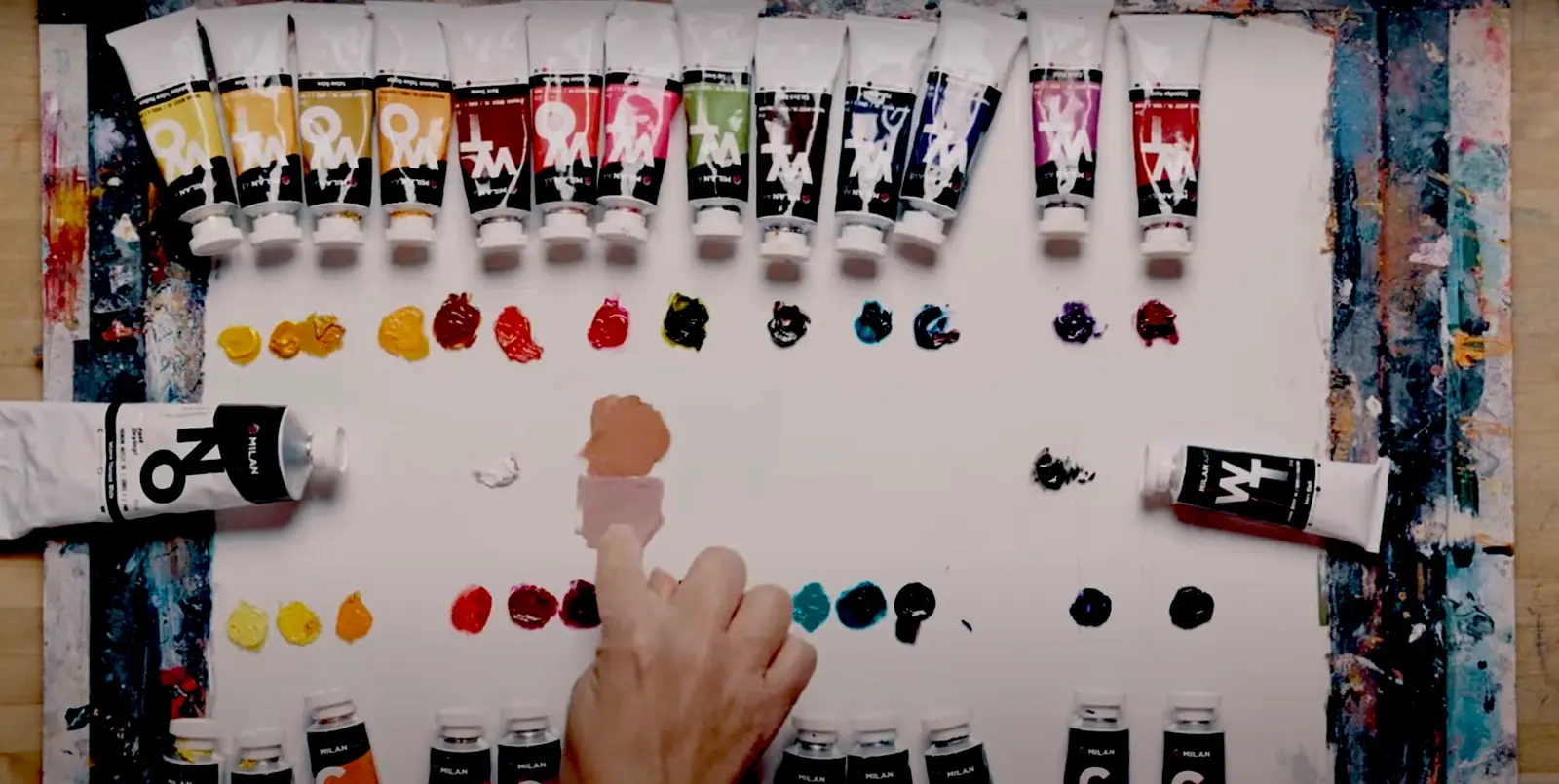
Brown is not a color you buy so much as a color you build. It is neutralized color, which means it comes from mixing complements, the pairs that sit opposite each other on the color wheel, until they cancel each other’s intensity and settle into a rich earth tone. That is why a brown you mix yourself holds warmth and light, while a brown straight from the tube tends to sit flat on the canvas. This guide covers three reliable ways to mix brown in acrylics and oils, plus how to steer it warm, cool, light, or deep once you have it.
What colors make brown?
Any two complementary colors make brown: orange and blue, red and green, or yellow and purple. Complements neutralize each other, so mixed toward balance they lose their brightness and become brown rather than gray, because the pairs are unequal in value and one usually carries more warmth. Orange and blue is the everyday favorite, since orange mixes easily from red and yellow, and the amount of blue you add controls how dark the brown becomes.
Once you have a base brown, the whole family of earth tones opens up. A touch of white gives you tan and beige. More of the darker pigment deepens it toward chocolate, umber, and near-black warm darks. The same complement thinking underlies every neutral on your palette, which is why it is worth learning as a system rather than a single recipe. The full method is in how to mix colors.
How do you mix brown from complements?
The most controllable brown comes from orange and blue, because you can dial the temperature and the depth separately. Here is the process in acrylic or oil:
- Mix a clean orange first from a warm red and a warm yellow, or start from a tube orange.
- Add blue a little at a time. Ultramarine gives a warm, natural brown; a cooler blue pushes it grayer and deeper.
- Watch the balance. As the blue approaches the strength of the orange, the mix neutralizes into brown.
- Adjust temperature: more orange or a touch of yellow for a warm brown, more blue for a cool one.
- Adjust value with white for tan and beige, or with more blue and red for a deep umber.
The reason to mix brown this way, rather than reaching for a tube, is control. You decide exactly how warm, how cool, and how deep, and the brown shifts temperature across a passage instead of sitting dead. If orange is where you want to start, our full walkthrough is in how to make orange.
How do you make brown from the three primaries?
Mix red, yellow, and blue together and you get brown, because any color containing all three primaries neutralizes. Start with roughly equal parts, then steer it: heavy on red and yellow gives a warm, reddish brown; more blue cools and darkens it toward a deep umber. This is the same reason that stirring too many colors into one pile turns them to mud. Here, that neutralizing effect is exactly what you want.
The primary route is handy when you already have a limited palette out and do not want to reach for more tubes. It also teaches your eye how much each primary is contributing, which sharpens every other mix you make. For the wider logic of why some mixes stay bright and others neutralize, the color wheel for painting lays it out.
How do you mix brown with earth pigments?
Earth pigments give you rich, natural browns with almost no mixing, and they are the fastest route to a believable brown. Burnt sienna, raw sienna, burnt umber, and raw umber are all browns straight from the tube, but the trick is to treat them as starting points and modify them, so they still shift and vary across a painting rather than reading flat.
- Warm a brown by mixing burnt sienna into it, which adds a rich, red-orange glow.
- Cool and deepen a brown with raw umber or a touch of ultramarine.
- Gray a brown toward stone or bark with a little of its complement or a cool blue.
- Lighten toward tan with white, or with a warm yellow like yellow ochre for a golden earth tone.
Even with earth pigments, the goal is variation. A tree trunk or a patch of soil painted in one flat brown looks like cardboard, while the same area built from several slightly different browns reads as real. This is the same thinking behind convincing skin tones, which are built almost entirely from varied, mixed browns and grays.
How do you keep brown from looking dead?
Flat, lifeless brown is the most common complaint, and it comes down to two habits. First, stop mixing before the color goes completely neutral, so a faint warm or cool bias survives; that residual temperature is what makes brown read as living form. Second, vary your browns across a passage rather than using one mix everywhere, letting a warm brown catch the light and a cooler brown fall into shadow.
Value matters as much as hue here. Squint at your reference to find where the browns are genuinely light and dark, and place those value shifts clearly. A brown that changes value and temperature across a surface will always look more real than a single even tone, no matter how perfectly mixed that one tone is.
Why do browns and earth tones anchor so many paintings?
Earth tones are the oldest colors in art, and they still ground almost every palette. The first known pigments were browns and ochres, the earth itself, and painters have relied on them ever since for warmth, realism, and a sense of the natural world. Brown reads as stable, grounded, and organic, which is why it carries landscapes, portraits, and still lifes so well.
You can trace that through the history of painting. The Old Masters built entire portraits on warm brown grounds, letting umbers and siennas glow through the flesh tones above. Rembrandt made a whole language out of golden browns and deep shadow. If the meaning behind color choices interests you, our guide to the symbolism of color goes deeper.
A brown you mix yourself is a small win that compounds. The same complement thinking that fixes your browns will sharpen every neutral on your palette, from grays to greens to skin tones. You will find more color and paint handling guides in our oil painting techniques hub. And if you want to practice color mixing with real feedback from a working artist, the free Two Week Challenge is a friendly place to start.
Frequently asked questions
What two colors make brown?
Any pair of complements makes brown: orange and blue, red and green, or yellow and purple. Complements sit opposite each other on the color wheel, and mixed toward balance they neutralize into brown. Orange and blue is the most common route, since orange is easy to mix from red and yellow and blue controls how deep the brown goes.
How do you make brown from the three primaries?
Mix red, yellow, and blue together in roughly equal parts, then adjust. Heavy on red and yellow gives a warm, reddish brown; more blue cools and darkens it toward a deep umber. This works because any mix containing all three primaries neutralizes, which is the same reason too many colors in one pile turns to mud.
Why is my brown muddy or lifeless?
Flat brown almost always comes from a tube, or from over-mixing until the color goes dead. Mix your brown from two complements instead, and stop while you can still see a warm or cool bias in it. A brown that shifts slightly warm and cool across a passage reads as living form; one even, flat brown reads as a hole.
How do you make a warm brown versus a cool brown?
Steer the temperature with the ratio. For a warm brown, favor the orange or red side of the mix, or add a touch of yellow. For a cool brown, add more blue or a little of the green side. A dab of white gives you tan and beige, while more of the darker pigment deepens it toward chocolate or umber.
Is mixing brown the same in acrylic and oil?
Yes. Brown is neutralized color in both mediums, so the complement logic is identical. Acrylics dry slightly darker, so mix a touch lighter, and oils give you longer to adjust the warmth on the canvas. Earth pigments like burnt sienna and raw umber behave the same way in both, and they are useful starting points either way.
What to practice this week
- Mix three browns from three different complement pairs: orange and blue, red and green, yellow and purple. Line them up and notice how each pair gives brown a different character.
- Take one warm brown and cool it in steps by adding blue a little at a time, watching it travel from a reddish tan toward a deep umber.
- Mix a brown, then add white in three steps to build a tan and beige scale, so you can see how browns lighten toward skin and earth tones.
Supplies used

About the author
More from Elli