Different Types of Painting: Every Medium Explained, Plus Genres, Styles and Markets
People mean four different things when they ask about types of painting. Here's each one, starting with the mediums, and how to tell which type you should be painting.
There are four ways to sort the different types of painting, and most confusion comes from mixing them up. The first and most practical is by medium: what the paint is made of. Then by subject (what’s in the picture), by style (how far the picture strays from its source) and by market (who it’s for). Start with the medium, because that’s the decision you make at the art store.
What are the different types of painting by medium?
The main painting mediums are oil, acrylic, watercolor, gouache, egg tempera, fresco, encaustic, pastel, ink and mixed media. They differ in one thing more than any other: the binder. Pigment is the color, and the binder is what glues the pigment to the surface. In the Q&A of our sellable abstracts workshop with Elli and John, the answer to a student’s question was simple: almost every water-based paint except gouache and watercolor is basically plastic, while watercolor and gouache are bound with gum arabic and oil paint with natural oils like linseed or walnut.
Once you know the binder, you can predict how a paint will behave: how fast it dries, whether water brings it back to life, how you layer it and how it ages. Here’s each one.
Oil painting
Oil paint is pigment ground in a drying oil, usually linseed or walnut. It stays wet for hours or days, which is what makes it so good for soft blending, glazing and skin. It also has the deepest record behind it: in our Acrylics Remastered masterclass, Elli and Dimitra point out that people have used oil for centuries, so there’s a written record of classical techniques to learn from that acrylic simply doesn’t have yet. Galleries and collectors also give oil a higher perceived value.
The trade-offs are real. You have to work thin to thick (fat over lean), or the top layers crack. Drying time between layers can slow you down if you don’t use mediums. And once a painting goes to oil, it stays oil: nothing water-based can go on top. Our guide to what oil paint is covers the chemistry, and how to start oil painting covers the first week.
Acrylic painting
Acrylic is pigment in an acrylic polymer emulsion, which dries into a flexible plastic film. It dries fast, cleans up with water and, once dry, it’s fully cured: you can paint over it with more acrylic or with oil, and the layer underneath won’t lift. That makes acrylic the classic underpainting for oil and the fastest way to build texture.
The masterclass is honest about its limits too. Acrylic carries a lighter pigment load and more binder than oil, so colors can look less rich, and the market still respects it a little less. If your acrylics look dull, see why your acrylic painting looks flat.
Watercolor painting
Watercolor is finely ground pigment in gum arabic, thinned with water and laid on paper in transparent washes. Two things set it apart. First, it rewets: brush water over a dry passage and the color lifts and moves again, which is why you can’t layer freely the way you can with acrylic. Second, there’s no white paint doing the heavy lifting. In our Watercolor Foundations portrait lesson, the instructor saves the white of the paper for the brightest highlights, even the tiny reflection in an eye, because opaque white never glows the same way.
Watercolor builds color by layering transparent washes rather than by mixing a lot on the palette. Paper matters more than in any other medium: the materials lesson recommends 100% cotton paper, which holds up under water far better than wood-pulp paper, in hot press (smooth), cold press (light tooth, the most common) or rough. For inspiration, see our list of famous watercolor paintings.
Gouache
Gouache is watercolor’s opaque cousin: pigment ground in water and gum, made thick enough to cover what’s underneath. The National Gallery’s glossary notes that its results look quite different from watercolor washes, which depend on the paper showing through. Gouache dries matte and flat, which is why illustrators and designers love it. Like watercolor, it rewets.
Egg tempera
Egg tempera is pigment bound with egg yolk, painted in thin, fast-drying strokes, usually on a gessoed wood panel. According to the National Gallery, most early Italian paintings are in egg tempera, and it became less common after about 1500 as oil took over. It can’t be blended wet like oil, so form is built with hatched strokes.
Fresco
Fresco is painting on wet lime plaster so the color bonds into the wall as it dries. The word is Italian for fresh. In true fresco (buon fresco) the artist plasters only as much wall as can be painted that day, a section the National Gallery calls a giornata. Our Mastery Program art history lesson on construction and deconstruction traces how Giotto trained to paint fresco for the church, and how his frescoes broke the rules about how holy figures were allowed to look.
Encaustic
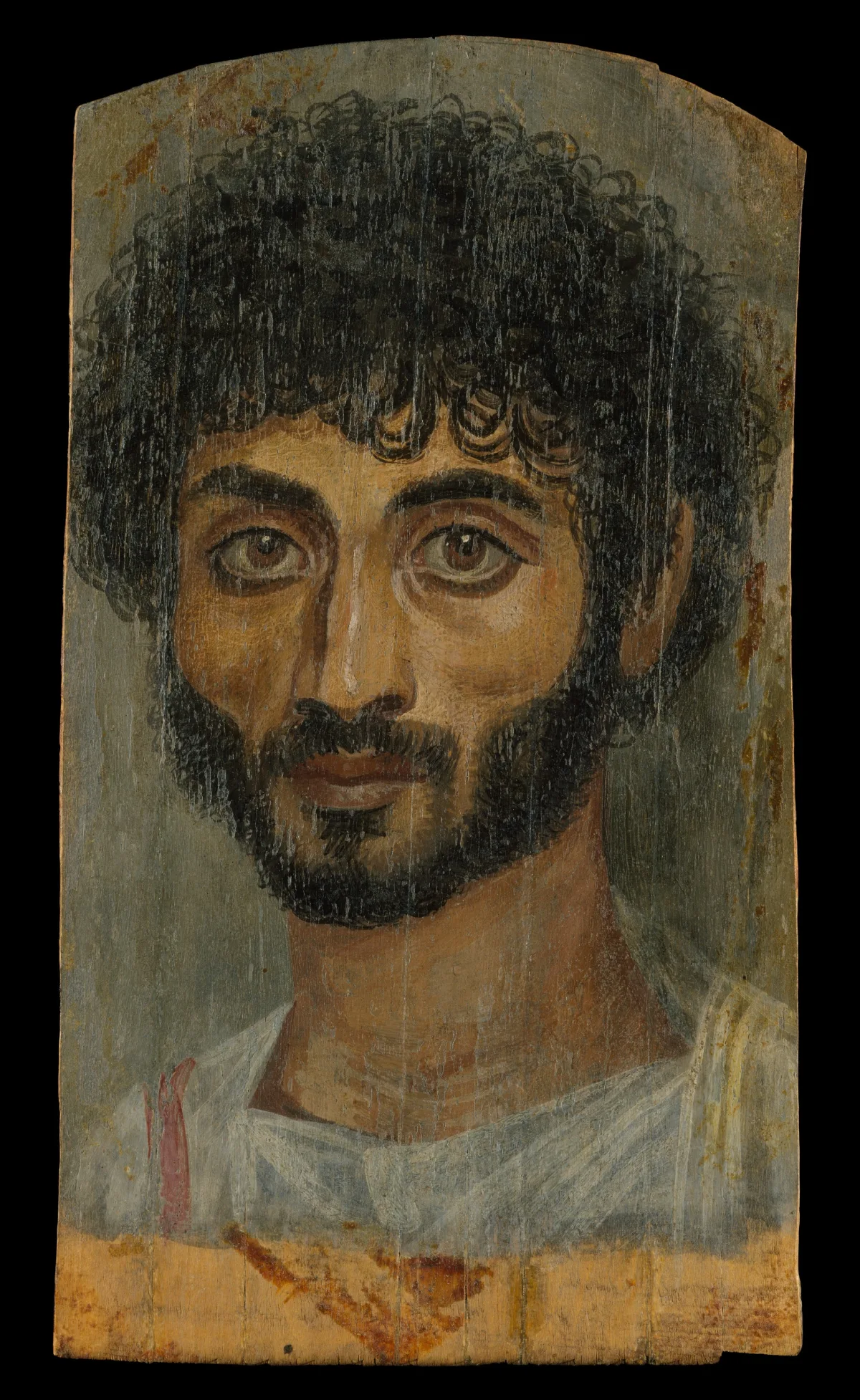
Encaustic is pigment mixed into beeswax, usually kept melted and applied warm. It’s one of the oldest painting types that still survives in good shape: the portrait at the top of this page was painted in encaustic in Roman Egypt around 170 CE, and the Met notes that the term now covers any method where pigment is mixed with beeswax. Today it’s mostly used for layered, textured abstracts.
Pastel, ink, spray paint and mixed media
Pastel is nearly pure pigment pressed into a stick with very little binder, which is why its color is so intense (our pastel techniques guide and oil pastels vs chalk pastels cover it). Ink, spray paint and acrylic markers belong to the water-based family. Mixed media combines several of these in one piece, and the rule that keeps it from peeling is the one from the Acrylics Remastered masterclass: water-based first, oil last. “Oil is king, it goes on top.” In that masterclass the studio keeps a water-based cart and an oil-based cart so the two never get mixed up. Our guide to mixed media art techniques goes deeper.
How do the painting mediums compare?
| Medium | Binder | Drying time | Rewets with water? | Best for |
|---|---|---|---|---|
| Oil | Linseed or walnut oil | Hours to days | No | Blending, glazing, portraits, longevity |
| Acrylic | Acrylic polymer | Minutes | No (cured when dry) | Speed, texture, underpainting |
| Watercolor | Gum arabic | Minutes | Yes | Transparent washes, light, travel |
| Gouache | Gum arabic | Minutes | Yes | Flat opaque color, illustration |
| Egg tempera | Egg yolk | Minutes | No | Fine hatched detail on panel |
| Fresco | Wet lime plaster | As the plaster cures | No | Murals |
| Encaustic | Beeswax | Seconds, as it cools | No | Layered texture |
If you’re choosing your first medium, our comparison of acrylic vs watercolor vs oil walks through the decision, and the 5 key differences between acrylics and oil paint covers the two most common choices.
What are the types of painting by subject?
Subject types, often called genres, describe what’s in the picture, and any of them can be painted in any medium. The main ones are portrait (a person, see famous portrait paintings), self-portrait, landscape (famous landscape paintings), still life (famous still life paintings), figurative and narrative painting (people doing something, often telling a story), floral, animal and wildlife, and abstract painting, where the subject is color, shape and mark itself. The traditional academies ranked these, with history painting on top and still life at the bottom, but that ranking means nothing to collectors today.
What are the types of painting by style?
Style describes how far a painting moves from what the artist was looking at. Our teaching treats styles as one line from photorealism through expressive realism, impressionism, stylized and whimsical painting, abstract realism and finally pure abstraction. Technique is different again: glazing, impasto, alla prima and palette knife are ways of putting paint down, and you can use most of them in any style. Our guides to types of painting styles and painting techniques cover each in depth.
What are the types of painting by market?
Paintings also split by who they’re made for. In the Mastery Program lesson on the three art markets, Elli names them as decorative, collectible and conceptual.
Decorative art is made to suit a space. Color matters most, and format follows the wall: a large horizontal for above the couch, a square or vertical for a niche, tall narrow pieces like 12 by 24 or 18 by 36 for the slim spaces every home has. A huge share of it goes to corporate spaces such as offices, hotels, banks and hospitals, usually through dealers and art consultants, and works on paper are traditionally sold in full sheets (30 by 44 inches) or half sheets (22 by 30) so they can be framed. Elli and her husband John made their living in this market for their first eight to ten years, and she’s clear that decorative doesn’t mean meaningless.
Collectible art is bought by collectors who connect with the artist’s message and story. Here your name and your style have to be synonymous, so a collector can recognize you across a room. That’s the market most of our students paint for. Fine art vs decorative art covers the difference in more detail.
Conceptual art is often made for shock value or to carry an agenda, frequently as installations or performances that don’t last and aren’t really for sale. It’s funded more by grants than by buyers. Elli doesn’t teach it, and says so.
Is a print a type of painting?
A print is a reproduction of a painting, not a type of painting. The print types lesson in the Mastery Program breaks them into open editions (unlimited, priced as decoration), limited editions (a number set in advance, each hand signed and numbered, such as 1/25), artist proofs (up to 10% of an edition, hand embellished) and the one of one. That last one blurs the line: you paint over a print with brushwork, gold leaf or a new background color until it’s significantly changed, and sell it as a hybrid of print and original. If you’re thinking about selling reproductions, start with how to make prints of paintings.
Which type of painting should you do?
Pick the type that fits how you like to paint, which is often different from the type you like to look at. In the Mastery Program lesson on types of art by temperament, Elli sorts art into four families: bold, high-contrast “power impact” art; bright, quirky “whimsical pop”; minimal, contemplative “raw earth”; and dreamy, detailed “beauty romance,” where anything hyperrealistic tends to land. She notices that most artists love the family opposite their own, the art they can’t make, and that trying to paint it is a fast route to frustration. A spontaneous painter who forces themself into hours of tiny, pre-planned detail usually ends up hating the easel.
Materials tell you the same thing. Elli’s advice is to notice which medium makes your heart swell when you pick it up, the ink, the spray paint or the oil, and build your process around that. Here’s a simple way to find yours:
- Try three mediums on one subject. Paint the same small object in oil, acrylic and watercolor, as in the practice list below.
- Notice your pace. If you want to see it finished today, acrylic, watercolor or gouache will suit you. If you love slowly turning form, oil or tempera will.
- Notice your tolerance for correction. Oil and acrylic forgive and let you paint over mistakes. Watercolor asks you to plan your lights before you start.
- Pick your subject and style second. Once a medium feels like home, the subject and style choices get much easier, and how to find your art style picks up from there.
Every type of painting on this page has produced masterpieces, from encaustic faces two thousand years old to last year’s abstracts. The best type for you is the one you’ll happily pick up tomorrow.
Frequently asked questions
What are the main types of painting?
By medium, the main types are oil, acrylic, watercolor, gouache, egg tempera, fresco, encaustic, pastel, ink and mixed media. By subject they're portrait, landscape, still life, figurative, abstract and narrative painting. Most people searching the phrase mean the mediums, because that's the choice you make first when you buy paint.
What is the difference between types of paint?
The binder. Every paint is the same kind of pigment held in something different: linseed or walnut oil for oil paint, a plastic polymer for acrylic, gum arabic for watercolor and gouache, egg yolk for tempera, beeswax for encaustic and wet lime plaster for fresco. The binder decides how fast it dries, whether it can be rewetted, how it layers and how long it lasts.
Which type of painting is best for beginners?
Acrylic is the easiest start for most people because it dries fast, cleans up with water and can go under oil later. Oil is the most forgiving to blend and has the longest record of classical technique to learn from. Watercolor is the hardest to correct, since every layer stays transparent and the paper's white is your only true white.
What is the oldest type of painting?
Painting on walls with earth pigments is the oldest. Of the mediums still taught today, egg tempera, fresco and encaustic are the old ones: encaustic portraits from Roman Egypt survive from the second century, and egg tempera carried most early Italian painting until oil took over after about 1500.
Is a print a type of painting?
No. A print is a reproduction of a painting on paper, canvas or another surface. The one exception sits in between: a one of one, where an artist paints heavily over a print until it becomes its own piece, sold as a hybrid of print and original.
Can you mix types of paint in one painting?
Yes, in the right order. Water-based materials (acrylic, ink, spray paint, acrylic markers) go down first and oil goes last, on top. Never put a water-based layer over oil, because it won't bond.
What to practice this week
- Buy one small tube of oil, one of acrylic and one pan of watercolor in the same color. Paint the same three-inch apple in each and write down which one you wanted to keep going with.
- Try the rewetting test: brush clean water over a dry swatch of each. Watercolor lifts, acrylic stays put, oil is still soft underneath. That one test teaches you what each binder does.
- Pull ten paintings you'd love to own and ten you'd love to make. Compare the two piles. If they look nothing alike, that's normal, and the second pile is the one to train for.
Supplies used
About the author
More from Elli