Giotto: Why Art Historians Call Him the First Real Artist
Before Giotto, painters were skilled craftsmen. He was the first to put genuine human feeling on the wall, and that one shift cracked the door open to the Renaissance.

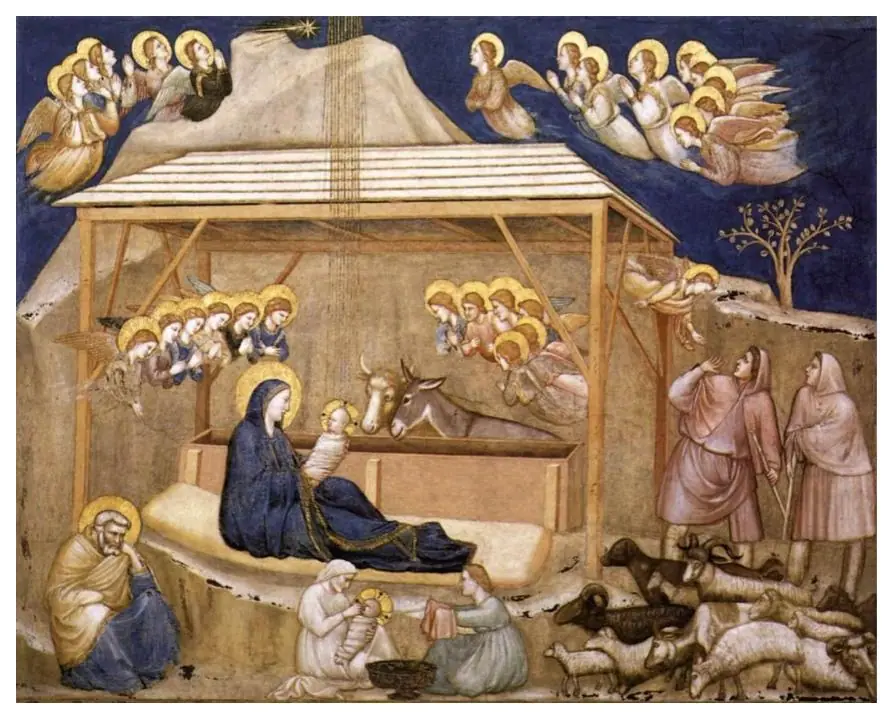
Giotto di Bondone is called the first real artist because he was the first painter to put genuine human emotion on the wall. Before him, painters were treated more as craftsmen, repeating the same flat, formulaic figures. Giotto gave his people weight, breath, and grief you could feel, and that single shift cracked the door open to the Renaissance.
Elli Milan, one of the founders of the Milan Art Institute, has a name for the moments when the direction of art takes a sharp turn. She calls them divergences: places where the whole trajectory of art bends and carries art history into new territory. Many artists have created divergences, but Giotto may have been the first who truly earned the title. In his work, expression and emotion came alive in a way no one had seen before.
Who was Giotto di Bondone?
Giotto di Bondone was an Italian painter born in the 13th century in Vespignano, Italy, and art historians have called him the father of European painting. He was believed to be the pupil of the Florentine painter Cimabue, and his work hinted at the innovations Renaissance painters would make roughly a hundred years later.
To understand why he matters, it helps to know what painting looked like before him. The artists of his day were treated more as craftsmen than as artists in the modern sense. They created manuscripts and ornamental objects, and they painted holy figures according to a rigid set of conventions. Faces were stylized and remote. Bodies were flat. The point was not to show a real person feeling a real thing. The point was to repeat a sacred pattern.
Giotto broke that pattern. According to Elli Milan, he counts as the first artist to really insert his own personal expression into the work. That element, expressiveness, is exactly what we associate with art today. The Milan Art Institute teaches it as one of the seven elements of art every painter learns to control.
Why is Giotto called the first real artist?
Giotto is called the first real artist because he was both the first to paint with believable emotion and the first whose personal fame became part of the story. As Elli Milan put it in an Art Club lecture, “I think Giotto is the first artist. He was famous. He had his name, his celebrity attached to his art. That’s what brought about the da Vincis, the Michelangelos, the Raphaels into the Renaissance, where the artist became the genius or the celebrity.”
That is the part people miss. Giotto did not just paint differently. He changed what it meant to be a painter at all. Before him, the maker disappeared behind the work. After him, the maker had a name, a reputation, and a personal vision worth knowing. Every famous painter who followed, all the way down the list of famous historical oil paintings, inherited that idea from Giotto.
What did Giotto paint, and what set his work apart?
The clearest example of Giotto’s gift is a scene of the burial of Christ, where he shows the anguish of Mary, the mother of Christ. In it, her grief is real, raw, and deeply relational. It is not symbolic. It is personal, the way a mother’s grief actually looks.
Compare that to what came before. Earlier depictions of Mary felt detached and unemotional, distant figures in a sacred diagram. Giotto made her a person. His art was so emotionally charged, so full of expression, that it gripped people. It depicted a relational kind of faith, intimate and felt, in place of a religion that had become rote and impersonal. That pull toward dramatic, lifelike feeling is the same instinct you can trace across the centuries that followed, including in how Caravaggio lit a dark world.
How was Giotto discovered?
The traditional story of Giotto’s discovery, as Elli Milan tells it, begins with a shepherd boy in a field. To pass the time while watching his sheep, young Giotto took charcoal from the fire and drew what he observed on the rocks around him.
As the legend goes, an artisan who painted frescoes for churches and cathedrals passed by one day and saw the boy’s drawings. He was stopped cold. There was real mastery in those sketches, and a powerful, captivating emotion he was not used to seeing. He was so gripped that Giotto eventually earned a place in a master artist’s studio, believed to be Cimabue’s, where he learned how to create frescoes.
Whether or not every detail of that story is literally true, it captures something real about Giotto. From the very beginning, what set him apart was not just skill. It was the feeling his drawings carried. In Elli Milan’s words, that gift is what “started basically the close of the Dark Ages, and it opened the crack of the door into the Renaissance. If it wasn’t for Giotto and his personal expression, his sort of divergence, the Renaissance probably wouldn’t have come about.”
What were Giotto’s contributions to the Renaissance?
Giotto’s contribution to the Renaissance was to bring naturalism and human emotion back into painting about a century before the movement fully arrived. He reminded European art that a painted figure could feel real things. The artists of the Renaissance built directly on that foundation.
His influence runs deeper than technique. By attaching his own name and personality to his work, Giotto helped invent the very idea of the artist as an individual creator. That idea powered the Renaissance and never went away. It runs through every divergence that followed, from the dreamlike inner worlds of Surrealism, to the raw color and feeling of Post-Impressionism, to a single American painting that came to stand for a whole nation’s values in Freedom from Want.
That is why knowing art history matters for any working artist. It lets you see the chain of divergences you are standing in, and it helps you understand the conversation you are joining when you pick up a brush. You can study the whole arc in our art history and famous paintings collection.
Where Giotto leaves you
Giotto’s lesson is simple and a little startling: the thing that made him the first real artist was not perfect technique. It was honest feeling. He painted what grief actually looks like, what tenderness actually looks like, and people have not stopped looking since.
If that idea pulls at you, the best way to understand it is to try it. Pick one Giotto face, copy it slowly, and watch how a small tilt of the head turns a figure into a person. When you are ready to take that further, our 2-Week Challenge is a gentle place to begin putting real feeling into your own work.
Frequently asked questions
Who was Giotto di Bondone?
Giotto di Bondone was an Italian painter born in the 13th century in Vespignano, Italy. Often called the father of European painting, he was believed to be the pupil of the Florentine painter Cimabue, and he is remembered as the first painter to fill religious scenes with believable human emotion.
Why is Giotto called the first real artist?
Giotto is called the first real artist because he broke from the flat, formulaic style of medieval painting and gave his figures real emotion and personal expression. He was also among the first painters whose personal fame and name were attached to the work, the way we think of artists today.
What are Giotto's most famous paintings?
Giotto's best known works are his frescoes, including a scene of the burial of Christ that shows the raw, deeply human grief of Mary over the body of her son. His Nativity scenes, filled with warmth and expression, are also widely studied.
What were Giotto's contributions to the Renaissance?
Giotto reintroduced naturalism and human feeling into painting roughly a century before the Renaissance fully arrived. By treating the painter as an expressive individual rather than an anonymous craftsman, he opened the path that the da Vincis, Michelangelos, and Raphaels would later walk.
What to practice this week
- Find a Giotto fresco online and copy one face in pencil, paying attention to how he tilts the head and the eyes to show feeling rather than just likeness.
- Take a simple subject and paint it twice: once as flat decoration, once with real weight and emotion, and notice what changes.
- Choose one emotion you want a figure to carry, then study how Giotto used posture and gesture to make grief or tenderness readable across a whole scene.

About the author
More from Elli