Impressionism: Light, Color, and the Movement That Freed Painting
Impressionism is not about perfection. It is about catching how a moment of light feels before it slips away. Here is what the movement was, who led it, and why it still matters.


Impressionism is a 19th century art movement that set out to capture the fleeting effects of light, color, and atmosphere rather than precise detail. Instead of aiming for a polished, photographic finish, Impressionist painters worked quickly, often outdoors, with quick visible brushstrokes that record an immediate impression of what they saw. The whole point was to convey how a moment feels, the shimmer on water, the way shadows stretch at sunset, before it shifts and disappears.
Here is the thing that made it radical: these artists were not confined by the rigid academic rules of their day. They stepped outside to paint in natural light, a practice called plein air, and they let the world stay loose and alive on the canvas. A face, a river, a crowd at a party, all of it became an excuse to chase light. If you want the wider context for why this mattered, our piece on why study art history makes the case, but the short version is that Impressionism changed what a finished painting was even allowed to look like.
What makes Impressionism unique?
Impressionism is unique because it records how light interacts with a scene in a single instant, using color to suggest movement and mood. Rather than blending paint smoothly the way academic painters did, Impressionists placed pure colors side by side and let the viewer’s eye do the mixing. This optical trick is what gives the work its shimmer. Up close, a canvas can look like a chaos of separate strokes. Step back, and it resolves into a harmonious, breathing whole.
That choice was about more than technique. By valuing the feeling of a moment over technical polish, these painters broke from the strict academic traditions that defined what serious art was supposed to be. Their work was less about precision and more about presence. That freedom transformed the art world and gave generations of artists permission to loosen up, to experiment with expression over detail, and to trust their own eyes. The same loosening underlies later movements you can trace forward to famous acrylic paintings and beyond.
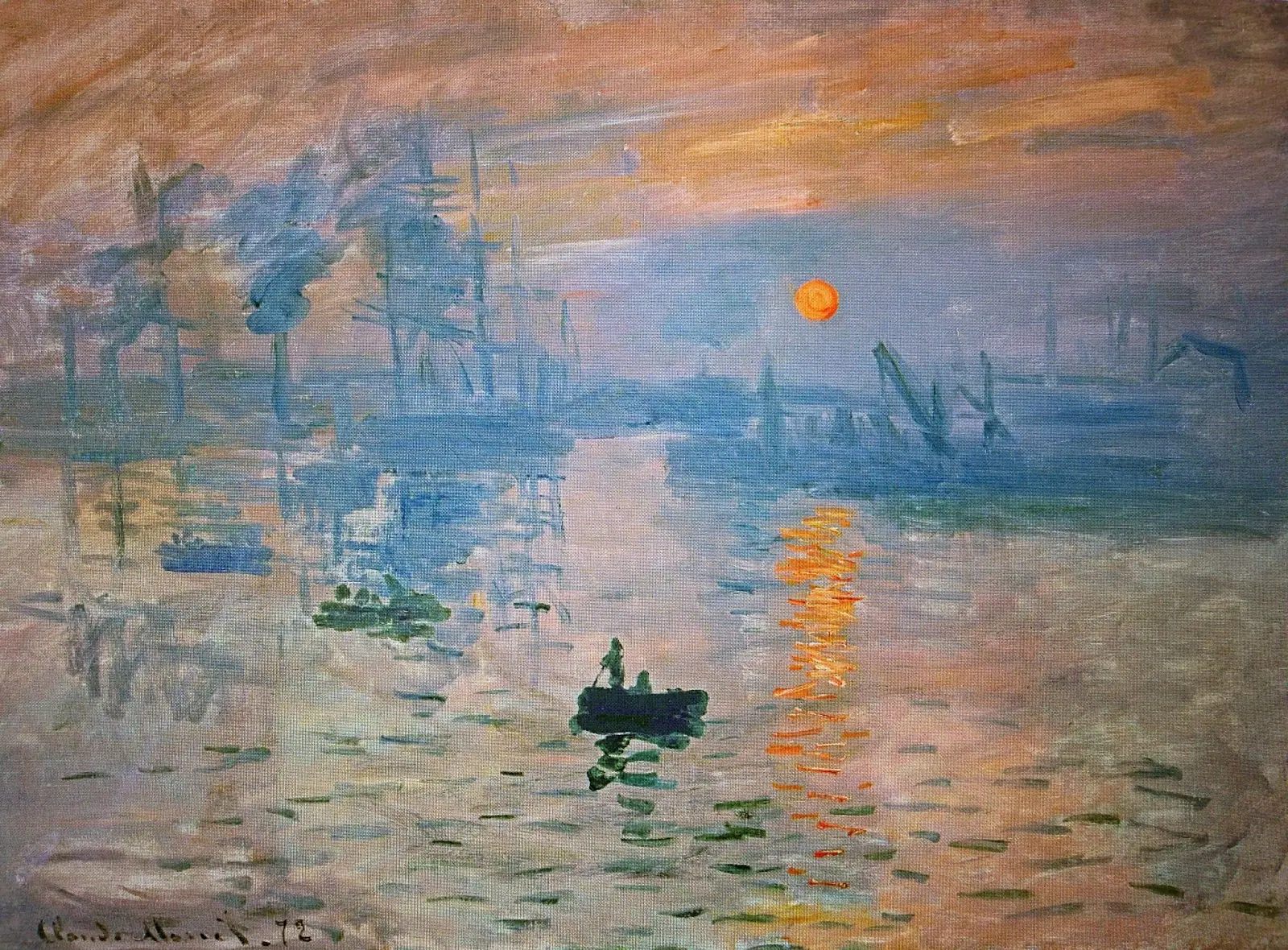
Claude Monet, Impression, Sunrise (1872), the painting that gave the movement its name.
Who were the masters of Impressionism?
The masters of Impressionism were a small circle of painters who reshaped how the world saw, led by Claude Monet and Pierre-Auguste Renoir. They were not the only ones, Camille Pissarro, Edgar Degas, Alfred Sisley, Berthe Morisot, and Mary Cassatt all belong in the room, but Monet and Renoir show the range of what the movement could do.
Claude Monet is often called the father of Impressionism. He spent his life chasing the ever-changing light on landscapes and water. His 1872 painting Impression, Sunrise not only lent its name to the movement, it captured the entire spirit of painting in the moment. His obsession with light eventually led to his Water Lilies series, where he painted the same pond again and again to study how the natural world shifts hour by hour. If Monet’s path interests you, our full breakdown of Claude Monet facts traces how the plein air painter started a movement.
Pierre-Auguste Renoir brought people into the frame. His art is brimming with life, full of joyful gatherings and leisurely afternoons. His Dance at Le Moulin de la Galette (1876) immerses you in the warmth of an outdoor party, his soft, colorful brushstrokes catching the flickering light of afternoon sun through the trees. Renoir reminds us that Impressionism was never only about landscapes. It was also about people and the experiences they share.
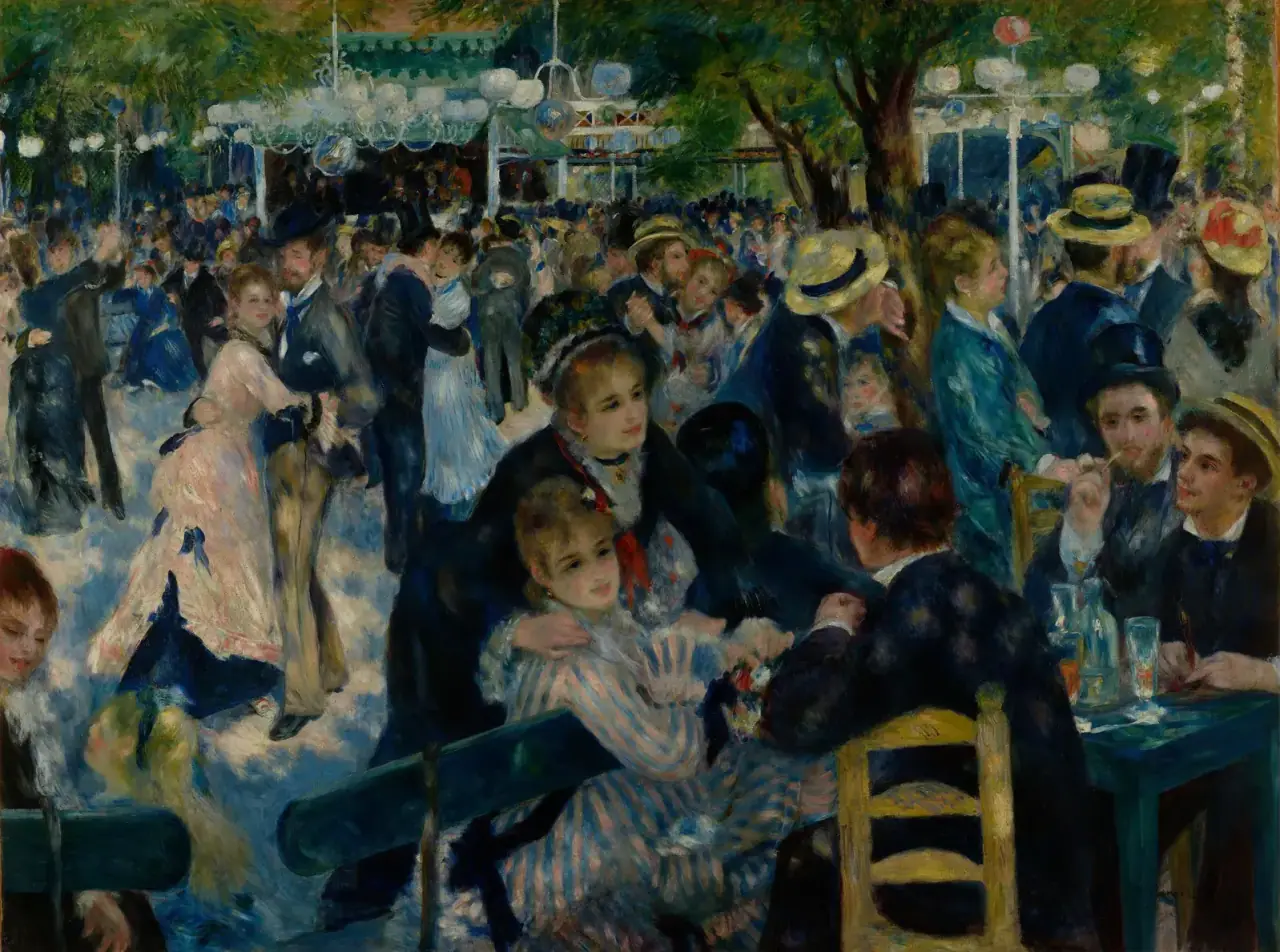
Pierre-Auguste Renoir, Dance at Le Moulin de la Galette (1876).
What is the art of fleeting moments?
The art of fleeting moments is Impressionism’s core skill: learning to see light and color in a new way and paint them before they change. Instead of getting caught up in detail, these artists focused on atmosphere and movement, which let them work swiftly and catch the essence of a scene before it slipped away.
This is the part that feels liberating once you try it. Impressionism embraces imperfection. Brushstrokes stay visible on purpose, capturing not just what is seen but the feeling of being present in the scene. The spontaneity teaches you to respond to a subject intuitively rather than grinding toward a flawless rendering. Many painters find that this is exactly the permission they have been waiting for, the freedom to make a mark and let it stand. That instinct to embrace the loose and unfinished is also why so many modern artists keep returning to the style when they explore famous acrylic paintings and contemporary techniques.
Why does Impressionism still inspire artists today?
Impressionism still inspires artists today because it champions freedom, spontaneity, and the ability to find beauty in imperfection. In a world flooded with polished digital images, the movement is a quiet argument for slowing down and noticing the small moments that make a life feel meaningful.
Modern painters still reach for Impressionist tools to evoke mood, build atmosphere, or suggest movement. Whether the subject is a busy cityscape or a quiet stretch of nature, artists keep using light and color to turn ordinary scenes into something worth keeping. That is the lasting lesson of the movement: art does not have to be flawless to be powerful. It just has to be honest.
How did Post-Impressionism push the movement further?
Post-Impressionism pushed the movement further by using color and texture to express emotion and inner experience, not just to record a passing moment. Vincent van Gogh is the clearest example. He is often discussed alongside the Impressionists, but his work is more accurately called Post-Impressionist, building on their ideas while pushing them somewhere new.
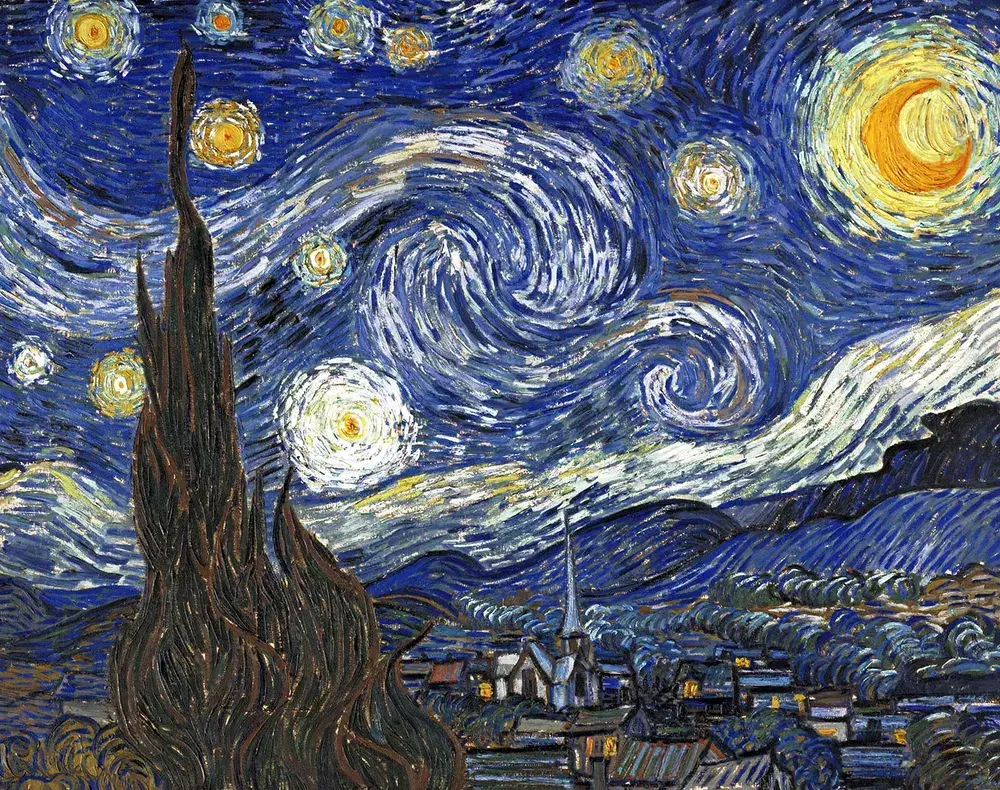
Vincent van Gogh, The Starry Night (1889), Museum of Modern Art, New York. A Post-Impressionist work.
Like the Impressionists, van Gogh was fascinated by light, color, and everyday subjects, painting landscapes, cafes, and portraits with visible brushwork and vivid hues. But he used color and texture to express how something felt, not only how it looked. In works like The Starry Night and Sunflowers, his swirling lines and intense yellows and blues turn observation into pure emotion, making nature seem almost alive. His approach marked a turning point in art history, bridging Impressionism and modern art by proving that painting could carry deep personal expression, not just visual realism. Our guide to Post-Impressionism follows that thread in full.
Why should you explore Impressionism yourself?
You should explore Impressionism because it is one of the best ways to loosen up creatively and learn to trust your own instincts. The style teaches you to paint quickly and with confidence, to chase the feeling you want to create instead of fussing over every detail. For an artist trapped by rigid technical habits, that freedom can unlock a whole new level of work.
At Milan Art Institute, we encourage students to use Impressionism to develop their own voice. The style challenges you to observe the world differently, to paint boldly, and to find beauty in every fleeting moment. Whether you pursue it long term or just borrow its lessons for other styles, the habits of spontaneity and attention to light will stay with you for the rest of your creative life. The movement also opened the door for the artists who followed it, including pioneers like Mary Cassatt, the American Impressionist who defied her family to paint.
In the end, Impressionism teaches that art is not about accuracy. It is about capturing life as it feels. Each brushstroke whispers the same quiet thing: this moment matters. Through that lens, even the most ordinary scene becomes extraordinary. If you want to put a brush in your hand and try the loose, light-chasing approach for yourself, our free Two Week Challenge is a guided way to start making real paintings, and the rest of our art history and famous paintings collection is here whenever you want to keep exploring.
Frequently asked questions
What is Impressionism in simple terms?
Impressionism is a 19th century painting movement that aimed to capture the fleeting effects of light, color, and atmosphere instead of precise detail. Artists worked quickly, often outdoors, using visible brushstrokes and unblended color placed side by side so the viewer's eye mixes it. The point was to record how a moment looked and felt in passing, not to render it flawlessly.
What are the main characteristics of Impressionism?
Impressionist paintings share a few traits: visible, loose brushstrokes, an obsession with how light changes over time, and pure colors set beside each other rather than blended on the palette. The subjects are everyday and modern, landscapes, water, gardens, cafes, and crowds, and the work often looks unfinished up close but resolves into a harmonious whole from a distance.
Who were the most famous Impressionist painters?
Claude Monet is often called the father of the movement, and his painting Impression, Sunrise gave it its name. Pierre-Auguste Renoir was known for warm, joyful scenes of people. Other major figures include Camille Pissarro, Edgar Degas, Alfred Sisley, Berthe Morisot, and Mary Cassatt. Together they reshaped what a finished painting was allowed to look like.
Why was Impression, Sunrise so important?
Claude Monet painted Impression, Sunrise in 1872, and a critic mockingly used its title to name the whole movement. The painting captures a harbor at dawn with loose strokes and a glowing orange sun, prioritizing the feeling of the light over any detail. It became the symbol of a new way of seeing, where atmosphere mattered more than finish.
What is the difference between Impressionism and Post-Impressionism?
Impressionism focused on capturing the fleeting look of light and atmosphere in a real moment. Post-Impressionism built on that freedom but pushed past it, using color and texture to express emotion and structure rather than just record observation. Vincent van Gogh is the clearest example: he kept the visible brushwork but used it to convey inner feeling.
What to practice this week
- Paint one scene outdoors in under an hour, working fast and leaving your brushstrokes visible instead of blending them smooth.
- Place two pure colors side by side without mixing them on the palette, then step back and watch your eye blend them into a third.
- Paint the same simple subject at two different times of day to see how completely the light, color, and mood change.
Supplies used

About the author
More from Elli