Mary Cassatt Facts: The American Impressionist Who Defied Her Family to Paint
She was born into a banking family that expected a society wife and became the only American in the Impressionist circle. Here are the real facts about Mary Cassatt.

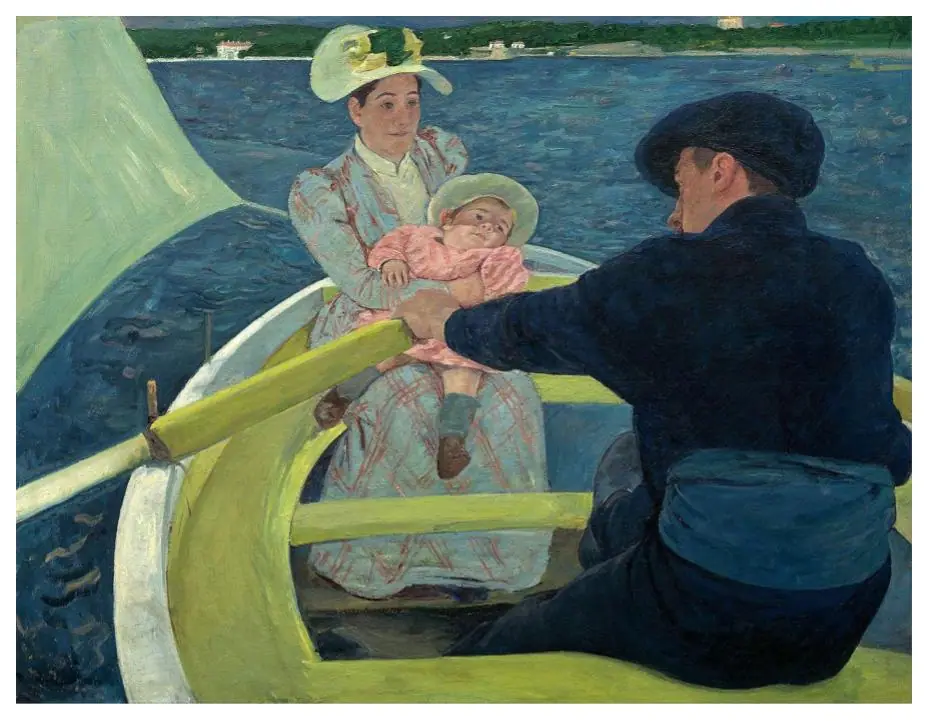

Mary Cassatt was an American Impressionist painter, born in Pennsylvania in 1844 and dead in France in 1926, and she was the only American ever to exhibit with the French Impressionists. She defied a wealthy banking family that expected her to marry well and live as a society wife, moved alone to Paris, and built a serious painting career at a time when that was nearly unthinkable for a woman. She is best known for her tender, clear-eyed paintings of mothers and children. If you only remember one thing about her, remember that she chose art over the comfortable life she was handed, and it cost her.
That choice is the reason an art-education company writes about her at all. Cassatt is proof that a great artist is built through stubborn work and real sacrifice, not handed a career by birthright. Here are the facts about her life that matter most, including the few people search for again and again, and why her story still encourages anyone learning to paint today.
Who is Mary Cassatt?
Mary Cassatt is the only American painter who became part of the French Impressionist movement. Her full name was Mary Stevenson Cassatt, and she was born on May 22, 1844, in Allegheny City, Pennsylvania, into an upper-middle-class banking family. Though she is not as famous as Claude Monet or Edgar Degas, she stands among the most important Impressionists, and the only one born in the United States.
She spent most of her working life in France, where the avant-garde art scene gave her room to grow that America could not. Her subjects were quiet and domestic, mothers, children, women at home, but she painted them with the loose light and bold design of the Impressionists, and with a draftsman’s discipline underneath. For the broader picture of the movement she joined, here is a closer look at the Impressionists and how they painted.
What are some interesting facts about Mary Cassatt?
The most interesting fact about Mary Cassatt is that she was expected to be a society girl and refused. Her father expected her to live the traditional life of a Victorian-era woman: to marry well, raise children, and stay inside the bounds of high society. Becoming a professional artist was considered renegade and edgy in its day, especially for a woman, and her family gave her no support. There was even a threat to disown her.
She went anyway. She was largely self-taught, never attending a formal art academy, and she funded her early career by taking commissions until she had saved enough to move to Paris. She believed, correctly, that Paris would give her the chance to advance that no American city could. That decision, to leave comfort and security for an uncertain life in art, is the quiet courage at the center of her whole story.
How did meeting Edgar Degas change her art?
Meeting Edgar Degas changed Mary Cassatt’s career, because he invited her into the Impressionist group and became her most important mentor. Through that invitation she became the only American associated with the Impressionists, a circle of painters who were rewriting the rules of how a picture could be made.
From Degas she received honest critique and steady encouragement, the kind of relationship every developing artist needs and few get. He pushed her to experiment, and it was his influence that led her into printmaking, where she did some of her most original work. The lesson here outlasts the history: Cassatt did not improve in isolation. She found a mentor and a community of working artists, studied alongside them, and grew faster because of it. Ultimately she showed her work in four of the eight Impressionist exhibitions, in 1879, 1880, 1881, and 1886.
What is Mary Cassatt best known for?
Mary Cassatt is best known for her paintings of figures, especially mothers and children. While she shared the Impressionists’ techniques, her subject matter set her apart. Much of her work centers on family life and the bond between a mother and her child, treated with attention and honesty rather than sweetness.
The inspiration came partly from her own longing for children and a family she never had. The subject feels ordinary now, but it was anything but ordinary in her time, when serious painters reached for grand history scenes and landscapes. Because of the conditions of her era, Cassatt felt she had to choose between art and family. She chose art. Family was never far from her thoughts, though, and you can see it in nearly everything she painted, including The Boating Party above. If you want the wider context of why looking closely at painters like her sharpens your own eye, here is the case for studying art history as a working artist.
How did Mary Cassatt’s work show the power of women?
Mary Cassatt’s work created space to show the influence of women in society, which is part of why she still matters. There is an irony in it: though she remained childless, her paintings argued that mothers hold real power, that they shape and influence the people their children become and, through them, shape the world. She made the domestic feel significant instead of small.
She backed that vision with her life. Cassatt was an early feminist who supported the suffrage movement at a time when doing so carried a cost. Her work and her example opened doors for the women artists who came after her. She could not have both a family and an art career in her era. Many artists today can, in no small part because of the sacrifices made by painters like Mary Cassatt.
Is it true Mary Cassatt advised art collectors?
Yes, one of the lesser-known facts about Mary Cassatt is that she mentored American art collectors and shaped what now hangs in major museums. From early in her time in Paris she advised wealthy collectors on what to buy, steering them toward both the French avant-garde of her own moment and the old masters she revered. She had the eye of a working artist and used it generously.
The most lasting result is the Metropolitan Museum of Art’s Havemeyer Collection, one of the great gatherings of Impressionist and old-master work in the United States, which Cassatt directly helped to build through her advice. So beyond her own canvases, she changed what Americans could see and study. Her taste, not only her brush, left a mark on the art world.
What can artists learn from Mary Cassatt today?
The biggest lesson from Mary Cassatt is that real skill and a real career are built through choice and work, not handed to you by talent or circumstance. She had every reason to take the comfortable path her family offered and every pressure to stay on it. She chose the harder road instead, taught herself the fundamentals, sought out a mentor in Degas, and kept making work that mattered to her even when the world had no category for it.
Heroic artists come from every culture and every walk of life, and they tend to share one thing: they gave up something to devote their lives to art. Because of artists like Cassatt, countless others, women and men alike, have found the nerve to chase their own work regardless of the sacrifice. You can find more figures who prove the same point in our art history and famous paintings collection. And if you want a structured, supported way to start building real skill yourself, the same way Cassatt learned by copying masters and studying alongside other painters, here is why copying artists helps you find your style, and our free Two Week Challenge is made for exactly the beginner who suspects the door is closed. It is not. It never was, not even for a society girl in 1860 who was told to put the brushes down.
Frequently asked questions
Who was Mary Cassatt?
Mary Cassatt was an American painter, born in Pennsylvania in 1844 and died in France in 1926. She is the only American artist who exhibited with the French Impressionists, after Edgar Degas invited her into the group. She is best known for warm, observant paintings of mothers and children, and she defied a wealthy family that expected her to marry and live as a society wife rather than paint.
What are some interesting facts about Mary Cassatt?
Mary Cassatt was largely self-taught, moved alone to Paris to build her career, and became the only American in the Impressionist circle. She showed work in four of the eight Impressionist exhibitions, painted mothers and children when that subject was considered unremarkable, supported the suffrage movement, and helped shape the Metropolitan Museum's famous Havemeyer Collection by advising American collectors.
Why is Mary Cassatt important?
Mary Cassatt matters because she opened the door for women in professional art at a time when it was nearly closed to them. She proved a woman could build a serious painting career, joined the avant-garde Impressionists as their only American member, and used her work to show the influence of women and mothers in society. Her advice to collectors also brought major Impressionist works into American museums.
What is Mary Cassatt best known for?
Mary Cassatt is best known for her intimate paintings and prints of mothers and children, treated with honesty rather than sentimentality. Works like The Boating Party and The Child's Bath show her Impressionist handling of light combined with strong drawing and design. She was also a skilled printmaker, an interest sparked by Edgar Degas and by Japanese woodblock prints she admired.
How did Mary Cassatt become an artist?
Mary Cassatt became an artist against her family's wishes, largely teaching herself to paint and funding her early career with commissions until she could move to Paris. In Paris she studied the masters, exhibited her work, and met Edgar Degas, who invited her to join the Impressionists. From him she received critique, encouragement, and the push toward printmaking that shaped her later work.
What to practice this week
- Pick one Mary Cassatt painting of a mother and child and study how she designs the composition before you judge the subject. Note where she places the figures and how she leads your eye.
- Copy a single Cassatt work from start to finish, the way she copied the masters in Paris, to learn how she balanced loose Impressionist color with firm drawing.
- Choose an ordinary, everyday scene from your own life this week and paint it with full attention, the way Cassatt elevated mothers and children that other painters overlooked.
Supplies used
About the author
More from Elli