Why Study Art History: Why It Is Important and What It Teaches You
Art history is not a pile of old paintings. It is a way of reading the world. Here are five reasons it is worth studying, for artists and non-artists alike.

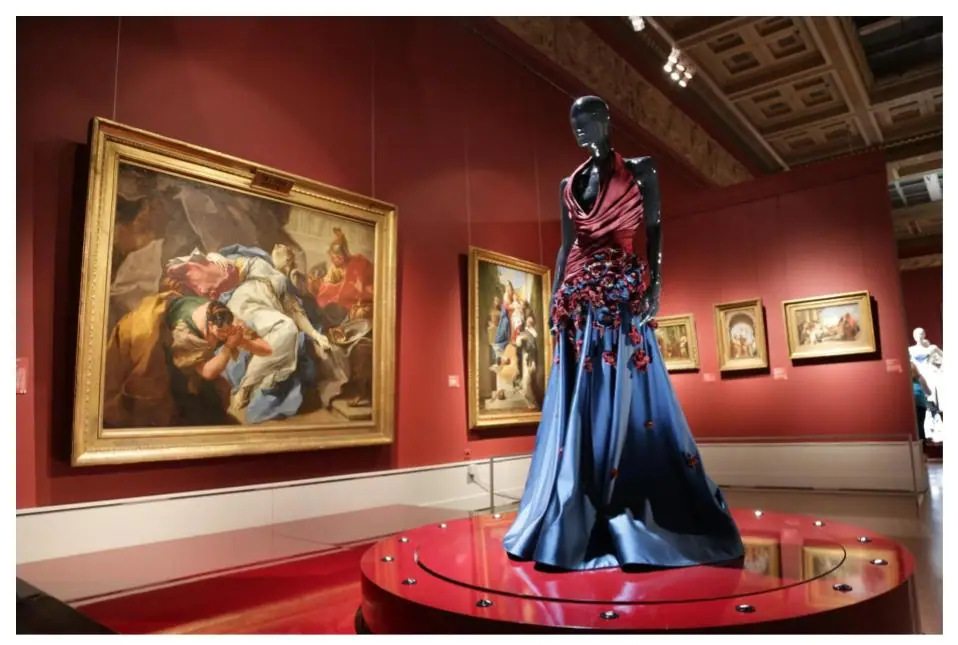
You should study art history because it teaches you to read the visual world, connect with the past, and make sense of a present that runs on images. It is not a pile of old paintings and sculptures made by people long ago. It is a living course of study that draws together history, science, literature, politics, and culture into one subject, and it enriches your life in ways that are easy to underestimate before you start. Here are five real reasons it is worth your time, whether or not you ever pick up a brush.
Quick answer: Studying art history matters because it teaches you to read the visual world, connect with the past, and orient yourself in a present flooded with images. It draws together history, science, literature, and culture into one subject, builds your ability to integrate information, and trains you to notice and value beauty.
Why is art history important?
Art history is important because few subjects teach you so much at once. Try a quick thought experiment: how long would it take you to study anthropology, literature, history, sociology, theology, chemistry, geometry, engineering, physics, war, and politics? Ten years of double majors? Longer? Any one of them could fill a lifetime. The study of art history quietly touches all of them.
When you study art history, you give yourself an education in the humanities, in history and politics, and even in the sciences. You can pursue it formally, the way a four-year university art program does, or you can take it up as a personal study and follow it wherever your curiosity leads. At Milan Art Institute we teach art history inside the Mastery Program, and we encourage students to keep studying it for the rest of their lives. It gives an artist a foundation not only in art, but in life and nearly everything that makes up life.
How does art history connect you to the past?
Art history connects you to the past by turning distant history into something you can feel, not just read about. Studying history and feeling a connection to it are two different things, and art is one of the few bridges that closes the gap.
Take a small, concrete example. When you study art history, you learn that some paintings, like Caravaggio’s, are dark because they were meant to be seen in the dark. As Salon has pointed out, when the paintings of earlier centuries were made, electric light did not exist. People saw them by daylight or by candle flame. Look at a work in a context closer to the one it was made for, and you forge a connection to the past in a way no textbook delivers. Caravaggio is a perfect case study here, and we go deeper into how Caravaggio lit a world without electricity if you want to see how much the lighting changes the work.
This is the difference between knowing a fact about the past and standing inside it for a moment. A date in a textbook stays abstract. A painting made for candlelight, seen by candlelight, lets you borrow the eyes of the person who first stood in front of it. That kind of connection is hard to get from any other subject, and it is one of the quiet reasons art history holds onto people once they start.
How does art history help you in the present?
Art history helps you in the present by teaching you how to read images, the literacy a screen-driven world increasingly demands. Our world has become intensely visual. Almost everyone carries a phone, a tablet, or a computer, and those devices are crowded with pictures shared from cameras, video games, and films.
Knowing how to process images is only going to matter more as pictures keep replacing text as our main means of communication. Study art history and you start to understand how visual tools, from the painted altarpiece to the camera, intersect with the societies that use them. You learn how images shape culture, and how you might contribute to that conversation rather than just scroll past it. The University of the People makes a similar case for why the subject is so useful right now.
Think of it as visual literacy, the image-world equivalent of learning to read. Someone who has studied how artists frame, light, and compose a scene is far harder to manipulate with a photograph, an advertisement, or a piece of propaganda, because they can see the choices behind the image instead of only its surface. In a feed built to move fast and feel before you think, that slower, trained way of looking is genuinely useful.
What does art history teach you to do?
Art history teaches you to integrate information, and integration may be the single most valuable skill it builds. As you study a work, you learn the context that produced it, the technologies of the day or the lack of them, and the science, literature, and politics swirling around it. Gathering all of that is one thing. Making sense of it together is another thing entirely.
That act of pulling information from scattered, unrelated sources and turning it into understanding is a high-level thinking skill, and it has become increasingly important in the workplace and in life. It is the same muscle you use to weigh evidence, spot patterns, and form a clear view out of messy inputs. Art history gives you a generous, enjoyable way to train it. Even loose drawing and doodling exercises a related kind of visual thinking, so the habit of looking closely pays off in more places than one.
How does studying art history develop a love for beauty?
Studying art history develops a love for beauty by asking you to look at a great deal of it, over and over, until noticing it becomes second nature. The world today is full of ugly, anxious images, and if you stare at them long enough you start to feel worn down by them.
Art history pulls in the other direction. It demands that you look at image after image of art, and most of it is beautiful. Do that for a while and you come to feel the truth in something Pablo Picasso is often credited with saying: that art washes from the soul the dust of everyday life. You do not have to take Picasso’s word for it either. The nonprofit Healing Power of Art gathers research suggesting that art affects brain wave patterns and emotion, influences the nervous system, and can shift a person’s whole outlook. Put plainly, looking at art can make you happier, which may be one of the very best reasons to study its history at all.
If this list has stirred something, the most direct way to act on it is not to read more about art but to make some. Our free Two Week Challenge is a guided way to put a brush in your hand and start building the eye that art history sharpens. When you want to keep reading, 20 famous paintings that shaped art history is a good next stop, virtual museum tours let you study masterworks from your couch, and the wider art history and famous paintings collection ties it all together.
Frequently asked questions
Why is art history important?
Art history is important because it teaches you to read the visual world, the same skill modern life increasingly demands as images replace text. It also gathers history, science, literature, politics, and culture into a single subject, so studying it gives you a broad education in the humanities and beyond while connecting you directly to how people in the past saw their world.
Why should you study art history?
You should study art history because it does five things at once: it gives you an in-depth look at the world across many disciplines, forges a real connection with the past, helps you orient yourself in an image-saturated present, trains you to integrate information from many sources, and develops a genuine love for beauty. Few subjects pay back that broadly.
What does art history teach you?
Art history teaches you to interpret images and the context that produced them, which means you learn history, technology, science, literature, and culture together. Above all it teaches integration, the high-level skill of pulling information from scattered sources and making sense of it, which is increasingly valuable in both work and everyday life.
What are the benefits of studying art history?
The benefits of studying art history include a broad cross-disciplinary education, a felt connection to the past, sharper visual literacy for a screen-driven world, stronger critical and integrative thinking, and the simple, real pleasure of spending time with beauty. You gain these whether or not you ever pick up a brush yourself.
Do you have to be an artist to study art history?
No. Art history rewards anyone who wants to understand the world more deeply, not just practicing artists. The visual literacy, historical insight, and integrative thinking it builds apply to nearly any field. For artists it adds a foundation that strengthens their own work, but the subject stands on its own for curious non-artists too.
What to practice this week
- Pick one painting you love and research the year it was made, then list three things happening in the world at that moment that shaped it.
- Look at a Caravaggio or another old master in dim light, the way it was first meant to be seen, and notice how the image changes.
- Spend ten minutes a day for a week studying images of art you find beautiful, and pay attention to how your mood shifts.
Supplies used
About the author
More from Elli