Caravaggio's Lighting Technique: How He Lit a World Without Electricity
His canvases blazed out of candlelit churches centuries before electric light, and the way he made them glow still teaches painters today.

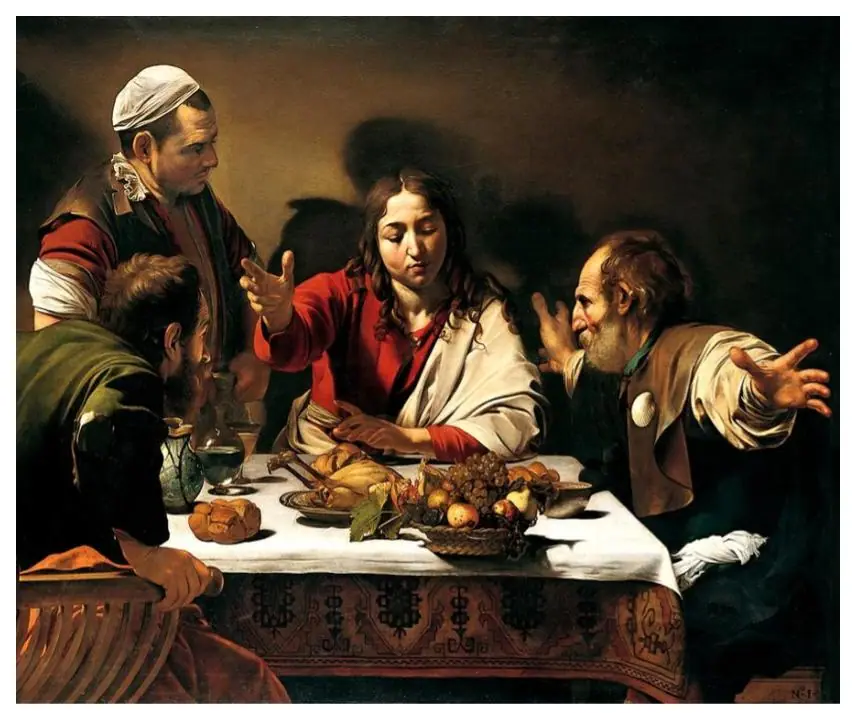

Caravaggio lit his paintings with a single, concentrated light source surrounded by deep shadow, a technique called chiaroscuro that he pushed so far historians gave his version a stronger name: tenebrism. He painted as if a shutter had just been thrown open in a dark room. More than four hundred years later, artists still study his canvases to learn what light can do.
His full name was Michelangelo Merisi da Caravaggio (1571 to 1610), and the name we know him by belonged to the small Lombard town his family came from. He worked fast, lived recklessly, and died at 38. In a career of barely two decades he changed the course of Western painting, and he did it with light.
What was Caravaggio’s lighting technique?
Caravaggio’s lighting technique was extreme chiaroscuro: one strong, directional light source set against large fields of near black. The Italian word joins chiaro (light) and scuro (dark), and it names the use of strong value contrast to model form. Plenty of painters used chiaroscuro before him. Caravaggio turned the contrast up so high that art historians reach for a separate term, tenebrism, rooted in the Latin word for darkness, to describe what he was doing.
In his paintings the light usually enters from high on one side, sharp and theatrical, like a spotlight in a cellar. You almost never see the source itself. It simply arrives, picks out exactly what he wants you to see (a face, a gesture, a hand reaching across the table) and lets everything else fall away. The darkness does half the work, because the light only reads as blinding when the darks around it stay deep and connected.
Look at Supper at Emmaus. The risen Christ blesses the meal while one disciple grips the arms of his chair and the other flings his arms wide. The light lands on faces, on the white tablecloth, on the food, and almost nothing else. Cover the lit shapes with your hand and the painting nearly disappears. That is value doing the storytelling, and value is one of the seven elements of art that Caravaggio mastered more completely than anyone before him.
Light says the most when you let some darkness remain.
Why did Caravaggio’s light shock the people who first saw it?
Because his first audience lived in a world without electricity, and they met his paintings in dim churches lit by candles and small windows. We see his work today under gallery lights and on bright screens, and that makes it easy to forget how it was first experienced. For viewers in 1600, the light inside the canvas would have practically leapt out of the gloom. It was a light in the darkness in the most literal sense.
It helps to remember what paintings were for in that world. Most people could not read, so they relied on artists to teach the stories and lessons of their faith through pictures. A painting was the sermon you could see. The Calling of Saint Matthew still hangs in the Roman church it was painted for, San Luigi dei Francesi, where a shaft of painted light crosses a dark room toward Matthew. Visitors today drop a coin into a box to switch on a lamp and watch the scene emerge from the shadows, which is about as close as we can get to seeing his work the way his contemporaries did.
The timing mattered too. Much of Caravaggio’s work was commissioned by the Church during the era of restoration that followed the Renaissance, when religious art was meant to feel direct, human, and emotionally immediate. Light breaking into darkness was the perfect visual language for spiritual restoration, and Caravaggio spoke it more fluently than anyone alive.
What did Caravaggio change about light and value in painting?
He made light the main event instead of a supporting tool. Up through the High Renaissance, painters gave most of their attention to drawing, balanced composition, and impressive feats of linear perspective. Value and light mattered, but they rarely carried the emotional weight of the picture. The Baroque period changed that, and Caravaggio stood at the front of the change. In his work, light is the drama, the meaning, and the message all at once.
He changed who got painted as well. His saints have dirty feet and weathered faces because he worked from ordinary people he found around him, and that directness scandalized some patrons as much as it thrilled others. His insistence on painting people as they actually appear places him in a long line that runs forward to the Realist movement two centuries later. Painters across Europe imitated his lighting so widely that they earned their own label, the Caravaggisti, and you can trace his influence through many of the most famous historical oil paintings of the century that followed.
How did simple composition make Caravaggio’s paintings so dramatic?
He stripped his scenes down to a few figures and let the darkness do the rest. The High Renaissance and the Mannerist era that followed filled canvases with crowds, angels, architecture, clouds, and elaborate perspective. By comparison, a Caravaggio looks almost bare: a handful of people, a table, a shaft of light. That bareness must have felt startling, even refreshing, when his paintings were first unveiled.
The simplicity is exactly where the power comes from. With nothing extra competing for attention, every gesture grows louder and every face carries more feeling. The large quiet darks give the viewer’s eye somewhere to rest, and rest for the eye becomes rest for the soul. It is a lesson worth borrowing for your own work: a painting with one clear statement and room to breathe will almost always beat a painting that tries to say everything at once.
Was Caravaggio’s life as dark as his shadows?
Yes. His police record was nearly as dramatic as his canvases. He was arrested repeatedly for brawling, spent time in jail, and in 1606 he killed a man in Rome and fled the city. He passed his final four years on the run through Naples, Malta, and Sicily, painting all the way, and died in 1610 at 38.
What makes this more than gossip is that he put his own failings into the work. He painted his own face into his pictures more than once, and rarely flatteringly: in David with the Head of Goliath, the severed head is widely understood to be a self-portrait. Yet in The Taking of Christ, the figure at the edge of the scene holding up a lantern is generally identified as Caravaggio too. The man who painted himself as the defeated giant also painted himself as the one carrying the light. Whether his life ever found the restoration his paintings preached, no one can say. The paintings keep preaching it anyway.
How can you paint with Caravaggio’s light?
Start with one light source and protect it. Almost everything that reads as Caravaggio in a painting comes from the discipline of a single source and a connected mass of shadow. Here is a simple way to practice it:
- Set the stage. Light a simple subject with one strong lamp placed high and to one side, and turn off every other light in the room.
- Squint and group. Squint at your subject until details vanish and you see only two or three big value shapes.
- Connect your darks. Let the shadow areas merge into one large, quiet shape instead of scattering dark patches around the canvas.
- Spend your light carefully. Save the brightest value and the sharpest edges for the focal point alone.
- Resist filling the dark. Leave the shadows simple so the eye has a place to rest.
If you want to study the master directly, nothing beats standing in front of the real canvases, and several museums that hold his work offer virtual museum tours you can take from your studio. You will find more painters and movements worth learning from in our art history and famous paintings hub.
Caravaggio worked in a world lit by fire and daylight, and he understood something brighter centuries keep forgetting: light says the most when you let some darkness remain. Set up one lamp tonight, put a brush in your hand, and find out what his light can teach yours. If you would like company and feedback while you practice, the 2-Week Challenge is a warm place to start.
Frequently asked questions
What is the difference between chiaroscuro and tenebrism?
Chiaroscuro is the use of strong light and dark contrast to model form, and many painters use it gently. Tenebrism pushes that contrast to an extreme, with large fields of near black and a single theatrical light. Caravaggio is the painter most closely associated with tenebrism.
Why is he called Caravaggio?
His real name was Michelangelo Merisi. Caravaggio is the small Lombard town his family came from, and like many Italian artists of his era, he became known by the name of his hometown.
Did Caravaggio really kill a man?
Yes. After years of brawls and arrests, he killed a man in Rome in 1606 and fled the city. He spent his final four years on the run through Naples, Malta, and Sicily, painting the whole way, and died in 1610 at age 38.
What to practice this week
- Set up a simple still life, light it with one strong lamp placed high and to one side, turn off every other light, and paint only what that single source reveals.
- Make a small grayscale study of Supper at Emmaus, squinting to map where the light lands and where detail dissolves into shadow.
- Take a recent painting of yours and find every spot that competes with the focal point, then plan one change that gives the eye a place to rest.
Supplies used

About the author
More from Elli