The Benefits of Drawing and Doodling: 5 Facts Backed by Research
Drawing is not just for artists. Here is what scientists, educators, and psychologists have learned about what a few minutes of doodling does for your brain.

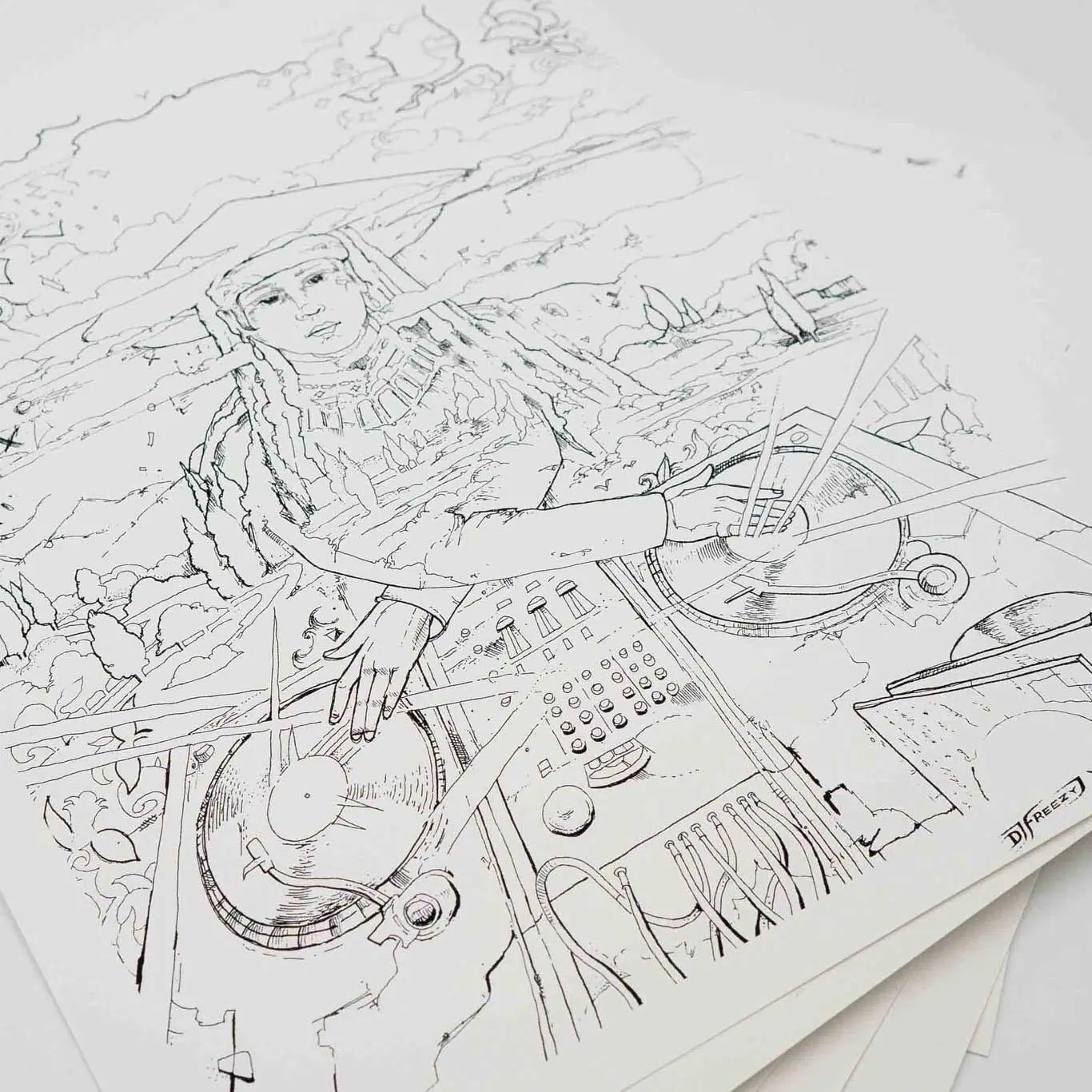
Drawing and doodling are good for you in ways that have almost nothing to do with making art. Over the last decade, people from education, psychology, medicine, and business have pointed to the same conclusion: a few minutes of putting pencil to paper sharpens your mind, steadies your mood, and feeds your creativity. The benefits are real, they are measurable, and they are available to anyone who can hold a pencil, no talent required.
The strange part is that most of us already knew this. As kids we drew constantly, filling pages with superheroes and monsters and maps of imaginary worlds. Somewhere along the way we decided we were too grown up for it. The research below is really just permission to start again. Here are five benefits of drawing and doodling, and how to build the habit in minutes a day.
Does doodling actually improve focus and memory?
Yes, and that is the fact that surprises people most. Doodling looks like the opposite of paying attention, yet research suggests people who doodle while doing something else, like sitting in a lecture or talking on the phone, often concentrate better than people who do not. According to coverage of doodling research on Psych Central, it is far from an absent-minded pursuit.
One reason is memory. Studies suggest that doodlers can retain noticeably more of what they hear than people who only take notes or sit still. Part of the explanation is in how many learning channels a simple doodle switches on. In the language of applied cognitive psychology, drawing activates your visual, auditory, and movement-based ways of processing all at once. More channels working together means more connections in the brain and more of the information actually sticking.
That is why a small doodle in the margin can do more than tidy notes ever could. The marks give your mind something to hold onto, so your attention stops drifting and your recall climbs. It is no wonder Sunni Brown, author of The Doodle Revolution, spends her career convincing skeptical adults to pick the pencil back up.
Why do humans draw in the first place?
We draw because the urge to make marks is older than the written word, and possibly older than spoken language as we know it. The history of drawing is, in a real sense, the history of human communication. According to reporting in National Geographic, some of the oldest known abstract engravings, found in Blombos Cave in South Africa, may be external representations of internal thought, an early attempt to get an idea out of the head and into the world.
Long before people could explain themselves in sentences, they drew. The marks left on rocks and cave walls were a symbolic system, a way of saying this happened or this matters without a single word. Many researchers believe this mark-making fed directly into higher levels of human thinking.
You are wired for this. When you doodle a quick cartoon to explain an idea, or sketch a shape to capture a feeling you cannot name, you are using one of the oldest tools your species owns. Drawing gives you a visual language, and that language reaches places words cannot. If you want to feel how naturally it comes back, try drawing a simple self-portrait, where the goal is not a likeness but the act of looking closely.
Can a doodle really lead to a career?
It can, and there is a well-documented example. Comic-book artist Nicola Scott spent years absent-mindedly drawing Wonder Woman’s face on scraps of paper while she was on the phone. In an interview with W Magazine, she described the moment the doodle changed her direction. She stopped asking herself what she could do with drawing and started asking what she wanted to draw. The answer was already in her hands, repeated on every notepad in the house.
Scott went on to a successful career illustrating graphic novels, and she moved across the world to chase it. The doodle did not hand her the career. Grit, practice, and a willingness to take the risk did that. But the doodle is what showed her where to point all of it.
The lesson here is not that scribbling will make you famous. It is that the things you draw when nobody is watching are quiet evidence of what you actually love. Pay attention to what your pencil keeps returning to. It is often telling you something your busy mind has talked itself out of hearing.
Is drawing a form of meditation?
In practice, yes. To draw or doodle is to change your brain state, and it can happen fast. Coverage in Vox and other outlets points to something researchers have measured directly: drawing and other art-making activities can lower cortisol, the body’s main stress hormone. The rhythm and repetition of laying down marks seem to do the calming work, the same way slow breathing or a long walk does.
This is not wishful thinking. The effect is steady enough that creative activities are used to support people through serious stress, including patients facing illness. You do not have to be making anything good. You just have to make marks, let your shoulders drop, and let the repetition settle your nervous system.
So when your mind is racing and a blank afternoon feels impossible, a few minutes with a pencil is one of the most reliable resets available. It costs nothing, it travels everywhere, and it leaves you calmer than it found you. If the blank page itself is what freezes you, you are not alone, and there is a way through it in our Creative Block and Identity collection.
How does a daily doodle spark creativity?
A daily doodle keeps your creative bank account full, so you never sit down to a blank page with empty hands. Every quick sketch, every loose study, every margin drawing is a deposit. Months later you draw on those deposits when you start a painting, write a story, or build a larger piece. A sketchbook full of small drawings is a reservoir of ideas waiting to be spent.
Julia Cameron, author of The Artist’s Way, gives one of the most useful prompts for keeping that account topped up. She calls them artist dates: small solo outings whose only job is to refill your imagination. She leaves the activity open, but drawing is one of the best ways to do it. Here is a simple way to build the habit:
- Choose a place with life in it, like a coffee shop, a park bench, or a public fountain.
- Set a small goal, such as filling one page or capturing three things you see.
- Draw fast and loose. You are recording movement and impressions, not finishing a masterpiece.
- Do it again tomorrow. Consistency matters far more than quality at this stage.
This loose, rapid approach has a long pedigree. Stan Lee and John Buscema taught a version of it in How to Draw Comics the Marvel Way, where a figure begins as a rough stick figure and gets scribbled into fullness. Urban sketchers use the same method to catch a stranger in a cafe or the motion of an animal at the zoo before the moment passes. It trains your eye and your hand together, and it guarantees your imagination never runs dry.
Start your doodle habit this week
You do not need talent, a studio, or an hour you do not have. You need a small sketchbook, a pencil, and a couple of minutes a day. The benefits described here, sharper focus, stronger memory, a calmer mind, a fuller imagination, all come from the simple act of making marks, again and again, with no pressure to make them good.
If your daily doodles start to pull you toward something bigger, follow that pull. You might explore what to do when a piece stops working in our guide to starting over on a painting, study how the masters drew through virtual museum tours, or begin shaping your sketches into a body of work as you create your art portfolio. For now, though, the only assignment is the smallest one. Pick up a pencil, fill one page, and let your hand remember what it always knew how to do.
Frequently asked questions
Why is drawing good for you?
Drawing engages your visual, auditory, and movement-based ways of learning at the same time, which helps you hold attention and remember more. It also calms the nervous system. Studies of art-making show it can lower cortisol, the body's main stress hormone, so a short drawing session can leave you steadier than you started.
Why do we doodle?
Doodling is a natural way the mind stays engaged and processes information while you listen or think. Far from being absent-minded, research suggests people who doodle during a task often concentrate better and recall more than people who only sit and listen, because the small repetitive marks keep the brain anchored to the moment.
Does doodling improve your drawing skills?
Yes. A daily doodle is low-pressure practice, and practice is what builds drawing skill. Quick loose marks train your eye to observe, your hand to respond, and your mind to make decisions fast. Over time those small reps add up to better control, sharper observation, and more confident lines.
How long does a doodle need to be to help?
A useful doodle takes only a couple of minutes. The benefits to focus and mood come from the act of making marks, not from finishing a polished picture. A few small drawings a day, done consistently, do more for your brain and your skill than one long session every few weeks.
What to practice this week
- Keep a small sketchbook within reach and fill one page a day with loose marks, no erasing and no judging, for one week straight.
- Doodle through your next phone call or video meeting and notice afterward how much of the conversation you actually remember.
- Take one short artist date this week: sit at a cafe or a park and quickly sketch three things you see, aiming for speed and observation rather than a finished drawing.
Supplies used
About the author
More from ElliKeep learning