Artist Imposter Syndrome: Why You Feel Like a Fake (and Why You Are Not)
Feeling like a fraud is one of the most common experiences artists share, and it usually grows with ambition, not with lack of skill. Here is why it happens and how to keep painting anyway.
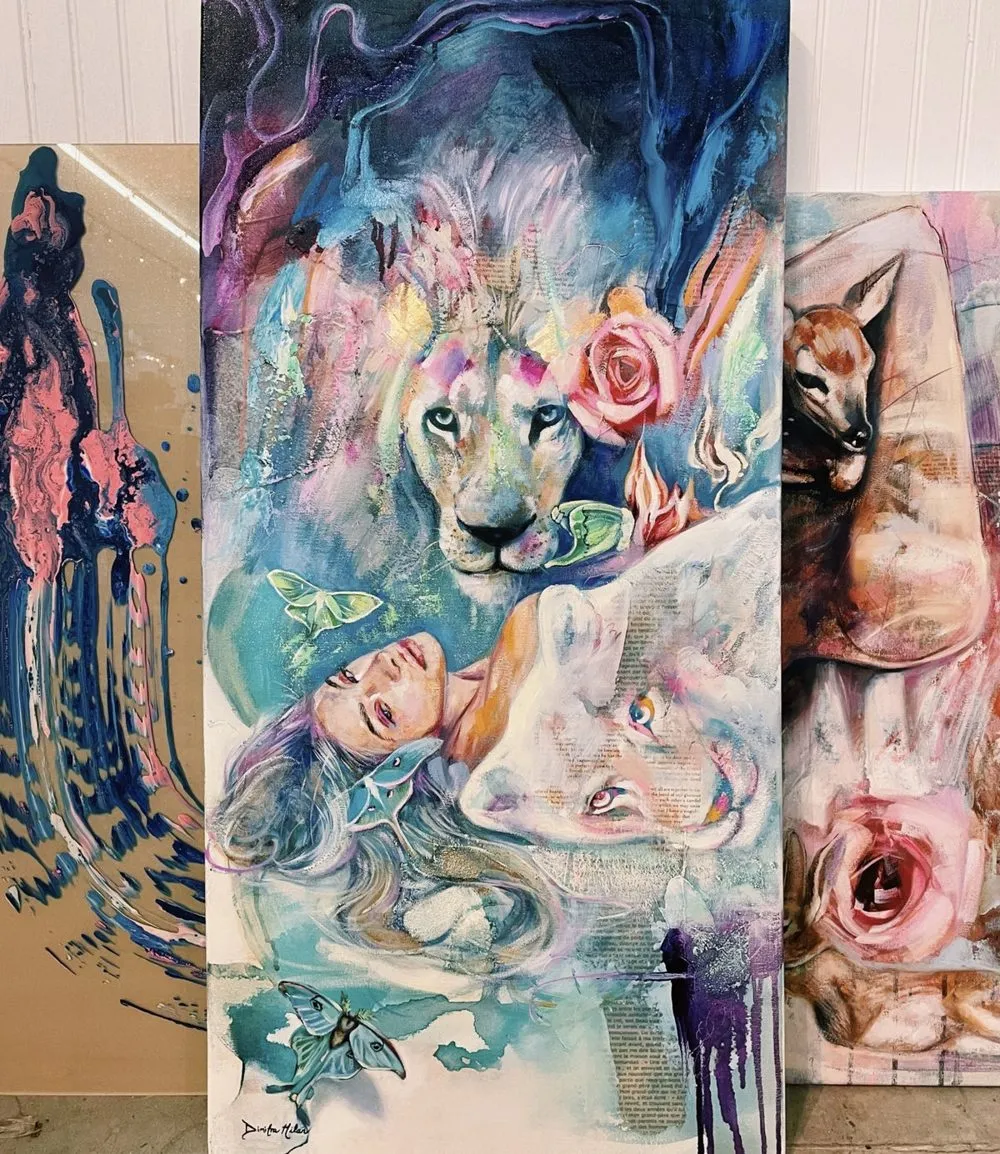
Feeling like a fraud is one of the most common experiences artists share, and it is not evidence that you are one. Almost every serious artist, including ones whose work you admire, has at some point been sure they were a fake about to be found out. Here is the part that matters: that feeling tends to grow with your ambition and your rising taste, not with any real lack of skill. So if the doubt has gotten louder lately, it may actually be a sign you are reaching higher, not a sign you do not belong.
This is an identity question more than a skill question, which is why no amount of getting better quietly fixes it. You can improve for years and still hear the voice that says you are not a real artist. That voice is lying, and below is why it shows up, what actually makes the identity true, and how to keep working while it talks.
What is artist imposter syndrome?
Artist imposter syndrome is the persistent feeling that you are a fake who will eventually be exposed, regardless of what you actually make. It is your mind reading two ordinary facts as proof of fraud: the gap between your taste and your current skill, and the constant comparison between your work and everyone else’s.
Those two things are normal parts of being an artist. The trouble starts when you interpret them as a verdict. A beginner sees the distance between their painting and the image in their head and concludes they have no talent. A working artist sees a peer’s stunning piece online and concludes they are behind, or pretending. In both cases the feeling is real, but the conclusion is false. The gap and the comparison are conditions every artist lives inside, not signs that you specifically are a fraud.
It helps to notice that imposter syndrome is loudest exactly when you care most. People do not feel like frauds about things they are indifferent to. The fact that it stings is a clue that this matters to you, which is the opposite of evidence that you should quit.
Why do even skilled artists feel like frauds?
Because the feeling is not actually about skill, so getting more skilled does not switch it off. Three forces keep it alive no matter how good you get.
- The taste-skill gap never fully closes. Your taste, your ability to see what is good, almost always runs ahead of your hands. As your skill rises, your taste rises right alongside it, so the distance between what you can see and what you can make stays open. That permanent gap feels like inadequacy, when it is really just proof your eye is developing. Ironically, the better your taste gets, the more like a fraud you can feel, because you can see your own flaws more clearly than ever.
- You compare your inside to other people’s outside. You know every doubt, every scraped-off layer, every painting you abandoned. You see none of that in another artist. You see only their finished, chosen, best work. Measuring your full messy process against their edited highlight reel is not a fair comparison, and it will always make you feel like the only one struggling. You are not. They just are not showing you the struggle.
- Art has no objective finish line. There is no exam you pass, no certificate that arrives in the mail declaring you a real artist at last. Without an external line that says “you made it,” the mind keeps moving the goalpost. You hit the thing you wanted, and the feeling of being a fraud simply attaches to the next thing. No achievement ever permanently silences it, because there is no official moment when you are allowed to feel done.
Put those together and you get a feeling that scales with ambition. The more you grow, the higher your taste climbs, the more skilled the artists you start comparing yourself to, and the bigger the goals whose finish line keeps receding. That is why skilled artists feel it too. It was never a skill problem.
What actually makes someone “a real artist”?
You are a real artist because you make art. That is the whole bar. Not sales, not a degree, not gallery representation, not anyone’s permission. If you make art, the identity already belongs to you.
This matters because imposter syndrome quietly attaches your worth to credentials you have not earned yet, and then uses their absence as proof you are a fake. So name the things that are genuinely not the bar.
- Sales are not the bar. Selling work means you found a buyer, which depends on marketing, timing, luck, and audience as much as art. Plenty of real artists sell little or nothing, and plenty of forgettable work sells well. Money is an outcome, not a credential of realness.
- A degree is not the bar. Many of the artists you admire never went to art school, and an art degree has never been what makes someone an artist. Formal training can help you grow faster, but its absence does not disqualify you, and its presence does not certify you.
- Permission is not the bar. There is no gatekeeper whose approval flips you from fake to real. You are waiting for a permission slip that does not exist and was never going to come. The only thing that grants the identity is the act of making the work, which you can do today.
So the test is simple. Did you make something, or are you making something? Then the word artist is accurate, right now, before any of the outcomes show up. The outcomes are nice. They are not the source.
How do you work through it?
You do not wait for the feeling to leave before you act. You act while it is still there, and you stop giving it the authority to decide who you are. Here is how to take its power down.
- Separate your self-worth from the piece. A weak painting is information about that painting, not a verdict on you. When something turns out badly, the honest read is “this one did not work and here is what I learned,” not “I am a fraud.” Keeping that line clear is the single most freeing habit, because it lets you make bad work without it meaning anything about your worth, which is the only way you ever make good work.
- Narrow the comparison. Stop measuring yourself against strangers online and start measuring against your own past work. That is the only comparison that is fair and the only one that tells you the truth. Pull up something you made a year or two ago, and the progress you cannot feel day to day becomes visible. Your past self is the right opponent.
- Keep evidence of your progress. Imposter syndrome has a terrible memory, so build a record it cannot argue with. Keep your old pieces, photos, and studies where you can see them. When the voice insists you are not improving and never will, concrete evidence of how far you have come is the most direct rebuttal you have.
- Act before you feel ready. Confidence does not arrive first and then produce the work. It is the other way around: you do the work, and confidence trickles in afterward. If you wait to feel like a real artist before you make real art, you will wait forever. Start the piece while you still feel unqualified, because that is how everyone who looks qualified actually began. If the fear has hardened into not painting at all, how to get out of an art block walks through restarting when you are stuck.
- Find honest critique and community. Imposter syndrome thrives in isolation, where your inner voice gets to narrate unchallenged. Honest feedback from people who make art replaces that imagined verdict with a real one, which is almost always kinder and more useful than the story in your head. A community also shows you, plainly, that the artists you admire wrestle with the exact same doubt. You stop feeling uniquely fraudulent the moment you hear someone you respect say it too.
One more thing worth understanding: imposter syndrome and creative block often feed each other, because the fear of being exposed makes starting feel dangerous, and not starting then becomes more evidence for the fear. If that loop sounds familiar, the how to overcome creative block pillar covers how to break it. And since so much of this doubt is really uncertainty about whether your work is “yours” yet, learning how to find your art style can quiet a surprising amount of it.
The goal is not to make the feeling vanish, because for most artists it never fully does. The goal is to take away its vote. You can feel like a fraud and pick up the brush anyway, and every time you do, the feeling loses a little of its authority. Make the next piece while the doubt is still talking. The best next step is to put structure and feedback around your practice instead of facing the doubt alone, and our free Two Week Challenge is a guided way to do exactly that. When you want to keep going, the rest of the creative block and identity collection is here.
Frequently asked questions
What is artist imposter syndrome?
Artist imposter syndrome is the persistent feeling that you are a fake artist who will eventually be exposed, no matter what you actually make. It usually comes from the gap between your taste and your current skill, sharpened by comparing your work to other artists. That feeling is common and is not proof that you lack talent or that you do not belong.
Why do even skilled artists feel like frauds?
Because the feeling is not driven by skill. Your taste tends to grow faster than your hands, so the gap between what you can see and what you can make never fully closes, which feels like inadequacy. Artists also compare their messy inside to other people's polished outside, and art has no objective finish line that ever declares you 'real.'
Am I a real artist if I have not sold anything or gone to art school?
Yes. You are a real artist because you make art. That is the whole bar. Sales, a degree, gallery shows, and praise are outcomes and credentials, not the thing that makes the identity true. None of them is required, and waiting for one of them to grant you permission only keeps you stuck.
How do I get over feeling like a fake artist?
Separate your self-worth from any single piece, since one weak painting is data, not a verdict on you. Narrow your comparisons to your own past work, keep visible evidence of your progress, and act before you feel ready rather than waiting for confidence. Honest critique and a real community shrink the feeling faster than working alone.
Does artist imposter syndrome ever go away?
For most artists it never fully disappears, but it stops running the show. As you keep making work and gather evidence of your own growth, the feeling loses its authority even when it still shows up. You learn to treat it as background noise that rises with ambition, not as a true signal about your worth or ability.
What to practice this week
- Open a folder of your own work from a year or two ago and set it beside what you make today, so your comparison is your past self, not a stranger online.
- Pick one small piece and start it before you feel ready, telling yourself it is a study, not a verdict on whether you are a real artist.
Supplies used
About the author
More from Elli