Can You Gesso Over Oil Paint? No. Here's What Works Instead
That painting glaring at you from the corner of the studio is one coat of oil paint away from a fresh start.

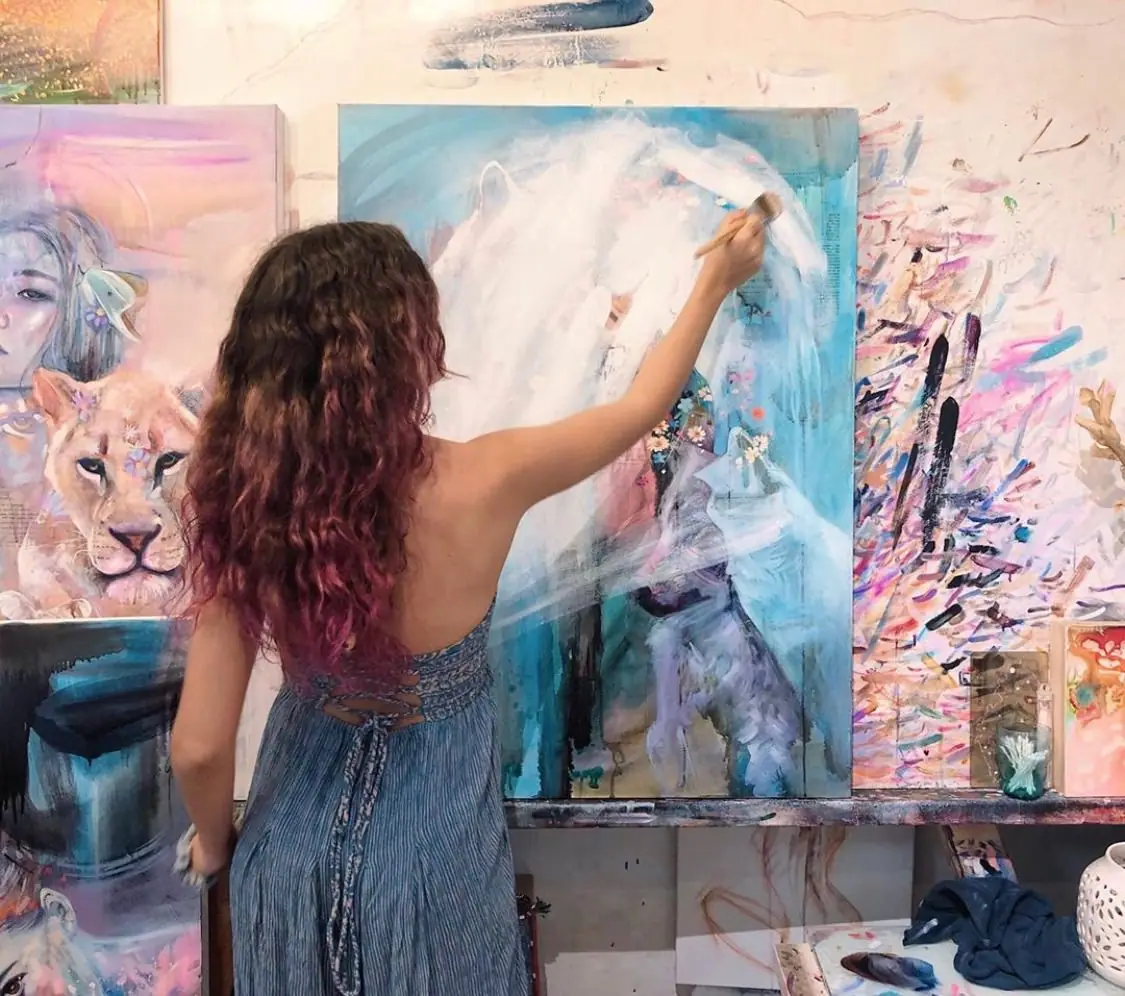
No, you cannot gesso over oil paint. Gesso is an acrylic product, and acrylic will not form a lasting bond with cured oil paint. It may look fine at first, then it peels away and takes whatever you painted on top of it along for the ride. The only material that reliably goes over oil paint is more oil paint, and the fix is simpler than you might expect: a half and half mixture of oil paint and a fast drying medium, brushed right over the painting you want gone.
Every artist has at least one painting they cannot stand. Some of us have stacks of them leaning against the studio wall with their faces turned away. The canvas underneath is still perfectly good, and you do not have to throw it out or keep living with the painting either. You just have to start over the right way.
A failed painting is not a verdict. It is a surface.
Why won’t gesso or acrylic stick to oil paint?
Gesso, acrylic paint, and modeling paste will not stick to oil paint because cured oil forms a tough, nonporous film with nothing for them to grip. Acrylic products need an absorbent surface to bond with, and a dried oil painting gives them the opposite: a closed, resilient skin that refuses to let a water based layer take hold. The new coat sits on top like a sticker, and over months or years it lifts, cracks, and peels off in flakes.
This is not a gamble worth taking. You could spend twenty hours on a beautiful new painting and watch it fail because the layer underneath let go. Oil paint is one of the most durable materials in art, which is wonderful when it carries your best work and stubborn when it carries your worst. Adhesion is also one of the most practical of the 5 key differences between acrylics and oil paint: acrylic accepts almost anything on top of it, while oil only accepts its own kind.
So put the gesso back on the shelf. There is a better way, and it is probably already in your paint box.
Can you reuse a canvas that has oil paint on it?
Yes, as long as you cover the old painting with oil paint rather than anything acrylic. A canvas with a failed oil painting on it is not trash. It is a prepared surface waiting for a second chance, and painters have been recycling canvases this way for centuries.
The classic mixture is half white oil paint and half a fast drying medium such as Galkyd, Liquin, Liquin gel, or cold wax. The medium thins the paint so it spreads easily, and it cuts the drying time from weeks down to days. Fresh oil bonds to cured oil the way no water based product ever will, which is why this is the one route that lasts. If you would rather work on a dark ground, swap the white for black oil paint. Either choice gives you a unified, toned surface instead of the painting that has been staring at you from across the room.
How do you paint over an oil painting, step by step?
Let the old painting dry completely, coat it with a mixture of oil paint and fast drying medium, and decide how much of the old work stays visible. Here is the full process:
- Wait until the painting is completely dry. Every part of the surface should be dry to the touch with no tacky spots. Thin passages can be ready in days, while thick impasto takes much longer. Covering wet paint invites cracking and adhesion problems later, so be patient here.
- Mix your covering layer. Combine roughly half white oil paint and half fast drying medium. Galkyd and Liquin both work well, and cold wax does too. For a dark start, use black oil paint instead of white.
- Coat the whole surface. Use a big bristle brush or a catalyst tool, which is a rubber spreading tool, and pull the mixture across the entire painting in an even layer.
- Decide what survives. You do not have to erase everything. You can leave the outer edges of the old painting showing, or protect a passage you genuinely love and build the new painting around it.
- Let it dry, then begin again. Once the new layer is dry to the touch, treat the canvas like any toned ground and start your next painting on it.
Any texture left from the old painting will stay under the new layer, and that is not a flaw. A little history beneath the surface can give the next painting a kind of depth that a brand new canvas never has.
What should you do before covering up a painting?
Study the painting until you can name exactly what makes it fail. Covering a canvas takes minutes, but the lesson inside a failed painting can serve you for years, so do not skip this step. Ask friends and family why they do not like the piece, and do not be offended when they answer honestly. Candid feedback will teach you far more than polite praise.
Then run a quick thought experiment. Imagine the painting without the thing that bothers everyone. Does it work now? Is there anything in it you love? Not every painting you hate is a lost cause. Many times the braver move is to push through the resistance and finish it anyway, because every painting you complete teaches you a tremendous amount, and some of them turn out far better than they looked halfway through. Learning to diagnose a painting before abandoning it is the same skill that will help you stop ruining your paintings in the first place.
If your honest diagnosis says the painting cannot be saved, cover it with a clear conscience. Starting over is not quitting. It is choosing to spend your hours on a painting that deserves them.
Can you remove oil paint from the canvas instead?
Only while the paint is still wet. If you catch a failed painting within hours, you can scrape away the worst of it with a palette knife, wipe the surface back with a rag, and land surprisingly close to a blank canvas. Once the paint has dried, removal stops being practical. Stripping cured oil from a canvas takes harsh solvents or aggressive sanding, both of which can damage the fabric, and neither of which is kind to your lungs. Covering the old painting with an oil ground is faster, safer, and leaves you a better surface to paint on.
Do not let starting over on an oil painting scare you again. You have what it takes to make something beautiful, and every reclaimed canvas is quiet proof that no single painting gets the final word. When your new ground is dry, explore a few painting techniques you have never tried, or wander through the rest of our oil painting techniques guides to plan the next piece. And if you want structure and real feedback while you rebuild, the 2-Week Challenge is a warm place to begin.
Frequently asked questions
Can you paint over oil paint with acrylic?
No. Acrylic will not bond to cured oil paint, so any acrylic layer eventually peels or flakes away and takes your new work with it. Always cover oil paint with more oil paint.
How long should an oil painting dry before you paint over it?
Wait until the entire surface is dry to the touch with no tacky spots. Thin layers can be ready in days, while thick impasto passages can take much longer. If any area still feels soft or sticky, give it more time.
Do you have to use white oil paint to cover an old painting?
No. White mixed with a fast drying medium gives you a light ground, but black works just as well if you prefer starting on a dark surface. Choose whichever suits the painting you plan to make next.
Will the old painting show through the new layer?
Raised texture from the old painting will stay visible under the new ground, and strong darks may need a second coat once the first is dry. Many artists treat that leftover texture as a gift because it gives the next painting a surface with history.
What to practice this week
- Pull out one painting you dislike and spend ten minutes naming exactly what fails: the drawing, the values, the color, or the composition. Write it down before you cover anything.
- Mix a small batch of half titanium white and half Galkyd or Liquin, then coat one dry failed painting edge to edge with a big bristle brush.
- On your next cover up, leave one passage you love untouched and build the new painting around it.
Supplies used
About the author
More from Elli