The Art of Watercolor: Tools to Support Your Creative Flow
Watercolor rewards spontaneity, but only when your tools stop fighting you. Here is what actually matters: pigment quality, the right brush, and a palette setup that keeps you in flow.

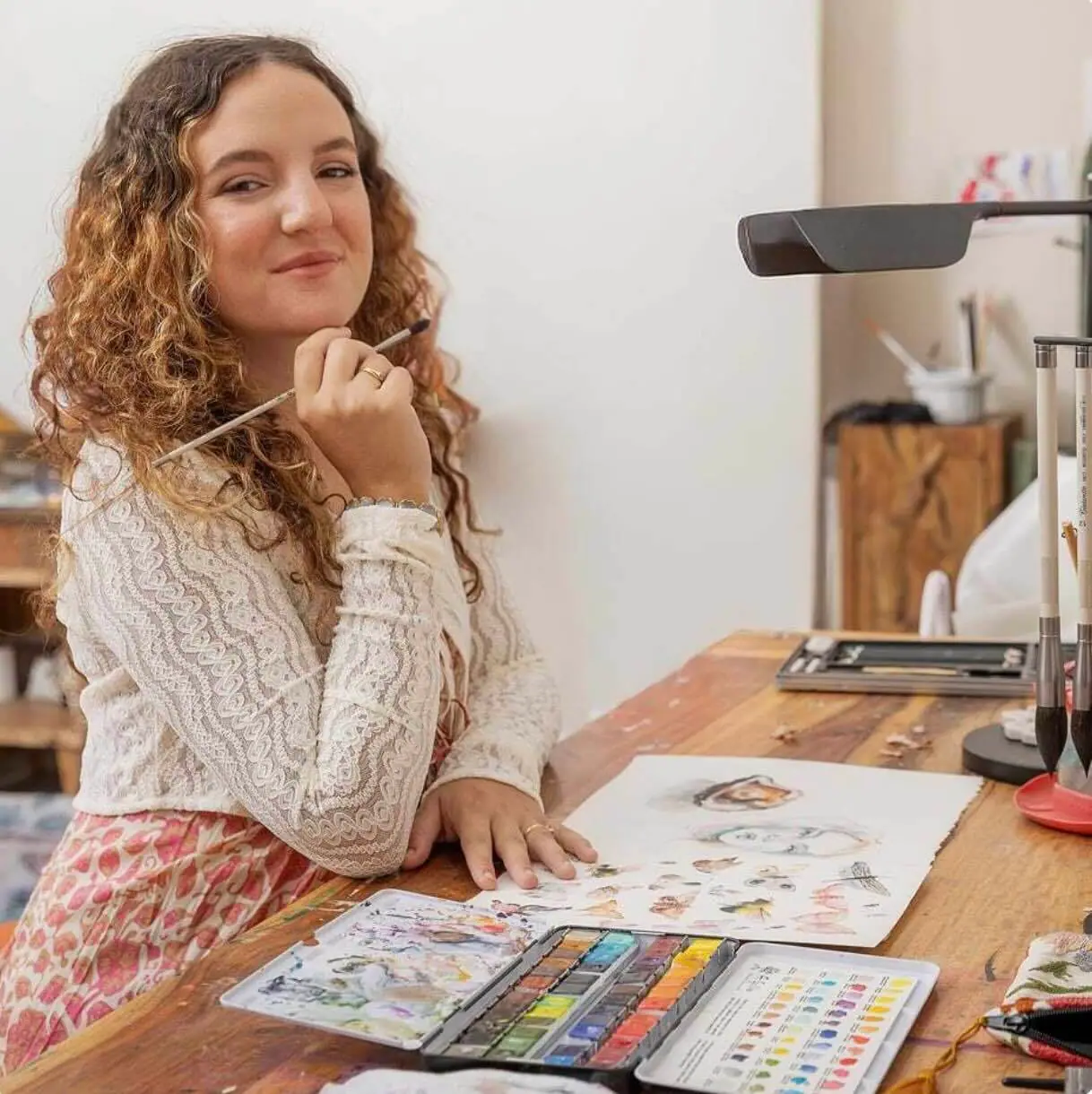
The tools that support your watercolor flow are the ones that stop getting in your way. That means paint with enough pigment to stay vibrant as you layer, a brush that holds plenty of water but still keeps a fine point, and a palette that lets you see your colors at a glance. With those three working for you, the medium stops feeling like a fight and starts feeling like a partner. The rest of this guide explains why each one matters and how to use it.
There is a reason so many artists fall in love with watercolor. It captures spontaneity in a way no other medium can. Each brushstroke feels alive as pigment meets water and paper, creating soft blends, luminous layers, and those magical, unexpected moments. The translucent quality lets light shine through every layer, giving the work a glowing, ethereal feel. And while it can feel unpredictable at first, that is exactly where the magic lives. You begin to sense the rhythm: when to let the water move, and when to gently guide it.
What watercolor paints support better flow?
Paints with a high concentration of finely milled pigment support better flow, because they stay vibrant and clean instead of turning muddy as you build up layers. In watercolor, pigment quality does more work than in almost any other medium. The paint is transparent by nature, so every bit of light passes through the layers and bounces back. Weak, chalky pigment kills that glow. Rich, well-ground pigment keeps it alive.
Here is what to look for in a set that performs rather than fights you.
- High pigment load. The more concentrated the pigment, the more color you get from a single touch of the brush, and the more transparent your washes stay. This is the single biggest difference between paint that sings and paint that sits flat.
- Smooth, finely milled texture. Finely milled pigment disperses evenly in water, which is what lets you blend softly and glaze cleanly. Coarse paint streaks and granulates in ways you did not choose.
- Good rewetting. Quality watercolor rehydrates beautifully from dried pans, so you can work straight from the tube or lift color from a dried palette and get the same brilliance. That rewetting property is what makes a single set last for years.
If you are still deciding whether watercolor is even your medium, it helps to compare the big three side by side. Our guide on acrylic vs watercolor vs oil lays out the honest trade-offs so you can choose with your eyes open.
What brush actually helps you in watercolor?
The brush that helps you most is a soft, responsive one that holds a generous load of water while still snapping back to a precise tip. Your brush is your connection to the paper, and in watercolor it has to do two opposite jobs at once. It needs to carry enough water for a loose, flowing wash, and it needs to come to a fine point for a delicate, controlled mark. A brush that does both gives you control and freedom in the same stroke.
That range is what lets you move from an expressive, water-heavy wash to a crisp detail without switching tools every few minutes. For a beginner, a brush like this teaches water control faster, because the brush behaves predictably instead of dumping or starving the paper. For an experienced artist, it rewards intuitive, fluid mark making. If you want to understand brush shapes, sizes, and bristle types more deeply before you buy, our guide on how to choose a paintbrush walks through the choices.
How should you set up your palette to stay in flow?
Set up your palette so your colors stay in your line of sight and you never have to break focus to find them. Flow breaks the moment you have to hunt for a color or reach across your work to mix. A thoughtful palette keeps your mixing space and your color wells organized and visible, so your eye stays on the painting and your hand keeps moving.
An easel-style palette helps even more, because it brings your colors closer to your line of sight rather than flat on a table below you. Small as it sounds, that one change keeps you immersed in the painting instead of constantly looking down and back up. The less your attention has to leave the paper, the longer you stay in that absorbed, flowing state where your best work tends to happen.
A clear palette setup also helps you keep your washes clean. When your colors are organized and your mixing area is open, you mix with intention instead of muddying one puddle into the next. Clean color is half of what gives watercolor its luminosity.
What are the core watercolor techniques to practice?
The two core techniques to practice are wet on wet and glazing, and most finished paintings use both. They sit at opposite ends of the control spectrum, and learning to move between them is most of what watercolor mastery is.
- Wet on wet. Wet your paper or a wash first, then drop color into the damp surface and let it bleed. This is where you get soft, dreamy transitions, atmospheric skies, and those happy, unplanned blooms. You guide the water more than you guide the pigment.
- Glazing. Let a layer dry completely, then lay a thin, transparent wash over it. Each glaze deepens the color and builds luminous depth without the layers below getting muddy. This is the controlled, patient side of watercolor.
- Water control as the foundation. Underneath both techniques sits the real skill: knowing how much water is on your brush and on your paper at any moment. Too much water floods and lifts. Too little drags and streaks. Learning to feel that balance is the practice that makes everything else work.
If you love working from observation, watercolor pairs naturally with painting outdoors. Its light, portable kit makes it ideal for capturing a scene on location, which is the whole appeal of plein air painting. A compact palette and a small water supply travel anywhere, so you can paint while the light, and your impression of it, is still fresh.
How do you build confidence with watercolor?
You build confidence by repeating small, low-pressure studies until water control stops feeling like a gamble. Watercolor is not about controlling every outcome. It is about learning to trust the process, to experiment, and to find beauty in the unexpected. Confidence comes from reps, not from a single ambitious painting you are afraid to ruin.
Start with tiny exercises that isolate one variable at a time. Paint a value ladder with a single color so you learn how much dilution changes it. Do a wet on wet study and watch two colors blend without touching them. Glaze one dried wash over another and compare it to the same colors mixed wet. Each of these teaches you something specific about how water carries pigment, and together they build the instinct that makes finished paintings feel intuitive instead of risky.
The point of good tools is to make this practice easier, not to replace it. Rich paint, a responsive brush, and a clear palette remove the friction so your attention goes to the thing that actually matters: learning to let the water move, and learning when to guide it. Let it flow. Let it surprise you. Let it become your space to create freely.
If you want a structured, guided way to start making paintings instead of just reading about them, our free Two Week Challenge is a simple way to put a brush in your hand with real direction. And when you want to keep exploring techniques across mediums, the oil painting techniques collection has more guides waiting for you.
Frequently asked questions
What watercolor tools do beginners actually need?
Beginners need three things: a set of richly pigmented paints that blend smoothly and rewet cleanly, one or two soft brushes that hold water while keeping a precise tip, and a palette with enough room to mix. Everything else is optional. Good materials remove the friction that makes early watercolor feel impossible, so you can focus on water control instead of fighting your supplies.
Why is watercolor so hard to control?
Watercolor is hard to control because water keeps moving after your brush leaves the paper, and the paint is transparent, so mistakes are difficult to cover. The skill is timing, learning when to let the water flow and when to guide it. Highly pigmented paints and a brush that releases water evenly make that timing far easier to feel and to repeat.
What is the difference between wet on wet and glazing in watercolor?
Wet on wet means painting into a damp surface so colors bleed and blend into soft, dreamy transitions. Glazing means letting a layer dry, then laying a transparent wash over it to deepen color and build depth. Wet on wet gives you spontaneity and atmosphere. Glazing gives you control and luminosity. Most finished watercolors use both.
Do expensive watercolor paints really make a difference?
Yes, pigment quality matters more in watercolor than in almost any other medium. Higher concentrations of finely milled pigment give you vibrant, transparent color that stays clean instead of turning muddy as you layer. Better paints also rewet beautifully from dried pans, so a single set lasts a long time and behaves predictably every time you sit down to work.
Can you paint watercolor outdoors?
Yes, watercolor is one of the most portable painting mediums, which is why it suits plein air and travel so well. A compact palette, a water brush or a small water container, a pad of paper, and one or two brushes fit in a bag. The light gear means you can capture a scene on location while the light and your impression of it are still fresh.
What to practice this week
- Do a wet on wet study: wet a small area of paper, then drop in two colors and watch them blend without touching them, learning how water carries pigment on its own.
- Paint a value ladder with one color, from your most diluted wash to your most saturated, so you learn how much water changes a single pigment.
- Glaze a dried wash with a second transparent color to see how layers build depth, then compare it to the same two colors mixed wet on wet.
Supplies used

About the author
More from Elli