Types of Paint Brushes and How to Choose the Right One
Round, bright, filbert, and script: learn what each brush shape does best, how size changes everything, and which bristles suit your paint.

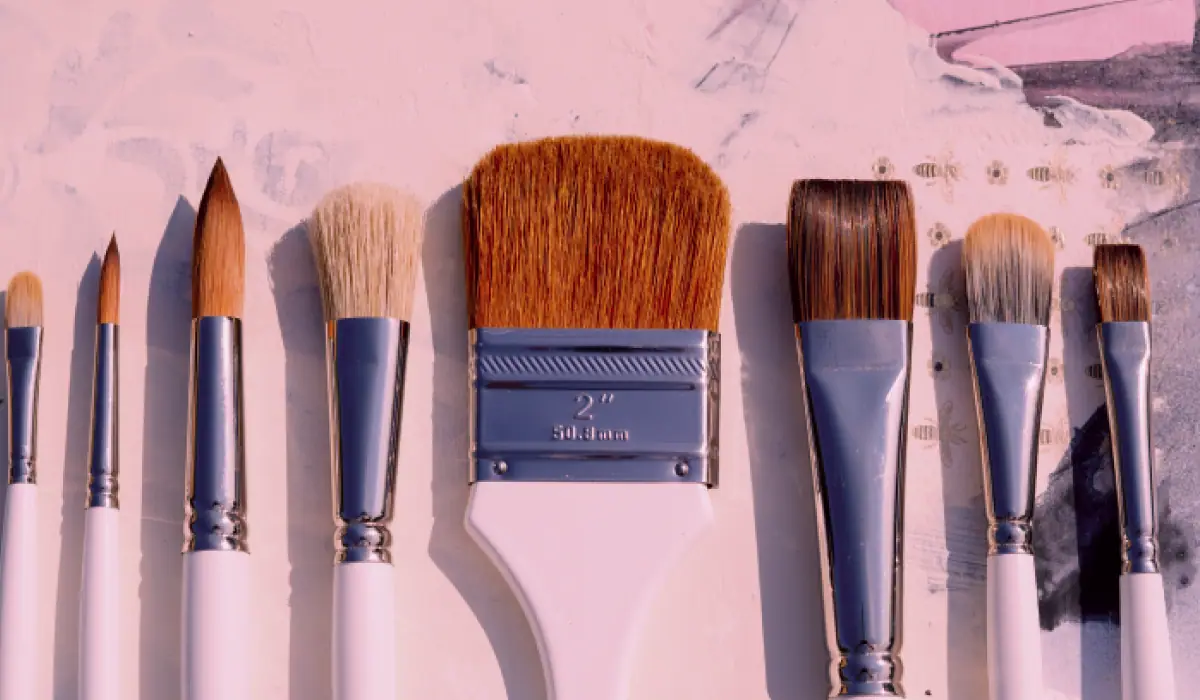
There are four main types of artist paint brushes, and once you know what each one does, choosing the right brush stops being a guess. Round and script brushes handle fine detail. Bright brushes cut crisp edges. Filbert and chip brushes blend soft transitions. Match the shape to the stroke you need, match the size to the area you are covering, and match the bristle to your paint. That is the whole decision. This guide walks through all three so the brush does the work for you.
What are the four main types of paint brushes?
The four core brush shapes are round, bright (square), filbert, and script (line), and each one makes a different kind of mark. Here is how to recognize them and what they are built for:
- Round. Circular at the base and tapering to a point. A round brush gives you a wide range of stroke widths in a single pass, from a hairline at the tip to a broad mark when you press.
- Bright (square). Flat and rectangular, so it reads as a straight edge from one side and a thin line when you turn it. Built for crisp lines and geometric shapes.
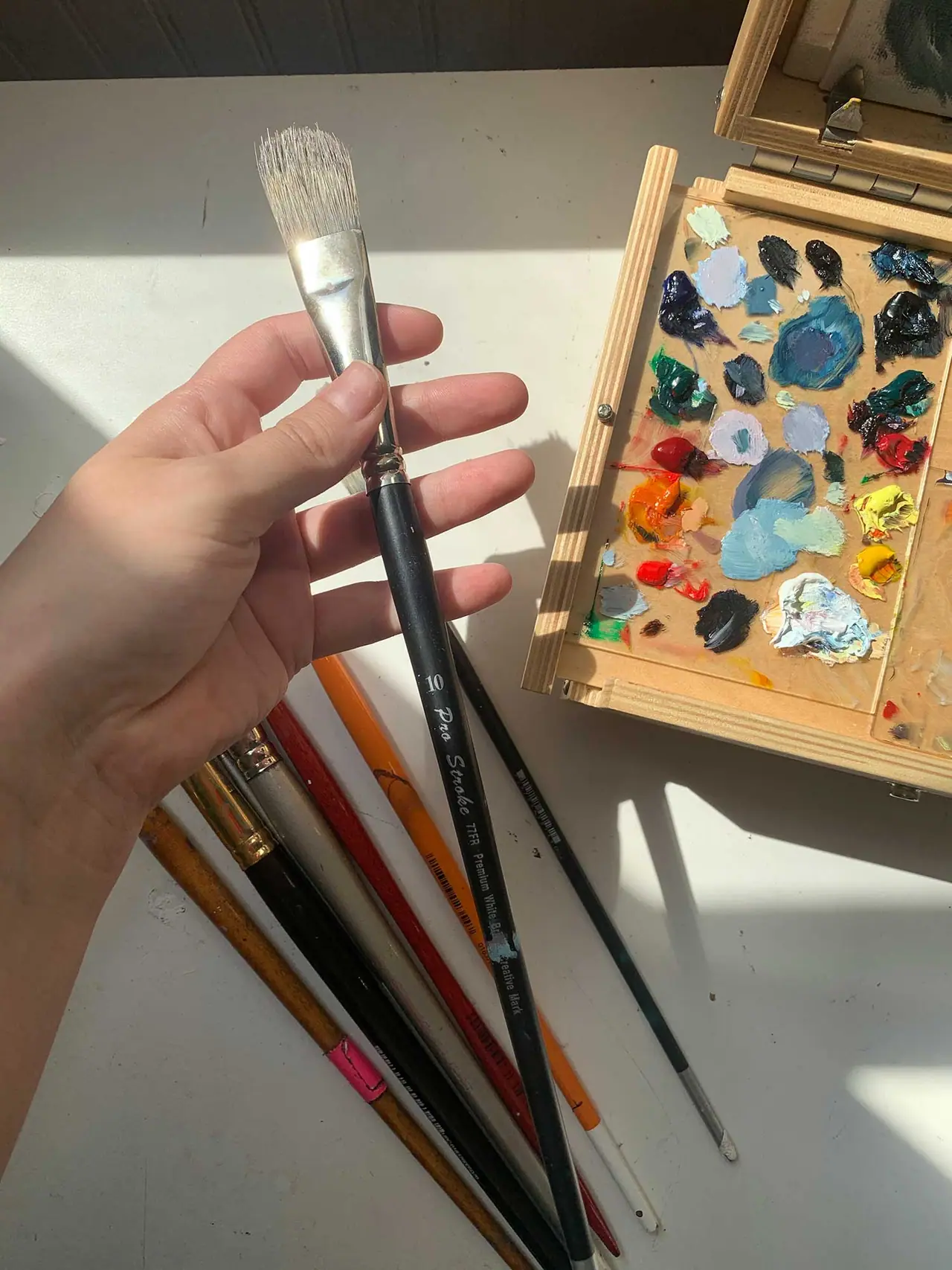
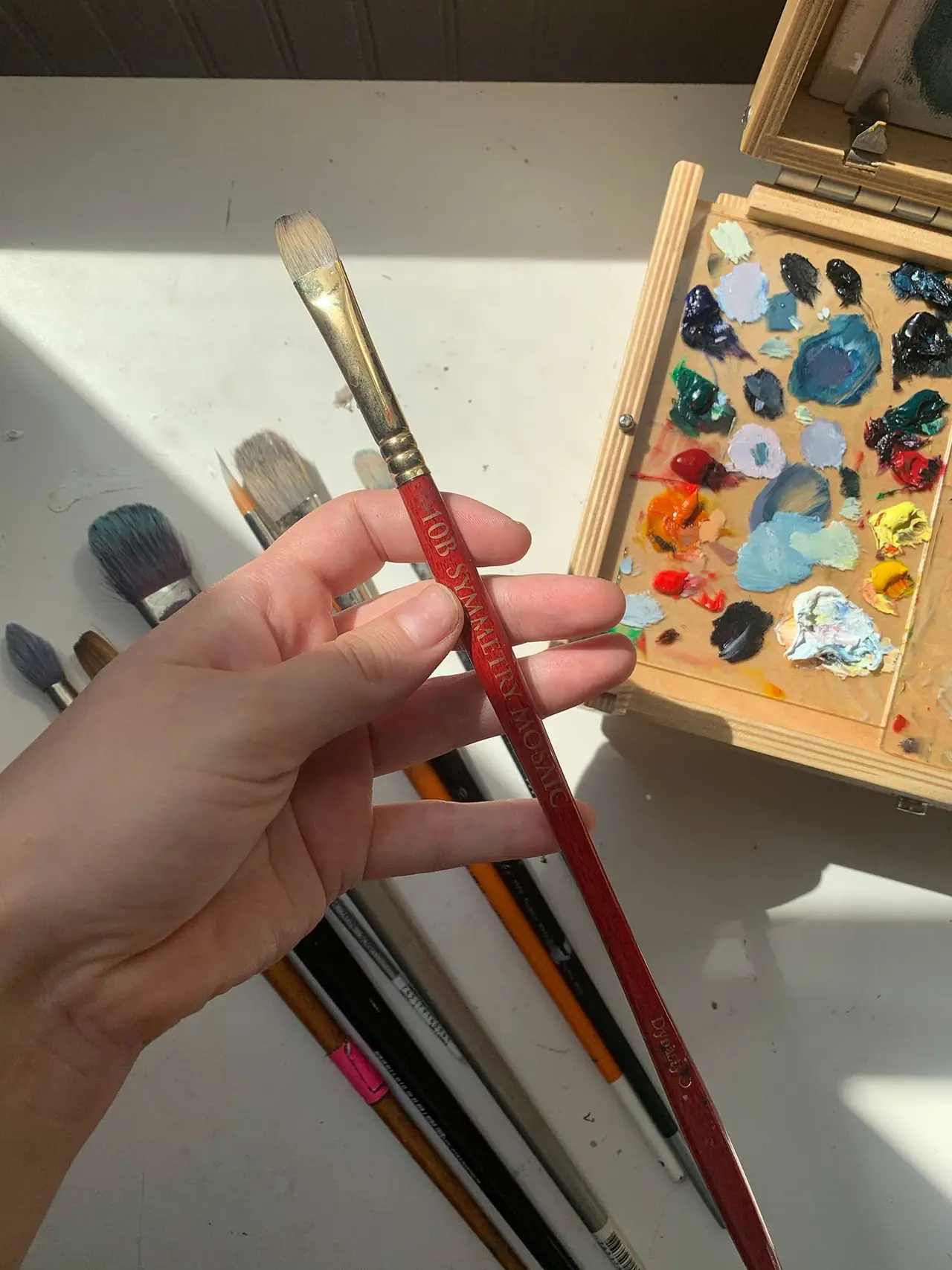
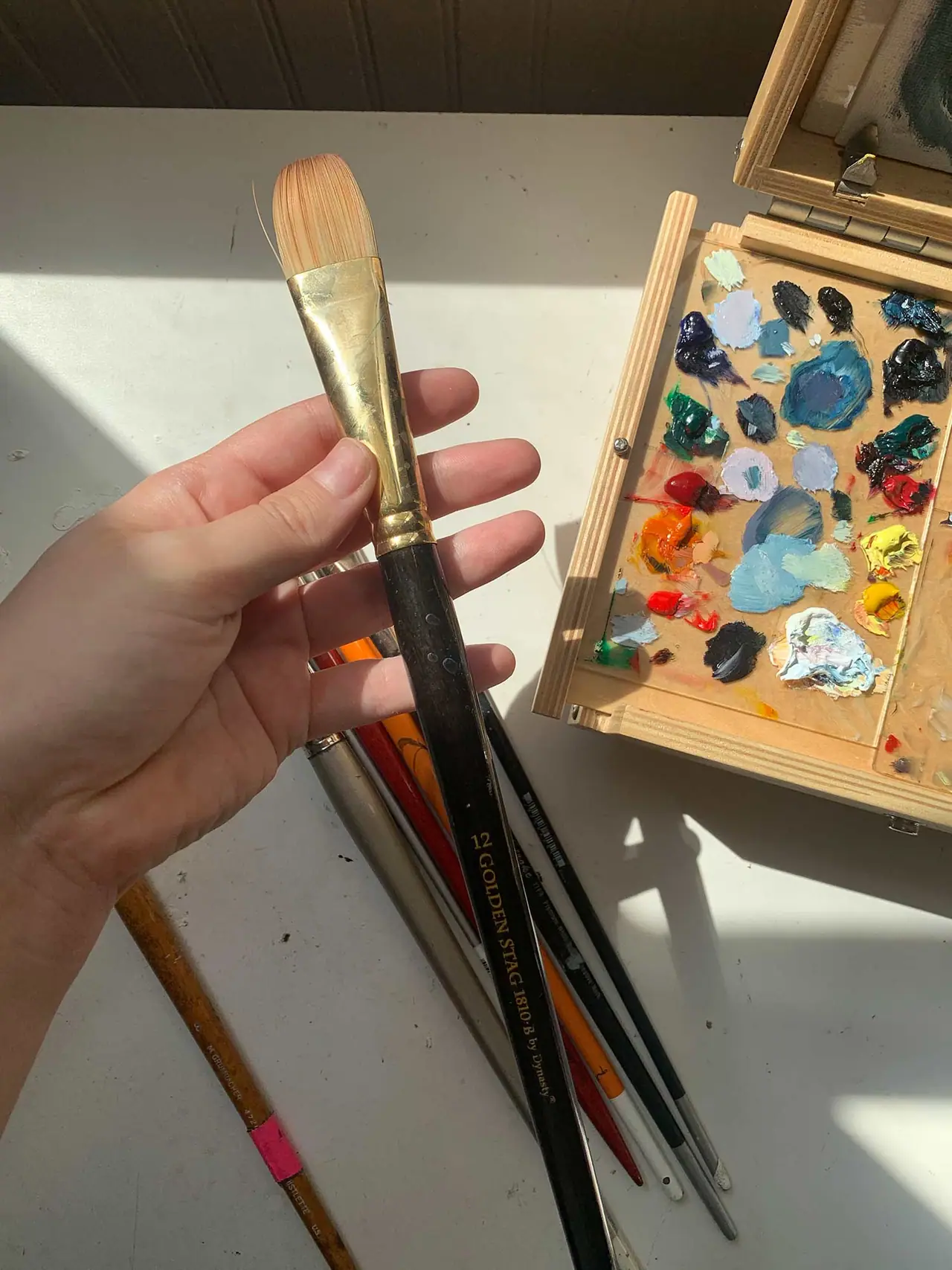
- Filbert. Like a bright brush but with a rounded, domed top instead of a hard flat edge. The most versatile shape: it blends, it dry-brushes, and it lays down painterly strokes.
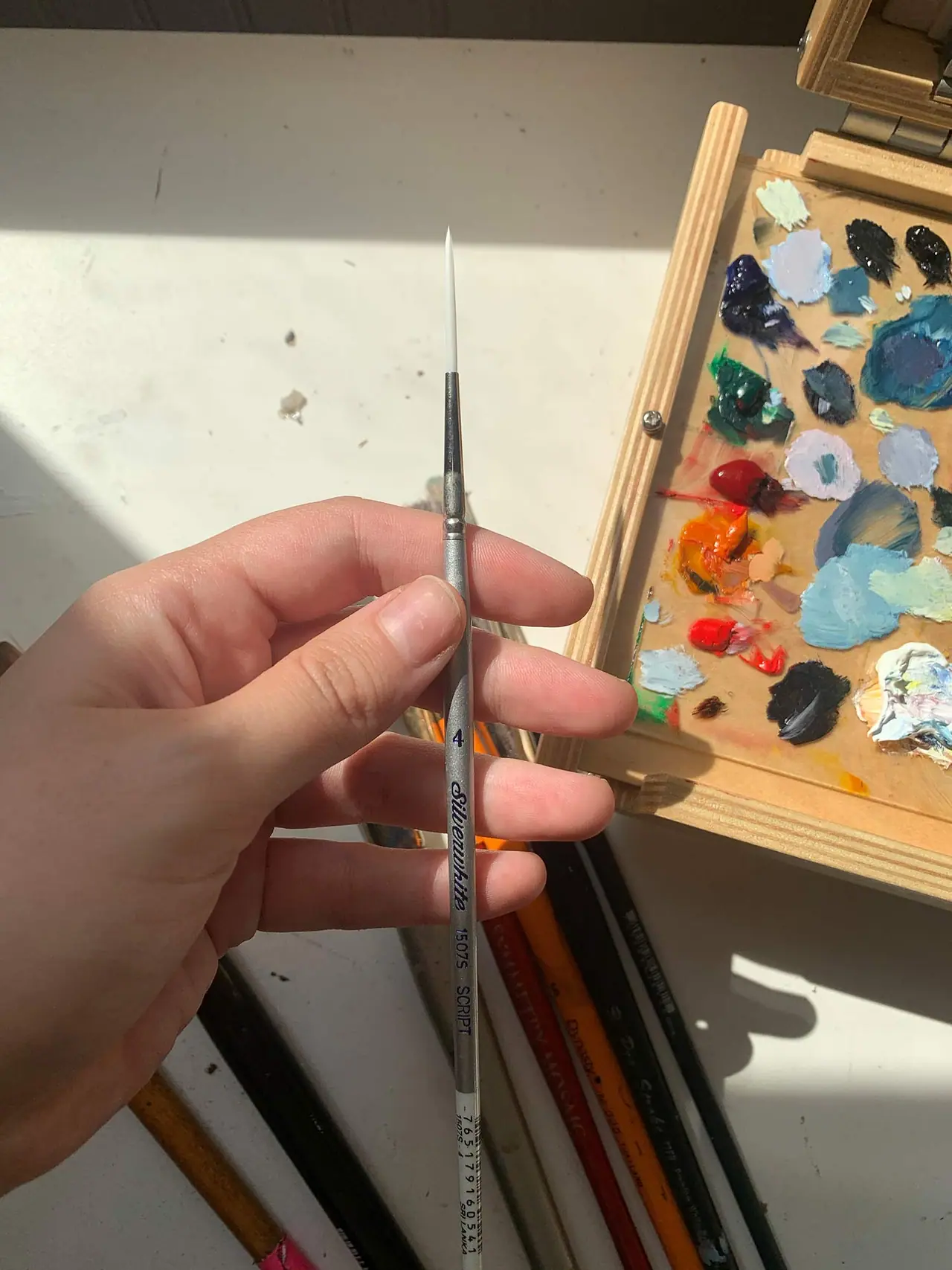
- Script (line). Long and very thin. Made for delicate, swirling lines and the smallest details.
Every shape comes in a full range of sizes, from a tiny 20/0 up to a large 30. That size range is part of what makes each shape so versatile, and it is the second half of choosing well, which we will get to below.
Which brushes are best for detail work?
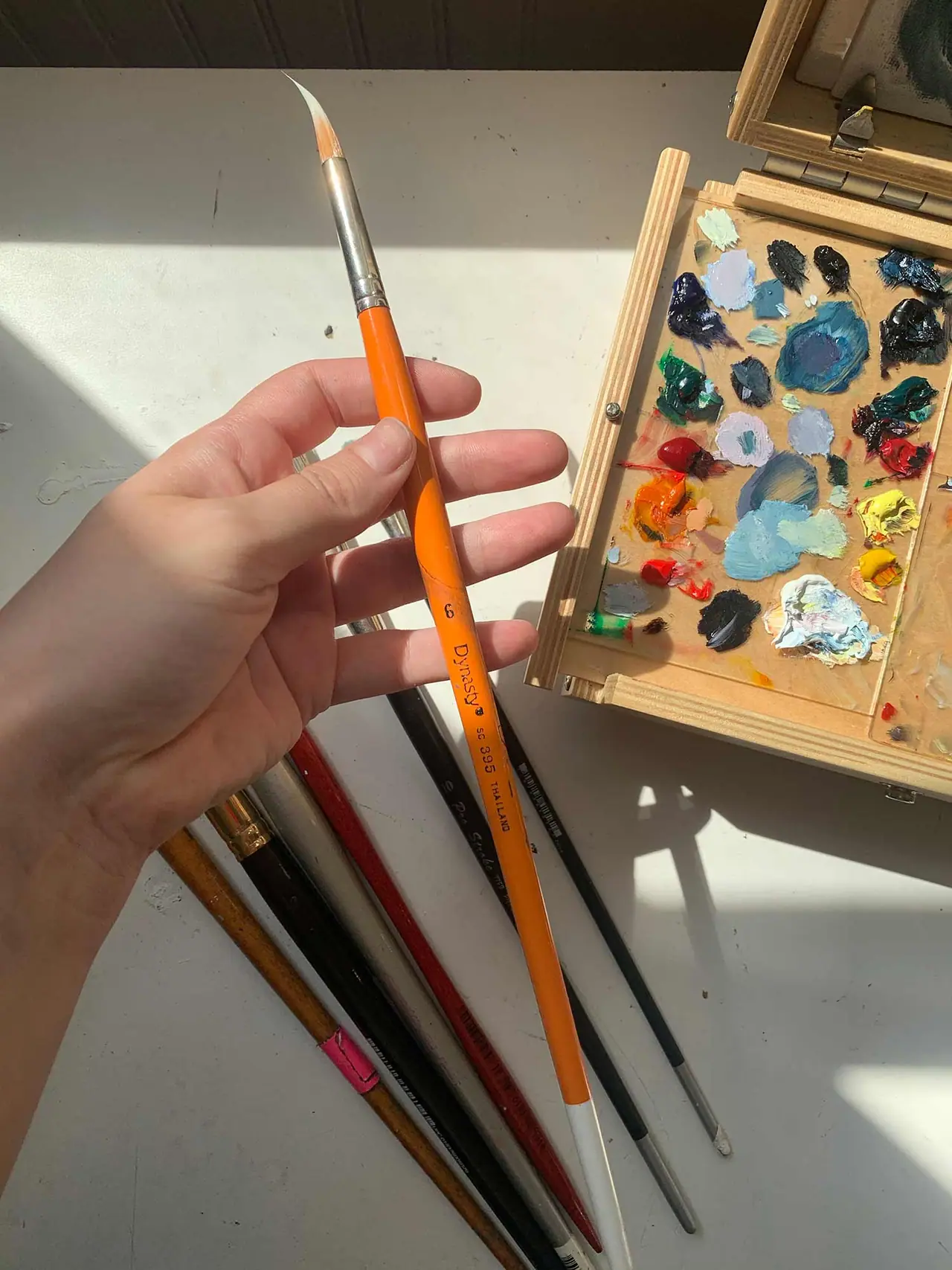
Round and script brushes are the best brushes for small details. Round brushes come in a large variety of sizes, while script brushes come in small, extra small, and extra tiny. The round is a favorite of mine because of its shape. It comes to a fine point, but because the base is thicker, you can pull a wide range of widths out of a single stroke. I use a round almost exclusively for tiger stripes, where the width of each stripe keeps changing. Script brushes are perfect for thin, delicate, swirly abstract lines, for eyelashes, and for tiny touches like the sparkle in an eye.
Which brushes are best for crisp edges?
Bright (square) brushes are the best choice for a crisp, straight line. Load just enough paint along the top of the brush and stamp a clean line the length of the bristles. These brushes also shine on geometric imagery and plane shifts, where you want one shape to meet another with a hard, deliberate edge. Size matters here as much as shape: do not reach for a size 12 bright to paint a small shape when a size 4 will do the job cleanly. That rule holds for every shape you own.
Which brushes are best for blending?
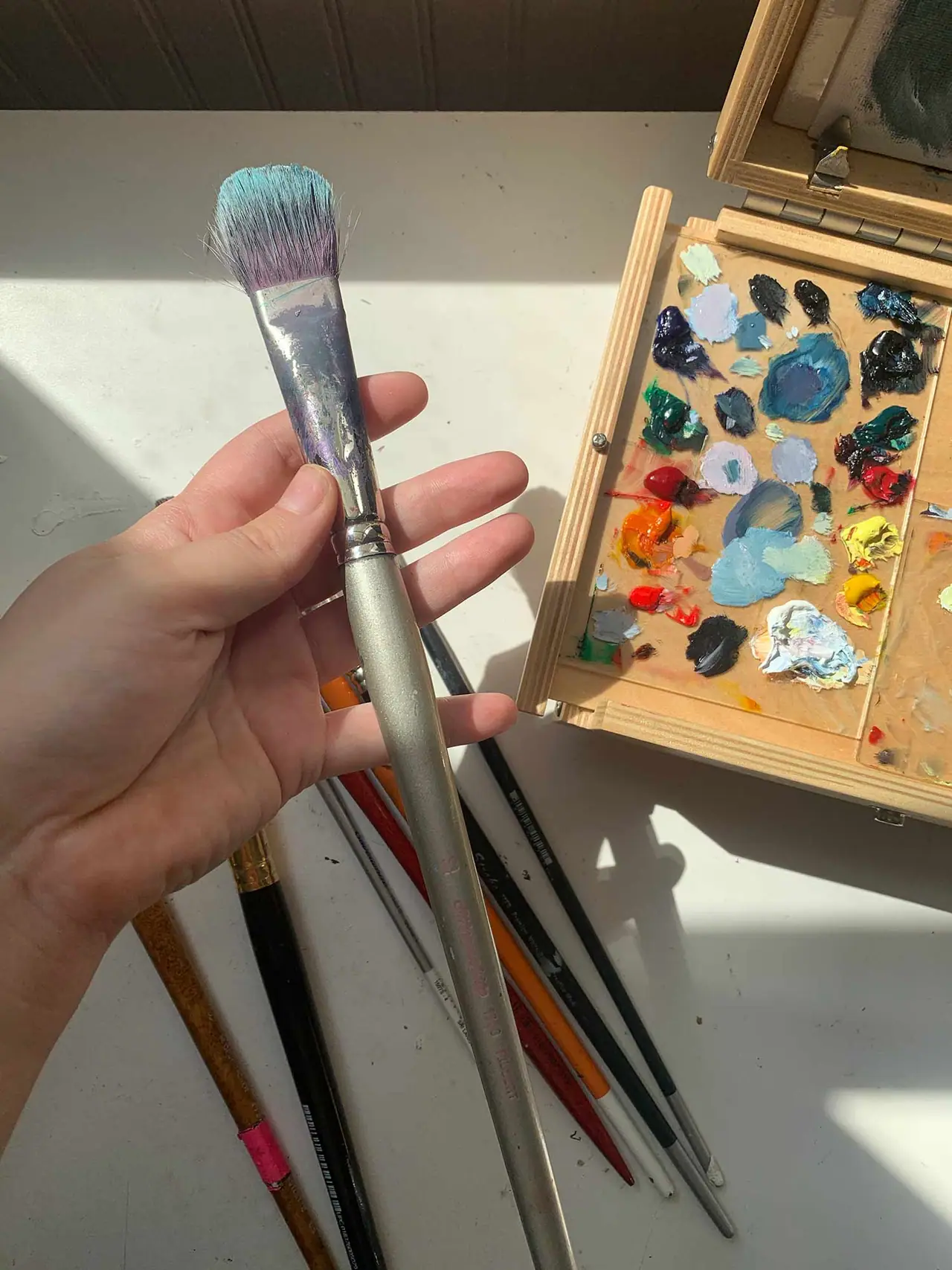
Filbert and chip brushes are the must-haves for blending soft edges. A chip brush has flagged bristles that lift away every trace of a brushstroke and leave a smooth, blended surface behind. The filbert is a great blender too, and far more versatile: it softens edges, but it can also pull beautiful dry-brushed textures and loose, painterly strokes. If you are working in oils, blending is one of the foundational moves, and you can see how it fits with the rest in our guide to essential oil painting techniques.
Natural or synthetic bristles: which should you choose?
Choose natural bristles for oil paint and synthetic bristles for acrylics. Every shape and size comes in both. Natural hair is significantly softer and responds to the oils in the paint, which is why it suits oil painting and why these brushes are higher quality with a longer life expectancy. Synthetic bristles do not absorb acrylic paint, so the paint moves onto the canvas more easily, and synthetic brushes cost less, though they wear out sooner. You can use synthetic brushes for oils, but the solvents and thinners that oil work requires take a harder toll on them over time.
Before you buy either kind, test the quality. Pinch the bristles between your thumb and index finger and tug lightly. A good brush holds every bristle. If the brush sheds, choose a higher-quality one, because loose bristles end up stuck in your painting and a cheap brush loses its shape fast. The same logic applies when you are picking up a fresh set of acrylic brushes: quality up front saves you frustration on the canvas.
What size paint brush do I need?
Match the brush size to the area you are painting, and keep a real range on hand. Size genuinely matters. Painting a large canvas with a tiny filbert from edge to edge is neither time-efficient nor logical when the right tool covers the same ground in a fraction of the strokes. For a big background, reach for a size 12 or larger filbert, or better yet an inexpensive chip brush, which is underrated and a true studio staple. A good rule is to keep at least three sizes of each shape: a small, a medium, and a large. They can vary in bristle type, but having that size variety on the table is what lets you pick the right brush for every stroke instead of forcing one brush to do everything.
How do you care for your paint brushes?
Brush care depends on the bristle type, and good care is what makes a quality brush last. With synthetic brushes, water and a little gentle soap will lift fresh wet paint right out of the bristles. Natural hair brushes need a gentler routine. When you are painting regularly, every day or every other day, wipe the excess paint off with a clean cotton rag, dip the bristles in a conditioning brush dip, and let them rest until the next session.
Here is a lesson I learned the slow way. When I first started painting, I washed my natural hair brushes with Dawn soap after every session, and they frizzed and frayed quickly. I never understood why until much later. Natural hair is sensitive and needs to be conditioned with brush oils. Dish soap strips those oils and dries the bristles out. Even when you are setting brushes aside for a long stretch, clean them with a very mild brush soap, dip them, reshape the head, and lay them flat or stand them with the bristles pointing up. Never store a brush resting on its head in a jar, because that ruins the shape. And do not overwash natural hair brushes. Keep them conditioned with a store-bought or homemade brush dip, and they will hold their point for years.
If you want your brushes to glide instead of drag, the surface underneath matters too. A properly primed canvas changes how every brush behaves, which is worth understanding before you start: see what gesso is and how to use it.
How do you choose the right brush, every time?
Choosing the right brush comes down to knowing your tools. Decide what the stroke needs, then pick the shape, size, and bristle that serve it. Detail calls for a round or a script. A clean edge calls for a bright. A soft transition calls for a filbert or a chip. Oils want natural hair, acrylics want synthetic, and the area you are covering tells you the size. The more you test and experiment, the faster this becomes second nature. As you paint, you will gravitate toward a handful of favorites and may end up using only about five brushes regularly. That is completely normal. Some artists discover they would rather skip brushes altogether for certain passages and reach for palette knives instead.
Know your tools, build a small but flexible kit, and let each brush do the work it was made for. If this opened up some new possibilities, keep exploring the rest of our oil painting techniques collection, and when you are ready to put these brushes to work, the 2-Week Challenge is a gentle place to begin. Happy painting.
Frequently asked questions
What are the main types of paint brushes?
The four main artist brush shapes are round, bright (also called square), filbert, and script (also called line). Round and script brushes are best for detail, bright brushes for crisp edges, and filbert brushes for blending. Each shape comes in a wide range of sizes, from 20/0 up to 30.
What size paint brushes do I need?
A good starting kit has at least three sizes of each shape, such as a small, a medium, and a large. Match the brush size to the area you are painting. A size 12 or larger filbert or a wide chip brush covers backgrounds fast, while a size 4 handles smaller shapes and detail.
What is the difference between natural and synthetic bristles?
Natural hair bristles are softer and respond to the oils in oil paint, so they suit oil painting and tend to last longer. Synthetic bristles do not absorb acrylic paint, which makes it easier to move acrylics onto the canvas, and they cost less. You can use synthetic brushes for oils, but solvents wear them out faster.
How do I know if a paint brush is good quality?
Pinch the bristles between your thumb and index finger and tug gently. A quality brush holds its bristles. If several pull out, choose a better brush, because shed bristles end up stuck in your paint and a cheap brush loses its shape quickly.
What to practice this week
- Take one shape you own, a round or a filbert, and fill a page with every mark it can make: a hairline, a wide press, a dry-brushed drag, a soft blend.
- Paint the same small shape with three different brush sizes and notice which size felt right for the job.
- Do the bristle tug test on every brush in your kit and set aside any that shed, so you only paint with brushes you trust.
Supplies used
About the author
More from Elli