What Is Gesso? What It's Made Of, What It Does, and How to Apply It
A clear guide to the white primer behind almost every good painting: its ingredients, its purpose, and how to brush it on the right way.

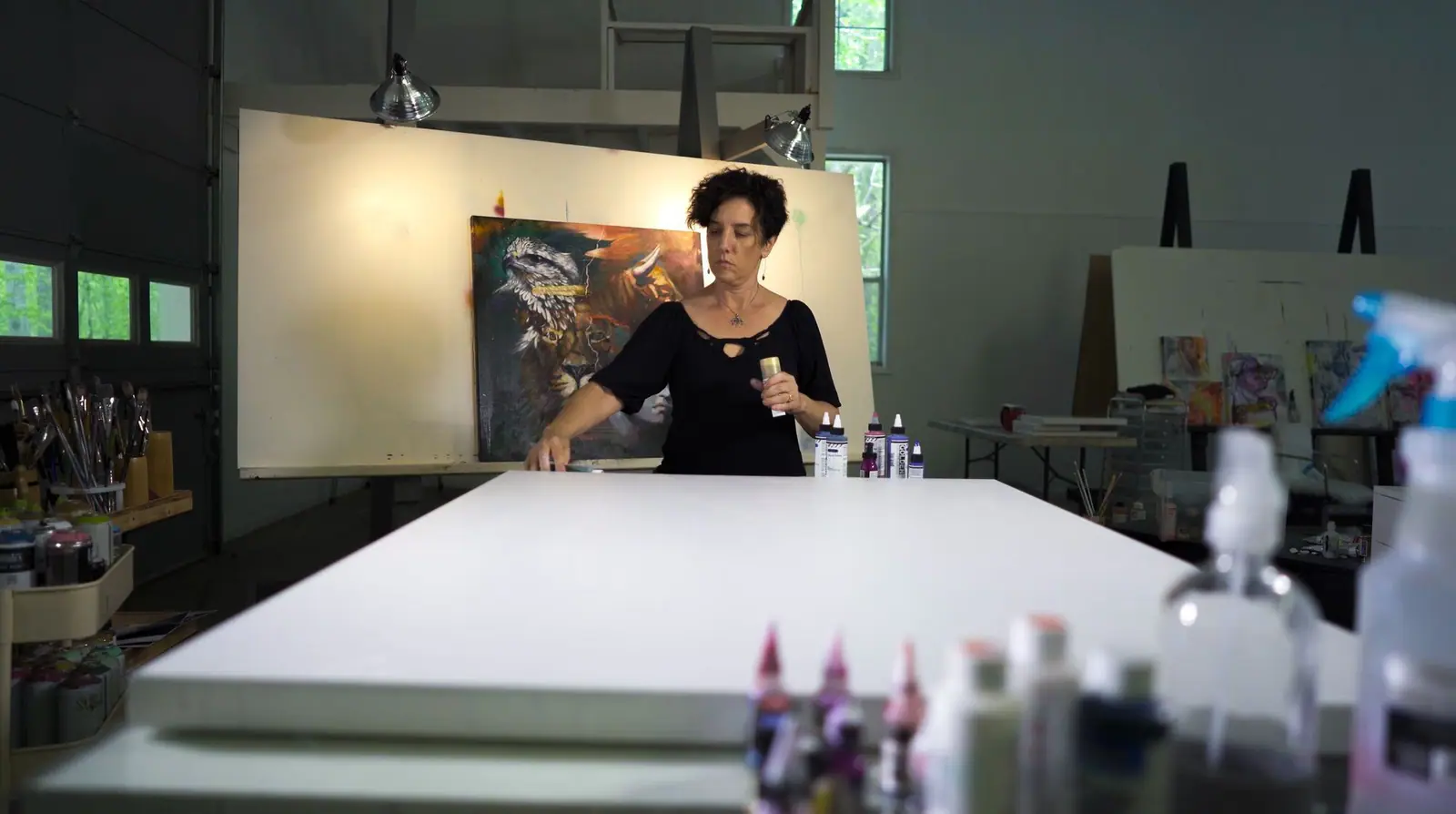
Gesso is a white primer that prepares a surface for painting. You brush it onto canvas, wood, or paper before you paint so the surface is sealed and ready, and so your paint grips instead of sinking in. Almost every good painting starts on a layer of it, which is why understanding gesso is one of the first practical steps in learning to paint. This guide covers what gesso is made of, what it actually does, and exactly how to apply it.
The word itself comes from Italian, where gesso simply means chalk or plaster. That single word carries the whole idea: a chalky, ground coat that turns a raw surface into one a painter can trust.
What is gesso made of?
Gesso is made of three things: a chalk or calcium carbonate base, white pigment, and a binder that holds it all together. The chalk gives gesso its body and its slight grip. The pigment makes it white and opaque. The binder is what changed over the centuries, and it is the main difference between old gesso and the kind you buy today.
Historically, the binder was rabbit-skin glue. Artists mixed chalk dust and white pigment into the warm glue to make a primer that dried into a hard, absorbent ground, ideal for the panels and stretched linen of earlier eras.
The modern version most painters use was developed by Henry Levison in 1955. He replaced the animal glue with acrylic polymer, combining calcium carbonate, pigment, and that flexible synthetic binder. He called it Liquitex, “a perfect blend of liquid and texture.” Acrylic gesso is thinner than white acrylic paint and dries hard, which is exactly the combination you want in a primer.
Is gesso the same as white paint?
No, gesso is not the same as white paint, even though both are white and both go on with a brush. Gesso is thinner and dries much harder. That hardness is the point: it lets gesso seal the surface and hold a slight grip at the same time, something ordinary white paint cannot do because it stays soft and flexible. If you have ever wondered why you cannot just slap on a coat of white acrylic and start painting, this is the reason.
Like paints, gesso comes in two grades, student and professional. Student-grade gesso has less pigment and more filler, so it costs less up front. It is not always the better deal, though. You usually use less of the professional grade because it covers better, so a more expensive jar can stretch further. Gesso is most often white, but you can also find it in black, clear, and a range of colored grounds if you want to start a painting on a tinted surface.
What does gesso do?
Gesso seals the surface and gives it tooth, the slight texture that lets paint hold on. Canvas is the most common surface painters prime, and raw canvas is thirsty: brush paint straight onto it and the color soaks right in, going dull and weak. Gesso stops that. It creates a smooth yet slightly grippy surface that holds your paint on top, where you want it, instead of letting it sink into the weave.
So gesso does two jobs at once. It protects your paint from the absorbent surface underneath, and it gives that surface just enough texture for paint to bond to. That is the whole point of priming: a stable, receptive ground that makes every brushstroke behave the way you expect. The same logic is why painters reach for gesso when they want to reset a surface, including when they decide to start over on an oil painting and prime right over the old image.
How do you apply gesso to a canvas?
You apply gesso in thin, even coats, letting each one dry completely before adding the next. The number of coats depends on how smooth you want the final surface to be: more layers and light sanding between them give you a glassier ground. Here is the process from a freshly stretched canvas to a painting-ready surface.
- Clean the surface. After you have stretched your canvas, make sure all dust and loose particles are removed. Anything left on the surface gets locked under the gesso and shows up later.
- Brush on a thin, even layer. Load your brush lightly and lay down one smooth, even coat. Thin coats dry better and crack less than one thick, gloppy layer.
- Let it dry completely. Patience matters here. Gesso has to be fully dry before you touch it again, especially before sanding.
- Sand lightly between coats (optional). If you want a smoother surface, sand the dried coat gently, then wipe away every bit of dust before the next layer.
- Repeat to taste. Add as many thin, sanded coats as the smoothness you want calls for. A textured ground might need only a coat or two. A polished, portrait-smooth surface might need several.
Pre-gessoed canvases are easy to find at most art supply stores, and they are genuinely ready to paint. Even so, if you want a smoother or more absorbent surface than the factory coat gives you, the same method applies: sand lightly, remove all dust, and brush on another thin, even layer. The smoothness you are after decides how many times you sand and reapply.
Brushwork on a well-primed canvas feels completely different from brushwork on raw fabric, and that difference shapes everything else you do. If you are still building your kit, it is worth knowing how to choose a canvas and how to choose a paintbrush so the surface and the tool work with you rather than against you.
Can you gesso surfaces other than canvas?
Yes, you can gesso almost any surface to prepare it for painting. Wood panels, masonite, paper, board, and even some unconventional supports all take gesso well, as long as they are clean and stable. Gesso is really a bridge between the surface you are using and the paint you want to use, so anywhere you need that bridge, it can go.
The principle stays the same no matter what you prime: thin, even coats, full drying time between them, and more layers for a smoother finish. Once you understand that gesso is simply a receptive ground, you stop seeing it as a fussy extra step and start seeing it as the foundation it is. A good painting needs a good surface under it, and gesso is how you build one. This kind of solid groundwork sits at the heart of the essential oil painting techniques every painter eventually learns.
If priming your first real surface feels like a small step toward something bigger, that is because it is, and you do not have to take it alone. Our 2-Week Challenge is a gentle place to put a brush in your hand and start building, one honest layer at a time.
Frequently asked questions
What is gesso made of?
Modern acrylic gesso is made of calcium carbonate (chalk), white pigment, and an acrylic polymer binder. Traditional gesso used the same chalk and pigment but bound it with rabbit-skin glue instead. Both create a slightly absorbent, textured surface that paint can grip.
What does gesso do?
Gesso seals a porous surface and gives it tooth, a slight texture that helps paint stick instead of soaking in. Without it, paint sinks straight into raw canvas, dulling color and weakening the bond between paint and surface.
Is gesso the same as white paint?
No. Gesso is thinner than white acrylic paint and dries much harder, which is what lets it both seal the surface and hold tooth. White paint stays flexible and does not prime a surface the way gesso does.
Do I need to gesso a pre-primed canvas?
Not always. Most canvases sold today come pre-gessoed and are ready to paint. Add one or two more thin coats only if you want a smoother surface or extra absorbency, sanding lightly between coats.
What to practice this week
- Gesso a small scrap of canvas or board with two thin, even coats, letting each dry fully, then notice how differently a brushstroke behaves on it versus raw, unprimed surface.
- Try sanding lightly between coats on one half of a primed board and leaving the other half unsanded, then feel the difference in tooth before you commit it to a real painting.
- Test one colored or clear gesso against plain white on the same subject and see how the ground changes the mood of the colors you lay over it.
Supplies used

About the author
More from Elli