How to Choose a Canvas for Painting: Quality, Types, and What Pros Buy
The surface you paint on shapes everything that lands on it, and choosing well comes down to a few decisions any artist can learn.


Choosing a canvas comes down to one question: what is this painting for? An experiment you will paint over next week and a gallery piece you hope to sell ask for completely different surfaces. Get that match right and the canvas all but disappears under your brush. Get it wrong and you will fight the surface for the life of the painting. This guide walks through what a canvas actually is, what separates a cheap one from a professional one, the main types you will find on the shelf, and how to pick the right one for the work in front of you.
What is a canvas for painting?
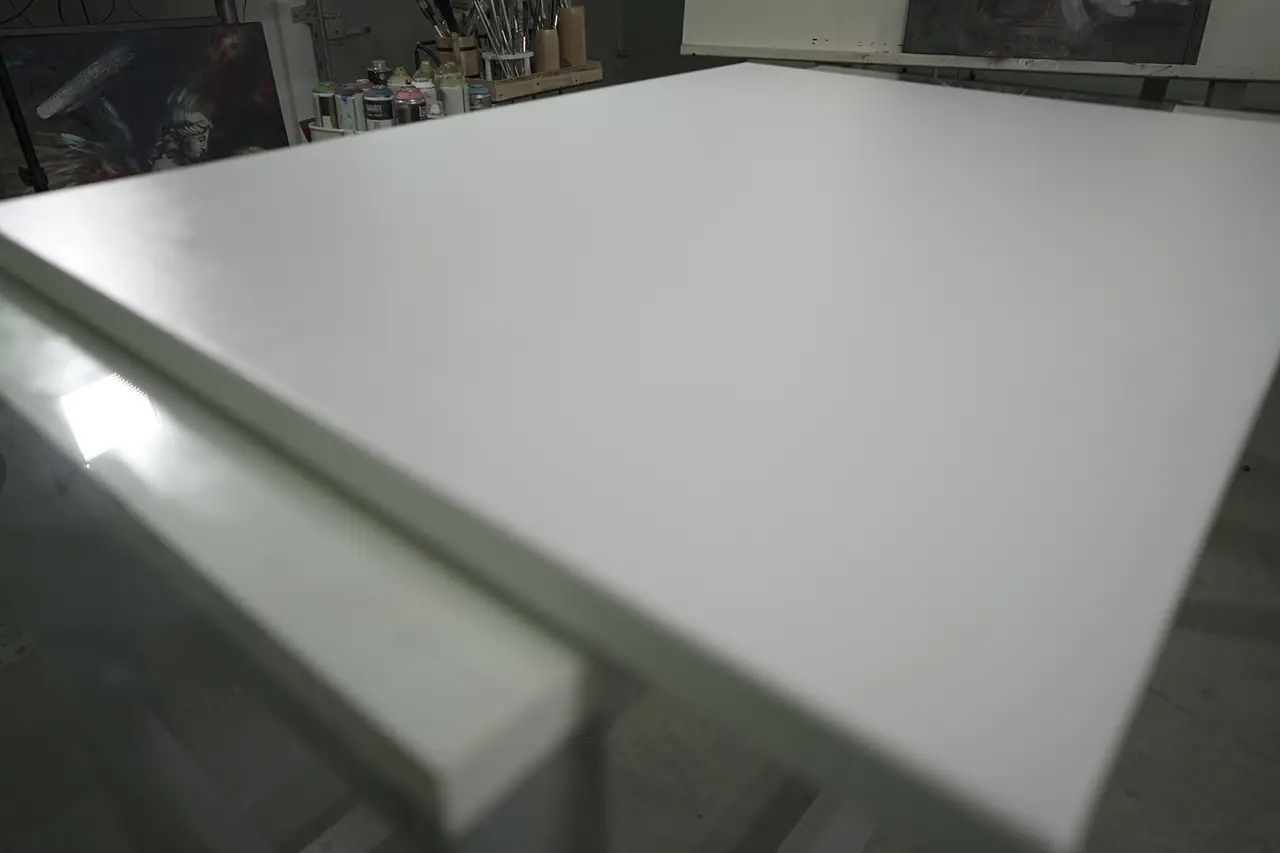
A canvas is a woven fabric, usually cotton or linen, stretched over a wooden frame to make a sturdy surface to paint on. It is the surface artists have created on for centuries, descended from the sailcloth that once caught the wind. Cotton is the common, affordable option. Linen costs more but offers a smoother, finer weave and a higher quality feel. Both can be left loose or stretched, and most are sold already primed so your paint sits where you put it.
Why do so many artists paint on canvas?
Artists choose canvas because it is durable, professional, and ready to hang the moment a painting is finished. The wooden frame underneath gives a stretched canvas a sturdy skeleton, and larger canvases add a horizontal support bar through the center to keep that frame from warping. That same frame makes the piece easy to display: a nail or a length of wire on the back is all you need, while a work on paper has to be framed under glass before it can go on a wall. Canvas also comes in nearly every shape and size you can imagine, including round and oval formats alongside the usual squares and rectangles. Because canvas is archival and holds up over time, a gallery will accept work made on it without hesitation, which is a real advantage if you ever plan to sell your art.
Does canvas quality matter?
Canvas quality matters most for any painting you intend to keep or sell, and matters far less for quick experiments. A high quality canvas stays tight, resists tearing where it wraps around the corners, and carries a properly primed surface that lets your colors stay vivid instead of sinking into the fibers. Spend your favorite painting onto a sagging, poorly primed canvas and you will regret it every time you look at the piece. For loose, lighthearted studies, none of that is worth worrying about, and a budget canvas does the job.
What makes a high quality canvas?
The best canvases share three traits: they are tightly stretched, built on a solid frame, and made from quality, gesso primed material. Here is what to look for before you walk out of the store.
- A tight, even stretch. A good canvas should feel taut as a drum, with no sag in the middle and no tearing at the wrapped corners. A loosely stretched canvas is the worst surface to paint on. You can sometimes tighten a loose one by misting the back with water and letting it dry in the sun, but it is far better to buy one that is already tight.
- A gesso primed surface. Quality canvases come primed with gesso, a white primer that lets paint sit on top of the weave instead of soaking straight into it. The label will tell you whether the canvas is primed or raw. A primed surface keeps colors bright and protects the painting over time.
- A sound wooden frame. The frame matters most on larger pieces. Look for solid, knot-free wood with no warping or cracks, and make sure any canvas 24 by 36 inches or larger has a horizontal support bar across the middle. Reputable brands rarely use bad wood, but it is still worth a look before you buy.
- Enough depth. Aim for a gallery wrapped depth of at least 1.38 inches. That little bit of extra thickness gives a painting a more finished, professional presence and lets it hang well without a frame.
What are the main types of canvas?
There are four common canvas formats, and each one fits a different way of working. The fabric and the idea stay the same, with a few useful variations.
- Canvas boards. Thin, lightweight wood boards with canvas wrapped over the front and edges. They are easy to store and ideal for plein-air kits, since you can measure your plein-air box and pick a board size that fits inside it.
- Loose unstretched canvas. Canvas with no wooden frame. It rolls into a tube, which makes it cheap and easy to ship. That is fine for sending work to a gallery, but pieces usually go to collectors stretched.
- Gallery-wrapped canvas. The most common stretched canvas you will see, wrapped around the frame with a depth of at least 1.38 inches and sold pre primed. Thicker-edged versions are available too, while thinner ones sometimes carry only a quarter inch edge.
- Linen canvas. A classic surface with a very smooth finish and a tighter, finer weave than cotton. Linen is excellent for oil painting and a favorite for realism and portraits, where the canvas texture all but disappears under the paint.
How do you choose the right canvas for your painting?
Choose your canvas by deciding what the painting is for before you spend a dollar. If you want to experiment, get wild, and tuck the piece in a closet later, there is no reason to spend big. A student canvas at a dollar or three, or a stack of canvas boards bought in bulk from a craft store, will serve you well. Any size works, and nearly any paint goes onto a primed canvas, so the same surface happily takes both acrylic and oil. For play, testing, and hobby work, you have freedom to spare.
If you intend to take your time and create a piece to sell, invest in a high quality canvas from the start. A pro-grade canvas can run sixty dollars or more, and it is worth it. The tighter stretch, the better frame, and the thicker gallery-wrapped edge all show in the finished work and signal real dedication to a collector. Your paintings will simply look better on a surface built to last. When you have settled on the canvas, the rest of your kit matters too, so it is worth reviewing the essential oil painting techniques and the foundational painting methods you will use on that surface.
What canvas do professional artists use?
Professional artists almost always work on a tightly stretched, gesso primed canvas with a solid frame and a gallery-wrapped edge, and many reach for linen when the subject calls for a smooth surface. The thinking is simple: a finished painting deserves a surface that will hold it well for decades, hang cleanly on a wall, and survive the handling that comes with shows and sales. For oil portraits and tight realism, linen’s fine weave keeps the texture from competing with the image. For most other work, a quality cotton canvas does the job at a friendlier price. The common thread is care: the canvas is tight, primed, and built to outlast the moment it was painted.
What is gesso, and why does it matter?
Gesso is a white, paint-like primer brushed onto raw canvas to create a smooth, slightly toothy surface that paint can grip. It keeps the paint from soaking straight into the fibers, which makes your colors read brighter and helps the painting last. Most ready-made canvases arrive pre primed, but you can apply your own when you want more control over the surface. Apply it evenly, because a layer that goes on too thick or uneven can crack over time and compromise the look of the piece. For a fuller walkthrough of priming, see our guide to what gesso is and how to use it.
From blank to brilliant
You now know enough to walk down the canvas aisle with confidence. Match the surface to the purpose, check the stretch and the frame, look for a primed surface, and spend where it counts. Whether that is a 24 by 36 inch gallery-wrapped linen or a small canvas board for a quick study, the right choice is the one that fits the work you are about to make. If this opened up a few new questions, keep exploring the rest of our oil painting techniques collection, and when you are ready to put that fresh canvas to use, our free 2-Week Challenge is a gentle place to begin.
Frequently asked questions
Does canvas quality really matter?
Yes, especially for paintings you plan to keep or sell. A high quality canvas stays tight, resists tearing at the corners, and holds paint on a properly primed surface, so the piece looks better and lasts longer. For loose experiments, a budget canvas is perfectly fine.
What is the best canvas for oil painting?
Linen is the classic choice for oil painting because its tight, smooth weave suits realism and portraits, where canvas texture can be a distraction. Quality cotton canvas also works well and costs less. Either way, choose one that is gesso primed and tightly stretched.
Can you use the same canvas for acrylic and oil paint?
Most stretched, gesso primed canvases work for both acrylic and oil paint, which is why they are the standard surface for so many artists. Check the label to confirm the canvas is primed. Choosing between cotton and linen matters more than choosing between the two paints.
How deep should a canvas be?
Aim for a gallery wrapped depth of at least 1.38 inches for a finished, professional look. Thicker edges let you hang the piece without a frame and give it more presence on the wall. Thin canvases with a quarter inch edge usually read as student grade.
What to practice this week
- Buy two canvases at very different price points, paint the same small study on each, and notice how the surface and the stretch change the way the paint behaves.
- Run your fingers over a cotton canvas and a linen canvas at an art store, and write down which weave you would reach for on a detailed portrait.
- Press lightly on the back of a canvas before you buy it. If it gives like a drum that is in tune, it is tight enough; if it sags, put it back.
Supplies used

About the author
More from Elli