Vivid Oil Paints: How High Chroma Color Changes the Way You Paint
Most paint systems make you mix your way to intensity, and true vibrancy gets lost along the way. High chroma oil paints take a different path. Here is how they work and when they help.

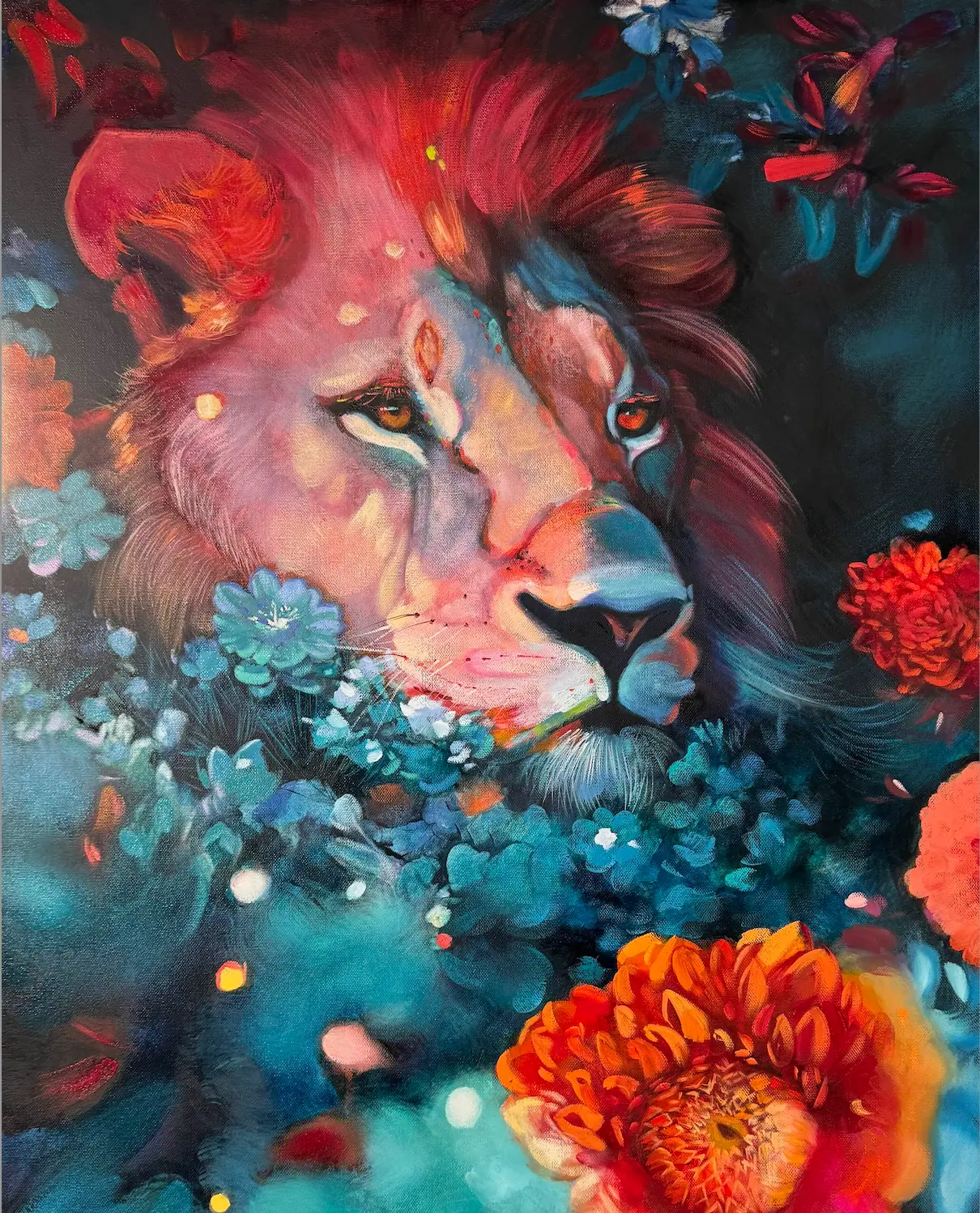

Vivid oil paints are high chroma colors formulated to stay brilliant at lighter values and through mixing, not just straight from the tube. They lean on strong, high level pigments, a lightfast formula for long term durability, and a fast drying linseed oil binder. The reason they exist is simple. Most traditional paint systems ask you to mix your way to intensity from warm and cool primaries, and along that road true vibrancy quietly disappears. A vivid system is built so you stop fighting your materials to reach the color you already see in your head.
Color is not just a tool. It is a language. And for a lot of painters, the hardest part is not using color at all. It is reaching the level of vibrancy, harmony, and control they imagine, then watching it turn dull the moment they start blending. If that is your frustration, the issue may not be your skill. It may be the chroma you have to work with.
Why are high chroma oil paints different?
They are different because they are formulated to hold saturation where traditional paints lose it: in lighter values and through mixing. Standard ranges expect you to build intensity by mixing primaries, but every pigment you add pulls a color toward gray, so the brightest version of a hue often lives only in the tube. High chroma colors are designed to survive that journey.
A well made vivid range usually shares a few traits:
- Ultra high chroma at lighter values. The color stays vibrant as you tint it toward white, instead of going chalky and weak.
- Strong, high level pigments. Heavier pigment load means the color reads as itself even when mixed.
- Lightfast formulation. A lightfastness rating of I means the color resists fading over the long life of the painting.
- A refined oil binder. A clean, refined linseed oil keeps the color clear and supports predictable handling.
- Fast drying performance. Colors that dry overnight keep your process moving instead of stalling between layers.
The result, in a range like Milan’s Vivid Oil Paints, is a set of bold tones such as Vivid Fire, Vivid Periwinkle, and Vivid Lime: a level of intensity that is nearly impossible to reach through traditional mixing alone. Instead of fighting your materials, you get to work with them. If you want the groundwork under all of this, what is oil paint explains how pigment and binder actually behave.
What makes it a color system, not just a set?
The real power is that the colors function as a connected system rather than ten unrelated tubes. When a range is built as a cohesive whole, the colors are balanced against each other, so they do specific things together that random bright paints cannot.
A cohesive color system gives you three practical things:
- Clean mixes. Colors blend without turning muddy, because the pigments are chosen to play well together.
- Luminous, controlled blends. Gradients stay clear instead of going gray in the middle of a transition.
- Range in one palette. You can move easily between subtle, quiet transitions and bold, loud statements without swapping toolkits.
The consistency is also balanced for technique. There is enough flow for smooth blending and soft gradients, and enough body for expressive, textured brushwork. That gives you both precision and freedom in the same set. This is really an extension of color theory: a good system makes harmony easier to reach because the relationships between colors are already considered for you.
How is this different from Gamblin Radiants?
Both aim for higher chroma, but they answer the problem in different ways. Radiant style ranges lean toward pastel, lighter tints meant to brighten a palette. A full vivid system is formulated to maintain vibrancy through mixing, not just straight from the tube, and it is designed to function as an integrated set rather than a handful of bright accents.
A vivid range also tends to offer tones that go beyond the traditional warm and cool categories, which is part of why it can reach color a conventional palette struggles to mix. The short version: a pastel leaning range raises your value and softens, while a vivid system raises your chroma and holds it. They are solving for different things, so the right choice depends on whether you want lighter and softer or brighter and stronger.
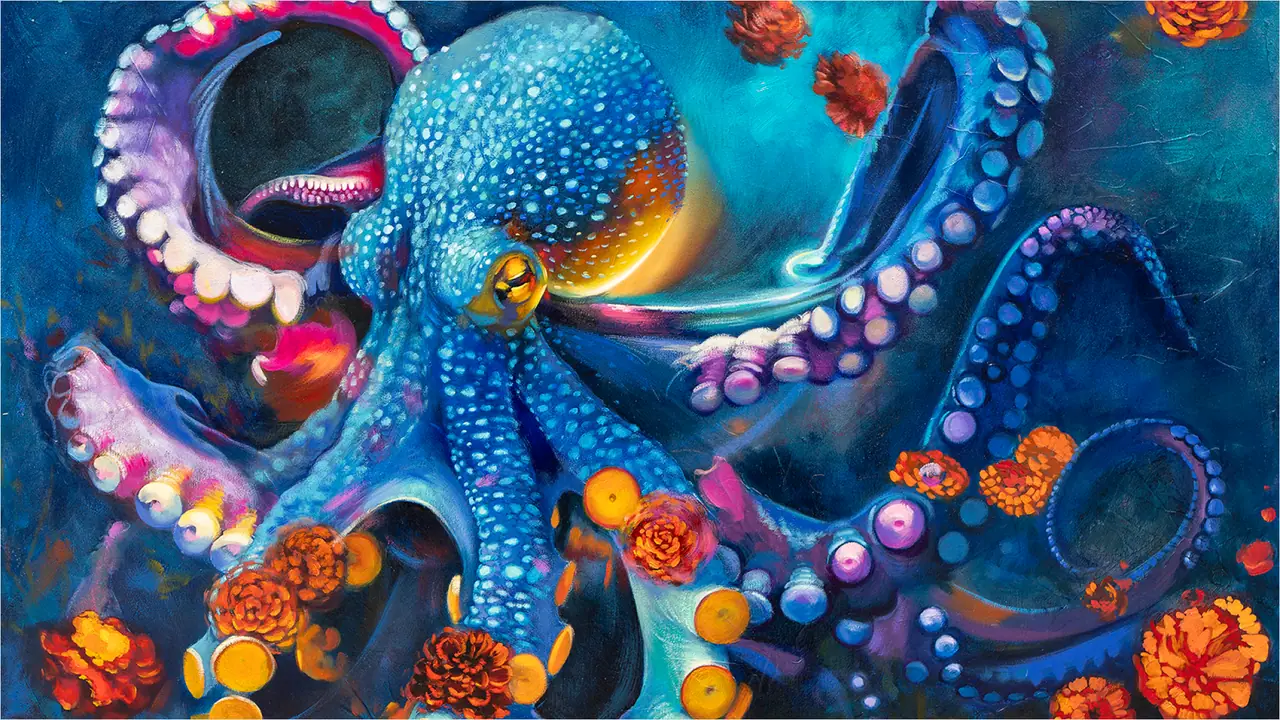
Can you mix vivid paints with your existing oils?
Yes. Vivid oil paints are oil paints, so they are compatible with other oil colors, including traditional sets you already own. You do not have to abandon your current palette to use them. Many painters add one or two high chroma colors to a traditional setup to lift a specific passage that keeps going dull.
That said, they perform strongest inside their own system, where every color is balanced to mix cleanly and the chroma is fully optimized. If you are pairing them with standard tubes, treat the vivid colors as your strongest, purest notes and let your traditional colors handle the neutrals and earths. For more saturated work overall, transparent oil paint is worth understanding too, since glazing with transparent color is another route to depth and glow.
When is a vivid palette actually worth it?
A vivid palette is worth it when dull or muddy color is genuinely holding your work back, and not before. If you keep mixing toward a bright hue and landing on something gray and disappointing, more chroma in the tube solves a real problem. If your color already sings, you may not need it yet.
It is most useful in a few situations:
- You paint subjects that demand intensity. Florals, abstract work, and luminous light effects all push the limits of what traditional mixing can hold.
- Your lighter values keep going chalky. High chroma colors keep their identity as you tint them, which fixes the washed out look.
- You want fewer steps to clean color. Less mixing to reach a bright result means less chance of muddying it on the way.
What a vivid set will not do is replace your fundamentals. It removes friction once you understand value and color relationships, but it cannot stand in for them. If you are early in oils, build the foundation first with how to start oil painting for beginners, then reach for high chroma color when standard tubes are the actual bottleneck. The right brushes matter for handling all that pigment as well, so best brushes for oil painting is a good companion read.
A new way to think about color
High chroma oil paints are not about replacing what you already know. They are about expanding what is possible. They give you access to intensity, clarity, and efficiency that removes friction from the creative process, so the color you imagine and the color on the canvas finally start to match.
If you have ever felt limited by your palette, this may be the shift you have been looking for. Not because brighter paint makes you a better painter, but because it lets your eye and your hand stop wrestling the materials and start saying what you actually mean. When color stops fighting you, you get to think about the painting instead of the mixing.
Learning to wield color this way is exactly the kind of skill we build inside the Mastery Program, where understanding value, harmony, and pigment turns a bright palette into intentional, expressive work. For more on the craft underneath all of it, the rest of the oil painting techniques collection is here whenever you want to keep going.
Frequently asked questions
What are vivid oil paints?
Vivid oil paints are high chroma colors formulated to hold their intensity at lighter values and through mixing, not only straight from the tube. They typically use strong, high level pigments, a lightfast formula for durability, and a refined linseed oil binder. The point is to reach a brilliance that is hard to get by mixing standard warm and cool primaries.
How are vivid paints different from Gamblin Radiants?
Both aim for higher chroma, but they solve it differently. Radiant style ranges lean toward pastel, lighter tints. A vivid system is built to stay saturated through mixing and to work as a connected set, so colors blend cleanly rather than only looking bright in the tube. A vivid range also reaches tones that fall outside the usual warm and cool categories.
Can you mix vivid oil paints with other brands?
Yes. Vivid oil paints are oil paints, so they are compatible with other oil colors, including traditional sets. They perform strongest inside their own system, where the colors are balanced to mix without going muddy, but you can add them to a traditional palette to lift specific passages or push a single color further than your normal tubes allow.
Why do my oil colors look muddy when I mix them?
Muddy color usually comes from mixing too many pigments, mixing complements without intention, or starting from primaries that are already low in chroma. Every pigment you add lowers saturation. Using fewer, cleaner, higher chroma colors and limiting how many you combine in one mix keeps blends luminous instead of gray.
Are high chroma oil paints worth it for beginners?
They can be, but they are not a fix for fundamentals. A vivid set removes the friction of chasing intensity through endless mixing, which helps once you understand value and color relationships. If you are brand new, build a foundation in value and basic color first, then add a high chroma range when dull color is actually holding your work back.
What to practice this week
- Paint the same simple subject twice, once with your standard primaries and once leaning on a high chroma color, and compare how clean the lighter values stay.
- Do a tint ladder: take one vivid color and mix it toward white in five steps, watching how much chroma survives as the value lightens.
- Limit yourself to three colors plus white for a full study, so you train clean mixing before you reach for a larger vivid range.
Supplies used

About the author
More from Elli