Best Brushes for Oil Painting: 10 Oil Paint Brushes Worth the Money
The right brush changes how paint behaves on the canvas. Here are ten oil paint brushes worth owning, how to pick the bristle, shape, and size for your work, and how to keep them alive for years.

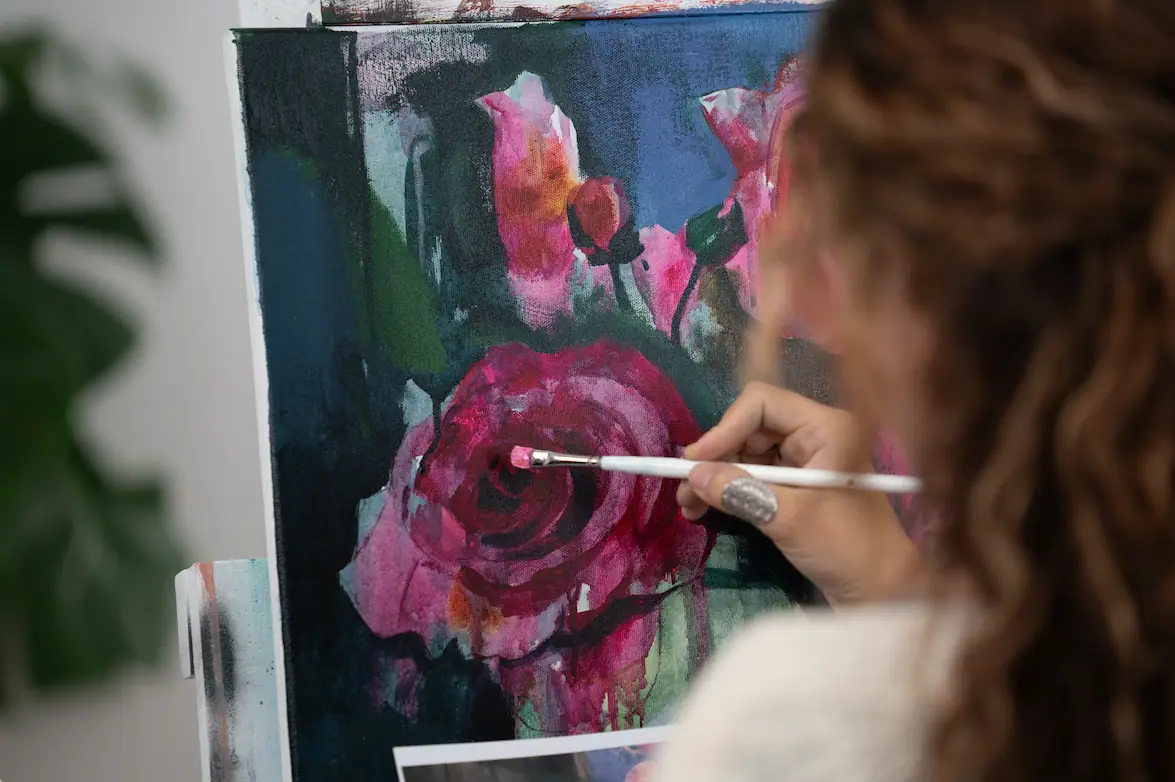
The best brushes for oil painting hold a heavy paint load, keep their shape stroke after stroke, and feel comfortable in your hand. After that, the right brush comes down to matching bristle, shape, and size to the work you actually make. This guide ranks ten oil paint brushes worth owning in 2024, walks you through how to choose, and shows you how to care for them so they last for years instead of months.
Here is the thing most beginners miss: the brush is not a small decision. It is the tool between your hand and the canvas, and a good one holds paint where you want it, releases it cleanly, and snaps back to shape so the next stroke lands true. A bad brush splays, sheds, and fights you the whole way. Investing in good oil painting brushes gives you precision, control, durability, and the freedom to keep your focus on the painting instead of the equipment.
How do you choose a brush for oil painting?
Choosing a brush comes down to matching the type, shape, and size to your goals for the painting. There is no single perfect brush, only the right one for what you are trying to do. Here are the factors that matter, in the order they matter.
Should you use natural or synthetic bristles?
Both work well, and the choice depends on how you paint. Each has a clear strength.
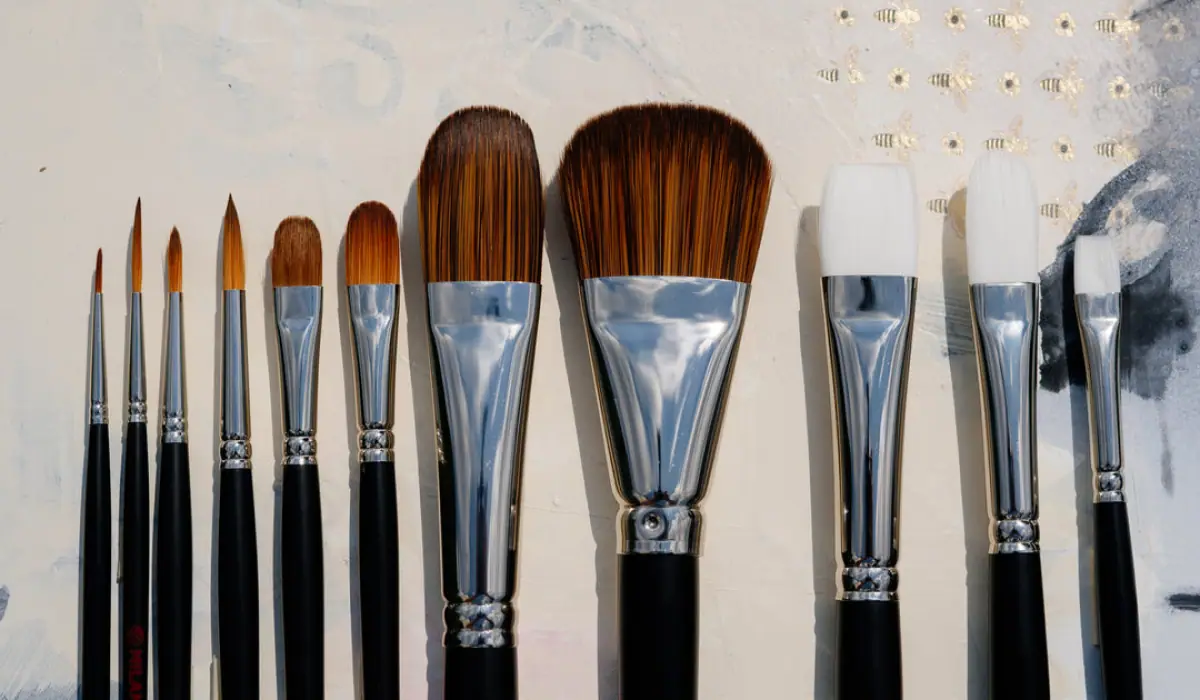
- Natural bristles. Made from animal hair such as hog, sable, or squirrel, natural bristles hold a lot of paint and create rich texture. They suit seasoned artists who love a heavy paint load and visible mark-making.
- Synthetic bristles. Made from nylon or polyester, synthetic bristles are resilient, hold their shape, and clean up easily. They are a great choice for beginners and for anyone after smooth, even strokes.
What brush shapes do you need?
Each brush shape is built for a different job, so a small set of shapes covers most of what you will do.
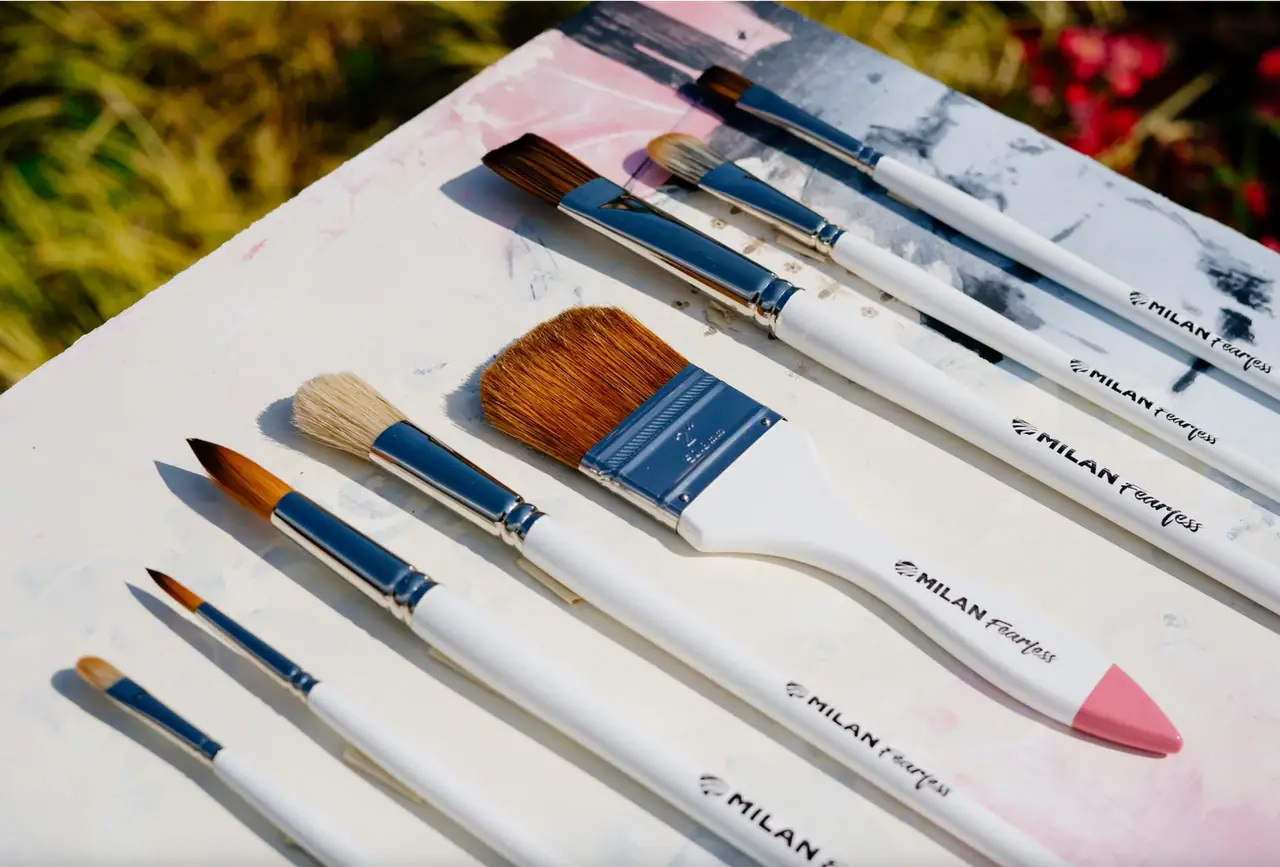
- Round brushes. Versatile for detailing, outlining, and sketching with precision.
- Flat brushes. Ideal for bold strokes, filling large areas, and creating crisp edges.
- Bright brushes. Perfect for short, controlled strokes and working in tight spaces.
- Filbert brushes. Essential for blending, soft edges, and varied strokes.
- Angle brushes. Excellent for curves, angled shapes, and dynamic lines.
- Fan brushes. Ideal for blending backgrounds and painting texture like foliage or clouds.
What size brushes should you buy?
Match the size to the scale of your work, and keep a small range on hand. Three size bands cover almost everything.
- Small brushes (0 to 2). Tailored for fine details and intricate work.
- Medium brushes (4 to 8). Versatile for a wide range of painting needs.
- Large brushes (10 and above). Perfect for covering large areas and making bold, expressive strokes.
How much do quality and brand matter?
Quality matters more than quantity, so choose brushes that keep their shape, have securely attached bristles, and feel comfortable to hold. Look to brands known for craftsmanship and durability. A few good brushes you understand will serve you better than a drawer full of cheap ones that splay after a month.
Does handle length matter?
Yes, and it changes how you work. Short handles are best for fine detail and close-up painting, while long handles suit easel painting and broad strokes because they let you stand back and move freely.
What about price?
Start with a basic set that includes a variety of shapes and sizes, then upgrade as your skills grow. You do not need professional brushes on day one. Investing in higher quality brushes makes sense once you know which shapes you reach for most.
What are the best oil paint brushes for professional artists?
Here are the top ten brushes for oil painting in 2024, each with a clear strength. They range from natural hog and Kolinsky sable to strong synthetics, so there is a match whether you paint thick and textured or fine and detailed.
10. Grumbacher Gainsborough filbert brushes
Made with natural hog bristles, this line blends beautifully, holds a soft edge, and stays versatile across many techniques. A reliable, affordable place to start with filberts.
9. Raphael Paris Classic 3572 flat brushes
Constructed of fine hog bristles, these flats are built for broad strokes and large areas. A dependable choice when you need to cover ground with confidence.
8. Rosemary and Co Ivory series brushes
Made with strong synthetic bristles, the Ivory series excels at heavy applications. It is best for artists who want a high quality synthetic alternative that stands up to thick paint.
7. Silver Brush Limited Grand Prix series
These interlocked bristles help the brush retain its shape, which makes them ideal for impasto and heavy texture. A strong pick for painters working with thick layers and bold strokes.
6. Isabey 6227Z Kolinsky sable round brushes
These rounds carry Kolinsky sable hair for fine detail, a high paint-holding capacity, and a smooth, controlled application. A pleasure to work with when precision matters.
5. Escoda Clasico series brushes
Made from high quality Chungking hog bristles, the Clasico series is built for expressive strokes. Best for painters who enjoy robust, textured mark-making.
4. Princeton Aspen series brushes
These synthetic brushes mimic natural hair and are made for heavy-bodied oils. A durable synthetic alternative for anyone who wants natural-feeling performance without natural hair.
3. Da Vinci Maestro series 10 round brushes
Crafted with Kolinsky red sable hair for flexibility and strength, the Maestro rounds are made for professionals who need durable, precise brushes for intricate work.
2. Winsor and Newton series 7 Kolinsky sable brushes
This series is renowned for precision and superior quality, delivering unmatched detail and control. For many artists it is the benchmark sable brush.
1. Milan Art Fearless Master Oil Set and Mixed Media Brush Set
Each brush in these sets was hand-picked by artists Elli and Dimitra Milan, and together they cover everything you need for almost any painting. The Fearless Master Oil set and the Mixed Media Brush Set both mix soft and firm bristles, so a single set carries you from broad blocking to fine detail. They were created out of frustration: years of hunting for good quality, affordable brushes that simply held up. So Milan built them.
How do you care for your oil brushes?
Good brushes last for years if you clean and store them right, and they die fast if you do not. The biggest mistake is leaving them soaking upright in a jar, which bends the bristles into a permanent splay. Here is the routine that keeps them alive.
How to clean oil brushes
Clean your brushes before you walk away for the night, every time. Wipe the excess paint off with a clean cotton cloth or rag, then rinse with clean paint solvent. Use a light detergent only when necessary, and reshape the bristles with your fingers afterward. Dry and store the brushes upright with the bristles facing up, or lay them flat on a table.
Only reach for mild soap when you will not paint for a week or more. If you paint regularly there is no need to soap your brushes every time, just an occasional deep clean. For the full routine, see how to clean your paint brushes so they last.
How to restore a crusty brush
If a brush has gone too dirty and crusty, try rubbing alcohol to break up the dried paint. And if the brush seems beyond saving, soak it overnight in Murphy’s Oil Soap before you give up on it. More brushes come back than you would expect.
How to condition natural bristles
Condition natural bristle brushes regularly with a brush cleaner or mild conditioner to keep them soft and pliable. Natural hair dries out over time, and a little conditioning keeps it from going brittle.
Why your brush choice matters
The brush you choose has a real impact on the painting you can make. Artists who have command over their tools can leave their mark boldly, and the difference between a just-okay painting and a masterwork often comes down to control. The right brush is the one that disappears in your hand and lets you think only about the image.
So consider the bristle, the shape, the size, the quality, the handle length, and the price, then pick brushes that match your style instead of buying everything at once. Take care of them, and they become reliable companions for years. If you are choosing your kit from scratch, our guide on types of paint brushes and how to choose the right one walks through every shape, and best brushes for acrylic painting covers the acrylic side if you work in both. When you are ready to put those brushes to work, the 3 layering methods in essential oil painting techniques show you how to build a painting that looks professional.
The fastest way to learn masterful brushwork, the kind filled with intention and emotion, is to paint alongside working artists who can see what you cannot yet see. That is exactly what the Mastery Program is built for: step-by-step instruction and real feedback that turns good tools into finished work. For more techniques in this family, the oil painting techniques collection is here when you want to keep going.
Frequently asked questions
What are the best brushes for oil painting?
The best oil paint brushes hold a heavy paint load, snap back to shape after every stroke, and feel balanced in your hand. Natural hog bristle and Kolinsky sable are prized for texture and fine detail, while strong synthetics like Princeton Aspen and Rosemary Ivory handle heavy oils and clean up easily. Trusted lines include Winsor and Newton Series 7, Da Vinci Maestro, Isabey, Escoda, and Silver Brush.
Are natural or synthetic brushes better for oil painting?
Both work, and the right choice depends on your style. Natural bristles, made from hog or sable hair, hold more paint and create richer texture, which suits expressive and detailed work. Synthetic bristles, made from nylon or polyester, are resilient, hold their shape, clean up easily, and give smooth, even strokes. Many oil painters keep both kinds on the table.
What size brushes do I need for oil painting?
Start with a small range and add as you grow. Small brushes sized 0 to 2 handle fine details and intricate work, medium brushes sized 4 to 8 cover most everyday painting, and large brushes sized 10 and up are for covering big areas and bold, expressive strokes. A basic set with a few shapes and sizes is plenty to begin.
How do I clean oil paint brushes so they last?
Never leave brushes soaking upright in a jar, which bends the bristles permanently. Wipe excess paint onto a clean cotton rag, rinse with paint solvent, use a light detergent only when needed, then reshape the bristles with your fingers. Dry and store them upright with bristles up, or flat on a table. Use mild soap only when you will not paint for a week or more.
Which Milan Art brushes are best for oil painting?
The Milan Art Fearless Master Oil Set and the Fearless Mixed Media Brush Set were hand-picked by artists Elli and Dimitra Milan. Both sets mix soft and firm bristles so they cover a wide range of techniques, from broad blocking to fine detail. They were built to solve a real problem: finding good quality, affordable brushes that hold up to serious oil work.
What to practice this week
- Buy one good filbert and one good flat in a medium size, then paint with only those two for a week to learn what each shape really does.
- After your next session, clean one brush properly: wipe, rinse in solvent, reshape the bristles, and store it upright with the hairs facing up. Compare it to a brush you neglected.
- Squint at your subject and block the big shapes with a large brush before you ever reach for a small detail brush, so detail lands on top of correct shapes.
Supplies used
About the author
More from Elli