What Is Post-Impressionism? The Movement That Pushed Painting Past Light
Post-Impressionism took the bright color of Impressionism and pushed it toward feeling and structure, and it changed what paint was allowed to say.

Post-Impressionism is the late 19th century art movement that took everything Impressionism discovered about color and light and pushed it somewhere new: into emotion, structure, and personal vision. Painters like Vincent van Gogh and Paul Cézanne kept the bright palette and visible brushwork, then asked their work to do more than record a passing moment. They wanted it to mean something. That shift turned out to be one of the most important turning points in the history of painting, and it built the bridge that modern art walked across.
This guide explains what Post-Impressionism is, why it started, who shaped it, and how it differs from the Impressionism it grew out of.
What is Post-Impressionism?
Post-Impressionism is a movement in painting that emerged in the late 1880s and 1890s, keeping the lively color and loose brushstrokes of Impressionism while moving beyond its focus on light and momentary impressions. The British critic Roger Fry coined the term in 1910 to describe a generation of French painters who had absorbed Impressionism and then carried it forward in deeply personal directions.
Where Impressionism chased the fleeting beauty of a single moment, Post-Impressionists wanted depth, structure, and individuality. They reached for emotion and symbolism. They were willing to exaggerate forms, intensify colors, and break the rules they had been handed, all in service of expressing something true about their inner world.
That is the heart of it. Impressionism asked, how does this scene look right now? Post-Impressionism asked, how does this scene feel, and how do I build it on purpose? The answer to that second question opened the door to nearly everything that came after.
Why did Post-Impressionism start?
Post-Impressionism started because a group of painters in the 1880s felt that Impressionism, for all its beauty, had given something up. Impressionism had freed color and light, but in chasing the fleeting moment it often let go of solid structure and deeper meaning. These younger artists did not want to abandon what Impressionism had won. They wanted to build on it.
So they kept the bright, broken color and the visible brushstroke, and then they reintroduced what Impressionism had loosened: composition, weight, symbolism, and feeling. Some, like Cézanne, were after a more lasting sense of order. Others, like Van Gogh, were after raw emotional truth. They were not a unified school with a manifesto. They were individuals who had each absorbed Impressionism and then pushed past it in their own way, which is exactly why the movement produced such different and unmistakable styles.
Who were the most famous Post-Impressionist artists?
The two most famous Post-Impressionists are Vincent van Gogh and Paul Cézanne, and their work still shapes how artists think today. They show the two great directions the movement traveled: one toward emotion, the other toward structure.
Vincent van Gogh: emotion and energy
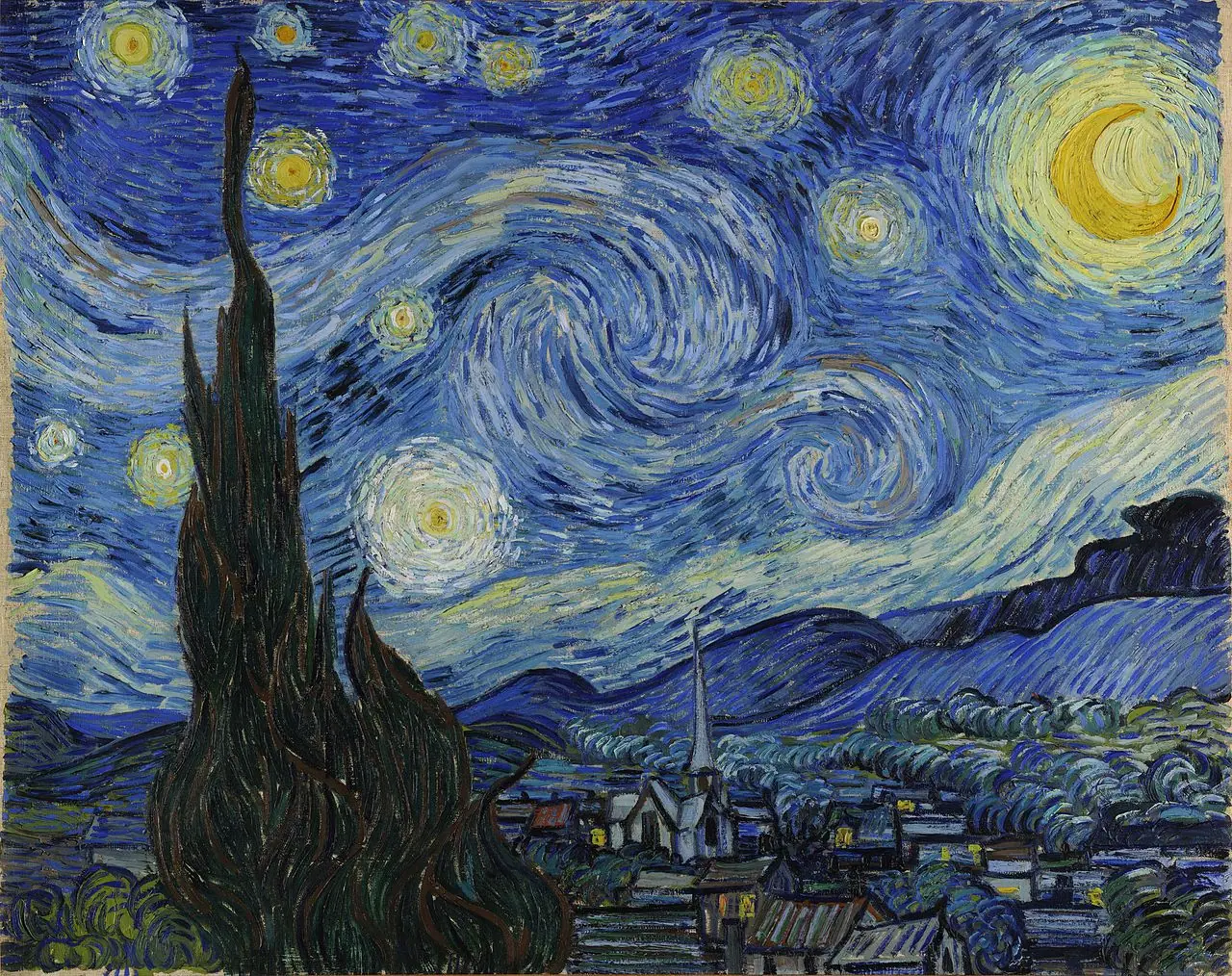
Van Gogh’s art is known for its raw emotional intensity and vibrant energy. His most famous painting, The Starry Night (1889), turns a quiet night sky into a swirling, almost living vision of light and movement. He painted it while staying at the asylum in Saint-Rémy, building the sky in thick, expressive strokes of paint that seem to pulse across the canvas.
Through that thick application of paint and fearless color, Van Gogh captured both beauty and turbulence. His brushwork is not there to describe the sky accurately. It is there to let you feel what the night felt like to him. That willingness to put feeling ahead of accuracy is what made him a cornerstone of the movement, and a direct ancestor of Expressionism.
Paul Cézanne: order and structure
Cézanne brought structure and order to Post-Impressionism, using geometric forms and planes of color to rebuild the natural world. In works like Mont Sainte-Victoire (1887), he broke the landscape down into a kind of puzzle of shapes and hues, simplifying the mountain and the land around it into building blocks of color.
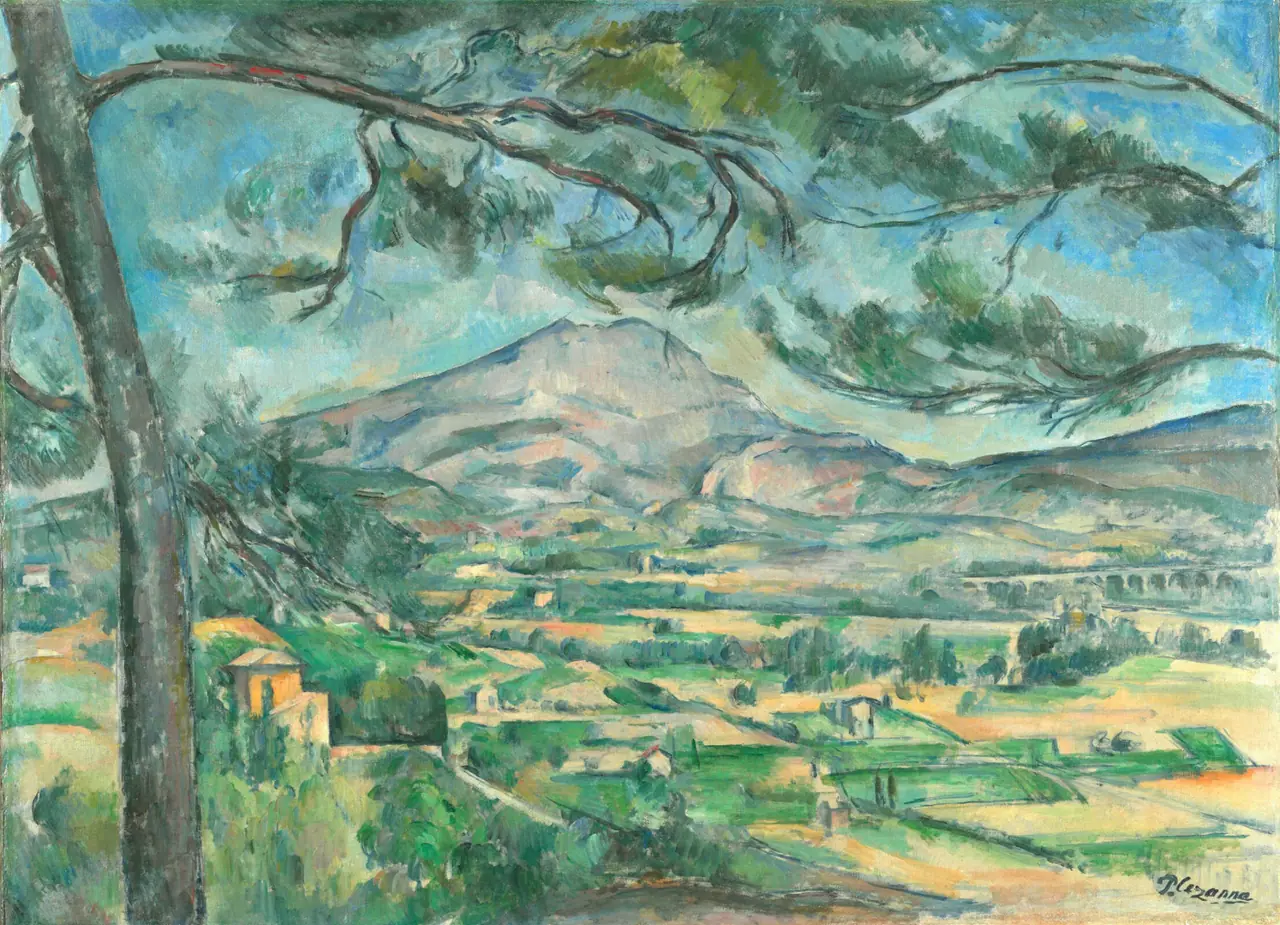
This was a quiet revolution. By treating a landscape as structure first and scenery second, Cézanne laid the groundwork for Cubism and much of the abstraction that followed. He proved that simplicity and even abstraction could carry as much depth and meaning as careful realism. Pablo Picasso later called him the father of us all, and the title fits.
Van Gogh and Cézanne were not the only Post-Impressionists. Georges Seurat built images out of tiny dots of pure color, an approach called Pointillism, and Paul Gauguin used flat planes of bold color and symbolic subjects. But Van Gogh and Cézanne remain the two figures most people picture when they hear the word.
How is Post-Impressionism different from Impressionism?
The core difference is intention: Impressionism set out to capture how a moment looked, while Post-Impressionism used that same visual language to express how a moment felt and how it could be built. Both movements share the bright palette, the visible brushwork, and the love of everyday subjects. That shared surface is why they are so easily confused.
Look closer, though, and the split is clear. Impressionism is about perception and the fleeting effect of light, the work of artists like Claude Monet, whose plein air studies you can explore further in our facts about Claude Monet. If you want to try that approach yourself, start with these four tips for painting like an Impressionist. Post-Impressionism takes those tools and aims them inward and forward, toward emotion, symbolism, and deliberate design. One records the world. The other reinterprets it.
That reinterpreting instinct is exactly what links Post-Impressionism to the modern movements that followed, including the strange dream logic of Surrealism. It also distinguishes it from the truth-telling honesty of Realism in art history, which came a generation earlier and looked outward at ordinary life rather than inward at feeling.
Why does Post-Impressionism still matter?
Post-Impressionism still matters because its bold experiments cleared the path for nearly all of modern art. Cubism, Expressionism, and Fauvism all trace their roots back to the permission these painters granted themselves: to distort, to exaggerate, and to put personal vision ahead of faithful description.
It also matters for the lesson it teaches working artists today. Post-Impressionism marries technical skill with emotional depth. It shows that the most powerful art often lives at the intersection of the two, where you have the craft to control your materials and the courage to say something real with them. Van Gogh had emotion and the brush control to channel it. Cézanne had feeling and the structural mind to give it order. Neither one alone would have changed art the way the pairing did.
That balance is something you can study and practice. Many of these paintings hang in museums you can visit, and they appear in our wider survey of famous paintings that shaped art history. The more closely you look at how Van Gogh built a sky or how Cézanne simplified a mountain, the more you start to see your own choices clearly.
If this movement pulls at something in you, that pull is worth following. Spend a little time with one of these paintings this week, then pick up a brush and try, in your own small way, to paint not just what you see but what you feel. You can keep exploring the painters and movements that got us here in our art history and famous paintings collection, and when you are ready to begin painting yourself, the 2-Week Challenge is a gentle place to start.
Frequently asked questions
What is Post-Impressionism in simple terms?
Post-Impressionism is a late 19th century art movement that kept the bright color and loose brushwork of Impressionism but used them to express emotion, structure, and personal vision instead of only capturing light. Van Gogh and Cézanne are its most famous figures.
Why did Post-Impressionism start?
Post-Impressionism started because a group of painters in the 1880s felt Impressionism's focus on fleeting light left out depth, structure, and feeling. They wanted art that did more than record a passing moment, so they pushed color and brushwork toward emotion and design.
Who are the most famous Post-Impressionist artists?
Vincent van Gogh and Paul Cézanne are the most famous Post-Impressionists. Van Gogh is known for emotional, swirling brushwork in works like The Starry Night, while Cézanne is known for building landscapes from geometric planes of color that pointed the way to Cubism.
What is the difference between Impressionism and Post-Impressionism?
Impressionism aimed to capture how light and color looked in a fleeting moment. Post-Impressionism kept that bright palette but used it to express inner feeling and deliberate structure, making the art more personal and more designed than a quick visual impression.
What to practice this week
- Find a reproduction of Van Gogh's The Starry Night and make a small study of just its brushstroke direction, drawing the swirls and lines without worrying about color.
- Take one simple landscape photo and reduce it to flat geometric planes of color the way Cezanne did, ignoring fine detail in favor of structure.
- Paint one small scene twice: once trying only to capture the light, and once exaggerating its color and shapes to show how it made you feel.
Supplies used

About the author
More from Elli