Claude Monet Facts: The Plein Air Painter Who Started Impressionism
The painter who took his easel outdoors, chased the light all day, and gave Impressionism its name.

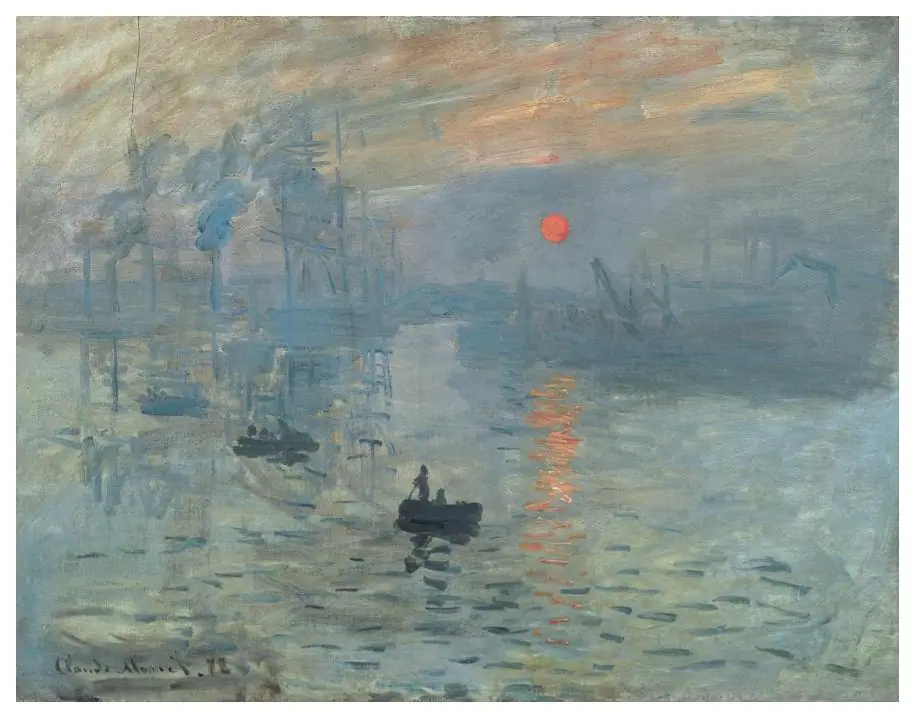

Claude Monet was a French painter, born in 1840 and working until his death in 1926, who led the Impressionist movement and built his whole practice around one obsession: light. He painted outdoors, directly in front of his subjects, in a method called plein air, and he chased the way sunlight changed a scene from one hour to the next. Once he wrote that his only merit lay “in having painted directly in front of nature, seeking to render my impressions of the most fleeting effects.” That sentence is the key to everything he made.
Studying how Monet worked adds a real tool to your own practice as a painter. Here are the facts worth knowing, organized around the questions most people actually ask about him.
What is Claude Monet best known for?
Claude Monet is best known for leading the Impressionist movement and for painting outdoors in natural light. If you have ever seen a soft, light-filled painting of a lily pond, a haystack, or a cathedral facade dissolving into color, there is a good chance Monet made it or inspired it. A few facts cover most of what people search for about him:
- He led the Impressionist movement and helped give it its name.
- He painted outdoors in plein air, directly in front of nature.
- He was a master of light, often painting the same subject many times over.
- He helped organize the artists who broke away from the official Salon.
- He painted for almost his entire life, even as his eyesight failed.
The rest of this guide unpacks each of those.
Why was Monet a plein air painter?
Monet became a plein air painter because he wanted to capture real, changing light, and the only place to find it was outdoors. Plein air simply means painting out in the open air, in front of your subject, rather than from sketches or memory back in a studio. A local landscape artist named Eugène Boudin first encouraged the young Monet to take his easel outside and paint nature as it actually looked.
That habit became the cornerstone of his work. Later in life, after settling in Giverny in northern France, Monet built a garden specifically so he could paint it, complete with a water lily pond and a Japanese style bridge. The waterlilies became the subject of several series, and they remain some of the most recognizable paintings in the world. Monet and the painters around him also opened the door for the travel artists and urban sketchers who still work outdoors today. If you want to try this approach yourself, our guide to painting like an Impressionist is a good place to begin.
What style of art did Claude Monet paint, and how did Impressionism get its name?
Monet painted in the Impressionist style, which uses bold color and loose, fearless brushstrokes to capture a fleeting moment rather than a polished, detailed scene. His bold color choices and quick strokes gave his canvases an unfinished look compared with the smooth, realistic paintings that were fashionable in his day.
The name itself began as an insult. When Monet showed a hazy harbor scene at dawn, some critics complained that it looked more like a rough sketch, a mere “impression,” than a finished painting. The painting was titled Impression, Sunrise, and the mocking label stuck. Instead of fading, it became the name of a whole movement, and Monet led the way for the artists who followed. You can see how that same instinct for color shaped a generation in our look at the symbolism of color and in our guide to Post-Impressionism, the movement that grew directly out of what Monet started.
How did Monet use light in his paintings?
Monet treated light as his true subject, often paying more attention to how light fell on a thing than to the thing itself. He was fascinated by the way sunlight changed a scene through the day, so he frequently painted the same subject again and again at different hours to record those shifts.
This is why he worked in series. Whether his subject was waterlilies, haystacks in a field, or the front of the Rouen Cathedral, he would return to it under morning light, midday light, and evening light, capturing a different painting each time. The subject barely mattered. What fascinated him most was the light moving across it. That patient, repeated study is one of the most useful lessons any painter can borrow from him, and it places his work alongside the other turning points covered in our guide to famous historical oil paintings.
Who were Monet’s artist friends, and how did they change the art world?
Monet built deep friendships with other painters and helped organize them into a group that broke away from the official art establishment. Even though he struggled at times with frustration and dark stretches, he understood the value of connecting with other artists of his era. He counted Auguste Renoir, Alfred Sisley, Frédéric Bazille, and Charles Gleyre among his friends and fellow painters.
Together, several of these artists formed a society, the Société Anonyme des Artistes, Peintres, Sculpteurs, Graveurs, to hold their own exhibitions outside the powerful official Salon. That decision mattered. By creating their own venue, these painters gave themselves the freedom to show work the Salon would have rejected, and that freedom is a large part of why Impressionism survived to reshape modern art.
Did Monet paint his whole life?
Yes, Monet painted for nearly his entire life, from childhood until his final years. As a boy he was always drawing caricatures of the people around him, encouraged by a mother who supported his artistic gifts. That early habit grew into a love of painting that never left him.
His first wife served as his frequent model in his early years as he developed his style. Decades later, even as cataracts clouded his vision, he kept painting. In his final years he produced a series of very large waterlily canvases that he hoped would serve as a “haven of peaceful meditation,” an enormous, immersive vision completed by a man who could barely see. Painting was, by every account, the love of his life.
What can painters learn from Claude Monet today?
The most useful thing you can learn from Monet is to look harder at light and to paint the same thing more than once. His habits are not mysteries reserved for geniuses. They are practices you can adopt this week: take your easel outdoors, finish small studies quickly before the light shifts, and let your brushstrokes stay loose instead of forcing every detail.
Researching the artists who came before us lets us choose which of their habits to adopt and which pitfalls to avoid. If Monet’s work pulls at you, get outside and try a plein air study of your own, even a small one. When you are ready to go further with the techniques behind paintings like his, the rest of our art history and famous paintings collection is waiting, and the 2-Week Challenge is a gentle place to pick up a brush and begin.
Frequently asked questions
What is Claude Monet best known for?
Claude Monet is best known for founding and leading the Impressionist movement and for painting outdoors in natural light. His most recognizable works are the Water Lilies series, the Haystacks, the Rouen Cathedral studies, and Impression, Sunrise, the painting that gave Impressionism its name.
What is plein air painting and why did Monet use it?
Plein air means painting outdoors, directly in front of your subject, in real natural light. Monet used it because he cared more about how light fell on a scene than about the scene itself, and outdoor light kept changing in ways he could never reproduce from memory in a studio.
What style of art did Claude Monet paint?
Monet painted in the Impressionist style. It uses loose, broken brushstrokes, bright color, and an unfinished look that captures a fleeting moment of light rather than a polished, detailed scene. Critics first used the word impression as an insult before it named the movement.
When was Claude Monet born and when did he die?
Claude Monet was born in 1840 in France and died in 1926. He painted for almost his entire life, continuing even in his final years when cataracts clouded his vision.
What to practice this week
- Set up outdoors and paint one small plein air study of whatever is in front of you, finishing in under an hour so the light cannot change on you.
- Pick one simple subject and paint it twice, once in morning light and once in late afternoon, then compare how the color shifts.
- Limit yourself to broken, separate brushstrokes for one study and resist blending them, the way Monet let the eye mix the color.
Supplies used

About the author
More from Elli