Color Symbolism in Art: What Each Color Means, Positive and Negative
Each color carries a positive charge and a negative one, and the same hue can flip its meaning entirely depending on where your viewer grew up.

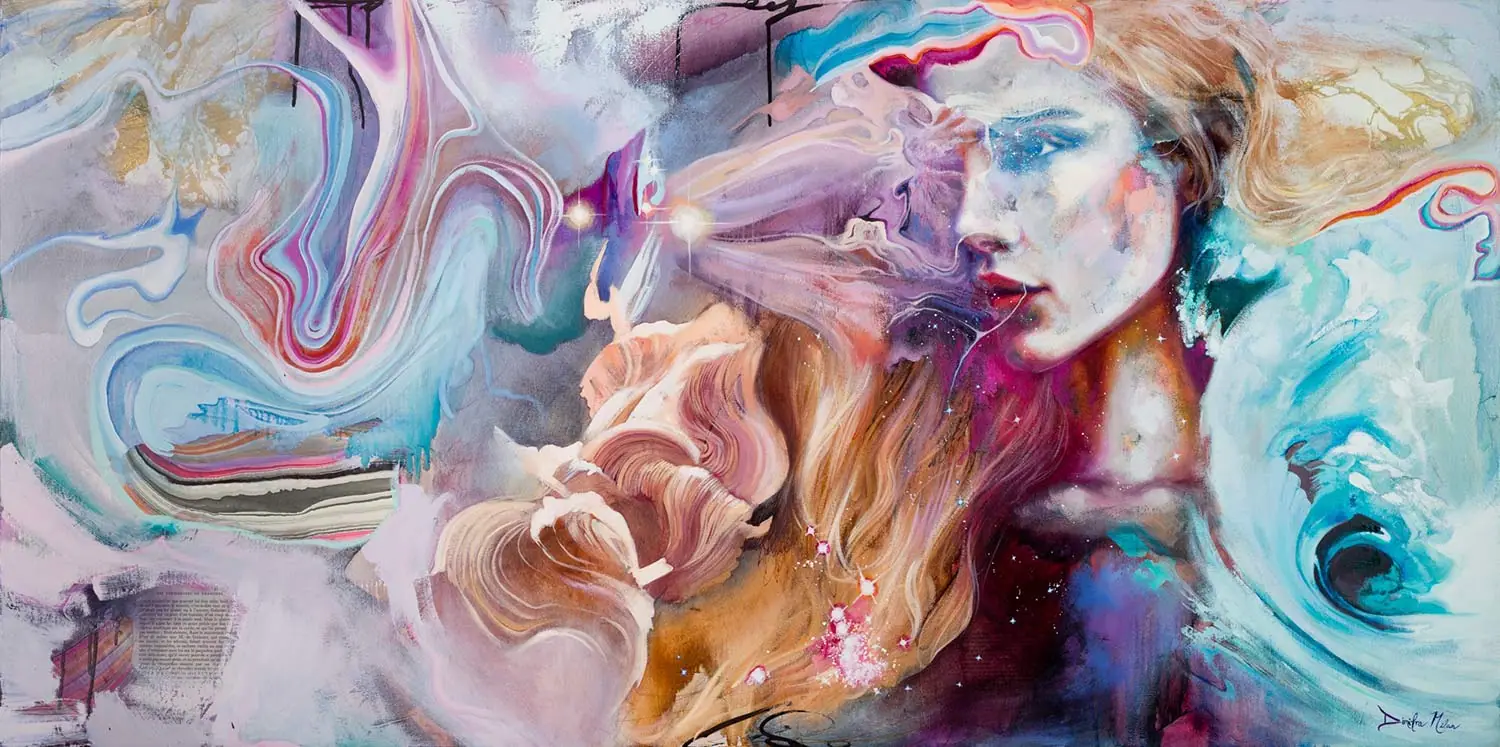

Color reaches your viewer before anything else does. Before they read the subject, before they notice the brushwork, before they decide whether they like the painting, the palette has already told them how to feel. That is color symbolism at work: the layer of meaning a color carries beyond what it literally depicts.
Every major color holds both a positive meaning and a negative one, and those meanings are not fixed. They shift across cultures with history, religion, and tradition, so the same red that blesses a wedding in China can signal violence in southern India. As an artist, you can put this whole vocabulary to work. Here is the full map: what each color symbolizes, how the Western and Eastern worlds read color differently, and how to fold that knowledge into your own paintings.
What do colors symbolize?
Each major color carries a positive charge and a negative one, and context decides which side your viewer feels.
- Red is the extreme of the palette. It symbolizes power, passionate love, adventure, and energy, and on its dark side, anger, seduction, violence, and danger.
- Orange signals enthusiasm, fascination, creativity, determination, and success. Overplayed, it can come across as abrasive and crass.
- Yellow typically means happiness, enlightenment, joy, positivity, and clarity. Its negative readings are critical, judgmental, and cautious.
- Green symbolizes life, renewal, nature, growth, balance, and harmony. It can also stand for greed, jealousy, and possessiveness.
- Blue carries depth, stability, wisdom, faith, truth, and heaven. Pushed the other way, it reads as coldness, indifference, and sadness.
- Purple combines the stability of blue with the fierce energy of red, which is why it has always signaled royalty, nobility, luxury, and ambition. Its negative side is decadence, conceit, and pomposity. (If purple keeps going muddy on your palette, here is how to mix a clean purple.)
- White means purity and innocence across most of the West. In much of the East it is the color of mourning, which makes it the clearest proof that color meaning is learned, not built into the pigment.
None of these meanings live in the paint itself. They live in the viewer, which is why the same list reads differently depending on where that viewer grew up.
What does color symbolize in the Western world?
In the Western world, blue means trust, green means money, and red means passion and valor, and you can see all three at work in branding and national identity. Banks and financial institutions lean on blue in their logos and buildings because blue signals trust and stability. Green reads as wealth. Red carries passion and courage, which is why both the United States and Australia fly red, white, and blue: red for valor, white for purity and innocence, blue for trust.
Australia’s sporting colors tell the same story in a different key. Their national teams wear green and gold: gold for the golden wattle, the national flower, and for the beaches, grain harvests, and mineral wealth; green for the forests, eucalyptus trees, and open pastures of the landscape.
Painters have worked this emotional register for centuries. Picasso spent the years from 1901 to 1904 painting almost entirely in shades of blue, depicting sad and disheartening scenes. Then from 1904 to 1906 he turned to reds, pinks, and oranges in what he called his Rose Period, and the entire mood of his work lifted. The same principle runs through the most famous paintings in art history, and it extends beyond hue: Caravaggio built his drama out of light and dark the way Picasso built his out of blue.
What does color symbolize in the Eastern world?
Across much of the East, color is bound to religion, ceremony, and politics, and several familiar Western meanings flip completely. The sharpest example is white. In the West, brides wear white as a symbol of purity. In China and India, white belongs to mourning: it is worn by widows and associated with funerals and ceremonies of death, a visual withdrawal from color, light, and the pleasures of ordinary life.
Red flips the other way. In both China and India, red is the color of brides, weddings, and festivals, though in the southern half of India it can also imply violence and disruption. Saffron, a cousin of red, is the most sacred color in India, worn by monks who give up their earthly possessions as a mark of purity and devotion.
India’s color meanings often trace back to its gods. One traditional account says Krishna’s skin was tinged blue after he survived a demon’s poisoning, and because Krishna embodies love and divinity, blue came to represent immortality and the divine.
China built its traditional color system on the rule of fives, pairing five primary colors with the five natural elements: water, fire, wood, metal, and earth. Landscape painters used those colors to represent each natural property of the land, and the system reached into politics too: each dynasty claimed its own colors, much as countries claim flags today. Red is the lucky color of Chinese culture, used to express joy and good wishes. Yellow corresponds to earth and to the emperor himself; China’s legendary first ruler was known as the Yellow Emperor, and the country’s heartland is still called the Yellow Earth.
How do you use color symbolism in your own paintings?
Choose the emotion first, then build a palette whose symbolism supports it, even when that means leaving literal accuracy behind. Van Gogh said it plainly:
Instead of trying to reproduce exactly what I see before me, I make more arbitrary use of color to express myself more forcefully.
Let the colors do the talking. If the painting is about longing, a faithful rendering of a sunny afternoon will fight you; cool the palette and the feeling arrives on its own. If you want tension inside a beautiful image, reach deliberately for a color’s negative side: a red that seduces, a blue that chills, a green that covets.
Two habits make this stick. First, name the feeling you want before you squeeze out any paint, then audit every major color choice against it. Second, remember who your viewer is. A palette that reads as celebration to a Western collector may carry a different charge elsewhere, and knowing that lets you choose on purpose. Color is one of the seven elements of art, and decision for decision, it carries more emotional weight than any of the others.
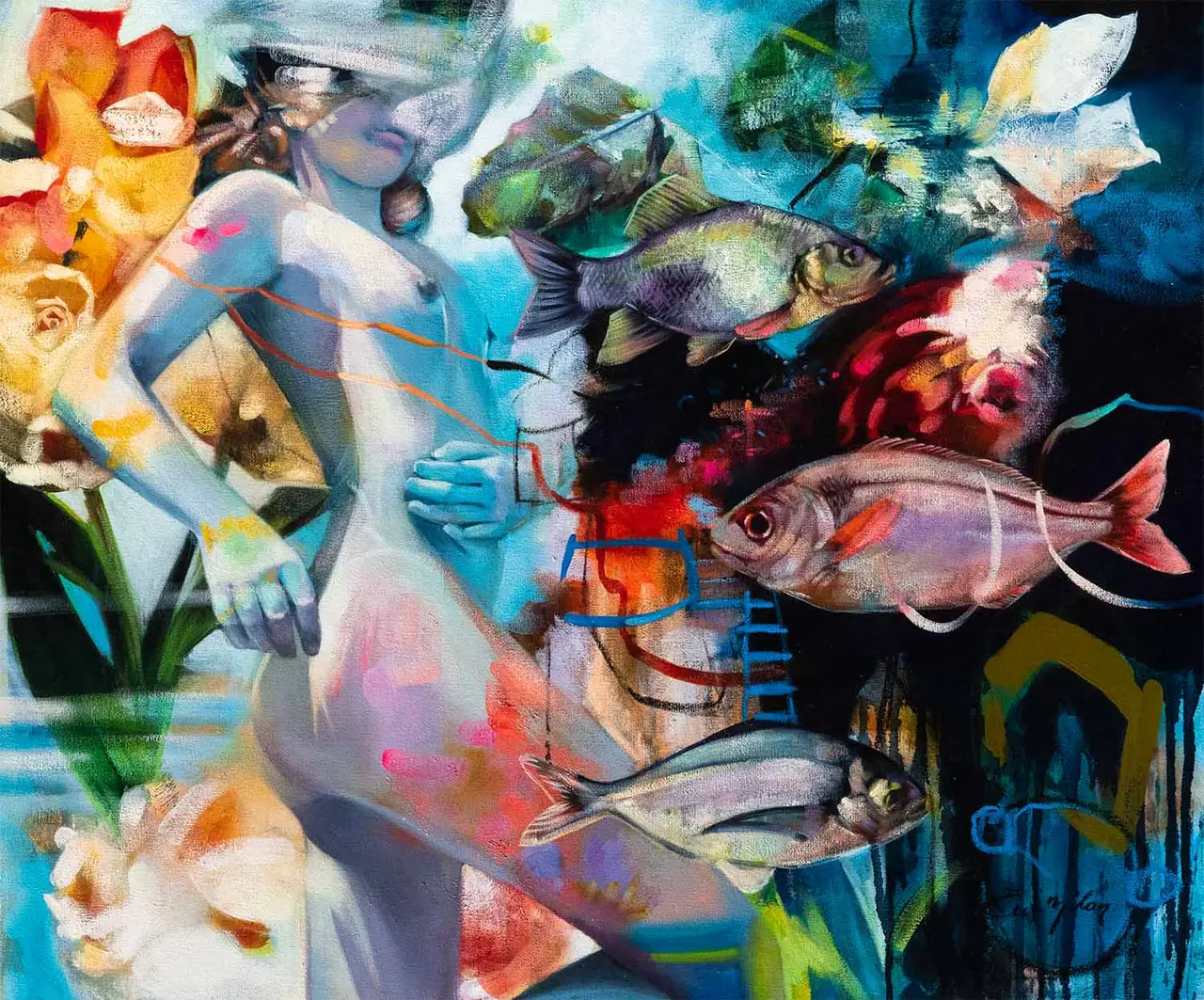
If the history behind these codes pulls at you, the art history and famous paintings collection traces how painters across the centuries made these same choices.
Frequently asked, answered fast
Color is a language your viewers already speak, whether or not they know it. Speak it back to them with intention and your work gains a depth that has nothing to do with technical polish. If you want a structured place to practice, the 2-Week Challenge is built for exactly this kind of experiment: one feeling, one palette, one painting at a time.
Frequently asked questions
What does the color red symbolize in art?
Red is the most extreme color in the palette. It symbolizes power, passionate love, adventure, and energy, but it can also read as anger, seduction, violence, or danger. Culture decides which side dominates: in China red is the lucky color worn by brides, while in southern India it can imply violence and disruption.
Why do color meanings change between cultures?
History, religion, and tradition shape what a color means to the people raised with it. White is the clearest example: it signals purity and weddings in the West, but mourning and funerals in China and India. The pigment is identical. The association is learned.
How do artists use color symbolism in a painting?
They choose a palette for the feeling they want the viewer to have, not just for visual accuracy. Picasso painted the sorrowful scenes of his Blue Period almost entirely in blues, then shifted to reds, pinks, and oranges for the warmer Rose Period. The color carried the emotion before the subject did.
What to practice this week
- Paint one small study of a single emotion using only colors whose symbolism supports it, and keep the subject simple.
- Repaint the same simple subject twice, once in cool blues and greys, once in warm reds and oranges, then compare the mood each version creates.
- Pull up a finished piece and write down what each dominant color symbolizes, then check whether that list matches what you wanted the painting to say.
Supplies used

About the author
More from Elli