Historical Women Artists: 22 Female Historical Artists Who Changed Art
Art history is full of women who built whole movements and were written out of the credit. Here are 22 historical women artists worth knowing, grouped by the movements they changed.
Historical women artists are the female painters and innovators who built entire art movements, often without ever getting the credit. This list gathers 22 of them across abstraction, surrealism, early modernism, and mysticism: women like Lee Krasner, Helen Frankenthaler, Leonora Carrington, and Hilma af Klint, who experimented bravely, worked far ahead of their time, and still shape how painters work today. Many were overlooked in their own lifetimes. Their influence has only grown.
What follows is organized by movement, so you can see not just who these women were but what they changed. Read it as a map of art history with the missing names filled back in, and a reminder that a voice worth hearing has never depended on permission to be heard.
Who are the most important historical women artists?
The most important historical women artists are the ones who changed how painting itself was done, often before the movements they shaped even had names. Lee Krasner and Helen Frankenthaler reshaped abstraction. Leonora Carrington and Remedios Varo built private worlds in surrealism. Hilma af Klint painted pure abstraction years before Kandinsky. Below, grouped by movement, are 22 women whose courage and innovation earned them a permanent place in art history, even when history was slow to give it.
Which women shaped Abstract Expressionism and modernism?
The women who shaped Abstract Expressionism and modernism include Lee Krasner, Helen Frankenthaler, and Agnes Martin, painters who pushed abstraction in directions the men around them had not imagined. Several of them were innovating in parallel with, or ahead of, the famous names that overshadowed them.
Lee Krasner
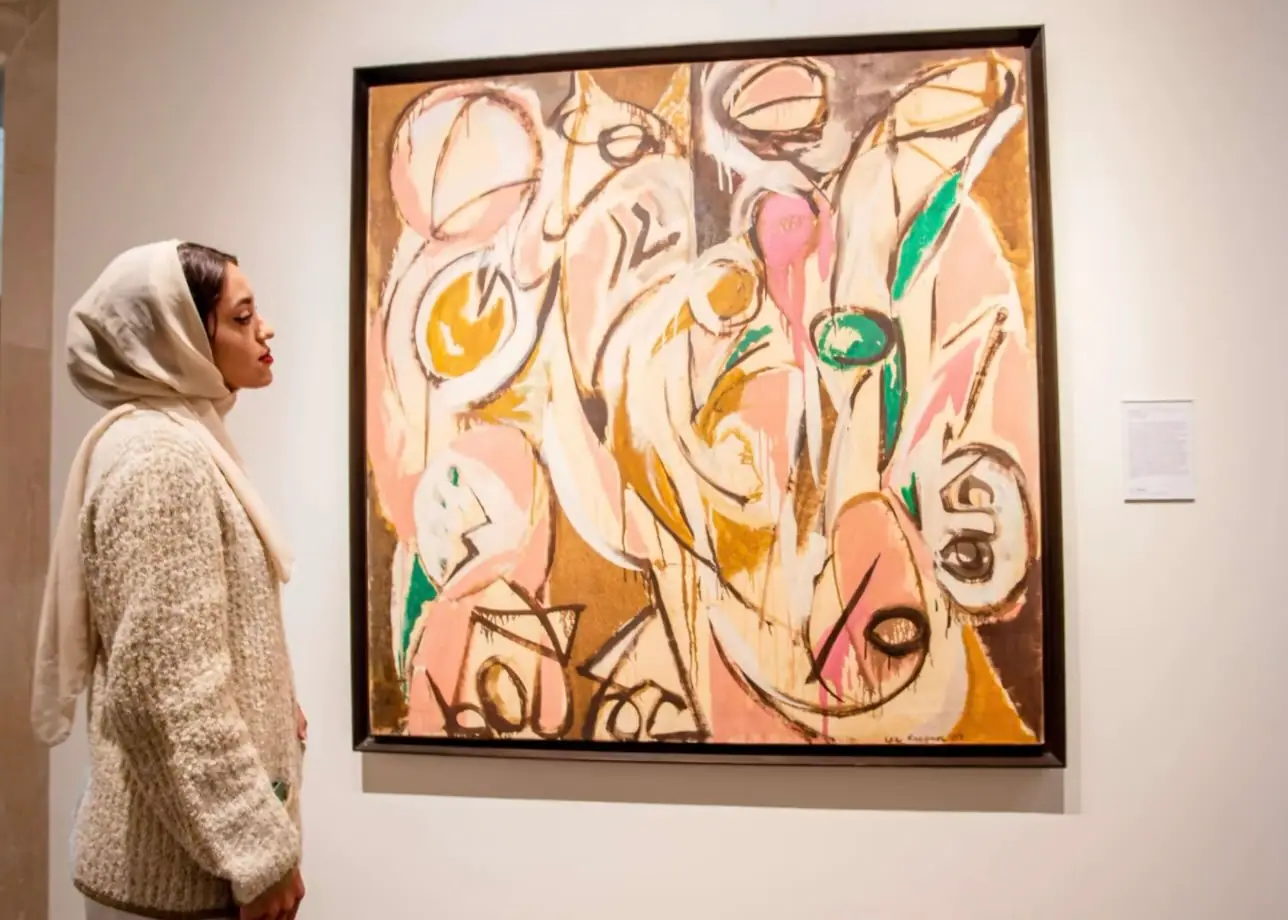
Krasner was a major force in Abstract Expressionism whose impact reaches far beyond the shadow of Pollock. Her painting Re-Echo is full of fierce strokes and layered energy, a reminder that she was a serious innovator in her own right, not a footnote to anyone.
Elaine de Kooning
De Kooning was a master of dynamic brushwork and expressive portraiture. Her vibrant portrait of John F. Kennedy captures motion and immediacy, proof that the energy of Abstract Expressionism could carry a likeness as well as an abstraction.
Helen Frankenthaler
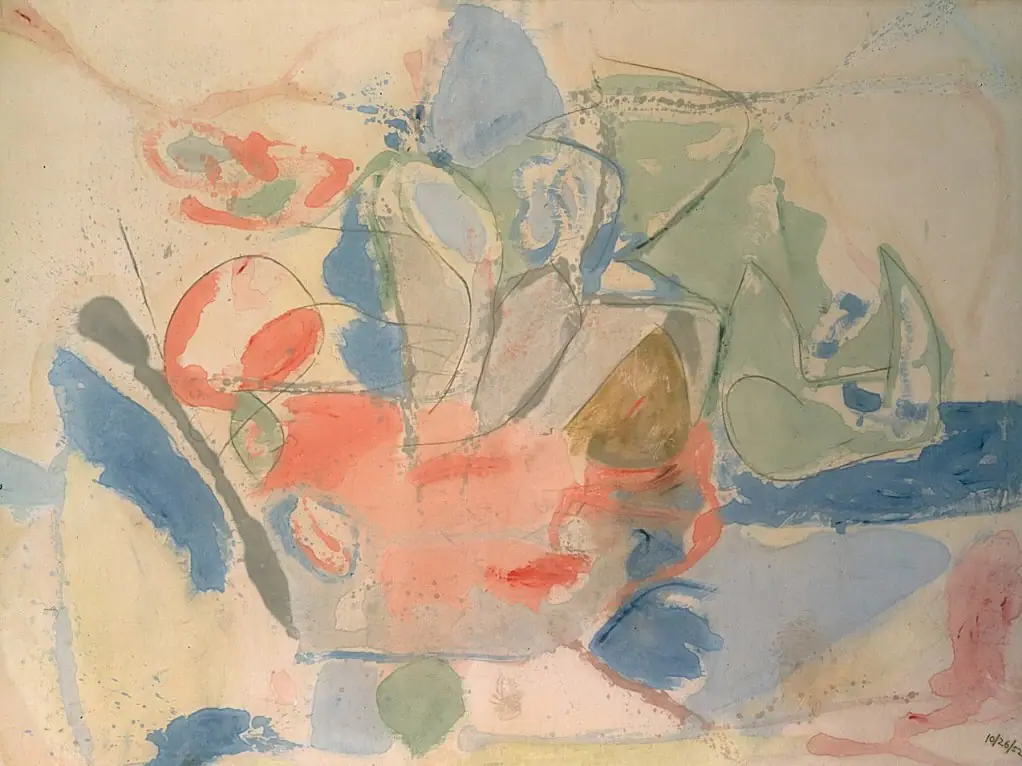
Frankenthaler reshaped contemporary abstraction with inventive color and form. Mountains and Sea shows her pioneering soak and stain technique, where thinned paint sinks into raw canvas, a method that opened the door to color field painting.
Pat Steir
Steir blends intention and chance in a way that feels poetic and atmospheric. Her cascading waterfall paintings, made by letting poured paint run down the canvas, invite quiet contemplation and treat gravity itself as a collaborator.
Agnes Martin
Martin was minimalist and deeply intuitive, working in soft graphite grids that create a peaceful, meditative rhythm. A painting like Summer looks simple from across the room and reveals enormous subtlety up close, all hand drawn line and breath.
Janet Sobel
Sobel was a bold innovator whose contributions were overlooked for decades. Her Milky Way is an early drip painting that predates Pollock, which means one of the signature techniques of American abstraction was pioneered by a self taught woman who is still too rarely named.
Bernice Bing
Bing was a Chinese American modernist who bridged cultures with expressive power. Her large gestural abstractions, influenced by calligraphy, fused Eastern brushwork with Western abstraction long before that conversation became common.
Which women defined Surrealism?
The women who defined Surrealism include Leonora Carrington, Dorothea Tanning, Remedios Varo, and Toyen, painters who treated the canvas as a doorway into private, dreamlike worlds. Far from being muses on the edges of the movement, they were among its most original storytellers.
Leonora Carrington
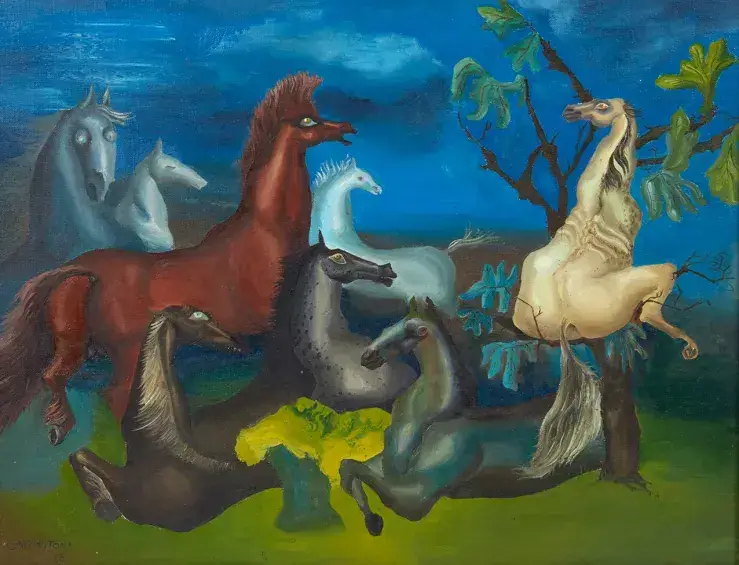
Carrington made paintings that feel like private universes shaped by story and symbolism. The Horses of Lord Candlestick is filled with mythical imagery, the kind of personal mythology that makes her work feel less like a dream and more like a place that genuinely exists.
Dorothea Tanning
Tanning was an explorer of psychological landscapes and the uncanny. Eine Kleine Nachtmusik is a haunting, dreamlike tableau, a hallway where the ordinary tips into the strange, and a clear sign of how far the unconscious could be pushed on canvas.
Remedios Varo
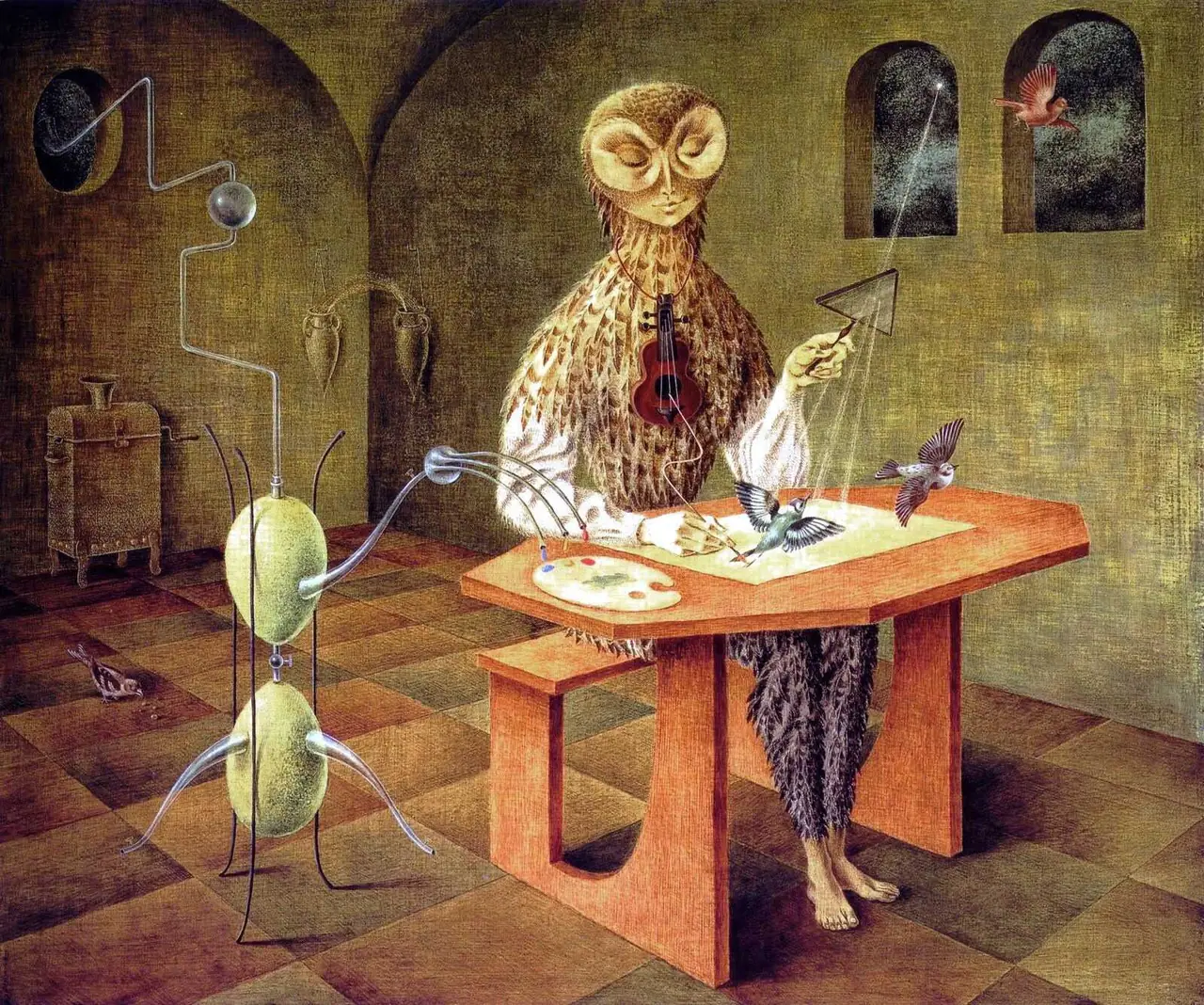
Varo combined science, wonder, and narrative imagination. Creation of the Birds shows a scene of magical invention, an owl like figure drawing birds into life, blending alchemy and storytelling into images that reward slow, careful looking.
Toyen
Toyen was a groundbreaking Czech artist who defied expectations and norms, both in art and in life. The Myth of Light is filled with symbolic surreal forms, the work of a painter who refused every box, including the one that said surrealism belonged to its men.
If surrealism pulls at you, this guide to what surrealism is traces the movement that painted dreams, and these women are central to that story.
Which women drove Expressionism and the early avant-garde?
The women who drove Expressionism and the early avant-garde include Gabriele Munter, Sonia Delaunay, Alma Thomas, Bridget Riley, Louise Nevelson, and Luchita Hurtado, artists who pushed color, geometry, and form into genuinely new territory. Several of them invented the visual languages that later movements took for granted.
Gabriele Munter
Munter was a central figure in Der Blaue Reiter with a fresh and modern approach. Her colorful, expressive portraits and landscapes helped define early German Expressionism, and her bold flat color shaped the look of the whole circle she worked in.
Sonia Delaunay
Delaunay was a visionary of Orphism whose influence reaches fashion, design, and painting. Electric Prisms radiates color and movement, the work of an artist who saw no wall between fine art and everyday design and treated color itself as the subject.
Alma Thomas
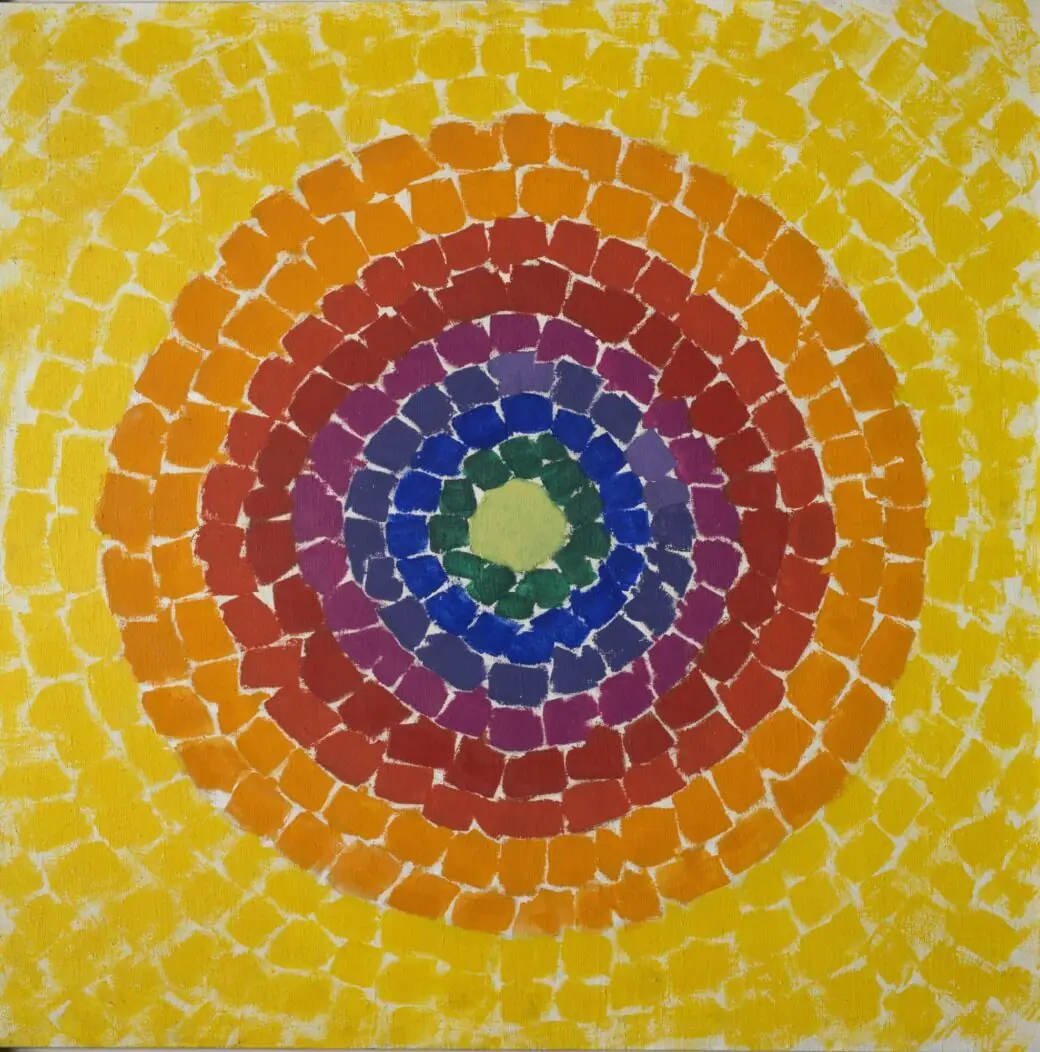
Thomas was a master of vibrancy and one of the great American colorists. Resurrection, a joyful mosaic of color, became the first painting by a Black woman acquired for the White House collection, recognition that arrived late for an artist who painted pure, patterned light.
Bridget Riley
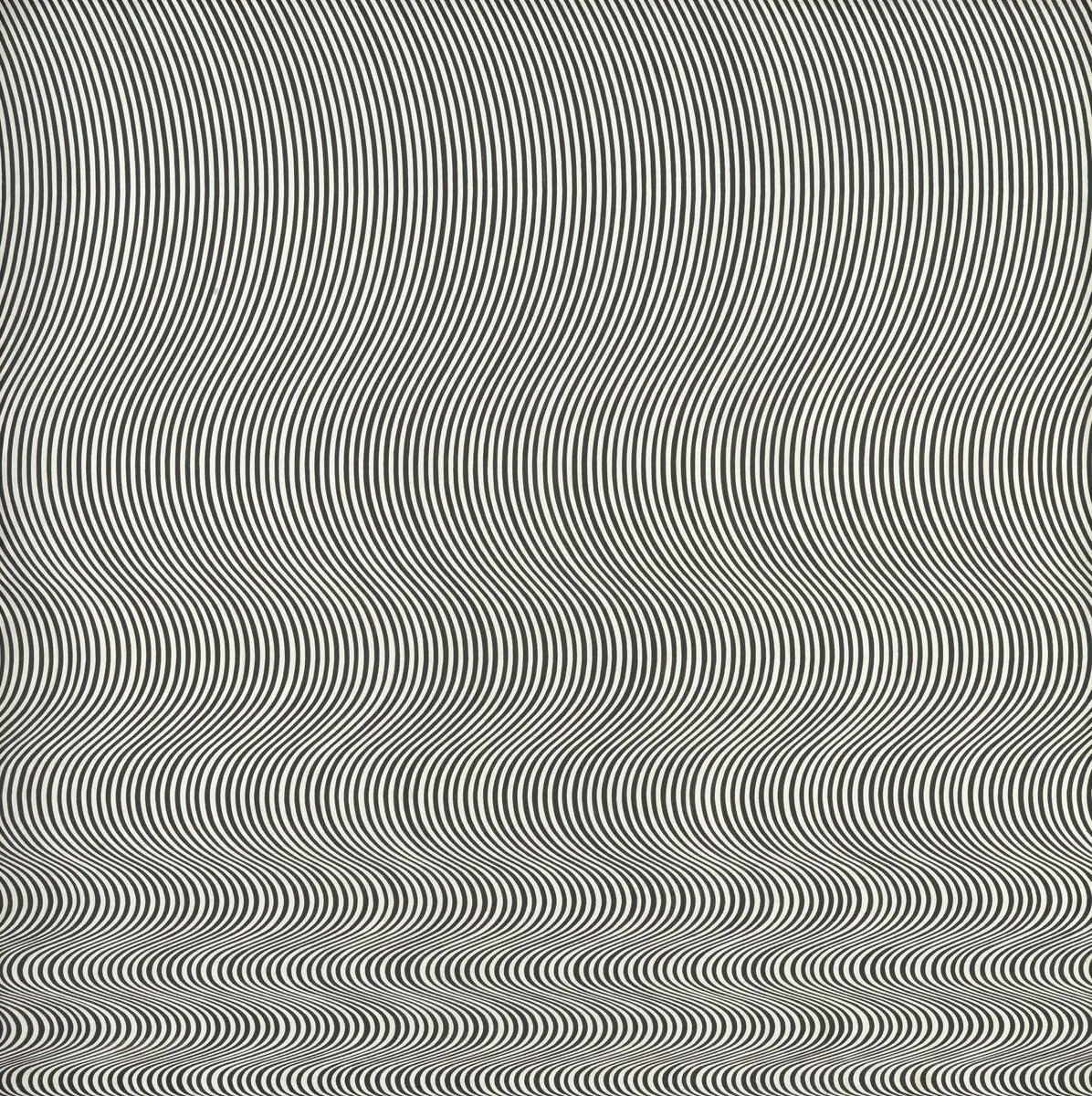
Riley is a leader of Op Art whose precision creates pulsating energy. Fall is an optical wave that seems to vibrate on the wall, a painting that proves how much sensation can be wrung from nothing but line, value, and exacting control.
Louise Nevelson
Nevelson made monumental wooden assemblages unified in a single tone, usually black. Architectural, dramatic, and unforgettable, her walls of found wood turned sculpture into something closer to a cathedral than an object.
Luchita Hurtado
Hurtado was an artist of intuition and identity whose recognition came late in life, in her late nineties. Her surreal self portraits, often viewed from above looking down at her own body, are quiet, strange, and unmistakably hers.
Which historical women artists worked in mysticism and the spiritual?
The historical women artists who worked in mysticism and the spiritual include Hilma af Klint, Emma Kunz, Georgiana Houghton, Ithell Colquhoun, and Hildegard of Bingen, women who treated art as a way to map the unseen. Several of them painted abstraction long before it was recognized as art at all.
Hilma af Klint
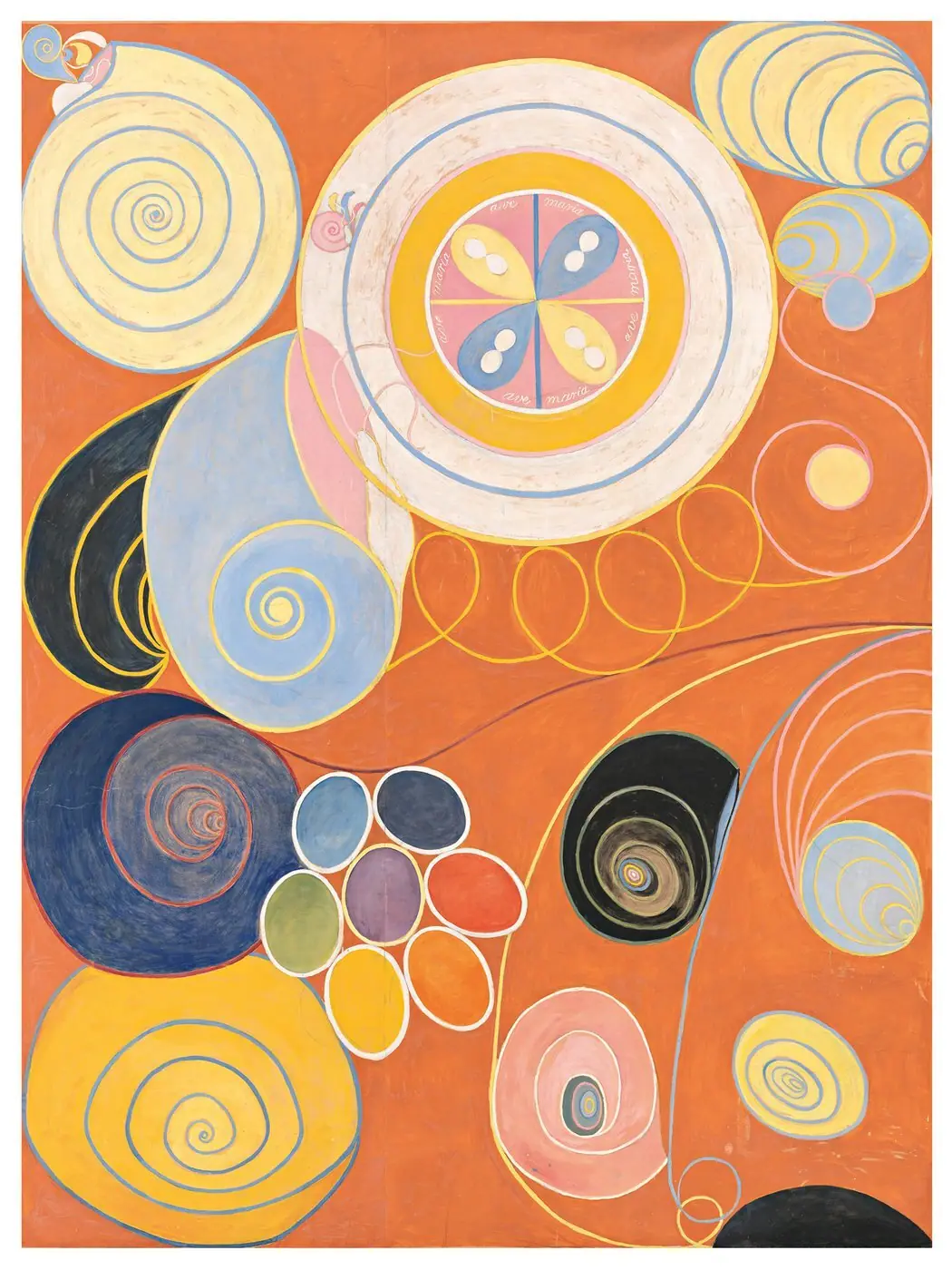
Af Klint was a visionary who created abstract work long before abstraction was recognized, years ahead of the men usually credited with inventing it. The Ten Largest is symbolic and full of movement, a series she asked to keep hidden until the world was ready to see it.
Emma Kunz
Kunz explored art as a form of healing and energetic balance. Her pendulum guided drawings are full of geometric harmony, made by a woman who saw her precise, radiant patterns less as pictures than as tools for understanding the world.
Georgiana Houghton
Houghton was a rediscovered pioneer with extraordinary intuition. Her intricate spirit drawings predate modern abstraction by decades, swirling layers of color and line made when nothing else in art looked remotely like them.
Ithell Colquhoun
Colquhoun combined esoteric knowledge with experimental technique. Scylla blends surreal forms and occult symbolism, the work of an artist who treated painting and magic as branches of the same study.
Hildegard of Bingen
Hildegard was a medieval mystic whose work still inspires contemporary artists. Her illuminated visionary mandalas and spiritual imagery, made in the twelfth century, prove that women have been making powerful, symbol rich abstract art for nearly a thousand years.
Are women still making history in art today?
Yes. Women are still making history in art today, which is the whole point of knowing the names above: great art is not a relic of the past but a living practice carried forward by artists who dare to pursue it. The painters in this list all began the same way, as creators with a vision and a desire to express something meaningful. Recognition often came late. The courage to create always came first.
That is also the encouraging part. Every woman here started out as a beginner who chose to keep going. Their work spans color symbolism, narrative, abstraction, and the spiritual, and if you want to read deeper into how artists build meaning, this guide to color symbolism in art and this one on why copying artists helps you find your style are good next steps. Copying the artists you admire, far from erasing your voice, is one of the surest ways to find it.
How can you start making your own art history?
You start making your own art history the same way these women did: by choosing one medium, learning to see, and coming to the work more days than not. The skills behind every painting on this page, color, composition, mark, edge, are learnable through practice, not gifts handed out at birth. You do not need to be born talented, and you do not need permission. You need to begin.
If these stories move you, take that as a signal. The next artist worth remembering is already out there, studying, practicing, dreaming of becoming more. She may well be you. Our free Two Week Challenge is built for exactly the beginner you are right now, and the rest of our art history and famous paintings collection is here whenever you want to keep going. Your best artwork is ahead of you, and the history you make starts with the next thing you paint.
Frequently asked questions
Who are some famous historical women artists?
Famous historical women artists include Lee Krasner, Helen Frankenthaler, and Agnes Martin in abstraction, Leonora Carrington and Remedios Varo in surrealism, and Hilma af Klint, who painted abstract work before the movement was named. Each shaped a major movement, and many were overlooked in their own time.
Why are so many female historical artists overlooked?
Female historical artists were often left out of museums, textbooks, and the market because galleries, critics, and institutions were run almost entirely by men. Their work was frequently credited to male partners or dismissed as minor. Recognition for artists like Hilma af Klint and Alma Thomas mostly arrived decades late, or after their deaths.
Did women paint historical paintings of women?
Yes. Many historical paintings of women, including self portraits and portraits of other women, were made by women themselves. Elaine de Kooning painted dynamic portraits, Luchita Hurtado made surreal self portraits viewed from above, and Gabriele Munter painted expressive figures and faces that shaped early modern portraiture.
What movements did historical women artists help create?
Historical women artists helped build Abstract Expressionism, Surrealism, Orphism, Op Art, color field painting, and early abstraction itself. Janet Sobel made drip paintings before Pollock, Sonia Delaunay co created Orphism, and Hilma af Klint painted pure abstraction years before the men usually credited with inventing it.
Can I learn to paint like these women artists?
Yes. The skills behind their work, seeing color, building composition, controlling mark and edge, are all learnable through practice, not talent you are born with. Studying and copying these artists is one of the fastest ways to absorb their decisions, and a structured program can shorten the path considerably.
What to practice this week
- Choose one artist from this list whose work moves you and copy a piece of theirs from start to finish to learn how they built it.
- Pick one movement here, abstraction, surrealism, or mysticism, and make a single small study in that language this week.
- Study one painting on this page for five minutes and write down three decisions the artist made: a color choice, an edge, and a composition move.
Supplies used
About the author
More from Elli