Why Do My Paintings Need Resting Space?
If your painting feels busy no matter how much effort you pour in, the missing piece is usually resting space. Here is what it is and how to use it on purpose.

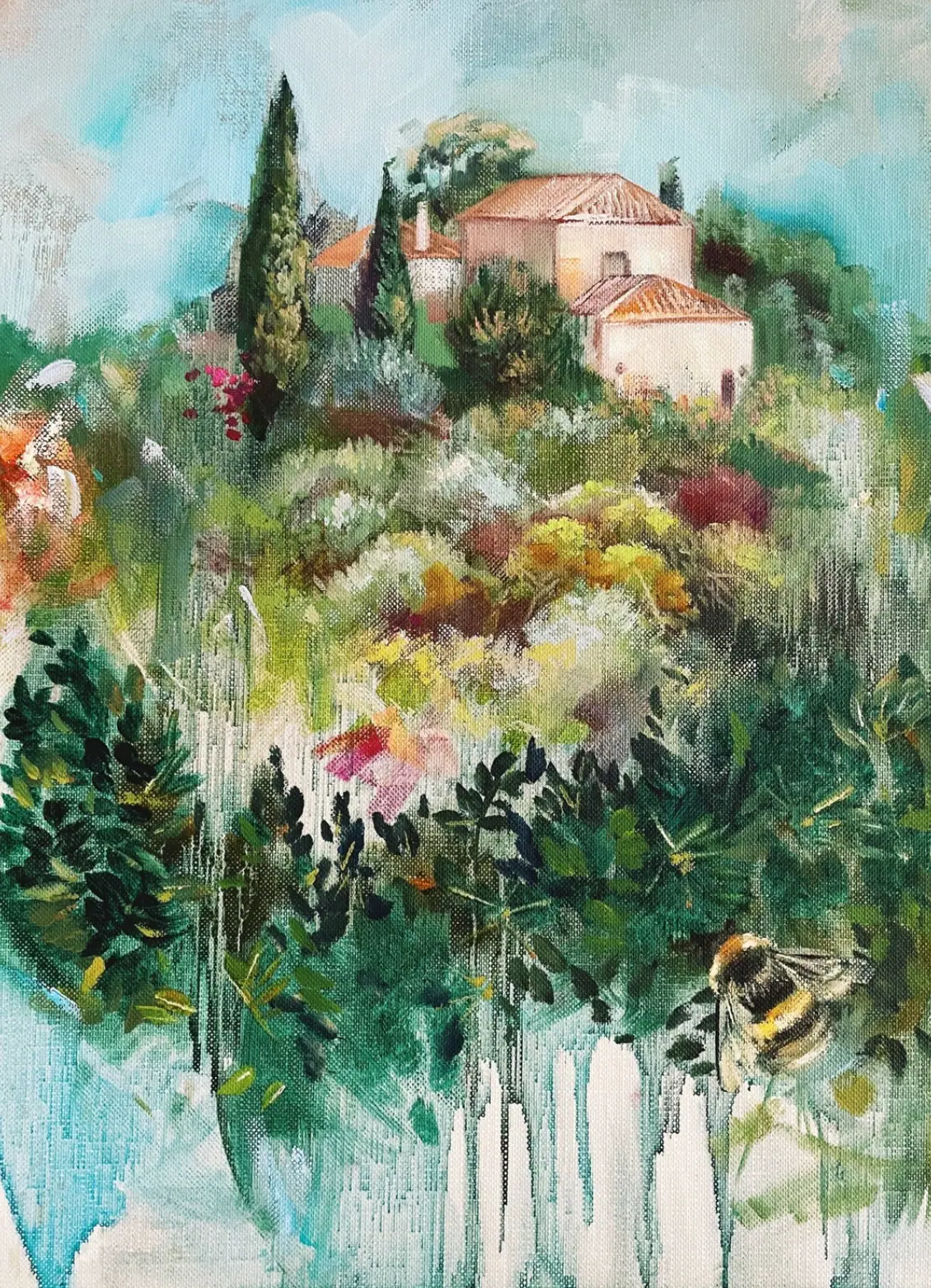

Your paintings need resting space because the viewer’s eye has to pause somewhere, and if every inch is full of detail it never gets the chance. Resting space is any quieter, simpler, less detailed area that gives the eye a breath. It strengthens your focal point through contrast, organizes your composition into readable shapes, and steadies the mood. Without it, everything in the painting competes, and nothing leads.
Here is the thing most artists miss. You can finish a painting, feel that something is off, and assume the problem is your skill, when every inch is actually full of effort and care. Often it is not skill at all. It is the lack of resting space, one of the most overlooked elements in a painting and one of the most essential for clarity, impact, and emotional connection. Let us break down why it matters and how to use it on purpose.
What is resting space?
Resting space is any area in your painting where the viewer’s eye can pause, and it is usually simpler, quieter, and less detailed than your focal area. Think of it as a visual breath. It might be a soft, blended background, a large shape with minimal texture, an area of reduced contrast, or a passage with less color intensity. The one thing it is not is empty. It is intentional, a quiet area you choose to leave alone so the rest of the painting can speak.
That distinction matters, because beginners often treat a quiet area as a place they have not finished yet. They feel a pull to go back in and add more. But a simplified passage is not unfinished. It is doing real work, the same way a rest in music is part of the music, not a gap in it.
Why does your painting need it?
Your painting needs resting space because it gives the eye a place to land, makes your focal point stronger, creates a sense of design, and shapes the emotion of the piece. Each of those reasons stands on its own, so here they are in turn.
- It gives the eye a place to land. If everything in your painting is loud, nothing stands out. When the entire surface is full of detail, contrast, and edges, the viewer’s eye has nowhere to rest, which creates visual fatigue and confusion. Resting space lets the viewer slow down and actually experience your work instead of bouncing off it.
- It makes your focal point stronger. Your focal point only works if something else is quieter. By simplifying the areas around your subject you create contrast, not just in value or color but in complexity, and that contrast is what pulls the viewer exactly where you want them to look. Without resting space your focal point competes instead of leads. If your focal point keeps getting lost, our full guide on how to create a good composition in art goes deeper into directing the eye.
- It creates a sense of design. Strong paintings are not just realistic. They are designed. Resting space helps you organize your composition into clear, readable shapes, group your information, and avoid unnecessary noise. When your painting has structure, it feels intentional and professional rather than accidental.
- It enhances mood and emotion. Busy areas create tension and quiet areas create calm. By controlling where your painting is active and where it is still, you guide the emotional experience of the viewer. A painting without resting space often feels chaotic. A painting with it feels balanced and complete. This is also how painters build a sense of air and distance, which we cover in atmosphere in painting.
How is resting space different from negative space?
Resting space is broader than negative space, and the two are easy to confuse. Negative space is the area around and between your subjects, the shapes that are not the main object. Resting space is any passage you deliberately keep quiet so the eye can pause, and it can sit anywhere, including inside the subject itself. A calm stretch of sky is both. A simplified, low-contrast area within a figure’s clothing is resting space but not negative space. So negative space is often resting space, but resting space is not limited to the background.
How do you know you are missing resting space?
You are probably missing resting space if you feel the urge to keep adding more everywhere, if every area has the same level of detail, if your focal point does not stand out clearly, if the painting feels overwhelming or cluttered, or if you are afraid to leave any area looking unfinished. If that list sounds familiar, you are not alone. Many artists equate effort with filling every inch, because adding paint feels like progress and leaving an area alone feels like quitting.
But mastery comes from restraint. The same instinct that makes a painting look busy is the one that makes work look cartoonish or flat, since uniform detail flattens the read, a problem we unpack in why your paintings look cartoonish. The skill you are building is the confidence to stop.
How do you create resting space on purpose?
You create resting space by simplifying shapes, softening edges, reducing contrast, limiting detail, and stepping back often. None of these require new materials. They are decisions about where to hold back. Here is how to use each one.
- Simplify shapes. Group areas into larger, more unified shapes instead of breaking everything into small pieces. A few big shapes read clearly. A hundred tiny ones read as noise.
- Soften edges. Not every edge needs to be sharp. Lost and soft edges create visual rest and let some passages quietly recede, while your hard edges save themselves for the focal point.
- Reduce contrast. Keep your highest contrast in your focal area and let other areas stay closer in value. Contrast is a spotlight, and you only want it pointed at one place.
- Limit detail. Ask yourself where detail actually matters. Then let the other areas stay simple. Detail spent everywhere is detail wasted.
- Step back often. When you step back from the canvas, it becomes obvious where the painting feels too busy. Distance shows you what your nose-to-the-canvas eye cannot.
-2.jpg)
What is the mindset shift behind resting space?
The mindset shift is that resting space is not about doing less, it is about doing what matters most. It takes confidence to leave areas quiet and intention to resist overworking, and both of those are learned, not innate. When you start designing your paintings with both activity and rest, everything begins to click, and the work stops fighting you. For more small, practical ways to sharpen this instinct, our roundup of painting tips for artists and the foundational 7 elements of art are good next reads.
Your painting is a conversation with the viewer. If you never pause, they cannot listen. Give them space to breathe, give your focal point room to shine, and give your work the clarity it deserves. If you want a structured, supported way to practice composing with intention instead of just reading about it, our free Two Week Challenge is built to get a brush in your hand, and the rest of the oil painting techniques collection is here when you want to keep going.
Frequently asked questions
What is resting space in a painting?
Resting space is any area where the viewer's eye can pause, typically simpler, quieter, and less detailed than your focal area. It might be a soft blended background, a large shape with minimal texture, a passage of reduced contrast, or an area of lower color intensity. It is not empty space left by accident. It is a quiet area you place on purpose.
Why does my painting look busy or cluttered?
A painting looks busy when every area carries the same level of detail, contrast, and hard edges, so the eye has nowhere to rest. When the whole surface is loud, nothing stands out and the viewer feels visual fatigue. The fix is to simplify large passages around your subject so the important area can lead instead of compete.
How does resting space make a focal point stronger?
Your focal point only reads as a focal point if something else is quieter. By simplifying the areas around your subject you create contrast, not just in value or color but in complexity, and that contrast pulls the viewer exactly where you want them to look. Without a quiet surround, the focal point competes with everything else instead of leading.
What is the difference between resting space and negative space?
Negative space is the area around and between your subjects, the shapes that are not the main object. Resting space is broader: it is any passage you keep quiet so the eye can pause, and it can sit inside the subject itself, not only around it. Negative space is often resting space, but resting space is not limited to the background.
How do I add resting space to a painting that is already too busy?
Step back and find the areas competing with your focal point, then calm them down. Group small shapes into larger unified ones, soften some edges so not every boundary is sharp, pull the strongest contrast back to the focal area, and reduce detail where it does not earn its place. You are subtracting noise, not adding more paint.
What to practice this week
- Take a finished painting that feels busy, photograph it, and circle every area carrying high detail or contrast. Then choose two of those areas to deliberately simplify.
- Do a value study where you allow yourself only one busy passage and keep everything else as large, quiet shapes, so you feel how a single active area can carry a whole image.
- Squint at your subject until the details blur, then paint only the big shapes you still see. Add detail back only inside your focal area.
Supplies used

About the author
More from Elli