Art Facts: 30 Fun and Interesting Facts About Art, Artists, and Drawing
Some of the best art facts are also the strangest. Here are 30 fun, interesting, and genuinely true facts about art, artists, and drawing, including three times painters saw the truth before science did.

Art is full of surprising true facts. Leonardo da Vinci drew the human heart more accurately than medical textbooks would for centuries. Vincent van Gogh painted real turbulence patterns into the sky of The Starry Night. French artists in 1900 sketched flying cars and robot style vacuum cleaners on postcards imagining the year 2000. The rest of this list gathers 30 fun, interesting, and genuinely true facts about art, artists, and drawing, starting with three times painters understood the world before science did.
Here is the thing about art facts: the best ones are not trivia. They are reminders that artists have always been some of our sharpest observers, people who notice patterns in a body, a sky, or a possible future before anyone has the tools to prove them. So this is not just a listicle. It is a short tour of how much artists have seen, and how often the rest of us caught up later.
What are some art facts where artists knew more than scientists?
The most remarkable art facts are the times artists understood something true about the world before science could explain it. Three painters stand out, and each one saw a pattern in the body, the sky, or the future that the experts of their day had not yet grasped. Here are those three first, because they are the heart of this list.
Leonardo da Vinci drew the human heart before doctors understood it
Leonardo da Vinci was years ahead of the medical community of his time. According to “Sketchbook for the Artist” by Sarah Simblet, Renaissance artists like Da Vinci were well ahead of their counterparts in medicine, and a BBC article on Leonardo the anatomist notes that his work produced the very first accurate drawing of the human spine.
It went further than the spine. The modern heart surgeon Francis Wells of Papworth Hospital in Cambridge has said that many of Da Vinci’s drawings of the human heart were better than the ones in modern anatomy textbooks. It was Da Vinci who worked out that the heart has four chambers, and who understood the workings of the heart’s aortic valve. In many respects, what Da Vinci knew in the 1500s was not properly understood again until the 20th century.
What set him apart was not just curiosity about anatomy. Plenty of people were curious about the body. Da Vinci was an excellent anatomist and an excellent artist, and his drafting skill let him communicate what he found in a way that still holds up to scrutiny today. His drawings kept a liveliness that clinical illustrations often lose. If you want to see the tools behind that precision, look at Leonardo da Vinci’s drawing tools.
Van Gogh painted real turbulence into The Starry Night
Vincent van Gogh captured the physics of moving air in paint. According to an article on the NPR website, the swirling sky of The Starry Night does more than decorate a hillside village at night. Those swirls follow the patterns of turbulent flow, the chaotic motion of moving fluids, captured with a precision that genuinely surprised the scientists who later studied the painting.
He painted it during one of the hardest stretches of his life, while staying at a hospital, working on his mental health and physically recovering after he cut off part of his own ear following a bitter argument with Paul Gauguin. Some attribute the intensity of his brushwork to the illness that peaked around then. Whatever the cause, the result was a sky that matches real turbulence with startling accuracy.
Here is the part that always stays with me: Van Gogh thought the painting was a failure. He told his brother Theo so in a letter. The work that millions now travel to see, hanging in the Museum of Modern Art in New York, was a disappointment to the man who made it. There is a lesson in that for anyone who has ever judged their own best work too harshly.
Artists in 1900 sketched flying cars and robot vacuums
A series of postcards from the year 1900 imagined flying machines, underwater hotels, and Roomba style vacuum cleaners, long before any of them existed. As the Public Domain Review explains, the French artist Jean-Marc Côté and others drew a set of cards predicting the world of the year 2000, full of things we now recognize.
The first cards were made for the 1900 World Exhibition in Paris, the City of Lights. They barely saw the light of day in their own time. Decades later, the science fiction writer Isaac Asimov came across them in the late 1980s and published them in a book called “Futuredays: A Nineteenth Century Vision of the Year 2000.” It took almost a century for the artists’ imaginations to reach the rest of us.
What are some fun facts about famous paintings?
Famous paintings carry stories that are stranger than the images suggest. Here are quick, genuinely true facts about some of the most recognized works in the world.
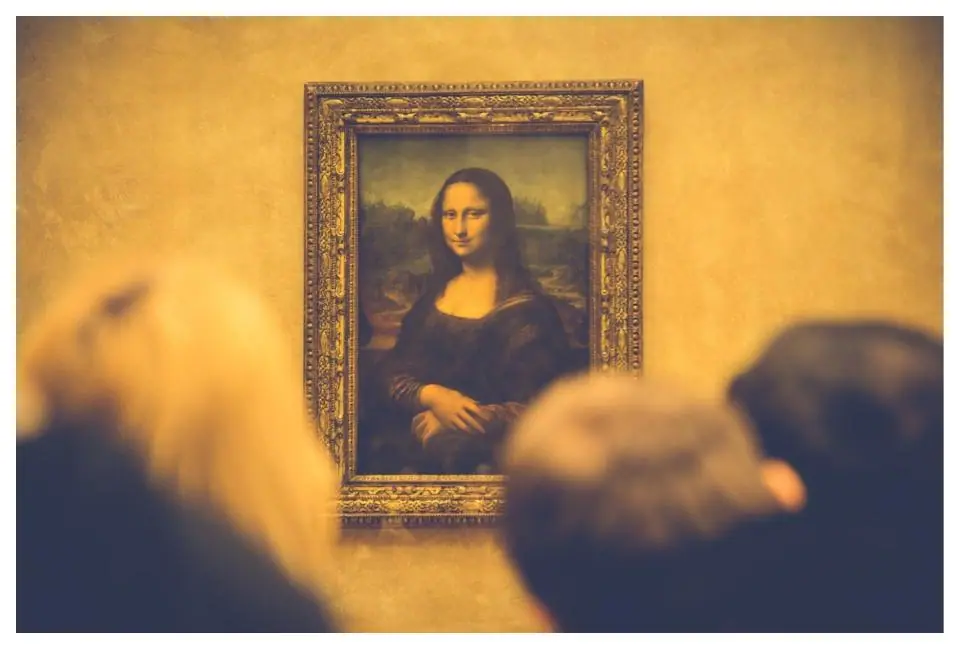
- The Mona Lisa got more famous after it was stolen. Leonardo da Vinci’s portrait was taken from the Louvre in 1911 and recovered two years later. The theft, the empty wall, and the recovery turned an admired painting into the most famous one on earth.
- The Mona Lisa lives behind bulletproof glass. Today the painting hangs at the Louvre in Paris in a climate controlled case, watched by guards, drawing millions of visitors a year who often see it for only a few seconds.
- Da Vinci painted other now famous works too. Beyond the Mona Lisa, Leonardo painted The Last Supper and the much debated Salvator Mundi, and he rightly takes his place as one of the premier thinkers of the Italian Renaissance.
- Van Gogh’s Sunflowers were painted to welcome a friend. The famous Sunflowers canvases were made in part to decorate the room where Van Gogh hoped Paul Gauguin would stay, which makes their later falling out all the sadder.
- The Starry Night shows a real place from memory. Van Gogh painted the view from his room at the hospital, then added an imagined village, blending what he saw with what he felt.
For a deeper look at the works that changed everything, our guide to famous historical oil paintings walks through twenty of them and the painters behind each.
What are some interesting facts about artists?
Artists themselves are often more surprising than their paintings. These facts are about the people who made the work.
- Da Vinci wrote in mirror script. Leonardo filled his notebooks with backwards writing, readable only in a mirror. Historians still debate whether he did it for secrecy, habit, or simply because he was left handed.
- Van Gogh sold almost nothing in his lifetime. One of the most beloved artists in history struggled to sell his work while alive, supported largely by his brother Theo. Fame came only after his death.
- Van Gogh painted at an astonishing pace. In the last few years of his life he produced hundreds of paintings, sometimes finishing a canvas in a single day.
- Many old masters trained as apprentices, not students. Painters like Da Vinci learned inside a working studio, grinding pigments and assisting a master long before they signed their own work.
- Color was once worth more than gold. The deep blue called ultramarine was made from ground lapis lazuli and was so costly that patrons specified in contracts exactly how much of it an artist could use.
- Artists made their own paint for centuries. Before tubes of ready made oil paint arrived in the 1800s, painters and their assistants mixed pigment with oil by hand, which is part of why studios needed apprentices.
The drive to study the artists who came before us is its own reward, and our piece on why study art history makes the case for it.
What are some facts about drawing?
Drawing is one of the oldest human activities, older than most people assume. These drawing facts cover where it came from and why it still matters.
- Drawing is older than writing. Humans were making images on cave walls tens of thousands of years before anyone invented written language. Drawing was one of our first ways of recording the world.
- Some of the oldest art is a handprint. Among the oldest surviving images are hand stencils, made by blowing pigment around a hand pressed to a cave wall, a gesture that still feels personal across thousands of years.
- Silverpoint left no room for mistakes. Renaissance artists like Da Vinci sometimes drew with a thin silver rod on prepared paper, a method called silverpoint that cannot be erased, which trained an extraordinary steadiness of hand.
- The pencil as we know it is fairly recent. A large deposit of pure graphite found in England in the 1500s gave rise to the wood cased pencil, which means the humble tool on your desk has a real history.
- Drawing trains your eye more than your hand. Most beginners struggle not because their hands fail them, but because they draw what they assume an object looks like instead of what is actually there. Learning to see is the real skill.
- Copying masters is a centuries old teaching method. Reproducing a work you admire lets you absorb decisions you could not yet make on your own, which is why artists have learned by copying for as long as art schools have existed.
What are some surprising facts about art history?
Art history is full of moments where a single choice changed everything that followed. Here are a few that still shape how we see art today.
- Impressionism got its name as an insult. When a hazy harbor scene was shown in Paris, critics mocked it as a mere “impression” rather than a finished painting. The name stuck and came to define a movement. You can read the fuller story in our piece on Claude Monet.
- Paintings used to tell stories the way books do. For much of history, art was how people read the events that mattered, before most of the audience could read words at all.
- Color carried hidden meaning. Artists chose colors for what they signified, not only how they looked, a language unpacked in our guide to the symbolism of color.
- Cave painters used the wall’s shape. Some prehistoric artists positioned animals so that bumps and curves in the rock gave the image a sense of three dimensional form, an early instinct for sculpture and light.
- Egyptian art followed strict rules for thousands of years. Figures were drawn with the head in profile and the torso facing forward, a convention so stable it barely changed across millennia.
- The Renaissance reintroduced perspective. The mathematical system that makes a flat surface read as deep space was worked out, then refined, by artists determined to paint a believable world.
- Public art is older than museums. For most of history, art lived in churches, palaces, and town squares. The idea of a building dedicated to displaying art for everyone is comparatively new.
A few final art facts worth remembering
The point under all of this is simple: artists have always been observers first. These last few facts close the list.
- Artists often see patterns before scientists can measure them. Da Vinci’s anatomy, Van Gogh’s turbulent skies, and the 1900 future postcards all show the same thing, a trained eye noticing truth ahead of proof.
- One painting can change how you see the world. The work of these artists pointed us toward experiences that now feel ordinary, which is a reminder of how much a single image can carry.
- You do not need permission to start noticing. The thing every artist on this list shares is attention. They looked harder than the people around them, and that is a habit anyone can begin today.
If these facts made you want to pick up a pencil yourself, that pull is worth following. Our free Two Week Challenge is a gentle place to begin, no experience required. And if you want to keep wandering through stories like these, the rest of our art history and famous paintings collection is right here. The artists in this list saw the world clearly and put it down where the rest of us could see it too. That door has always been open, and it is open to you.
Frequently asked questions
What is a fun fact about art?
One of the best fun facts about art is that Vincent van Gogh painted real, mathematically accurate patterns of air turbulence into the swirling sky of The Starry Night, decades before physicists could describe that kind of turbulent flow. Artists have a long history of capturing truths about the world before science had the tools to measure them.
What are some interesting facts about famous artists?
Leonardo da Vinci discovered that the human heart has four chambers and drew it more accurately than medical textbooks would for centuries. Van Gogh believed The Starry Night was a failure and said so in a letter to his brother. French artists in 1900 sketched flying cars and robot style vacuum cleaners on a set of postcards imagining the year 2000.
What is an interesting fact about drawing?
Drawing is older than written language. The oldest known cave paintings and hand stencils are tens of thousands of years old, which means humans were making images on walls long before anyone wrote a single word. Drawing was one of our first ways of recording and sharing what we saw.
What is the most famous painting in the world?
The Mona Lisa by Leonardo da Vinci is widely considered the most famous painting in the world. It hangs behind glass at the Louvre in Paris, where it draws millions of visitors a year, and its fame grew enormously after the painting was stolen from the museum in 1911 and recovered two years later.
Did artists really predict the future?
In a sense, yes. They did not see the future, but they often understood the world ahead of the science of their day. Da Vinci's anatomy, Van Gogh's turbulent skies, and the 1900 future postcards all show artists noticing patterns and possibilities long before anyone could prove or build them.
What to practice this week
- Pick one famous painting from this list and copy a small section of it by hand to learn how the artist actually built the image.
- Spend ten minutes drawing one object from direct observation, the way Da Vinci studied anatomy, recording exactly what you see rather than what you assume is there.
- Find a short video about the science hidden in one painting, then look at the painting again and try to spot what the artist understood.
Supplies used
About the author
More from Elli