Urban Sketching Ideas: How to Run Your Own Personal Sketch Crawl
When the weather and your schedule keep you indoors, a personal sketch crawl gets you out drawing on location. Here is how it works and exactly what to bring.

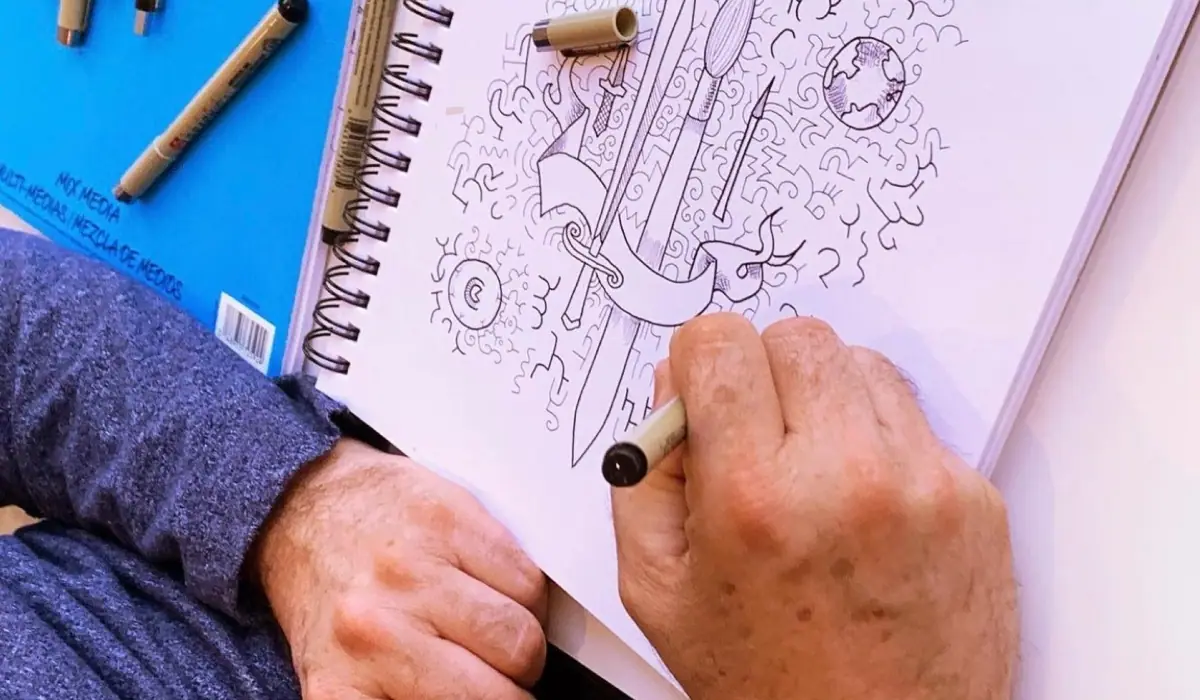
Urban sketching ideas almost always run into the same wall: getting out the door. The simplest fix is a personal sketch crawl, a self-guided drawing tour where you walk your own city and sketch its public art and street scenes on location. You plan a short route, pack a sketchbook and a couple of pencils, and treat an ordinary afternoon as a reason to draw from life. It works in any season, and it works whether you go alone or drag a friend along.
Winter is when most people stall. The cold and the early dark make it easy to stay in, and that is rough on anyone who loves drawing outdoors. A sketch crawl turns the season into the subject. Below is what it is, why it is worth doing, and exactly what to bring so you actually go.
What is a personal sketch crawl?
A personal sketch crawl is a self-guided drawing tour where a single artist, or a small group, takes their sketchbooks out and creates their own route through the city. Most people already know the local art crawl, the monthly event where art lovers wander between museums and galleries taking in the work. A group sketch crawl is the drawing version of that: urban sketching clubs organize people to gather and sketch the art on display, which adds a social layer to the whole thing.
The personal version strips out the scheduling. You set your own route and sketch the public art around your city on your own time. Here in Athens, for example, there are dozens of large painted bulldog statues, known locally as dawgs, scattered around town as public art. A walk that strings several of them together gets you familiar with the city’s art and gives you a reason to be outside when it is chilly. That is the whole model: pick a handful of things worth drawing, connect them into a loose route, and go.
Why should you do a personal sketch crawl?
You should do a personal sketch crawl because it gets you drawing on location even when a group is not an option. The social side of urban sketching is wonderful, but schedules, family, and the occasional cold get in the way. Going solo means you still get out, still see some art, and still draw from life instead of waiting for the perfect group day that never comes.
It also keeps your eye sharp. You stay current with what your city looks like, you learn how your favorite places read when everything is frosted over, and you start noticing the world differently. It is travel sketching in your own backyard, and becoming an urban sketcher where you already live forces you to really look at streets you usually walk past on autopilot. If you want more on that habit of paying attention, why artists keep a sketchbook goes deeper into it.
And it builds skill fast. Drawing on location is practice from life, and it quietly trains your problem-solving as you work around changing light, weather, and odd vantage points. None of that means taking real risks; the point is not to tough out a blizzard. The point is that working under mild constraints teaches you to draw faster and looser, which is exactly what most sketchbooks need. The same logic shows up in the benefits of drawing and doodling: low-stakes, frequent marks beat rare, precious ones.
How do you prepare for a sketch crawl?
Prepare for a sketch crawl the way an event organizer would: build a short itinerary first. A loose plan keeps you moving and stops you from standing on a cold corner wondering where to go next. Pick a few stops worth drawing, connect them into a walkable route, and decide roughly how long you will spend at each. Then pack with the season in mind. Here is the full checklist.
1. Find indoor places to draw in case the weather turns
Line up indoor backups before you leave. Drawing outside is great until it is not, so scout spots where you can keep working under cover. A coffee shop is the classic choice: you can sketch a street sculpture through the window, draw the art the shop has for sale, or just capture the cozy room itself.
Your parked car is the other reliable shelter. You can run the engine on and off to stay warm, but kill the headlights and shut the door tightly whenever you step out. Coming back to a dead battery because of an electrical drain is a sad end to a good drawing day.
2. Wear heavy-duty boots if you are trudging through snow
Put real boots on if there is any snow involved. You want them insulated enough to keep your toes off the frost line and comfortable enough for an extended sketch walk, because nothing kills a crawl faster than aching feet. Good traction matters just as much: icy sidewalks and a sketchbook are a bad mix.
3. Layer your gloves and mittens so your hands stay usable
Layer your hand coverings so you can adjust on the fly. Wear thin gloves under mittens, and you can keep your hands warm between sketches while still pulling the mittens off to draw. Your ears will be miserable if you ignore them, so bring a hat, a scarf, and earmuffs too. Dress for the actual weather, not the weather you wish you had.
4. Pack art supplies that hold up in the cold
Choose supplies that survive winter conditions. Colored pencils and traditional graphite pencils are safe bets. Painting is often off the table when it is truly cold, because low temperatures can make wet materials freeze or behave strangely. Bring a bound sketchbook rather than loose sheets, too: it would be a shame to nail a travel sketch and then lose it because the page slipped out of a notebook. If you are not sure what to put on those pages, winter drawing ideas has a long list of cold-season subjects.
5. Bring a city guide to find the best public art
Carry a city or travel guide if you want to track down the best public art to sketch. Travel guides are one of the fastest ways to find the obscure outdoor pieces you would otherwise walk right past, and they tend to point you toward other worthwhile subjects, like a local Christmas market or a historic square. Treat the guide as a scouting tool that fills out your route.
6. Pack a small flashlight just in case
Bring a light, even if you do not expect to need one. Winter days are short, and the festive lights only do so much. A small flashlight, or a flashlight app on your phone, lets you see in the dark and keep drawing in your car after the sun drops. It weighs almost nothing and saves the back half of a short afternoon.
A local Christmas market is an easy first stop for a sketch crawl: warm light, people to draw, and plenty of detail to fill a page.
How do you actually draw on a sketch crawl?
Draw fast, draw loose, and let the pages be rough. The goal of a crawl is not a gallery-ready piece at every stop; it is volume and observation. Give yourself a tight window at each location, maybe ten or fifteen minutes, and capture the gesture of the scene rather than every brick. The constraint is the teacher. When you cannot fuss, you learn to see the big shapes first and commit.
Vary what you go after so the day stays interesting. Sketch a sculpture at one stop, a storefront at the next, the interior of a warm cafe at the third, then a quick crowd study at a market. Mixing subjects keeps your eye flexible and stops a single hard drawing from sinking the whole outing. If you find yourself stuck staring at a blank page, that is normal, and how to find inspiration and get back into your groove covers ways to break the freeze.
One more habit worth building: shoot a few reference photos as you go, especially of scenes you love but cannot finish in time. They become raw material for studio work later. There is a right and wrong way to lean on them, which reference photos for painting walks through, so you train your eye instead of just tracing.
Quick answer: what is a personal sketch crawl?
A personal sketch crawl is a self-guided drawing tour where you walk your own city and sketch its public art and street scenes on location. Plan a short route, pack a bound sketchbook and a couple of pencils, dress for the weather, and keep an indoor backup like a coffee shop. The aim is drawing from life, not finishing a masterpiece.
Ready to take your drawing further?
A sketch crawl is one of the simplest ways to build a real drawing habit, and the habit is what changes you. If you want a structured, supported way to grow past quick sketches into work you are proud of, our free Two Week Challenge is built for exactly the beginner who wants to start now. And when you are ready to keep going, the rest of our creative block and identity collection is here, full of honest, practical ways to keep returning to the page.
Frequently asked questions
What is a sketch crawl?
A sketch crawl is a drawing tour where artists move through a city and sketch what they see on location, often the public art and street scenes along a planned route. Group sketch crawls are organized by urban sketching clubs, usually around a monthly art crawl. A personal sketch crawl is the same idea done solo or with a friend, on your own schedule.
What is the difference between a sketch crawl and a sketch walk?
They are nearly the same thing: a sketch crawl and a sketch walk both mean moving through a place and drawing on location rather than staying at one spot. Crawl tends to describe a planned multi-stop route that hits several scenes, while walk can be looser. Either way you are sketching from life as you go.
What are good urban sketching ideas for beginners?
Start with one short, simple route and a few easy subjects: a coffee shop interior, a statue or fountain, a busy market stall, a row of storefronts. Draw fast and loose instead of chasing detail. Pick a bound sketchbook so nothing falls out, bring a couple of pencils, and give yourself permission to make rough pages. Quantity teaches you more than polish.
What supplies do you need for a sketch crawl?
Keep it light. A bound sketchbook, a couple of graphite or colored pencils, and an eraser cover most of it. In cold weather add insulated boots with good traction, layered gloves under mittens, a hat and scarf, and a small flashlight for low light. A city or travel guide helps you find the best public art to draw.
Where can you draw if the weather is bad?
Pick indoor spots before you go out. A coffee shop lets you draw the room, the art on its walls, or a sculpture seen through the window. Your own parked car works too: run the engine on and off to stay warm, but kill the headlights and shut the door tightly so you do not drain the battery. Libraries and covered markets are good backups as well.
What to practice this week
- Plan a short three-stop route near home and sketch one thing at each stop in under fifteen minutes, fast and loose.
- Do a 'window crawl': sit in one warm coffee shop and fill a page with quick sketches of whatever passes outside.
- Pack a single pocket sketchbook and one pencil, then draw five small scenes on a normal errand run without planning anything.
Supplies used

About the author
More from ElliKeep learning