What Is the Purpose of an Artist's Sketchbook? 5 Reasons Artists Keep One
A sketchbook is not where you make finished art. It is where you learn, experiment, remember, and play with no pressure to get it right. Here is what it is actually for, and how to start keeping one.

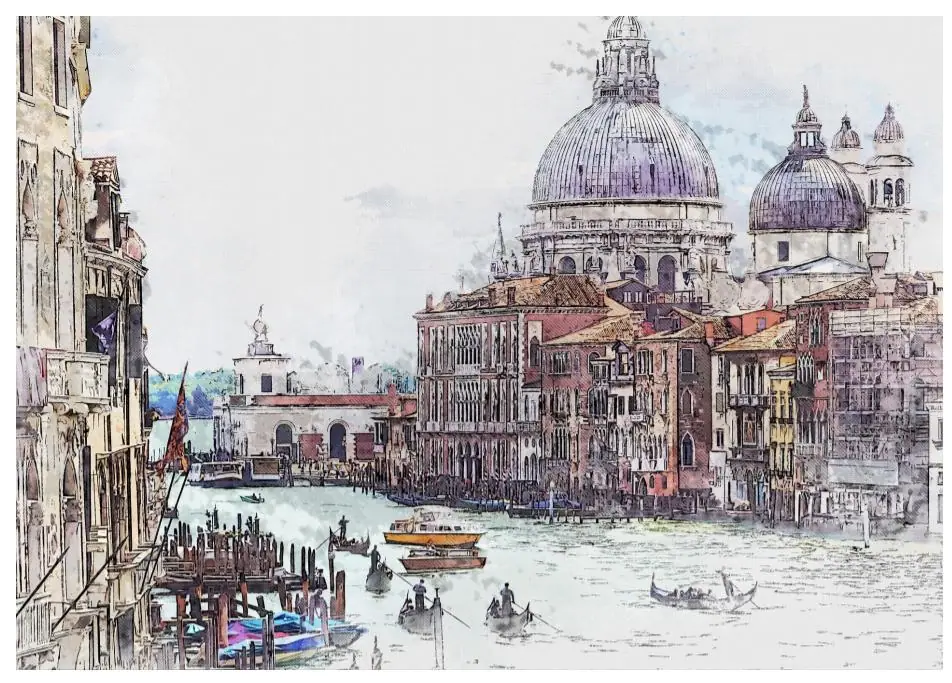
The purpose of an artist’s sketchbook is to give you one place where you can grow without pressure. It is not where you make finished art. It is where you learn to see, test new materials, record what you experience, catch ideas before they slip away, and play. Because nobody is judging the pages, you are free to make mistakes, and that freedom is exactly why a sketchbook improves your art faster than almost anything else you can do.
Plenty of artists love the idea of a daily sketchbook but never quite start one. Part of it is not knowing what to draw. The bigger part is not knowing why it matters. Once the why is clear, the habit gets much easier to keep. So here are five real reasons artists keep sketchbooks, and what each one does for your work.
Why do artists keep sketchbooks to hone their skills?
Artists keep sketchbooks because drawing from life is one of the fastest ways to sharpen real skill. If you want to make representational work, as opposed to abstract, few things help more than regularly drawing the world in front of you. It builds your observation and your hand-eye coordination at the same time, and it builds your problem-solving too, because every unfamiliar texture you try to capture, like the rough bark of a tree, asks you to figure something out.
Drawing from life outdoors also teaches you how light behaves. The color and quality of light at noon in summer is nothing like noon in winter, and once you have studied those shifts in your sketchbook, you can recreate them in a painting from memory. That is a skill you cannot fake.
There is one more thing daily drawing trains, and it is the hardest one for beginners: the jump from three dimensions to two. When you work from a photograph, the camera has already flattened the scene for you. When you draw from life, your own brain has to do that translation. It takes practice, but once it clicks, your sense of true color, of how long a hallway runs or how deep a ceiling vaults, gets far more accurate, and you become free to draw from imagination too. If you want a gentler on-ramp to all of this, the benefits of drawing and doodling are a good place to start, and getting comfortable with how to hold a pencil for drawing removes one early frustration.
Why do artists use sketchbooks to test new materials?
Artists use sketchbooks to try new media safely, where a mistake costs nothing. Many artists do not only draw in pencil in their books. They use them to test paint they are not used to, like watercolor, acrylic, gouache, or mixed media, and to see how each one actually handles in their own hands.
A sketchbook is the right place to experiment because there is no painting to ruin. On a canvas, a bad decision feels expensive. In a sketchbook, it is just a page. That is what makes it the perfect lab for mixing media you have never combined, like acrylics with inks, to watch how they shift the color or the texture.
You can also learn which papers suit which media. You might find the paper in one sketchbook takes mixed media beautifully while another works better for watercolor pencils or liquid graphite. There is usually no way to know until you have played with it a little, and the sketchbook is where that play belongs. Building these small tests into your routine is part of healthy studio practices that keep you experimenting instead of stalling.
How does a sketchbook work as a visual journal?
A sketchbook works as a visual journal by turning the places and moments you experience into something you remember more deeply than a photo ever could. At Milan Art Institute we are unapologetic fans of travel and travel sketching, and it is not unusual for one of us to keep a small separate travel sketchbook just for the road.
There is nothing like drawing a place to fix it in your memory. A quick sketch of a statue you passed, made with a few pens and a little watercolor, will mean far more to you later than a photo of the same spot. The author Danny Gregory makes this case in his book “An Illustrated Journey.” He took up travel sketching because he did not want his photos of places like Paris to look like everyone else’s. If that were the goal, he points out, he could just buy postcards.
Your brain genuinely remembers things differently when you draw them instead of photographing them. If you sketch on location, you tend to write beside your drawings too, noting why a particular spot caught your eye and why you chose it over another. Over time the book becomes a personal newspaper of your days. It also quietly solves the I-do-not-know-what-to-draw problem: put yourself in front of real scenery with a few tools, and subject matter for future work appears on its own. A sketchbook full of these prompts becomes one of the calmest ways back in whenever you feel stuck.
Why do artists develop ideas in a sketchbook?
Artists develop ideas in a sketchbook because an idea you do not capture is usually an idea you lose. Many professional artists use the daily habit to grow concepts for real projects. When a painting idea arrives, often at an inconvenient moment, a fast sketch saves it before it fades. That is especially useful when the idea involves invented elements, like a mythical animal, or design work, like a logo, that no photo reference exists for yet.
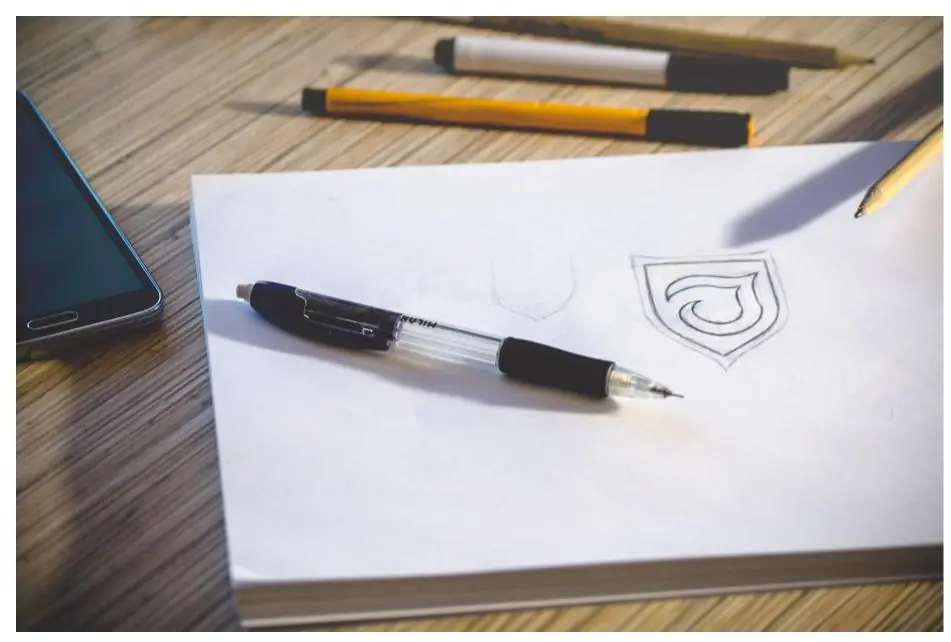
Later, back in the studio, you can refine the rough sketch, gather photo references that fit it, and build it into something finished. The sketchbook is the holding place between the spark and the work. Without it, half your best ideas evaporate before you ever sit down to paint, and the ones that survive show up sharper because you caught them early.
Why is play an important purpose of a sketchbook?
Play is important because it is where some of your best growth actually happens, not in spite of the fun but because of it. If this list makes a sketchbook sound like nothing but skill drills and project planning, that is the wrong picture. Those reasons are real, but they are not the most important ones.
Your sketchbook should hold some pure play. If it does not, you are probably doing it wrong. Mastering art does take practice and discipline, but even the most disciplined practice needs room for joy. When you make art for the fun of it, you slip into the zone and start drawing from your right brain, which is exactly the state you need to improve. Drawing just to play often delivers your best leaps precisely because you stopped trying so hard. If your sketchbook has gone stale, leaning into play is one of the surest ways through an art block, and it is the spirit behind the kind of right brain activities that loosen everything back up.
What does keeping a sketchbook give you over time?
Keeping a sketchbook gives you a record of your own growth and your own life, all in one place. Across its pages you hone your skills, test materials you were afraid to touch, capture ideas before they vanish, and leave room for play that keeps the whole thing alive. Artists who keep the habit even while traveling get something else too: in the cold of January, they can open a book and be back in August in Italy, in a way a photo rarely manages.
That is a quietly wondrous thing, to look back at your life through the marks you made. It is reason enough on its own. You do not need talent or a perfect setup to begin. You need one book, a couple of tools, and a few minutes a day. If you want a structured, supported way to build the daily art habit, our free Two Week Challenge is made for exactly that first step, and the rest of our creative block and identity collection is here when you are ready to keep going. Start a page today, badly, on purpose. That is how every sketchbook worth keeping begins.
Frequently asked questions
What is the purpose of an artist's sketchbook?
A sketchbook is a low-pressure space for growth rather than a place for finished work. Its purpose is to let you practice seeing, test materials, record experiences, capture ideas, and play. Because nobody is grading the pages, you can make mistakes freely, and that freedom is exactly what makes a sketchbook the fastest way most artists improve.
Why do artists keep sketchbooks?
Artists keep sketchbooks because the daily habit compounds. Drawing from life sharpens observation and hand-eye coordination, testing new media in the pages removes the fear of ruining a real painting, and quick sketches preserve ideas before they vanish. A sketchbook also becomes a visual journal, so it doubles as both training ground and memory.
How is a sketchbook different from finished artwork?
Finished artwork is made to be shown and resolved. A sketchbook is private and unresolved on purpose. It is where you think on paper, try things that might fail, and explore without an audience. Loosening that pressure is the point: the looser pages are where you learn the most, and that learning later shows up in your finished pieces.
How do you start keeping a sketchbook?
Start small and keep it easy to reach for. Pick one sketchbook and a couple of basic tools, then draw something in front of you for a few minutes a day. Do not aim for good pages. Aim for consistent ones. Draw from life, jot notes beside your sketches, and let some days be pure play so the habit stays enjoyable enough to last.
Why is sketching important for improving as an artist?
Sketching is important because it trains the two skills underneath every drawing and painting: seeing accurately and moving your hand to match. Drawing from life forces your brain to translate a three-dimensional world onto a flat page, which a camera otherwise does for you. Done regularly, that translation becomes second nature and lifts the quality of all your work.
What to practice this week
- Draw one object in front of you for ten minutes today, from life rather than a photo, and let it be rough.
- Use a spread to test a material you have never tried, mixing two media to see how they behave with no finished piece at stake.
- On your next outing, sketch one thing you see and write a sentence next to it about why it caught your eye.
Supplies used
About the author
More from ElliKeep learning