Right Brain Activities: 11 Right Brain Exercises to Activate the Right Hemisphere
The right side of your brain is where intuition, imagery, and creative flow live. Like a muscle, it gets stronger with use. Here are 11 simple exercises to wake it up.

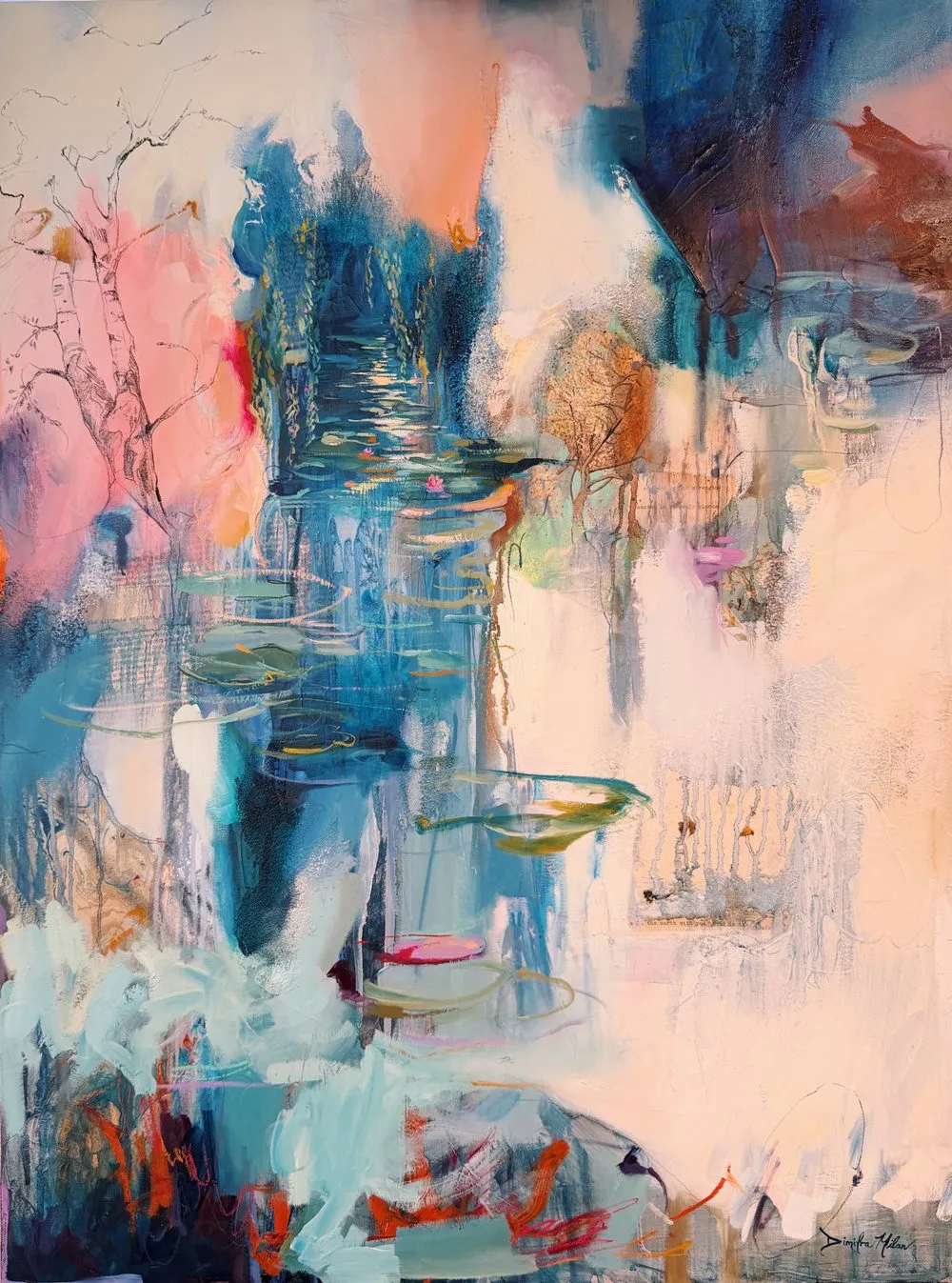
Right brain activities are exercises that wake up the creative, intuitive side of your brain: the hemisphere responsible for imagery, emotion, spatial awareness, and flow. If your art feels stiff, overthought, or stuck, the problem is often that you are working entirely from the logical left brain. The fix is to practice exercises that bypass logic and let intuition lead. Below are 11 simple right brain exercises you can start today, no special supplies required.
Most of us live in left brain mode without realizing it. The left hemisphere handles logic, structure, language, and getting things done, and a normal adult day demands all of that constantly. The right hemisphere, where creativity actually thrives, gets very little use by comparison. Like any muscle, it weakens when you neglect it and strengthens when you train it. These exercises are that training. None of them ask you to be good at art. They ask you to stop planning and start sensing, which is exactly the shift that makes creating feel alive again.
What are right brain activities, and why do they matter for artists?
Right brain activities are anything that engages intuition, imagery, and present-moment awareness instead of logic and planning. They matter for artists because the act of making art lives mostly on the right side. When you draw what you see rather than what you assume, feel a composition rather than calculate it, or let color carry emotion rather than follow a rule, you are working from the creative hemisphere. Training it directly carries straight back into your art.
A quick note on the science, in the spirit of honesty: the tidy left brain versus right brain split is more metaphor than fact. Both hemispheres cooperate on nearly everything you do, and creativity is not locked into one side. But the model is still a useful handle, because these exercises really do help. They work by interrupting the overly analytical, over-planned thinking that strangles creativity, and inviting a looser, more intuitive way of working. Whether you credit your right hemisphere or simply a calmer, less judgmental mind, the result is the same: art starts to flow.
What are the best right brain exercises to activate the right hemisphere?
The best right brain exercises share one quality: they quiet the planning mind and reward instinct. Here are 11 simple, powerful ones that help you activate the right side of your brain and start creating with greater intuition, endurance, and joy. Try a few as a warmup before you make art, and notice how much faster the flow state arrives.
-
Doodle without a plan. Grab a pen and draw flowing lines and shapes that connect naturally, without thinking too much about where they are going. For inspiration, look up “Zentangle” patterns and try mimicking some of them. Let your hand wander and enjoy the meditative flow. This is the gentlest on-ramp into right brain mode there is.
-
Fake-write with both hands. Pretend to write a sentence with your left hand, then switch and do the same with your right. This bilateral movement engages both sides of the brain and helps stimulate creative neural pathways. It feels strange, which is part of the point, because strangeness pulls you out of autopilot.
-
Try blind contour drawing from crumpled paper. Crumple a piece of paper and set it in front of you. Without looking down at your sketchbook, follow the contours of the crumples with your eyes and let your pencil follow what your eyes see. Stay focused on the fine detail and trust the process. The point is not a good drawing. The point is the seeing.
-
Draw a face without looking at the paper. Find a partner or use a photo. While studying the subject’s face closely, draw without glancing at your sketchbook. Let your pencil mirror the slow movement of your eyes over every contour and shape. This is the classic exercise behind drawing on the right side of the brain, and it forces your eye and hand to work together instead of your assumptions taking over.
-
Dance to music. Let your body move freely to instrumental music. Do not plan it. Just feel the rhythm and let movement become another form of expression. It is a fantastic way to break out of a mental rut and reconnect with your instincts, and it gets you out of your head and into your body.
-
Visualize a place with your eyes closed. Close your eyes and bring to mind a place you have been or something you just saw. Visualize the colors, shapes, and spatial relationships in as much detail as you can. You can also study a photo, then close your eyes and mentally reconstruct every detail. This builds the visual imagination that every artist draws on.
-
Sing a made-up song. Stream-of-consciousness singing is a fun, freeing way to bypass logic and dive into raw expression. The words do not have to make sense. Just let your imagination lead and let the sounds come out however they come out. Permission to be silly is permission to be creative.
-
Move differently. Walk backward, balance on one foot, or invent a quirky stride. Changing how your body moves interrupts automatic thought patterns and helps build new creative connections. Novelty is fuel for the right hemisphere, and your habits are its enemy.
-
Daydream with intention. Set a timer for 10 minutes, close your eyes, put on instrumental music, and let your mind drift without trying to control it. Notice what images appear and what thoughts unfold. Structured daydreaming is not laziness. It is one of the oldest ways artists have found ideas.
-
Take beauty shots. Snap five photos throughout your day, not for social media or for perfection, but simply for beauty’s sake. Pay attention to light, texture, color, and mood. This sharpens your eye for composition and visual storytelling, and it trains you to notice beauty you would otherwise walk right past.
-
Journal nonsense. Set a timer and write whatever words come to mind, without censoring yourself. The goal is to let your subconscious speak without judgment. You will be surprised by the raw creativity that flows through once you stop editing, and the exercise loosens the same grip that keeps your art stiff.
How do you make right brain activation part of your daily practice?
You make right brain activation a daily practice by treating it like a warmup rather than a project. The more you engage your right brain, the easier it becomes to create from a place of flow, emotion, and instinct, so the goal is frequency, not intensity. Pick one or two of these exercises and spend five or ten minutes on them before you sit down to make art. Done consistently, they retrain your default state, so the flowing, intuitive mode you used to wait for starts arriving on demand.
A few of these double as resets when you feel stuck mid-session. If you have ever frozen up in front of a blank canvas, the doodling, free movement, and journaling exercises are quick ways back in, and we go deeper on that in how to get out of an art block. If the block runs deeper than a single bad day, how to overcome creative block takes a more honest look at what is really going on. And if the loose, low-pressure drawing in these exercises surprises you with how much it helps, that is not an accident: the research on the benefits of drawing and doodling backs it up.
Why do these exercises actually work?
These exercises work because they remove the two things that strangle creativity: planning and judgment. Almost every one of them takes away your ability to control the outcome. You cannot doodle wrong. You cannot blind-contour a perfect drawing. You cannot sing a made-up song incorrectly. By design, they make the analytical, evaluating part of your mind irrelevant, and the moment that voice goes quiet, the creative side finally has room to lead.
That matters because the loudest thing standing between most people and their art is not a lack of skill. It is the inner critic, the voice that judges every mark before it lands. These exercises are practice at ignoring it. Over time, you learn that you can create without that voice running the show, and that lesson is the real prize. If the critic is more than a passing nuisance for you, if it has you doubting whether you are an artist at all, that is worth naming directly, and artist imposter syndrome goes there.
What is the difference between right brain and left brain thinking?
The difference is one of mode, not of permanent type. Left brain thinking is logical, sequential, language-based, and focused on getting a correct answer. Right brain thinking is intuitive, holistic, image-based, and comfortable with ambiguity. You are not one or the other for life. You shift between them constantly, and most adults simply spend far more time in left brain mode because daily responsibilities demand it.
This is good news, because it means the imbalance is fixable. You are not stuck being uncreative. You have a creative side that is underused, and underused is not the same as gone. Every exercise above is a small invitation back into the right brain mode you already have. The more often you accept the invitation, the more available that mode becomes, until reaching for intuition over logic stops feeling like effort and starts feeling like home.
These exercises are not just warmups. They are gateways back to your true artistic voice, the one that gets buried under all the planning and judging. If you want a structured, supported way to put this into real practice, our free Two Week Challenge is built to get a brush in your hand and your right brain working, even if you are starting from zero. And when you want to keep going, the rest of our creative block and identity collection is here for you. The creative side of you was never lost. It was only waiting to be used.
Frequently asked questions
What are right brain activities?
Right brain activities are exercises that engage the brain's right hemisphere, the side associated with intuition, imagery, emotion, spatial awareness, and being present in the moment. They tend to bypass logic and planning. Doodling without a plan, drawing without looking at your paper, moving to music, and free writing all pull you out of analytical thinking and into a more intuitive, creative state.
How do you activate the right side of your brain?
You activate the right side of your brain by doing things that quiet logic and reward intuition. Draw what you actually see instead of what you think an object looks like, move your body without choreographing it, visualize scenes with your eyes closed, and write or sing without censoring yourself. The key is to stop planning and let your hand, eye, and imagination lead instead.
Are right brain exercises useful for adults?
Yes. Right brain exercises are especially useful for adults, because most adults spend their days in left brain mode, handling logic, structure, and problem solving. That makes the creative side rusty. A few minutes of intuitive drawing, free movement, or unfiltered writing each day rebuilds access to creativity, imagery, and flow that the analytical routine tends to crowd out.
Do the left brain and right brain really work that differently?
The popular left brain versus right brain split is simpler than the real science. Both hemispheres cooperate on almost everything, and creativity is not confined to one side. Even so, the model is a useful shorthand: the exercises here genuinely help by interrupting overly analytical, planned thinking and inviting a looser, more intuitive way of working that artists rely on.
How often should you do right brain exercises?
A little every day beats a long session once a week. Right brain access behaves like a muscle, so short, regular practice keeps it strong and available. Pick one or two of these exercises, spend five or ten minutes on them as a warmup before you make art, and the intuitive, flowing state will start to arrive faster each time you sit down to create.
What to practice this week
- Set a timer for five minutes and doodle flowing lines and shapes with no plan, letting your hand wander instead of deciding what to draw.
- Do one blind contour drawing: pick a subject, keep your eyes on it, and draw without once looking down at your paper.
- Put on instrumental music, close your eyes, and visualize a place you have been, rebuilding its colors, shapes, and light in your mind.
Supplies used
About the author
More from ElliKeep learning