What Is Pop Art? The Movement, Its Era, and Why It Still Matters Today
Pop art turned soup cans and comic strips into fine art. Here is what the movement was, the era it came from, what it is known for, and why it still feels modern.

Pop art is a movement that began in the 1950s and peaked in the 1960s, and it pulls its imagery straight from everyday life: advertisements, comic books, packaging, and consumer products. Pop artists used bright flat colors, familiar images, and repeated patterns to make art that felt fresh, relatable, and modern. The whole point was to show that the ordinary objects and icons of our culture, a can of soup or a comic panel, could be just as captivating as any traditional subject. If you have ever wondered what pop art is, when it happened, or why it still feels current, this is the short, clear version.
The movement did something quietly radical. It took the line that separated “fine art” from popular culture and rubbed it out. That single idea is why pop art still turns up everywhere, from album covers to phone cases, decades after its peak.
What is pop art, exactly?
Pop art is the art of turning the everyday into something extraordinary. Where most traditional art focused on nature, people, or historical events, pop art aimed its attention at the things we usually ignore, like a soda can, a logo, or a comic strip. Pop artists set out to blend the worlds of fine art and popular culture, challenging the very idea of what could count as art. By doing that, they handed us a new way to look at the world around us.
The style is easy to recognize. Pop art tends to use bright, flat colors, bold outlines, and repeated patterns that make a piece look like an advertisement or a mass-produced product. That look is no accident. It mirrors the fast pace of modern life and the influence of mass media on the culture, and it asks us to find beauty in things we would normally overlook. Pop art shares the early modern impulse to question the rules that movements like post-impressionism had already started bending.
What is pop art known for?
Pop art is known for transforming mass-produced and commercial imagery into fine art, and two artists defined that reputation: Andy Warhol and Roy Lichtenstein.
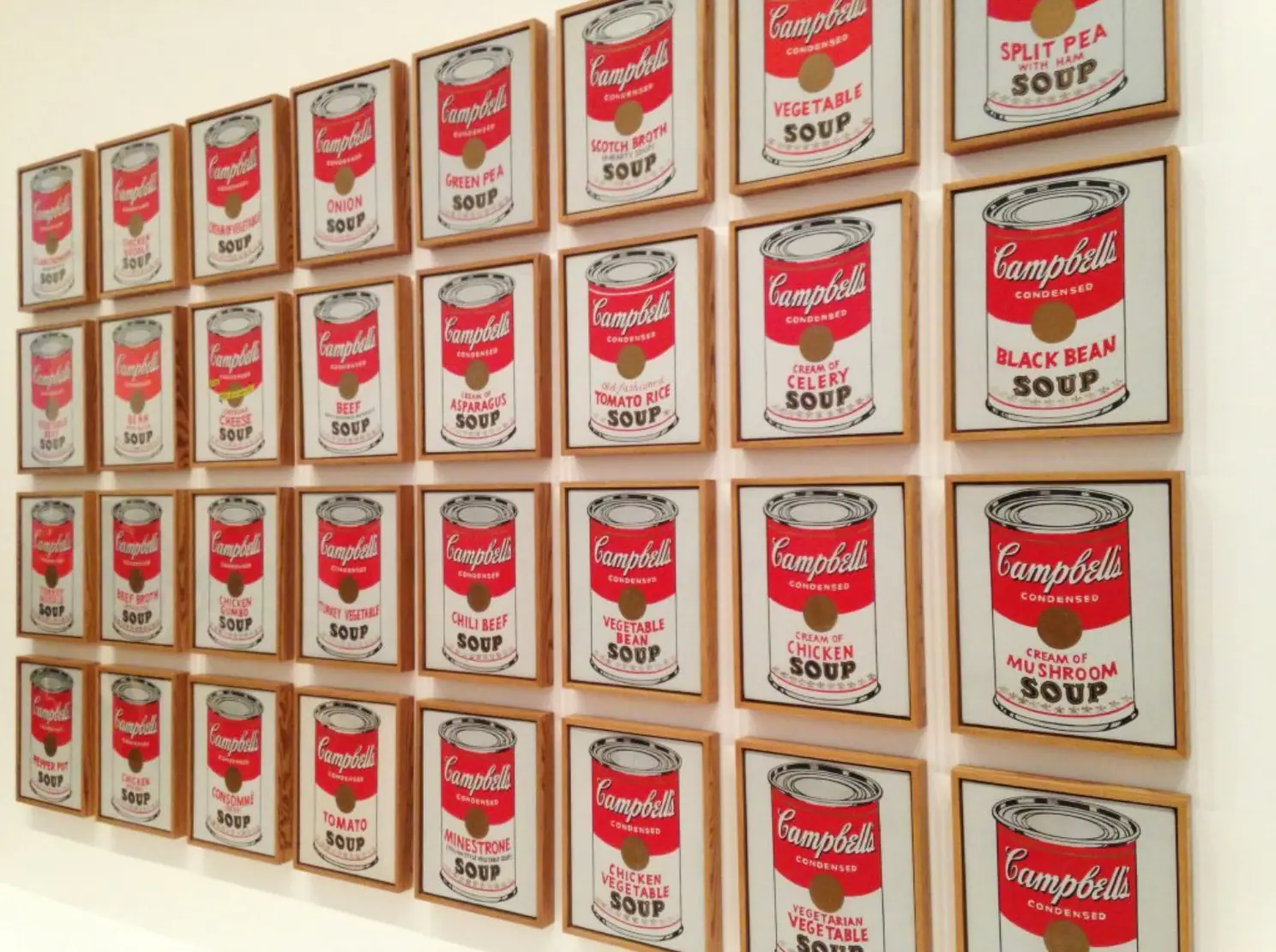
Andy Warhol turned everyday products into art. His Campbell’s Soup Cans (1962) took a simple grocery item and made it a powerful symbol of American culture. His use of familiar objects and repeated images pushed viewers to think about consumer culture and how we assign value to ordinary things. Warhol also explored fame and media through portraits of celebrities like Marilyn Monroe, using bright colors and repetition to mirror the way the media shapes how we see public figures.
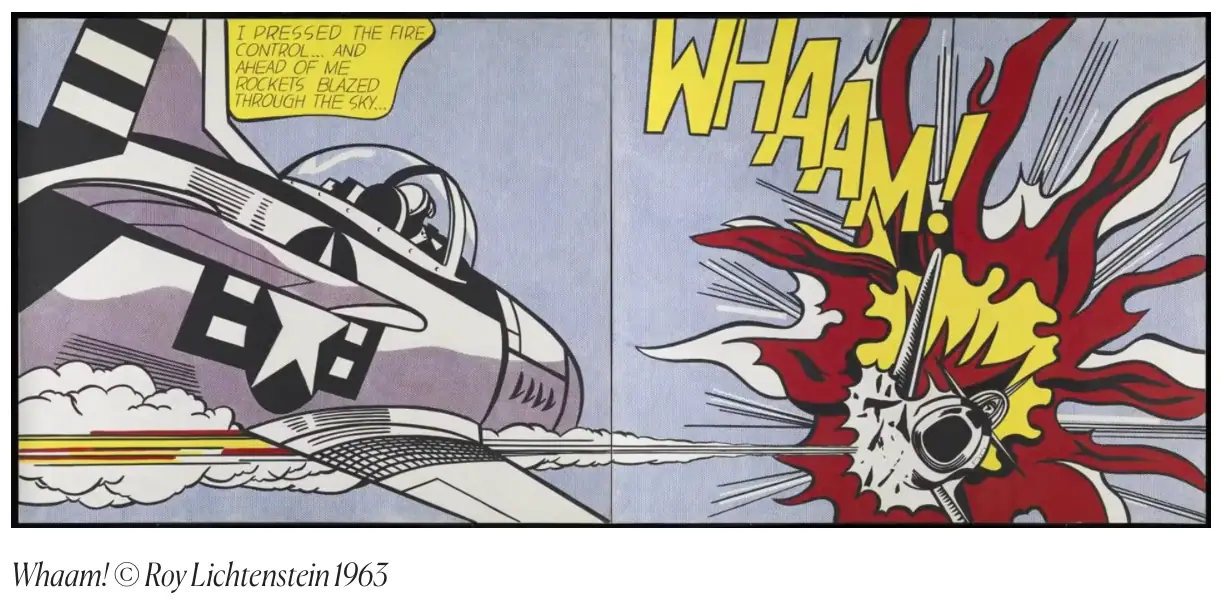
Roy Lichtenstein took his cue from comic books and gave them a playful, exaggerated twist. Pieces like Whaam! (1963) feature thick outlines, primary colors, and speech bubbles that give the work the look of a comic strip. Lichtenstein leaned into drama and storytelling, but in a fun, larger-than-life way. By borrowing from popular media, he challenged viewers to treat everyday comics as a legitimate art form.
Warhol and Lichtenstein both used common images to make work that changes how we see the things in front of us every day. That is the signature of pop art: take something familiar, blow it up, simplify it, and make you look twice.
What time period is pop art from?
Pop art emerged in the mid-1950s and reached its peak through the 1960s. It grew out of the postwar boom in advertising, television, and consumer goods, a world suddenly full of bright packaging and mass media. It also reacted against the heavy seriousness of the abstract expressionism that came right before it, offering color, humor, and recognizable subjects instead.
The core era runs from roughly 1955 into the early 1970s, with Britain and the United States as the two centers where it took hold. But unlike some movements that flared and faded, pop art never fully closed. Its visual language kept moving forward, which is the next question worth answering.
Why does pop art make the ordinary extraordinary?
Pop art makes the ordinary extraordinary by treating consumer culture as worthy subject matter instead of background noise. It shows that the things we see all day, a soda can, a cereal box, a billboard, can be inspiring and worth celebrating. The effect is that you start looking at daily life with fresh eyes and a little curiosity.
Rather than reaching for traditional subjects, pop artists pulled from advertising, packaging, and celebrity culture. That choice tied their work directly to the modern world and the experiences of ordinary people. Pop art celebrates popular culture in all its forms, turning consumer items and mass media into iconic images. It is a generous way to see the world, and it sits alongside the way artists have always loaded objects with meaning, the way color symbolism loads a single hue with feeling.
Is pop art still relevant today?
Yes, pop art is still relevant today, and arguably more than ever. Its influence runs through artists, designers, and the fashion industry. The bright colors, bold patterns, and playful style show up in everything from posters to clothing. Its focus on media and popular culture lands especially hard in a digital age where we are surrounded by social media, advertising, and celebrity, the exact territory pop art was built to comment on.
Pop art also still challenges us to rethink what art can be. It made the case that art does not have to live only in galleries and museums; it can be found in the everyday things around us. That invitation, to look at your surroundings with curiosity and find beauty in the unexpected, has not aged.
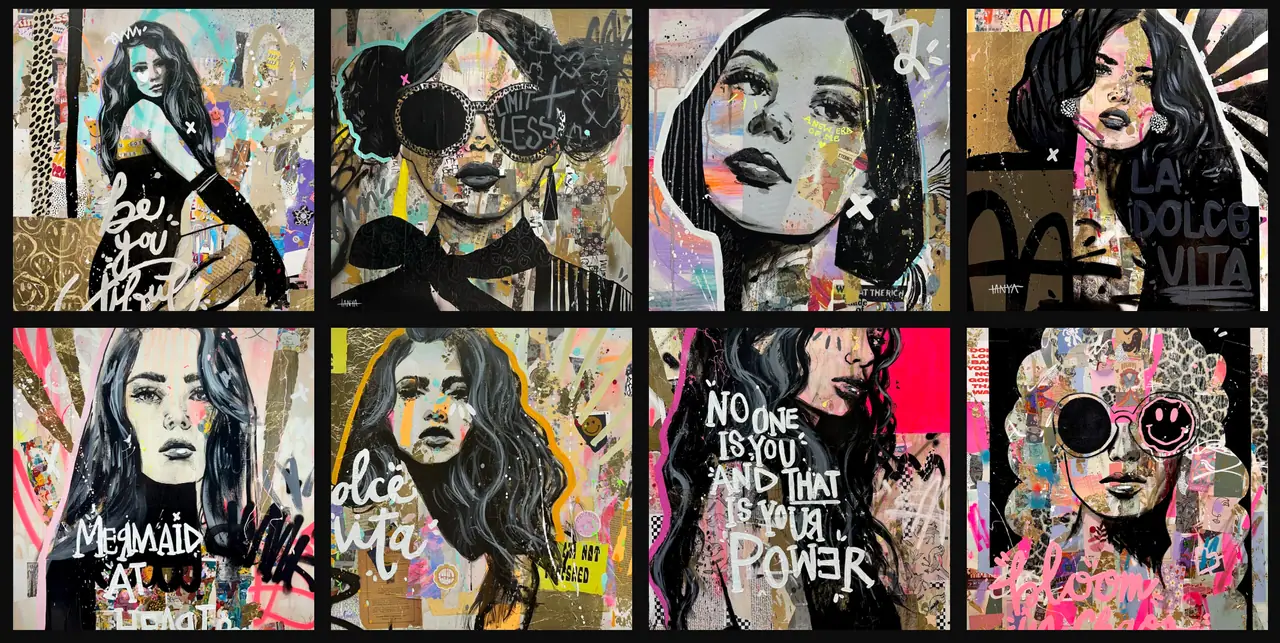
You can see the movement living on in working artists right now. Painters like Tanya Aubut bring a fresh, contemporary energy to the pop art tradition, blending bold color, graphic lines, and expressive portraiture. Her work reimagines everyday figures and cultural icons with a vibrant, playful edge, using exaggerated palettes, stylized forms, and high-contrast imagery as her own creative voice. That is the proof: the genre stays alive, adaptable, and full of possibility. The same restless energy drives every living style, which is part of why current art trends keep circling back to bold color and recognizable imagery.
Why should you try pop art yourself?
You should try pop art because it gives you permission to play with familiar images and bright color without chasing perfect realism. Pop art is about making bold, eye-catching statements, not rendering every detail. You can explore collages, comic-inspired paintings, or designs built from logos and advertisements. It hands you the freedom to experiment and have fun with the things you already see in daily life.
Treat it as a way to explore new ideas and connect with your surroundings. The style teaches you to view the world with fresh eyes and pull inspiration from the ordinary. Whether you stick with pop art or use it as a spark for other styles, it builds creative thinking and makes the process of making art genuinely enjoyable. In the end, pop art shows us that art does not have to be serious or complicated to be meaningful. With every bright color and familiar image, it says: this is our world, and it is worth celebrating.
If you want to take that spark and actually start painting, our free Two Week Challenge is built to get a brush in your hand fast, no experience required. And if you enjoy understanding how movements connect, the rest of our art history and famous paintings collection traces the threads from one style to the next, including kindred movements like surrealism and realism.
Quick answer
Pop art is a movement that began in the 1950s and peaked in the 1960s, drawing its imagery from advertising, comic books, and consumer products. It is known for bright flat colors, bold outlines, and repeated images. It still matters because it blurred the line between fine art and everyday culture, an idea that shapes design today.
Frequently asked questions
What is pop art?
Pop art is a movement that pulls its imagery straight from everyday life: advertisements, comic books, packaging, and consumer products. Pop artists used bright flat colors, bold outlines, and repeated images to make the ordinary look extraordinary. The goal was to blur the line between fine art and popular culture, treating a soup can or a comic panel as a subject worthy of a canvas.
What is pop art known for?
Pop art is known for turning mass-produced and commercial imagery into fine art. Think of Andy Warhol's soup cans and celebrity portraits or Roy Lichtenstein's comic-strip panels. The style favors bright, flat color, heavy outlines, and repetition that makes the work look mass-produced on purpose. It is also known for its sense of fun and its challenge to what counts as serious art.
What time period is pop art from?
Pop art emerged in the mid-1950s in Britain and the United States and reached its peak through the 1960s. It grew out of the postwar boom in advertising, television, and consumer culture, and it reacted against the seriousness of abstract expressionism that came before it. Its core era runs roughly from 1955 to the early 1970s, though its influence never really stopped.
Is pop art still relevant today?
Yes. Pop art is still relevant because its core idea, that everyday and commercial imagery can be art, now shapes graphic design, fashion, advertising, and social media. We live surrounded by logos, screens, and celebrity culture, which is exactly the world pop art was built to comment on. Contemporary artists continue to borrow its bold color and graphic style.
Who are the most famous pop artists?
Andy Warhol and Roy Lichtenstein are the two most famous pop artists. Warhol is known for his Campbell's Soup Cans and his repeated celebrity portraits, including Marilyn Monroe. Lichtenstein is known for his comic-strip paintings like Whaam!, built from thick outlines, primary colors, and speech bubbles. Their work defined the look most people picture when they think of pop art.
What to practice this week
- Pick one ordinary object from your kitchen or desk and paint it large, in flat bright color with a bold outline, the way a pop artist would.
- Choose a photo of a face you like and repeat it four times across one surface, changing the color palette in each copy the way Warhol did with his portraits.
- Make a small comic-inspired piece: a single panel with thick black outlines, primary colors, and a hand-lettered word or speech bubble.
Supplies used
About the author
More from Elli