How to Thin Acrylic Paint: Water vs. Mediums (and How Much Is Too Much)
Water works for washes, mediums work for glazes, and the difference comes down to what happens inside the paint.

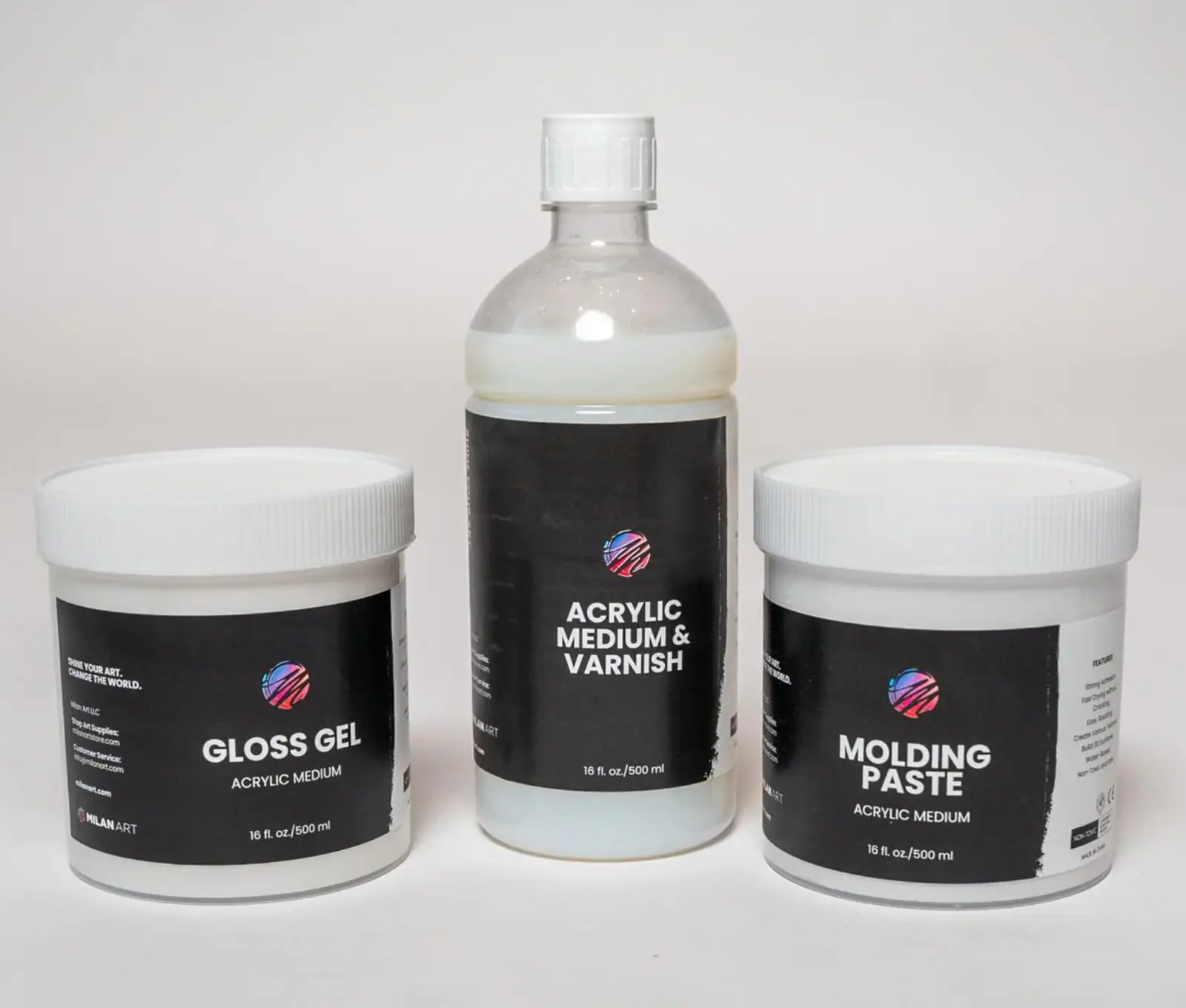
You can thin acrylic paint two ways: with water or with an acrylic medium. Water is perfect for washes and underpainting, but past roughly equal parts water and paint it starts to break down the binder that glues pigment to your surface. Mediums thin paint without that risk and add control over flow, transparency, and drying time. Everything else in this guide is about knowing which tool fits which job.
Thinning matters because layers matter. When a painting seems to hold real depth, what you are usually seeing is many thin passes of color stacked on top of each other, each one letting the layer beneath glow through. Learning to thin your paint well is the skill that makes that depth possible.
Why would you thin acrylic paint?
Thinning acrylic paint changes more than its viscosity: it opens up techniques that paint straight from the tube cannot reach. Delicate washes, luminous glazes, smooth even coats, drips and splashes, all of them start with paint that flows.
Thinner paint also loosens your hand. It travels further with less pressure, which invites bigger, freer brushwork and makes experimenting feel less precious. If you have been wanting to break out of tight, careful strokes, changing the consistency of your paint is one of the fastest ways to do it. It is a foundational move behind many of the painting techniques artists build whole styles around.
Can you thin acrylic paint with water?
Yes. Water is the simplest way to thin acrylic paint, and for washes and underpainting it is usually all you need. The process is short:
- Start with a modest amount of paint on your palette. A cup or a palette with ridges helps keep runnier mixes from spilling.
- Add water gradually, mixing with a palette knife or a brush made for acrylics until the consistency is smooth and uniform.
- Treat a 1:1 ratio of water to paint as a common starting point for washes, then adjust toward the effect you want.
- Stop before the paint loses its body entirely. Too much water breaks down the acrylic binder, which weakens the paint film and reduces adhesion.
Heavy body acrylics thin exactly the same way. They simply take longer to loosen, so add water in smaller increments and keep mixing between additions instead of flooding the pile to hurry it along.
Water is also the engine behind drip and splash techniques. For drips, adjust the water content to control how fast and how far the paint runs, and experiment with working flat, standing the surface upright, and tilting it while the paint moves. For splatter, keep the mix slightly thicker and flick it from a toothbrush or a spray brush. A spray bottle mister can push wet tint around the surface for effects you could never plan.
What should you use to thin acrylic paint besides water?
An acrylic medium. There is no solvent thinner for acrylics the way turpentine or mineral spirits thin oil paint. Acrylics are water based, so your two honest options are water and mediums formulated for the job, and mediums are the better choice whenever you care about the strength and finish of the paint film.
Each medium serves a different purpose:
- Glazing liquid thins paint into transparent, luminous layers, ideal for building depth one veil of color at a time.
- Flow improver helps paint flow and spread more easily without washing out its color.
- Retarder slows the drying time so you can blend and manipulate the paint longer. Depending on your environment, retarder can be the difference between fighting your paint and steering it.
The mixing process mirrors thinning with water: place your paint on the palette, add a small amount of medium, and blend until the mixture is fully consistent. The difference is what happens inside the paint. Mediums are built on the same acrylic polymer as the paint’s own binder, so they preserve adhesion and durability even at generous dilutions, and many let you choose your finish, from matte to glossy.
This is why mediums are particularly magical for glazing. They create smooth, even, transparent coats that give a painting richness, without the risk of over-thinning that comes with water.
How do opaque and transparent paints behave when thinned?
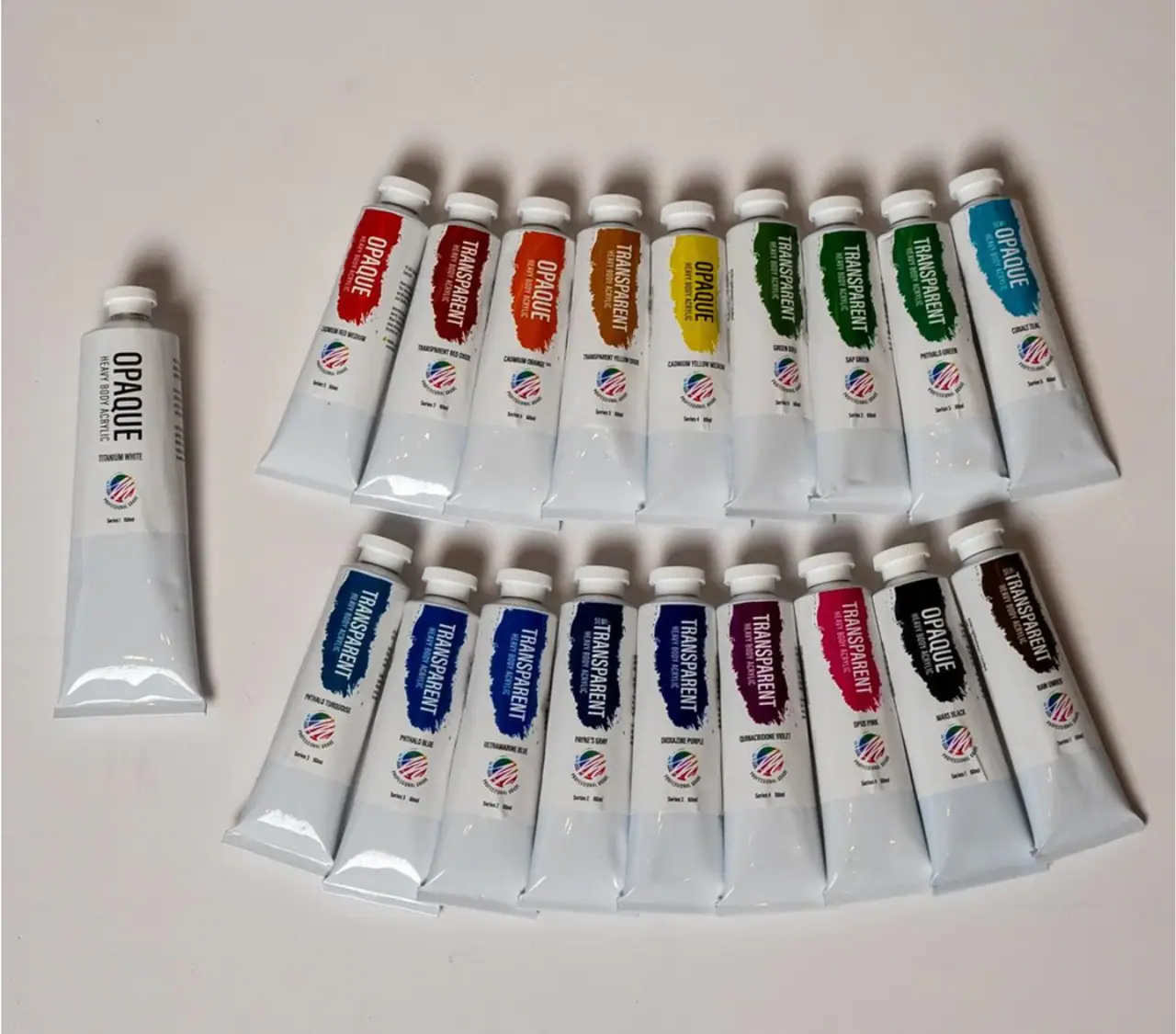
Opaque paints keep a degree of coverage when thinned but can turn streaky if you dilute them too far with water, while transparent paints hold their translucency and are made for glazing and layering. The two kinds of pigment ask for different treatment.
Reach for thinned opaque colors when you want solid layers and texture that still read as one unified passage. Thin your transparent colors with a medium rather than water to preserve their clarity and vibrancy; that is how you get luminous effects and subtle transitions between layers.
Knowing which of your colors are opaque and which are transparent is half the planning of a layered painting. The information lives on the tube label, though some brands make you hunt for it.
Which acrylic paints are best for thinning?
High-quality professional paints hold up to thinning far better than budget paints. Brands such as Golden, Liquitex, and Winsor & Newton are known for their consistency and performance when diluted, and starting with a quality paint makes a visible difference in the final surface.
Our own Milan Art professional acrylics were designed by working artists with thinning and layering in mind. Every tube shows the color and its opacity at a glance, so you can plan transparent glazes and opaque passages without decoding fine print, and the buttery texture loosens evenly with either water or medium.
How does thinning affect drying time?
Water-thinned paint dries faster, and medium-thinned paint gives you more control. Acrylics already dry quickly compared to oils (one of the five key differences between acrylics and oil paint), and adding water does not change that; thin washes can be ready for the next layer in minutes. Push the water too far, though, and the paint can dry unevenly and even crack.
Mediums behave more predictably. Retarder deliberately slows the drying process to buy you blending time, which matters most in a hot or dry studio. Flow improver and glazing liquid maintain a consistent drying rate, so the paint performs the same way from the first layer to the last without losing its integrity.
What are the most common mistakes when thinning acrylic paint?
The two big ones are adding too much water and not mixing thoroughly. Too much water breaks down the binder, weakens the paint film, and can leave layers that lift or flake later. Incomplete mixing leaves an uneven consistency that shows up as streaks halfway through a stroke. Both have the same cure: add gradually, mix completely, and test on a scrap edge before you commit to the canvas.
One more habit worth building: store leftover thinned paint in an airtight container so it does not dry out, and label the container with the ratio of paint to water or paint to medium you used. Next session starts exactly where this one ended.
Thinning mistakes are only one of the ways a promising painting goes sideways. If you have ever worked a piece past its best moment, read how to stop ruining your paintings next.
Frequently asked, answered fast
Thinning acrylic paint is a small skill with a long reach. Water for washes and drips, mediums for glazes and smooth layers: once both are in your hands, you can build the kind of depth that thick paint alone never gives you. Experiment with ratios until the paint moves the way you imagine, and explore more foundations in the painting techniques hub. If you would rather practice with structure and feedback from a working artist, the 2-Week Challenge is a friendly place to start.
Frequently asked questions
Can you thin acrylic paint with water?
Yes. Add water gradually and mix until smooth, starting around equal parts water and paint for a wash. Stop before the paint loses all its body: too much water breaks down the binder, which weakens the paint film and hurts adhesion.
Is there a thinner for acrylic paint like turpentine for oils?
No. Acrylics are water based, so solvents made for oil paint do not apply. Use plain water for washes, or an acrylic medium such as glazing liquid, flow improver, or retarder when you want to protect the paint film.
How do you thin heavy body acrylic paint?
The same way as any acrylic, just more gradually. Add small amounts of water or medium and mix completely between additions. Heavy body paint takes longer to loosen, and rushing it with a big pour of water is how mixes turn streaky.
Does thinned acrylic paint dry faster?
Water-thinned paint usually dries faster because of its higher water content. Medium-thinned paint is more predictable: glazing liquid and flow improver keep a consistent drying rate, and retarder deliberately slows drying so you have more time to blend.
What to practice this week
- Mix one color with water at three strengths (a touch of water, equal parts, and a thin wash), paint a swatch of each, and note where the color starts to streak or lose its grip.
- Glaze over a dry swatch twice, once with color thinned in water and once with color thinned in glazing medium, and compare the clarity of the two layers.
- Thin a small amount of paint until it drips, work flat, then tilt your surface and watch how the water content changes the speed and reach of the drips.
Supplies used

About the author
More from Elli