Fat Over Lean (Oil Painting): What the Rule Means and How to Use It
Fat over lean is the one oil painting rule that keeps your layers from cracking. Here is what fat and lean paint actually are, why the order matters, and how to build a painting that lasts.

Fat over lean means each new layer of oil paint should hold more oil than the layer beneath it. It is the one rule in oil painting that most reliably keeps a finished piece from cracking, and it is worth understanding before you ever worry about subject or style. The key thing to know up front: fat and lean describe the oil content of the paint, not how thick or thin you apply it. Build your layers from lean at the bottom to fat at the top, and your painting stays sound for decades.
As artists we tend to bristle at rules. We want to break free, think outside the box, burst through the boundaries. That is how we change the world. But this is one of the few rules in painting that is pure physics, not taste, and understanding the why behind it makes you a better painter rather than a more cautious one. So let us start with the what.
What is the difference between fat and lean paint?
Fat paint has higher oil content and lean paint has lower oil content. That is the whole distinction. Notice what it does not refer to: a thin layer or a thick layer of paint. Fat and lean are about what is inside the paint, not how much of it sits on the canvas.
Oil paint is a mixture of oil, usually linseed, plus pigment and sometimes added fillers. The ratio of oil to pigment, solvent, and medium is what decides whether a given paint is lean or fat. Depending on the medium you reach for, you can take the same color and push it toward either end of that scale, which is exactly how you control the order of your layers.
What is lean paint and how do you make it?
Lean paint is paint with reduced oil content, and you make it lean either by thinning it with solvent or by adding a fast-drying medium that does not raise the oil level. Lean layers dry quickly and hard, which is why they belong at the bottom of a painting.
Two mediums are useful for keeping paint lean. Alkyd is a synthetic resin treated with alcohols and acids, which speeds up drying time. Add it to your oil paint and you keep most of the qualities of oil while reaching touch-dry in about twenty-four hours. Copal medium, made from natural resin, also shortens drying time and gives a brilliant enamel-like glaze finish. Lighter colors hold their brightness and darker colors deepen with copal, but less is more here: too much can yellow your colors over time.
What is fat paint and how do you make it?
Fat paint is paint with raised oil content, and you make it fat by adding an oil-rich medium. Fat layers dry slowly and stay flexible, which is why they belong on top.
Cold-pressed linseed oil and stand oil both create glossy, slow-drying finishes. Cold wax produces a matte finish while also drying slowly. Damar varnish gives a smooth, glossy finish, and notice that word finish: it is a very fat medium and is the last thing you add to a painting. If sorting through all these mediums feels overwhelming, paired lean and fat mediums exist precisely to simplify it. A typical lean medium is linseed oil with spike lavender oil, and the matching fat medium is the same blend with damar resin added, so you can move up your layers without measuring oil ratios yourself.
Why should you paint fat over lean?
You paint fat over lean because of how oil dries, and getting the order wrong is what cracks paintings. Remember, this is about oil content, not paint thickness. Here is the physics, kept simple:
- Oil paint oxidizes and hardens as it dries.
- With changes in temperature and humidity, paint films expand and contract.
- Lean oil paint dries and hardens faster than fat paint.
Now picture the wrong order. You start with a juicy, oil-rich fat layer, let it get touch-dry, and then brush a quick lean layer on top. That leaner layer hardens fast while the fat layer underneath is still curing and moving. As the fat layer expands and contracts beneath it, the brittle lean film on top has no flexibility to follow it, so it cracks or even flakes off.
That is the why of the rule. If you want beautiful, archival-quality paintings that survive being moved, hung, and aged, you build fat over lean. The flexible, slow-drying paint stays on top where it can move with the surface instead of fighting it.
How do artists actually layer fat over lean?
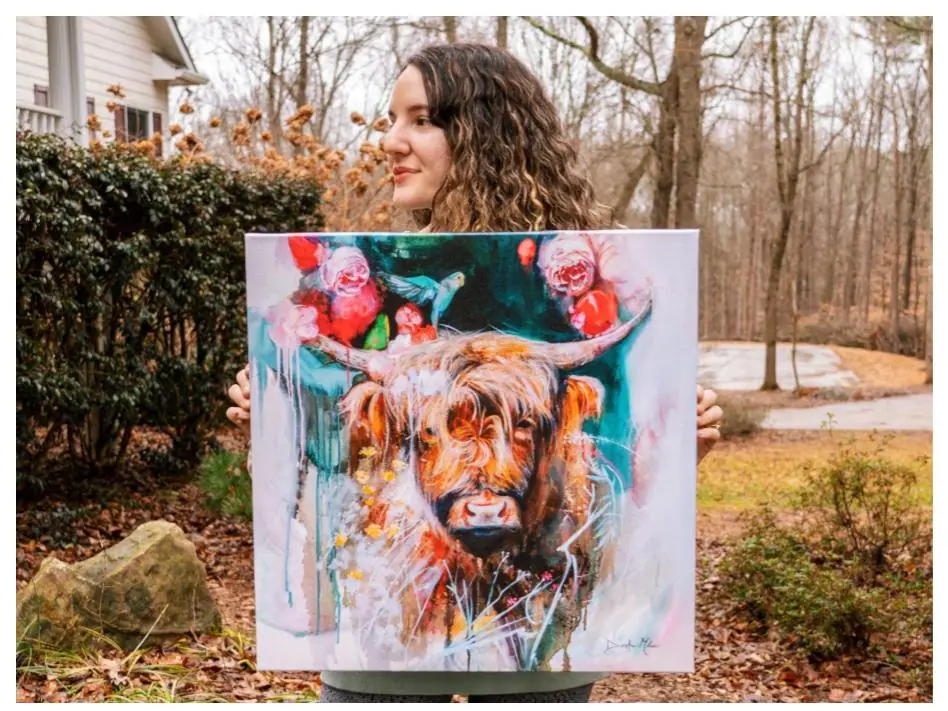
Artists put it into practice by starting lean and getting progressively fatter with each layer, saving the fattest mediums and varnish for last. Dimitra Milan, co-owner of Milan Art, builds her paintings this way. She often begins with a sketch and mark-making, then adds inks and acrylics as a first, lean layer.
As she builds, each layer becomes fatter, and she even works in cold wax to add dimension. Once the painting has cured, she adds a final glossy varnish that punches up the colors and the brilliance of the work. The order is the whole point: lean foundation, increasingly fat layers, varnish at the very end.
A few techniques sit naturally inside this lean-to-fat structure. A subtractive underpainting makes an excellent lean first stage, since it is built thin and dries fast. Transparent oil paint and glazing live in the fatter, later layers where you want depth and glow. And when it is finally time for that last fat coat, follow a careful method so you do not damage the surface: here is how to varnish a painting without ruining it. For the broader system of building oil paintings in order, the guide to essential oil painting techniques puts fat over lean in context with the other layering methods.
Quick recap
Fat over lean is a rule about oil content, not thickness. Lean paint, lower in oil, dries fast and hard and belongs at the bottom. Fat paint, higher in oil, dries slow and flexible and belongs on top. Keep that order and your layers move together instead of cracking apart. Get it backwards and a hard, brittle skin sits over paint that is still shifting underneath, and the surface fails. Start lean, build fatter, finish with varnish.
If you want to learn this kind of thing properly, with your hands and not just your head, the free Two Week Challenge is built for exactly this stage of an artist’s path. And when you are ready to go further into the craft, the rest of our oil painting techniques collection is here for you. The rule is not there to box you in. It is there so the work you pour yourself into is still there, uncracked and glowing, long after the paint has dried.
Frequently asked questions
What does fat over lean mean in oil painting?
Fat over lean means every new layer of oil paint should have more oil in it than the layer underneath. It is a rule about oil content, not about how thick or thin you apply the paint. Because oil-rich paint stays flexible and slow-drying, putting it on top of leaner, faster-drying paint lets the surface move without cracking as it cures over time.
What is the difference between fat and lean paint?
Fat paint has higher oil content and lean paint has lower oil content. Oil paint is pigment suspended in oil, usually linseed, and the ratio of oil to pigment and solvent is what makes a paint fat or lean. Adding a medium with more oil makes paint fatter; thinning it with solvent or using a fast-drying medium makes it leaner.
Why do you paint fat over lean instead of lean over fat?
Lean paint dries and hardens faster than fat paint. If you put a quick-drying lean layer over a slow-drying fat layer, the top hardens first while the layer below is still curing and shifting. As the fat layer expands and contracts, the brittle lean layer on top can crack or flake off. Fat over lean keeps the flexible paint on top, so the surface stays sound.
Does fat over lean refer to thick versus thin paint?
No. Fat and lean refer to oil content, not paint thickness. You can apply a lean layer thickly or a fat layer thinly. A common beginner mistake is reading fat as thick impasto and lean as a thin wash. What matters for the rule is how much oil is in the paint, which you control through your medium, not how much paint sits on the surface.
How do you make oil paint fatter or leaner?
To make paint leaner, thin it with solvent or use a fast-drying medium like alkyd, which keeps oil content low. To make paint fatter, add an oil-rich medium such as cold-pressed linseed oil, stand oil, or a fat medium that includes resin. Many brands sell paired lean and fat mediums so you can move up the layers without measuring oil yourself.
What to practice this week
- Mix three small batches of one color: one thinned with solvent (lean), one straight from the tube (medium), and one with added linseed oil (fat). Paint a swatch of each and note how differently they dry.
- On a small board, do a quick lean underpainting, let it touch-dry, then build one fatter layer on top so you feel the order in your own hands before committing it to a real piece.
- Save your fat mediums and any varnish for the final layers only, and keep your solvent-thinned paint for the first layers, so your stack naturally runs lean to fat.
Supplies used
About the author
More from Elli