Essential Art Supplies: The Tools and Materials Every Artist Should Have
A category-by-category checklist of the art supplies that actually earn a place in your studio, from brushes and paints to surfaces, mediums, and studio gear.

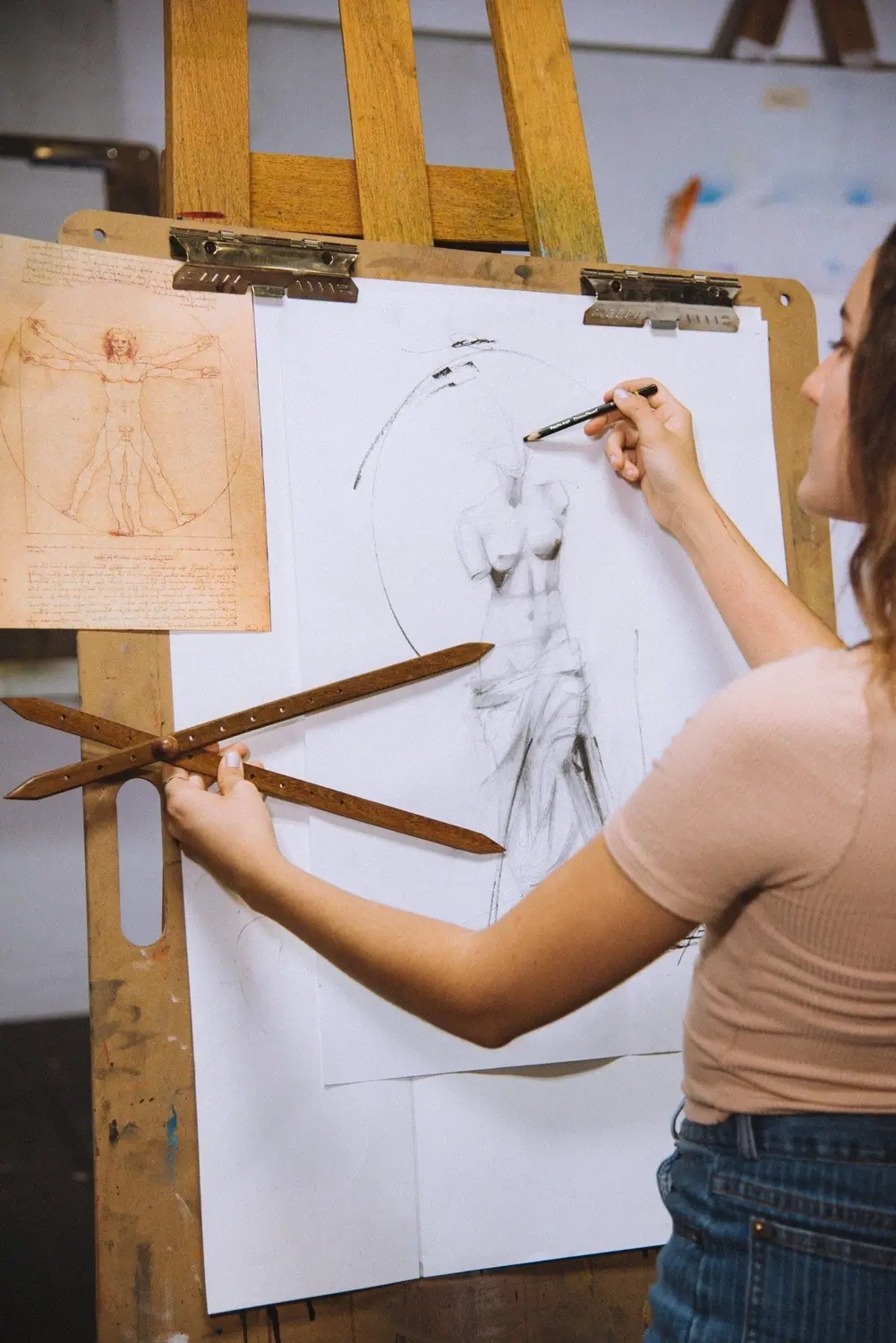
The essential art supplies are simpler than the average store aisle makes them look. You need brushes, paint, something to paint on, a few tools for drawing and mixing, and enough studio gear to work comfortably. Everything else is an upgrade you grow into. This is a category-by-category guide to the professional art tools and materials worth owning, so you can build a studio that actually serves your work instead of cluttering it.
You do not need all of this on day one. Buy for the medium you are working in now, learn it, and add the next thing when a piece demands it.
What brushes do every artist need?
A small set of brush shapes covers almost everything: a flat, a round, a filbert, and a liner. Each shape makes a different mark, and learning those marks matters more than owning a huge set.
- Flat brush. Bold strokes, blocking in shapes, and backgrounds. Durable and quick to cover ground.
- Round brush. Detail, line work, and varied stroke control. Your everyday workhorse for precision and flow.
- Filbert brush. The best of both worlds, soft edges with good coverage. Especially useful for blending.
- Fan brush. Textures like fur, foliage, and softened skies.
- Liner brush. Fine lines, calligraphy, and signature details, for controlled, delicate strokes.
- Large bristle. Soft blending and glazing, and a good choice for watercolor and large area work.
- Angular brush. Sharp corners, curves, and precision edges, plus dynamic shapes.
A few well made brushes beat a large cheap set every time. If you want help choosing by shape and bristle, read Types of Paint Brushes and How to Choose the Right One, and once you own good brushes, How to Clean Your Paint Brushes So They Last for Years keeps them alive.
Which paints belong in a professional kit?
The right paint depends on how you like to work, so most artists settle into one or two mediums rather than owning all of them. Here are the professional art materials worth knowing.
- Artist grade acrylics. Vibrant, fast drying, and versatile, a staple for the modern artist.
- Professional oil paints. Rich color and long drying time for blending, ideal for classical and expressive work.
- Watercolors. Transparent, portable, and built for ethereal, layered effects. Great for travel.
- Gouache. Bold color with a matte finish. It bridges the gap between watercolor and acrylic, which makes it a favorite for illustration.
- Alcohol and acrylic inks. Fluid, vibrant, and fun for abstract work and unconventional surfaces.
- Spray paint (water based). Useful for mixed media and graffiti style pieces. Choose water based for low odor and safe indoor use.
- Paint pens. Controlled lines and vibrant detail for highlights, outlines, and signatures.
If you are deciding between the two most common painting mediums, Acrylic vs Oil Paint: 5 Key Differences lays out the tradeoffs honestly.
What surfaces should you paint and draw on?
The surface matters as much as the paint, and matching the two is half the battle. Water based media warps thin paper, and rigid panels hold detail that loose canvas cannot.
- Canvas panels. Affordable and ideal for studies or plein air work, pre primed and ready to go.
- Stretched canvas. The go-to for finished oil or acrylic work, with the tension and texture most artists love.
- Wood panels. Great for mixed media and ultra smooth finishes, with a rigid surface perfect for collage and layering.
- Watercolor paper (300gsm or heavier). Essential for heavy washes. Heavier paper avoids warping and supports multiple layers.
- Mixed media sketchbook. Perfect for experimenting and sketching on the go.
- Acrylic paper pads. A specialized surface that holds acrylic without warping, good for practice and technique refinement.
- Gesso boards. Pre primed, smooth, and ready for detail work, with a clean, absorbent surface.
Choosing the right canvas is its own small skill. How to Choose a Canvas for Painting covers quality, types, and what professionals actually buy.
What drawing and mixing tools do artists use?
Beyond brushes, a handful of hand tools do the unglamorous work of shaping, measuring, and mixing. These are the quiet professional art tools you reach for constantly.
- Drawing proportion tool. A two pronged tool used to scale a source image up or down to the exact size you want.
- Palette knives. For mixing or applying thick paint with texture and energy. A set of shapes and sizes gives you freedom to scrape, mix, and lay on impasto.
- Pencils and a kneaded eraser. The foundation of any drawing, and the starting point for most paintings too.
Palette knives deserve more attention than they get. If you want to use them as a painting tool and not just a mixing tool, 10 Palette Knife Painting Techniques for Oils and Acrylics shows what they can do on the canvas.
What studio gear makes a productive workspace?
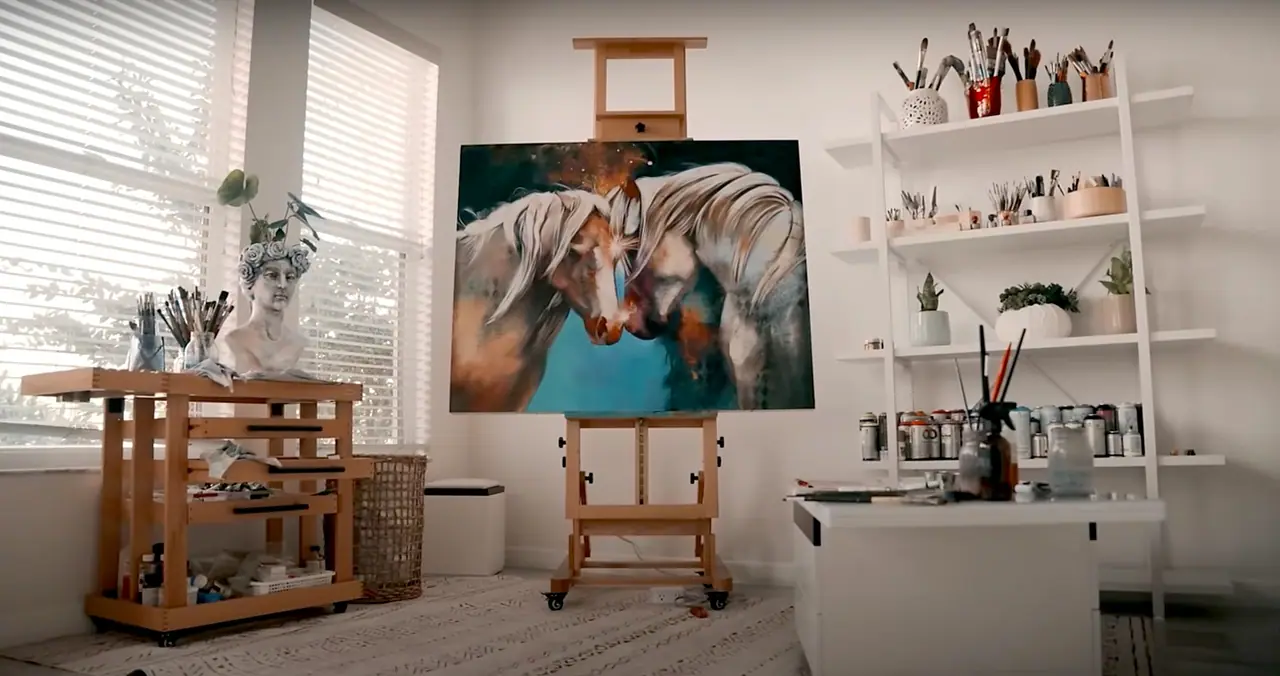
Studio gear is the part you buy once and keep for years. An easel, a palette, good lighting, and a way to stay organized turn a corner of a room into a real workspace.
- Easel. Supports posture and workflow for any medium. An adjustable easel lets you work comfortably for hours.
- Palette. A stay wet palette keeps acrylics workable across multiple sessions, which helps in dry climates. A glass palette is reusable, easy to clean, and non porous for mixing color.
- Lighting kit. Daylight balanced bulbs keep your color perception accurate, which matters in the evening or in low light studios. Options run from budget clamp lights to high CRI track lighting.
- Apron or smock. Keeps your clothes safe. Look for durable material with pockets.
- Storage carts or shelving. Organize supplies for easy access and less clutter. Rolling carts suit a workspace that moves around.
What digital tools help the modern artist?
Digital tools are optional, but they earn their place if you plan compositions, test color, or share your process online. None of them replace paint and a surface.
- Tablet and stylus. Useful for sketching, layout planning, and setting up photo references. Handy for testing color palettes before you commit.
- A drawing or painting app. A layer based workflow makes it easy to plan mixed media pieces and digital studies.
- A simple design tool. Helps you build portfolios, social posts, and marketing visuals from templates.
- Lighting for filming and a phone mount. If you record your process, clear video and a steady camera dramatically improve what you can share.
- Backup storage. An external drive or cloud storage protects your reference photos, finished work, and video archive.
How do you decide what to actually buy?
Buy for the medium and the work in front of you, not the full list. The tools you use shape your creative flow, but owning everything at once slows you down more than it helps.
Pick one medium, get a small paint set, three or four brushes, a surface or two, and a palette, then make something. The right next purchase becomes obvious once a painting asks for it, a heavier paper for a wash that keeps buckling, a liner brush for the detail you cannot reach, a better easel because your back is done bending over a table.
Investing in quality over time is one of the best things you can do for your growth, and you can keep building toward a professional kit at your own pace. For more on the techniques these supplies serve, browse our full oil painting techniques hub.
If you want a structure to put these supplies to work, the 2-Week Challenge gives you a guided start and real feedback while you paint, no full studio required.
Frequently asked questions
What are the essential art supplies for a beginner?
Start small and specific: one set of student or artist grade paints in a single medium, three or four brushes (a flat, a round, a filbert, and a liner), a few canvas panels or a pad of heavy paper, a palette, and a pencil. That covers a first painting without overwhelming you. Add tools as the work asks for them.
What professional art tools are worth the higher price?
Paint and surfaces reward the upgrade most. Artist grade pigment is more concentrated and lightfast than student grade, and a well made canvas or panel holds up for decades. Brushes matter too, but a few good ones beat a large cheap set. Studio gear like an easel and lighting is a one time investment you keep for years.
What is the difference between acrylic, oil, watercolor, and gouache?
Acrylics are fast drying, water based, and forgiving. Oils stay workable for days and blend beautifully but need solvents or oil mediums. Watercolors are transparent, portable, and built on layering. Gouache is opaque and matte, sitting between watercolor and acrylic. Each one calls for slightly different surfaces and brushes.
What surfaces can you paint on?
Stretched canvas is the standard for finished oil and acrylic work. Canvas panels are cheaper and good for studies. Wood panels and gesso boards give a rigid, smooth surface for detail and mixed media. For water based media, use heavy watercolor paper (300gsm or more) so it does not warp under washes.
Do you need digital tools to be an artist?
No. Digital tools are useful for planning compositions, testing color, and sharing your process online, but they are optional. A tablet, a drawing app, and basic lighting help if you sell work or post videos. The core practice still lives in paint, brushes, and a surface to work on.
What to practice this week
- Pick one medium and buy only what that medium needs this week: a small paint set, three brushes, one surface, and a palette. Resist buying the full 35 item list at once.
- Run a brush test. Load a flat, a round, a filbert, and a liner, and fill a page with the marks each one makes so you learn what to reach for before you start a real piece.
- Set up your lighting before your next session. Swap in a daylight balanced bulb and notice how much more accurately you read color.
Supplies used
About the author
More from Jake