Time Boxing Your Painting Process: A Simple Timed Workflow
Unlimited time is what makes painting stall. Give each stage a timer, move on when it ends, and you build momentum, confidence, and cleaner work fast.
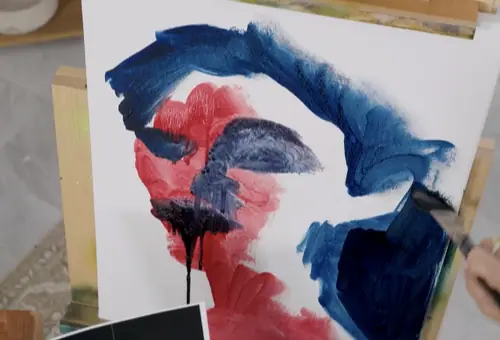
Time boxing your painting process means giving each stage a fixed amount of time, and when the timer ends, you move on. No revisiting. No refining. No spiraling. You plan, you block in, you refine structure, you add a few strategic details, and then you stop. The whole point is that a constraint creates freedom, and that freedom is what finally gets you out of the overthinking that stalls so much work.
One of the biggest myths in art is that great work requires unlimited time. In reality, unlimited time usually leads to second guessing and stalled momentum. When artists feel stuck, it is rarely because they lack talent. More often, they lack structure. Time boxing hands you that structure. If you are not sure whether the problem is skill or something else, is art a skill or talent is worth reading alongside this, because the honest answer changes how you practice.
Why do time constraints make you a better painter?
Time constraints make you better because they force you to commit, prioritize, and decide faster than your doubt can catch up. When you remove endless time from the equation, three shifts happen.
First, you trust your instincts. You do not have the luxury to hesitate, so you commit. Second, you focus on the big picture. There is no time to obsess over eyelashes or tiny highlights, so you are forced to prioritize value, composition, and clarity. Third, you build decision making speed. Strong artists are not just skilled, they are decisive, and time boxing trains that muscle.
Ironically, working faster often improves your finished pieces. Strong foundations matter more than polished details, and a timer forces you to build those foundations well before you can fuss over anything else.
What does a simple timed painting workflow look like?
A simple timed painting workflow runs through four working stages and one hard stop, each with its own timer. You can adapt the times to fit your schedule, but the structure is what matters.
Stage 1: Concept and planning, ten to fifteen minutes
Set a timer and define your subject, your focal point, your mood or story, and your value plan, meaning where the lights, mids, and darks will fall. Do not start painting until you have clarified these. This stage prevents most mid painting confusion. It is not about perfection, it is about direction. When the timer ends, move on.
Stage 2: Block in, twenty to thirty minutes
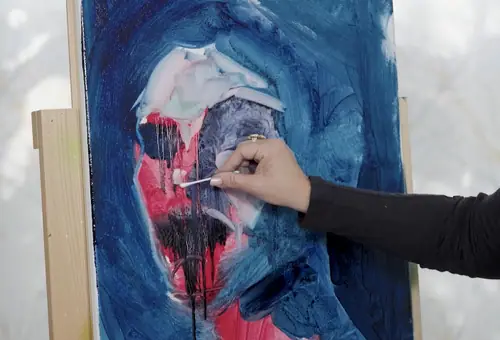
Now focus only on big shapes, major value relationships, and overall composition. Avoid details entirely. Think of this stage as sculpting the painting from a distance. If you squint at your work, it should already read clearly. When time is up, stop, even if it feels unfinished. That tension is part of the training. If composition is where you tend to lose your way, the full composition in art guide will steady this stage.
Stage 3: Structure and refinement, thirty to sixty minutes
Here you clarify edges, strengthen form, refine value transitions, and adjust proportions. Still no micro details. This is where many artists get lost in endless tweaking, and the timer is what keeps you honest. You are strengthening structure, not decorating.
Stage 4: Strategic details, fifteen to thirty minutes
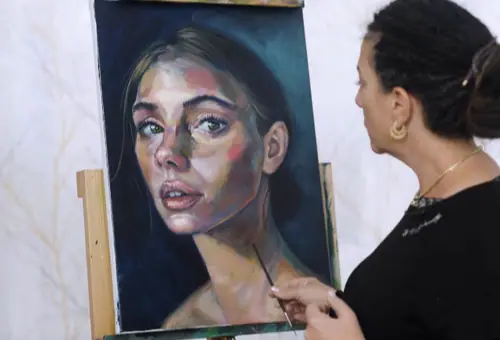
Only now do you allow yourself to add key highlights, texture accents, and refinement to the focal area. Notice the word strategic. Details are meant to serve the focal point, not overwhelm the entire piece. Because your time is limited, you are forced to choose wisely, and that choosing is what creates sophistication.
Stage 5: Stop
This is the hardest part. When the final timer ends, you stop, even if it feels like you could just fix one more thing. Growth happens in repetition, not over polishing. Instead of squeezing one painting for days, start the next one and apply what you learned immediately.
How does time boxing build emotional control?
Time boxing builds emotional control by lowering the stakes of any single painting so it becomes practice instead of performance. Artists often struggle with perfectionism, fear of failure, attachment to outcomes, and creative burnout. A timed workflow reduces the emotional weight of each piece. You are no longer trying to create a masterpiece every time, you are building mastery through repetition and structure.
That shift matters more than it sounds. So much of what looks like a skill problem is really a fear problem in disguise, and the same loop drives the fear of failure in art that keeps painters from ever finishing. A timer quietly takes the pressure off, and when the pressure drops, the work loosens up. If a single piece becomes one of many instead of the only one that counts, the spiral has nowhere to grab.
How often should you practice timed painting?
You should practice timed painting as often as it fits your week, and there is no single right amount. Use it as a warm up before a longer painting, for daily one to two hour focused sessions, as a weekly challenge to sharpen fundamentals, or as a fast way to break through a creative block. Many artists are surprised at how much stronger their work becomes after just a few weeks of consistent timed sessions. The key is commitment to the structure.
This is also one of the fastest resets when you are completely stuck, because it replaces the question of what to make with a simple instruction to start the timer. If you want more tools for those frozen moments, how to get out of an art block pairs naturally with a timed session.
What does time boxing actually teach you over time?
Over time, time boxing teaches you to compose more clearly, read values faster, and hesitate less, all of which add up to finishing more work. You will notice your compositions improve, your values get cleaner, your brushwork grows more confident, and you stop second guessing every stroke. And finishing more work is the thing that matters most.
Outstanding artists are not defined by one great piece, they are defined by the ability to consistently produce strong work, and consistency comes from process. Time boxing is one of the simplest processes you can install. It will not replace learning value, color, and composition, but it will stop the overthinking that keeps you from practicing them. For the deeper habits that hold all of this together, studio practice is the natural next read, and how to overcome creative block covers the wider version of the problem a timer solves.
So set a timer, pick a subject, and run one full timed painting today. The fastest way to put this into a guided routine, with a subject to paint and feedback on what you make, is our free Two Week Challenge. When you want more on the mindset side of getting unstuck, the rest of the creative block and identity collection is here whenever you need it.
Frequently asked questions
What is time boxing in painting?
Time boxing is a workflow where you give each stage of a painting a fixed amount of time, and when the timer ends you move on without revisiting that stage. You plan, block in, refine structure, add strategic details, and stop. The constraint stops overthinking and forces you to prioritize value and composition over fussy detail.
How does a timed painting workflow help you improve?
A timed workflow forces three shifts: you trust your instincts because there is no time to hesitate, you focus on the big picture instead of tiny details, and you build decision making speed. Stronger foundations matter more than polish, so working against a timer often produces better finished pieces, not worse ones.
How long should each stage of a timed painting take?
A simple structure is ten to fifteen minutes for concept and planning, twenty to thirty minutes for the block in, thirty to sixty minutes for structure and refinement, and fifteen to thirty minutes for strategic details. You can adapt the times to your schedule. The structure matters more than the exact minutes.
Why should you stop painting when the timer ends?
Because growth happens through repetition, not over polishing. When you stop on time, even if it feels unfinished, you carry what you learned into the next painting instead of squeezing one piece for days. Finishing more work, not perfecting one piece, is what builds mastery over time.
How often should you practice timed painting?
You can use time boxing as a warm up before a longer painting, for daily one to two hour focused sessions, as a weekly challenge to sharpen fundamentals, or to break through a creative block. Many artists notice their work gets noticeably stronger after just a few weeks of consistent timed sessions.
What to practice this week
- Run one full timed painting today: ten minutes to plan, twenty to block in, thirty to refine structure, fifteen for strategic details, then stop, even if it feels unfinished.
- Set a single timer for the block in stage only and paint nothing but big shapes and major values until it rings, then resist touching detail.
- Do a week of daily thirty minute timed studies and start a new piece each session instead of reworking yesterday's.
Supplies used

About the author
More from ElliKeep learning