Is Art a Skill or Talent? The Honest Answer Every Artist Needs
Most people think great artists are born. They are not. What we call talent is a stack of art skills, built through practice, and that means anyone can learn them.
Art is mostly a skill, not a talent. Here is the truth you may not often hear: you do not need talent to succeed as an artist, but you absolutely need skill. What most people call talent is a set of abilities (seeing accurately, using the elements of art, mixing color, controlling edges) that have been honed over time through practice and discipline. That distinction changes everything, because skill is something anyone can learn, while talent is the comforting excuse people use to never start.
The reason this matters is simple. A lot of passionate, would-be artists quit before they begin, convinced they were not born with the gift. They watched someone draw effortlessly and decided the difference was genetic. It almost never is. Below is the honest case for why art is a skill, what that means for you, and the specific skills you need if you want your work to actually go somewhere.
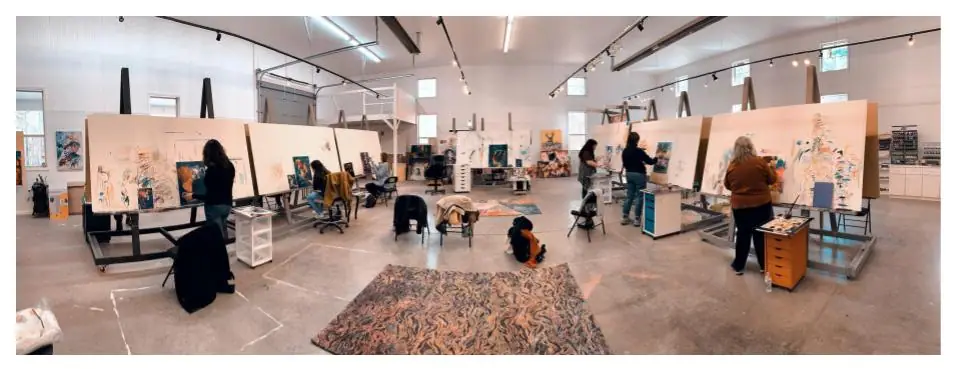
Skill is built in the studio, one honest session at a time.
Is art a skill or talent?
Art is mostly a skill. What we perceive as talent is, in reality, a set of skills honed over time through tenacious practice and discipline in the face of obstacles. A person who appears to have been born able to draw has usually spent years filling sketchbooks you never saw. The result looks like magic, so we call it talent, but the mechanism underneath was repetition and attention.
This is good news, not bad news. If art were a fixed gift, you would either have it or you would not, and there would be nothing to do about it. Because it is a skill, the door is open. Make no mistake about it: if you want to succeed wildly as an artist, you are going to need some powerful skills. The point is that those skills are learnable, and that puts the outcome in your hands instead of in your genes.
Is painting a skill or a talent?
Painting is a skill, the same way drawing is. It is a stack of teachable abilities layered on top of one another: drawing what you actually see, building form with light and shadow, mixing color, handling a brush, and composing a picture. Each of those can be isolated, practiced, and improved. None of them arrives at birth fully formed.
That is why painters keep getting better for decades. There is no ceiling that a person simply hits because they ran out of talent. Even painters with twenty-five years of experience admit there are skills they still want to learn and master painters they still want to learn from. The work of acquiring skill never fully ends, which is exactly what you would expect from a craft and not from a gift.
Why do people confuse skill with talent?
People confuse skill with talent because the practice that produces skill is usually invisible. You see the finished painting, not the thousand hours behind it. So the brain fills the gap with the simplest story: that person was born this way. It is an easy explanation, and it quietly lets the observer off the hook for never trying.
There is a cost to that story, though. When you believe art is a talent you either have or lack, every clumsy early attempt feels like proof you do not have it, and you stop. When you believe art is a skill, that same clumsy attempt becomes a rep, one of many you need, and you keep going. Same drawing, completely different meaning. The artists who make it are rarely the ones who felt the most gifted. They are the ones who kept practicing after the work was ugly. If that inner voice insisting you simply were not born for this is the thing stopping you, our writing on creative block and identity goes deeper into it.
What art skills do you actually need to succeed?
The skills that matter most are foundational and learnable, and they apply no matter what style you eventually paint in. Here are the core ones to build, roughly in the order they support each other:
- Seeing accurately. Most beginners struggle not because their hands fail them but because they draw what they think an object looks like instead of what is actually there. Training your eye to report real shapes, proportions, and edges is the foundation under everything else.
- The seven elements of art. Line, shape, form, value, color, space, and texture are the building blocks every painting is made of. Understanding how to use form, light, color, and line properly is what lets you construct an image on purpose rather than by accident. Start with the 7 elements of art.
- Drawing and constructing form. Before color, you need to be able to build a believable form with value, the range from light to shadow. This is the representational backbone that even loose, expressive work rests on.
- Color mixing. Knowing how to mix the color you actually want, rather than fighting the muddy result you got, is its own deep skill, and it pays off in every medium.
- Edge and brush control. Where an edge is soft and where it is crisp does enormous work in a painting. Learning to control it is the difference between a flat image and one with depth.
- Composition. Arranging the elements so the eye moves where you want it to is a skill you build over many pictures, not a knack you either have or do not.
These are the abilities that separate work that almost reads from work that lands. The encouraging part is that every single one of them responds to focused practice.
Do even abstract artists need traditional skills?
Yes, even abstract artists need traditional skills. It is still important to understand how to create form and how to use artistic elements like form, light, color, and line. You learn those when you study traditional, representational drawing and painting. In other words, when you learn to paint and draw what you see, you develop the foundational skills you need to create beautiful abstracts and other less representational work.
This is especially true for anyone drawn to looser styles like abstract realism, where the freedom on the surface is held up by real command underneath. The masters who broke the rules first learned the rules cold. Skipping the foundation does not make your abstract work freer. It usually just makes it weaker, because you are improvising without the vocabulary. The traditional skills are not a cage. They are what give your less traditional work its power.
How long does it take to build real art skill?
Building real art skill takes consistent, deliberate practice, and the timeline depends far more on how you practice than on how gifted you are. With focused effort on specific skills, most people see noticeable progress within months, not years of waiting. The people who seem to take forever are usually practicing vaguely, dabbling without aim, while the people who improve quickly work on one defined skill at a time and pay attention to what went wrong.
Treat skill the way you would treat learning an instrument. An hour spent on a specific challenge, edges this week, color mixing next, beats a whole afternoon of comfortable, repetitive painting. Excellence asks for a long commitment, and the artists who reach it begin to see skills training as fun rather than a chore. That shift, from grinding through practice to enjoying it, is what eventually lets them create remarkable paintings with the finesse and vision of the artists they admire. If you ever stall along the way, here is a practical guide on how to overcome creative block so a rough stretch does not become a full stop.
Why does skill matter so much in the end?
Skill matters because it is the thing that lets you touch other people. For some artists, making work is a private joy, and that is completely valid. But the artists who want their work to speak to a wider audience cannot get there on feeling alone. Skill is what carries the emotion across the gap to a viewer. The vision in your head only reaches someone else if you have the craft to put it on the surface clearly.
That is the real answer to whether art is a skill or a talent. It is a skill, and that is precisely why it is worth so much. A gift you were born with would cost you nothing and mean nothing. The skill you build, honestly and over time, becomes the bridge between what you feel and what another person sees. As you grow it, your own voice starts to surface too, which is its own journey covered in how to find your art style.
Final words: art is a skill, so anyone can learn it
The most proficient artists embrace skills training. They dedicate themselves to the work that helps them improve, and over time they stop seeing practice as a chore. The talent myth says the door is locked unless you were born with the key. The truth is more generous: skill is trained, not granted, which means the door was open to you the whole time.
So pick one skill and start. Train your eye to see what is really there. Learn the elements of art. Copy the work you love. Show up more days than not. If you want a structured, supported way to take that first step, our free Two Week Challenge is built for exactly the beginner you are right now. You were never missing the talent. You were only waiting to build the skill, and that part is entirely within your reach.
Frequently asked questions
Is art a skill or talent?
Art is mostly a skill. What people call talent is almost always a set of trained abilities (accurate seeing, command of the elements of art, color mixing, edge control) developed through practice. A little natural inclination can give someone a head start, but it is the learnable skill underneath that decides how far an artist actually goes.
Is painting a skill or a talent?
Painting is a skill. It is a stack of teachable abilities: drawing what you actually see, building form with light and shadow, mixing color, and handling a brush. None of those are gifts handed out at birth. They respond to deliberate practice the same way learning an instrument or a language does, which is why painters keep improving for decades.
Do you need talent to be an artist?
No. You do not need talent to succeed as an artist, but you do need skill. Many would-be artists give up because they confuse the two and assume they were not born with the gift. The truth is more hopeful: the abilities that make art work can be learned by anyone willing to practice with intention.
What skills do you need to be an artist?
The core art skills are seeing accurately, drawing and constructing form, using the seven elements of art (line, shape, form, value, color, space, texture), mixing color, controlling edges, and composing a picture. On top of those sit habits like consistent practice, the willingness to make bad work, and the patience to keep refining over years.
Can anyone learn to paint, or is it a born gift?
Anyone with normal vision and steady practice can learn to paint. Ability comes from focused, repeated effort far more than from any fixed inborn gift. The artists you admire put in the work to be called masters. The door is open to you for the same reason it was open to them: skill is trained, not granted.
What to practice this week
- Spend one week drawing from observation: set up a simple object in good light and draw the real shapes and proportions you see, not what you think the object looks like.
- Pick one of the seven elements of art (start with value) and do a study that focuses only on it, so you train one skill at a time instead of everything at once.
- Choose a painting by an artist you admire and copy it from start to finish to absorb the decisions you cannot yet make on your own.
Supplies used
About the author
More from ElliKeep learning