Abstract Realism: What It Is, the Artists Who Define It, and How to Paint It
Abstract realism keeps the subject recognizable while loosening color, edge, and mark to carry feeling. Here is what it is, who paints it, and how to try it yourself.

Abstract realism is a painting style that keeps a subject recognizable while using loose brushwork, expressive color, and unconventional composition to carry emotion. It is not about copying a subject perfectly. Instead, it anchors the work in real, familiar forms, then bends color, edge, and texture toward feeling. The result sits in the space between two worlds: detailed enough to read as real, free enough to read as art. You paint what you see, and you express how it feels, at the same time.
That balance is exactly why so many artists are drawn to it. You do not have to choose between the discipline of realism and the freedom of abstraction. Abstract realism asks you to hold both. If you want the broader history behind the realistic side of that equation, our guide to realism art history traces where the realistic tradition came from, and this post focuses on what happens when you loosen it on purpose.
What is abstract realism?
Abstract realism is a style where a recognizable subject is rendered with deliberate abstraction, so the work feels both true to life and emotionally charged. Familiar subjects like people, landscapes, or everyday objects are given a twist. Artists reach for bold color, loose strokes, and unexpected compositions to layer mood and imagination onto something we can still clearly name.
The key word is deliberate. Unlike traditional realism, abstract realism is not chasing perfect replication. It invites abstraction in to evoke energy, atmosphere, and impression, which gives you the freedom to pour personal expression into the work while keeping it anchored in forms a viewer recognizes. A portrait is still a portrait. A field is still a field. But the color might run hotter than life, the edges might dissolve, and the texture might say something the literal scene never could.
That anchoring matters. Because the subject stays readable, the abstraction has something to push against. Loose marks feel intentional rather than accidental, and pushed color feels expressive rather than arbitrary. The realism is the structure. The abstraction is the voice.
How is abstract realism different from pure realism?
Realism aims for accuracy, and abstract realism aims for feeling on top of accuracy. That is the whole difference in one line. A realist painter tries to render a subject close to what a camera would capture: correct proportion, accurate light, faithful detail. An abstract realist starts from that same recognizable subject and then chooses to depart from exact replication.
Take a portrait as the example. A realist paints the face as it appears, measuring likeness against life. An abstract realist might keep the likeness but flood the skin with expressive color to show the subject’s inner state, or break the background into loose, gestural marks so the figure feels charged with emotion rather than simply documented. The person is still clearly there. The aim has shifted from how they look to how they feel.
The same move works on a landscape. A recognizable hillside or shoreline can take on exaggerated textures, heightened color, or simplified forms until it becomes a vivid reimagining of the place rather than a record of it. The viewer still reads “landscape,” but they feel something the literal scene would not have given them.
What is the difference between abstract and realism?
Realism depicts the world as it visibly appears, and abstraction moves away from literal depiction toward shape, color, and gesture. They sit at opposite ends of a spectrum. Realism leans on accurate proportion, light, and detail to convince you that you are looking at the real thing. Pure abstraction lets go of recognizable subject matter entirely, working instead with color relationships, marks, and form for their own sake.
Abstract realism lives in the middle of that spectrum, which is what makes it so useful to learn. The subject is still present and readable, but it is treated with the freedom and emotion of abstraction rather than strict accuracy. You get the grounding of one approach and the expressive range of the other in a single piece. If you want to explore the far end of that spectrum on its own, our walkthrough of abstract painting techniques covers how artists work when the recognizable subject falls away completely.
Who are the famous abstract realism artists?
Gerhard Richter and Chuck Close are two of the clearest examples of abstract realism in action, and studying them is the fastest way to understand the style. Both moved fluidly between realistic depiction and abstraction, and their work shows just how wide the territory is.
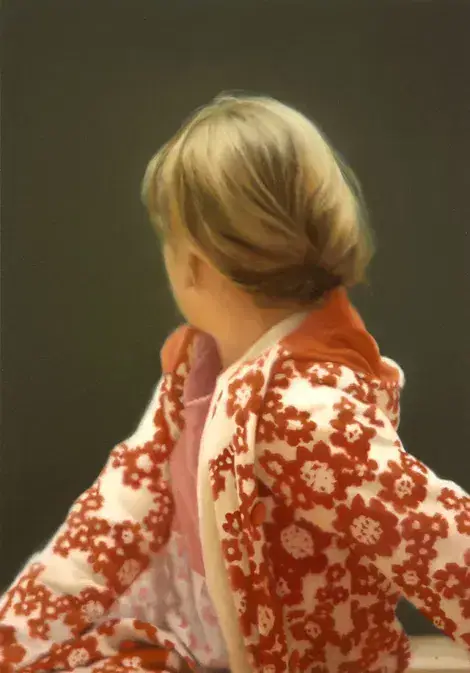
Gerhard Richter is known for moving seamlessly between photorealism and abstraction, sometimes inside a single work. In Betty (1988), he paints a hyperrealistic portrait of his daughter, then adds a soft blurred effect that tips the whole image into a dreamlike abstraction. The face is unmistakably real, yet it shimmers as if seen through memory. His heavily textured abstract paintings, like Abstract Painting (1986), sit at the other end of his range and show how comfortably he holds both. You can explore more of his work through the Gerhard Richter Archive.
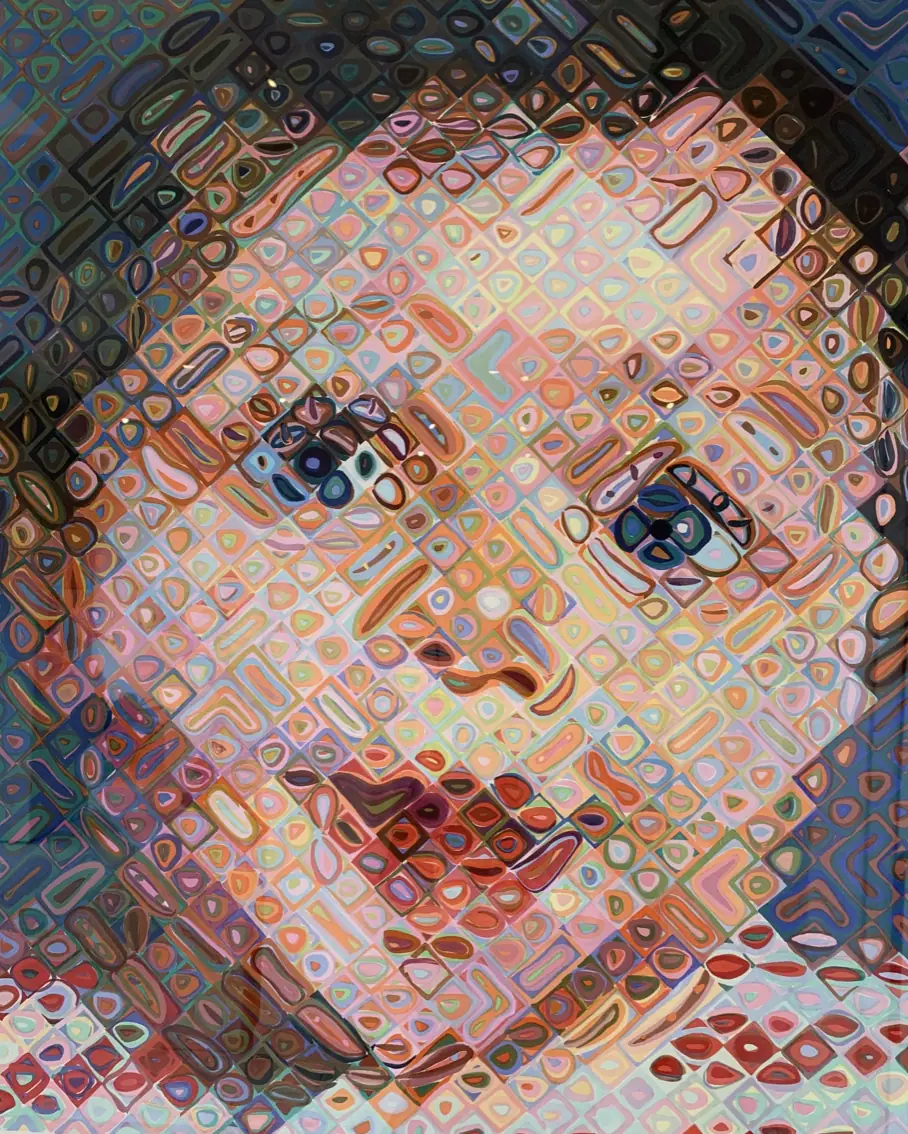
Chuck Close approached it from the opposite direction, deconstructing realism into abstraction. He is renowned for intricate portraits, and in Emma (2002) he built the face out of colorful grids and small shapes. Stand back and you read a clear, realistic portrait. Step close and the whole thing dissolves into abstract pattern. That single shift, from likeness at a distance to pure mark up close, is one of the most vivid demonstrations of how realism and abstraction can occupy the same canvas.
Why does abstract realism still resonate?
Abstract realism still resonates because it embraces complexity instead of forcing art into a single category. It shows that a painting can be layered, multifaceted, and emotionally rich all at once, true to life and free at the same time. That refusal to pick a side is exactly what keeps it alive in contemporary work.
Its realistic elements ground the painting and make it relatable, while its abstract techniques open the door to emotional and creative freedom. That interplay can make a piece feel structured and spontaneous in the same breath. Contemporary artists lean on this to explore personal narratives, cultural identity, and emotional landscapes, building work with enough depth to reward a second and third look. The recognizable subject pulls a viewer in, and the abstraction is what keeps them standing there.
How do you start painting in an abstract realist style?
Start from a recognizable subject and then loosen one thing at a time on purpose. Abstract realism is a wonderful style for artists who want to merge technical precision with creative exploration, because it rewards a solid foundation in realism while encouraging you to experiment with color, composition, and form. You build skill and freedom together rather than choosing between them.
The simplest way in is to paint a familiar subject twice. Render it once as accurately as you can, then paint it again with looser marks and pushed color, and notice what each version makes you feel. From there, take a realistic portrait or landscape and exaggerate a single element, the color, the texture, or the edges, while keeping the subject readable. Changing one variable at a time teaches you how far you can push before the image stops holding together. Copying a section of a Richter or a Close is the third exercise worth doing, because reverse-engineering how a recognizable image survives out of loose or gridded marks teaches you more than any explanation can.
Underneath all of it sits observation and the fundamentals. You still need to see proportion, value, and color accurately before you bend them, which is why the 7 elements of art are worth knowing cold. The abstraction lands only when the realism underneath it is sound. As you experiment, abstract realism becomes one of the clearest paths to your own voice, and our guide on how to find your art style picks up that thread.
Whether you lean toward realism or abstraction, this style gives you room to grow in both directions. If you want a guided, supported way to make your first paintings instead of only reading about them, our free Two Week Challenge is built for exactly that first step. And the rest of our art history and famous paintings collection is here when you want to keep exploring where styles like this one came from.
Frequently asked questions
What is abstract realism?
Abstract realism is a painting style that keeps a subject recognizable while adding abstract qualities like loose brushwork, expressive color, and unconventional composition. It is not about copying a subject perfectly. It grounds the work in real, identifiable forms, then bends color, edge, and texture toward feeling, so the piece reads as both true to life and emotionally charged.
How is abstract realism different from realism?
Realism aims to render a subject as accurately as possible, close to what a camera would capture. Abstract realism starts from that same recognizable subject but deliberately departs from exact replication. It uses heightened color, looser marks, and altered texture to express mood and energy. The subject stays readable, but the goal shifts from accuracy to feeling.
What is the difference between abstract and realism?
Realism depicts the world as it visibly appears, with accurate proportion, light, and detail. Abstraction moves away from literal depiction toward shape, color, and gesture, sometimes with no recognizable subject at all. Abstract realism sits between them: the subject is still there, but it is treated with the freedom and emotion of abstraction rather than strict accuracy.
Who are famous abstract realism artists?
Gerhard Richter and Chuck Close are two of the clearest examples. Richter moves between photorealism and pure abstraction, sometimes within a single work, as in his blurred 1988 portrait Betty. Close built realistic portraits from grids of small abstract marks, like his 2002 painting Emma, which reads as a face from a distance and as colorful pattern up close.
Is abstract realism good for beginners?
Yes, because it lets you build real drawing and painting skill while leaving room to experiment. You still learn to see proportion, value, and color from a real subject, which is the foundation under every style. Then you get permission to loosen your marks and push color, so the practice stays both rigorous and freeing rather than pressuring you to copy perfectly.
What to practice this week
- Paint one familiar subject twice: first as accurately as you can, then again with looser marks and pushed color, and compare what each version makes you feel.
- Take a realistic portrait or landscape and exaggerate one element on purpose, the color, the texture, or the edges, while keeping the subject recognizable.
- Copy a section of a Richter or Chuck Close painting to study how a recognizable image holds together out of loose or abstract marks.
Supplies used

About the author
More from Elli