Leonardo da Vinci's Apprenticeship: How He Learned to Paint and Became an Artist
Da Vinci was not born a master. At fourteen he became an apprentice in a Florence workshop, grinding pigments and priming panels. Here is how that training made him, and what it still teaches anyone learning to paint.

Leonardo da Vinci’s apprenticeship began around age fourteen, when he entered the Florence workshop of the master artist Andrea del Verrocchio and started doing the unglamorous work that turns a beginner into a painter. He ground pigments, primed panels, and prepared the studio before he was ever trusted with a brush on a real commission. That apprenticeship lasted about six years, and it is the reason the world remembers him as a master rather than a notary’s son with a knack for drawing.
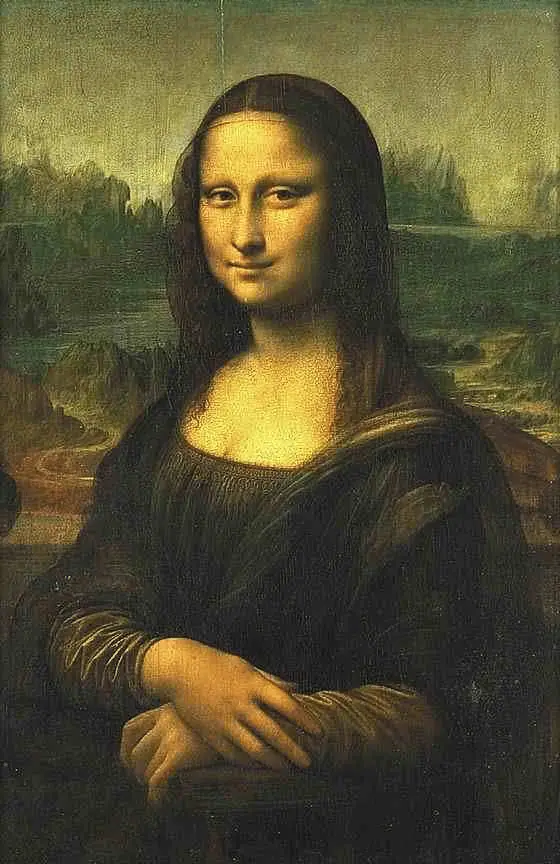
When you picture da Vinci, you probably picture the finished work: the Mona Lisa, the Vitruvian Man, the notebooks crowded with machines and anatomy. It is easy to forget that none of it came first. Before the masterpieces, there was a teenager learning to see, to mix color, and to build a painting one careful layer at a time. His story is not really a story about genius arriving fully formed. It is a story about training, and that makes it useful to anyone who wants to learn to paint today.
When did Leonardo da Vinci start painting?
Leonardo da Vinci started painting in his early teens, when he joined Verrocchio’s workshop around age fourteen. He was not handed a canvas on day one. Like every apprentice, he began with the humble tasks that supported the studio: grinding paint pigments, priming wooden panels, and getting the master’s workspace ready for the day’s work. Touching the actual paintings came later, once he had proven he could be trusted with them.
His earliest documented contribution to a finished painting dates to around 1473, when he was assisting Verrocchio directly. By then he had already been registered as a member of the Florence painters guild in 1472. So if the question is when his serious painting life began, the honest answer is his mid-teens, inside a working studio, not in some sudden burst of adult inspiration. He started young, and he started at the bottom.
Who did Leonardo da Vinci study under?
Leonardo da Vinci studied under Andrea del Verrocchio, one of the most respected master artists in Florence. This was the standard path during the Renaissance. A young person who wanted to become an artist did not enroll in a school in the modern sense. They were placed with a master and learned the trade by living and working inside that master’s studio.
There is a nice piece of lineage here. Verrocchio had himself trained in the tradition of the sculptor Donatello, so Leonardo stepped into a chain of skilled mentors, each one passing technique down to the next. According to History Extra, da Vinci’s father made a formal contract with Verrocchio. A standard apprentice contract required the young artist to be diligent and honest, doing exactly the kind of studio work, grinding pigments, priming panels, preparing the workspace, that filled Leonardo’s first years there. That is who he learned from, and it is part of why he learned so well.
How did Leonardo da Vinci become an artist?
Leonardo da Vinci became an artist through a formal apprenticeship, the same way nearly every working painter of the Renaissance did. He learned how to draw and paint like an old master by studying under one, day after day, for years. Many art scholars point to his father’s standing in the community as the reason a teenager managed to secure such a strong placement with a master as good as Verrocchio.
The arrangement was an exchange. As da Vinci grew more skilled, he took on harder work, including helping Verrocchio with actual paintings. In return, he was fed, clothed, and housed for the roughly six years of his apprenticeship. It was not unusual for an assistant to contribute to a master’s commission, though the contract for each job usually spelled out which parts the apprentice could handle and which the master kept for himself. In one well known case, Verrocchio likely painted the faces and figures while da Vinci handled the background. By 1473 he was assisting at that level, which tells you how far his skill had come in a few short years.
What did Leonardo da Vinci do to prove he had become a master?
Leonardo da Vinci proved his mastery by completing a finished work of his own, the painting known as the Annunciation. In the world of the guilds, this was the whole point of the long climb. An apprentice did not simply graduate. He had to demonstrate his skill with an exemplary piece submitted for the approval of the guild that governed his craft.
That, in fact, is where the word masterpiece comes from. The term dates to the Middle Ages, when apprentice artisans had to prove their skills by submitting exemplary work to the guild that governed their trade, whether that trade was carving, metalwork, or enameling. If the piece demonstrated genuine mastery, the apprentice was promoted to master and authorized to train others. The Annunciation was Leonardo’s version of that proof, presented in the world of the Florence painters. He had become a member of that guild in 1472, yet he kept working with Verrocchio for about four more years before fully striking out on his own.
When he did go independent, he built his own clientele, including a residency with the Duke of Milan. It was during these years that he developed the stylistic signatures we still associate with him, including sfumato, the soft, smoky effect created by blending the edges of objects so that they melt into one another. By 1503 he had begun the Mona Lisa. He went on to fill his notebooks with anatomy and machine drawings, and his work influenced both Michelangelo, who was at times his rival, and Raphael. Five hundred years later, that once humble apprentice is still teaching artists how to see.
What can artists today learn from da Vinci’s apprenticeship?
The biggest lesson from da Vinci’s apprenticeship is that mastery is built, not born, and it follows habits any artist can adopt right now. He did not become Leonardo because of a gift that descended on him at birth. He became Leonardo because he trained inside a serious studio, under a serious mentor, for years. Here are the parts of that training you can borrow today.
- Learn art theory and art history, not just technique. You may have come to art because you love to draw and paint, but skill grows fastest when you understand the principles underneath the marks: line, form, proportion, the way light behaves. Studying the artists who came before you is part of that education, not a distraction from it. Da Vinci stood on a tradition that reached back through Verrocchio and beyond. Knowing your heritage as an artist, the way Giotto reshaped painting or Caravaggio bent light and shadow, gives you a deeper well to draw from.
- Paint and draw a lot, like it is a job. There is no shortcut around the hours. Professional artists often paint something close to forty hours a week, and that volume is exactly what lets them gain command over their materials. You do not need to match that number, but you do need consistency. If you treat practice like a craft with regular hours rather than a mood that strikes now and then, your skill will climb.
- Work with a mentor. Just as Leonardo got feedback from Verrocchio, you will grow faster with someone watching your work who can see what you cannot yet see. Learning to see like an artist and to control the fine motor skills of painting takes time, and you miss things while you are in the middle of learning them. A mentor helps you catch your own mistakes and learn from them without losing sight of where you are headed.
The thread running through all three is patience. Da Vinci copied, assisted, practiced, and absorbed for years before anyone called him a master. If you want to study the kind of work an apprentice would have copied, the famous historical oil paintings in our collection are a good place to start looking with an artist’s eye.
How did da Vinci’s training shape his most famous work?
Da Vinci’s apprenticeship gave him the technical foundation that made his later breakthroughs possible. The patient studio work, mixing color, preparing surfaces, building a painting in layers, was not separate from the genius of the Mona Lisa. It was the groundwork that the genius was built on. Sfumato, the soft blending he became known for, is a refinement of skills he first practiced as an assistant handling the backgrounds of someone else’s commissions.
This is the part people skip when they tell the da Vinci story as a tale of pure inspiration. He developed his eye, his hand, and his understanding of light through years of disciplined repetition, and only then did he start producing the work that changed art history. The lesson is not that you need to be a Leonardo. The lesson is that the path he walked, study, practice, mentorship, and time, is the same path open to any serious beginner. If you are still working out which direction your own work wants to go, our guide to finding your art style walks through how a personal voice emerges from exactly this kind of practice.
Final thoughts on the apprentice who became a master
Leonardo da Vinci was an apprentice before he was a legend, and that order matters. He spent his early years grinding pigments and priming panels, then years more assisting a master before he ever signed a masterpiece of his own. The painting we line up to see in the Louvre is the far end of a long, ordinary, disciplined process that started with a fourteen year old doing the lowliest jobs in a Florence workshop.
That should be encouraging, not intimidating. It means the qualities that made da Vinci, study, practice, mentorship, and sheer persistence, are not locked away in some rare bloodline. They are available to you. You will not become Leonardo, but you can become a far better artist than you are now by walking the same kind of path he did. The fastest way to take a first real step, with structure and feedback instead of guesswork, is our free Two Week Challenge, built to get a brush in your hand and your eye training right away. And when you want to keep studying the masters who shaped how we paint, the rest of our art history and famous paintings collection is here for you.
Frequently asked questions
When did Leonardo da Vinci start painting?
Leonardo da Vinci started painting in his early teens, when he entered Andrea del Verrocchio's workshop around age fourteen. His earliest known contribution to a finished painting dates to about 1473, when he assisted Verrocchio with the background of a commission. By 1472 he was already a registered member of the Florence painters guild, so his serious painting began in his mid-teens, not in adulthood.
Who did Leonardo da Vinci study under?
Leonardo da Vinci studied under Andrea del Verrocchio, one of the leading master artists of Florence. Verrocchio had himself trained in the tradition of the sculptor Donatello, so Leonardo entered a lineage of skilled mentors. Under Verrocchio he learned drawing, painting, pigment preparation, and studio practice over roughly six years.
How did Leonardo da Vinci become an artist?
Leonardo da Vinci became an artist the way nearly every Renaissance painter did, through a formal apprenticeship. His father placed him with the master Verrocchio in Florence, where he spent years doing studio work and assisting on paintings until his skill earned him paid collaboration and guild membership. He became a master not through talent alone but through years of mentored practice.
How long was Leonardo da Vinci's apprenticeship?
Leonardo da Vinci's apprenticeship lasted roughly six years. He entered Verrocchio's workshop around age fourteen and was registered in the Florence painters guild in 1472, though he kept working alongside Verrocchio for about four more years after that. Long apprenticeships were normal in the Renaissance, because mastery of drawing and painting took time to build.
What inspired Leonardo da Vinci to become an artist?
Leonardo da Vinci's path into art was shaped largely by his family situation and the customs of his time. As the son of a Florentine notary, he was placed in a respected workshop rather than following a trade, and many scholars credit his father's standing for securing such a strong apprenticeship. Inside that workshop, his curiosity about nature, anatomy, and light grew into the work we know today.
What to practice this week
- Choose one master painting you admire and copy it slowly from start to finish, the way an apprentice would, to learn how it was actually built rather than just how it looks.
- Work with a mentor or get regular feedback on your paintings, because an outside eye catches the mistakes you cannot yet see in your own work.
- Treat painting like a craft with hours, not a mood that strikes: schedule regular sessions and show up to them whether or not you feel inspired.
Supplies used
About the author
More from Elli