How Long Does It Take to Learn to Paint? A Timeline by Hours a Week
Paint 20 hours a week and you can go from never holding a brush to painting what you see in about six months. Paint less and it takes longer. Here's the math, and what speeds it up.
Learning to paint what you see takes about six months if you paint 20 hours a week with a teacher. A finished portfolio takes about a year. Paint fewer hours and both take longer.
I’m Elli Milan. I’ve painted for a living since 1996, and I run Milan Art Institute, an online art school. The thing that decides how fast you learn is how many hours you paint each week, and whether someone’s guiding those hours. Talent and age matter far less than people think.
How long does it take to learn to paint?
A complete beginner can learn to paint what they see in about six months at 20 hours a week. Building a portfolio takes about a year. (A portfolio is a set of finished paintings that look like they belong together, the kind you’d show a gallery or put up for sale.)
I’ve watched people who’d never touched paint get there. Our online course, the Mastery Program, is designed to take a year at that pace, and students finish in 12 to 24 months depending on their hours.
Here’s the same math at other paces. Six months at 20 hours a week is about 500 hours, and a year is about 1,000:
| Hours a week | Paint what you see (about 500 hours) | A finished portfolio (about 1,000 hours) |
|---|---|---|
| 40 | About 3 months | About 6 months |
| 20 | About 6 months | About a year |
| 10 | About a year | About two years |
| 5 | About two years | About four years |
These are my estimates from our program’s pace, so use them as a guide. They count hours with a brush in your hand. Watching tutorials helps, but it doesn’t move you down the table.
Can you really paint 20 hours a week?
Yes, and I’m hardcore about this. I believe almost everybody can paint 20 hours a week. That’s about three hours a day, or two hours on weeknights and five on each weekend day.
We have students who work full time and raise young kids and still paint 20 hours a week. They want it badly enough to find the time. If you can’t, that’s fine. You’ll still get there, just further down the table.
What can you paint in your first few weeks?
You can finish a simple painting you’re proud of in your first week or two, as long as you keep it to one color plus white. A pear painted in shades of brown, say. Our own beginner lessons start the same way, so all your attention goes to light and dark.
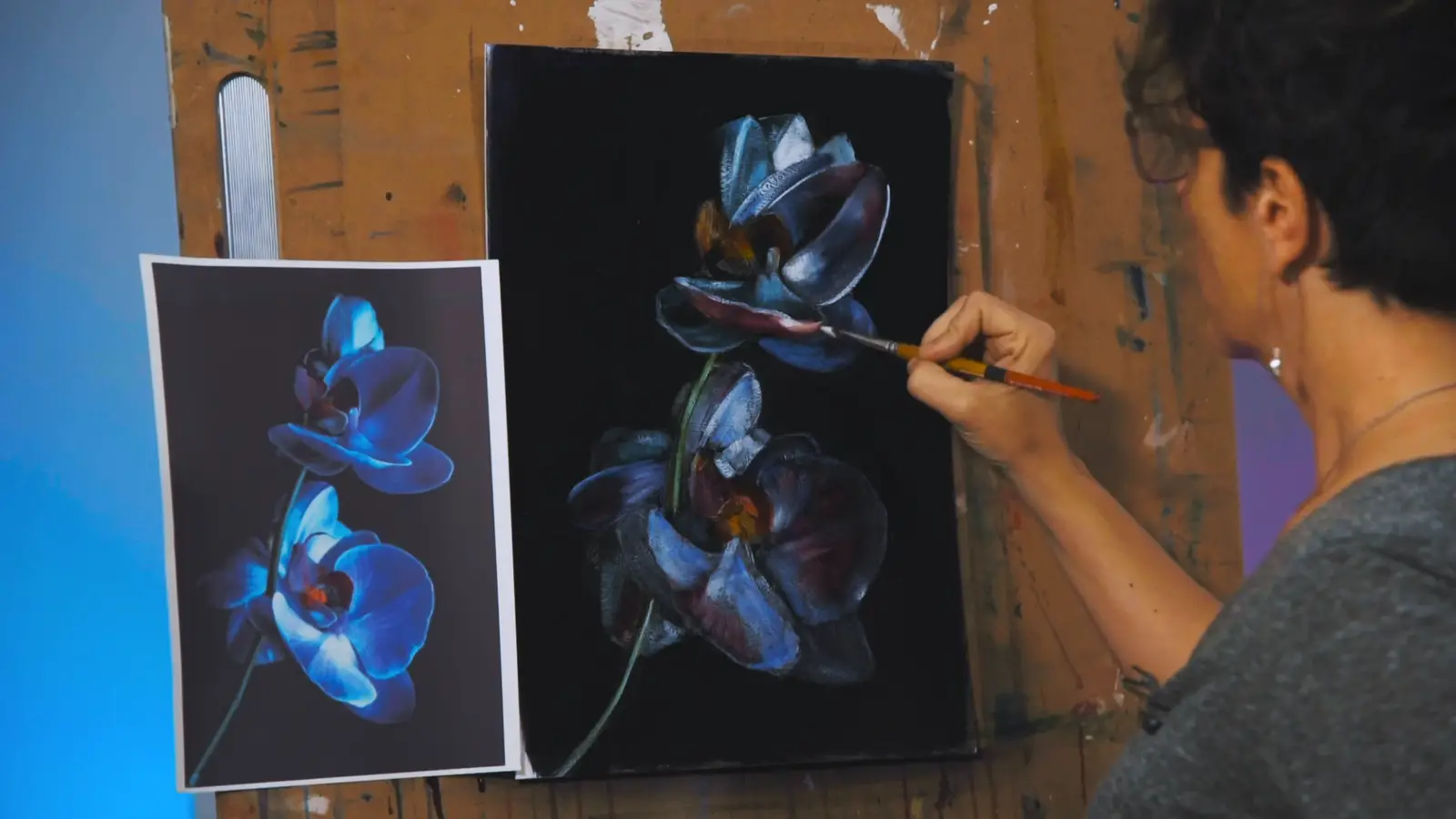
Expect an ugly stage, even with a teacher. In one of our orchid lessons, the teacher covers the flowers in a dark see-through layer of paint. For a while there’s nothing light in it at all. She tells her students they’re probably thinking she ruined it and should throw it in the garbage. Then she paints the whites back in and the flowers come alive.
Every painter goes through that stretch on every painting, so don’t quit in the middle of it. (More in the ugly stage of painting.)
How long does it take to get good at painting?
Getting good, meaning you can paint what you see and make things look round and solid instead of flat, takes about six months at 20 hours a week. The first skill to click is value: how light or dark each shape is.
About seven weeks into one of our courses, students are already seeing values and drawing form well enough to start oil paintings built up in layers. By six months most subjects are within reach.
At that point, “good” means you can do five things:
- Proportion. A face you paint looks like that face.
- Value. Your lights and darks make an apple look round instead of flat.
- Color mixing. You can match the color of a lemon without it turning to mud. (How to mix colors helps here.)
- Layers. You paint the big shapes of the whole picture first, then add detail.
- Brushwork. You grab a big square brush to cover a background and a thin script brush for a strand of hair.
All five come from drawing and painting from life, which is why we teach drawing and traditional oil painting before anything else.
How long does it take to learn to draw and paint?
Learn them together and plan on six months to a year at about 20 hours a week. Drawing teaches you to see proportion and shape, and painting builds on it.
You need both before you can paint the pictures in your head. Here’s an example I give students. Say you dream of painting women in water, but proportions trip you up and water scares you. Your idea can’t make it onto the canvas until the skill catches up. Drawing fundamentals is a good place to start.
How long does it take to find your own style?
Your own style usually comes after the basics, somewhere between six months and a year in. If you painted 40 hours a week for six to eight months straight, you’d find your style just by painting that much.
A teacher can get you there sooner by handing you lots of materials and techniques to try, then helping you notice which ones you keep coming back to. How to develop your own art style walks through it.
What helps people learn to paint faster?
The people who learn fastest paint on a schedule and get feedback. Here’s what makes the biggest difference:
- Book your hours. Treat painting like a class with a set time. On a bad painting day, paint anyway.
- Learn value before color. Light and dark carry a painting. Color gets much easier once you can see them.
- Paint in layers. Paint the big shapes first, then refine. Finishing one square inch at a time is slow and looks stiff.
- Use more brushes. Lots of beginners paint a whole picture with about three brushes. I use ten or twelve on a painting, from big to small.
- Let some strokes show. Beginners often blend everything smooth because a bold stroke feels too loud. Blend on purpose, only where you want softness.
- Find a way of painting you enjoy. If you dread going to paint, your materials or method probably don’t suit you. Someone who loves to move fast will hate tiny brushes and details. Try other materials until you look forward to it.
- Get feedback. A teacher can spot in a minute what might take you a month to see on your own.
So where do you start?
Decide how many hours you can paint each week and put them on your calendar. That one number tells you your timeline. Then use our month by month art study plan for what to practice, and in what order.
If you’d like a teacher from day one, our Two Week Challenge is five step-by-step projects (two drawings and three paintings). The video lessons open the day you join, and a working artist coach reviews each piece you submit. It’s $99, paid once. And if you’re wondering whether you need a degree for any of this, read is art school worth it?
Six months from now, you could have a stack of finished paintings leaning against the wall. Put the first hours on your calendar tonight.
Frequently asked questions
Can you learn to paint in a month?
You can learn the basics in a month and finish a few simple paintings you're happy with. You won't be able to paint whatever you see yet. Drawing, values, color mixing and layering take a few months of steady practice before they come together.
How many hours a day should I practice painting?
About three hours a day gets you to 20 hours a week, the pace our year-long program is built around. If that's too much, paint less but keep it on a schedule. An hour every day teaches you more than one long session whenever you feel inspired.
How long does it take to learn to paint at a few hours a week?
At about 5 hours a week, plan on roughly two years to paint what you see and four years to build a portfolio. It still works if you keep it steady. Book the same days each week so the hours keep adding up.
How long does it take to learn oil painting?
About the same as learning to paint in general: a few weeks to get comfortable with the paint, and around six months of steady practice to paint well. Oil dries slowly, so you can fix mistakes while it's wet, which helps beginners.
Is it too late to learn to paint as an adult?
No. Your weekly hours decide the timeline far more than your age does. A 55-year-old who paints 20 hours a week will pass a 25-year-old who paints when the mood strikes.
What to practice this week
- Write down how many hours you can paint each week, then find your row in the table above.
- Block those hours into your calendar for the next four weeks, the same way you'd book a class.
- Paint one study in a single color plus white this week, and pay attention only to light and dark.
Supplies used
About the author
More from ElliKeep learning
- Best Online Art Schools for Adults: 6 Compared by Price, Feedback and What They Teach
- An Art Study Plan for Beginners: Learn to Draw and Paint at Home in 12 Months
- Art Degree vs Online Art School: Cost, Time, What You Learn and What You Get at the End
- How to Start With Milan Art: Free First, Then $99, Then Decide