The Most Common Methodologies of Art: 7 Ways to Read a Painting
Each methodology is one question you ask a painting. Learn the seven, then watch them work on a single Giotto.

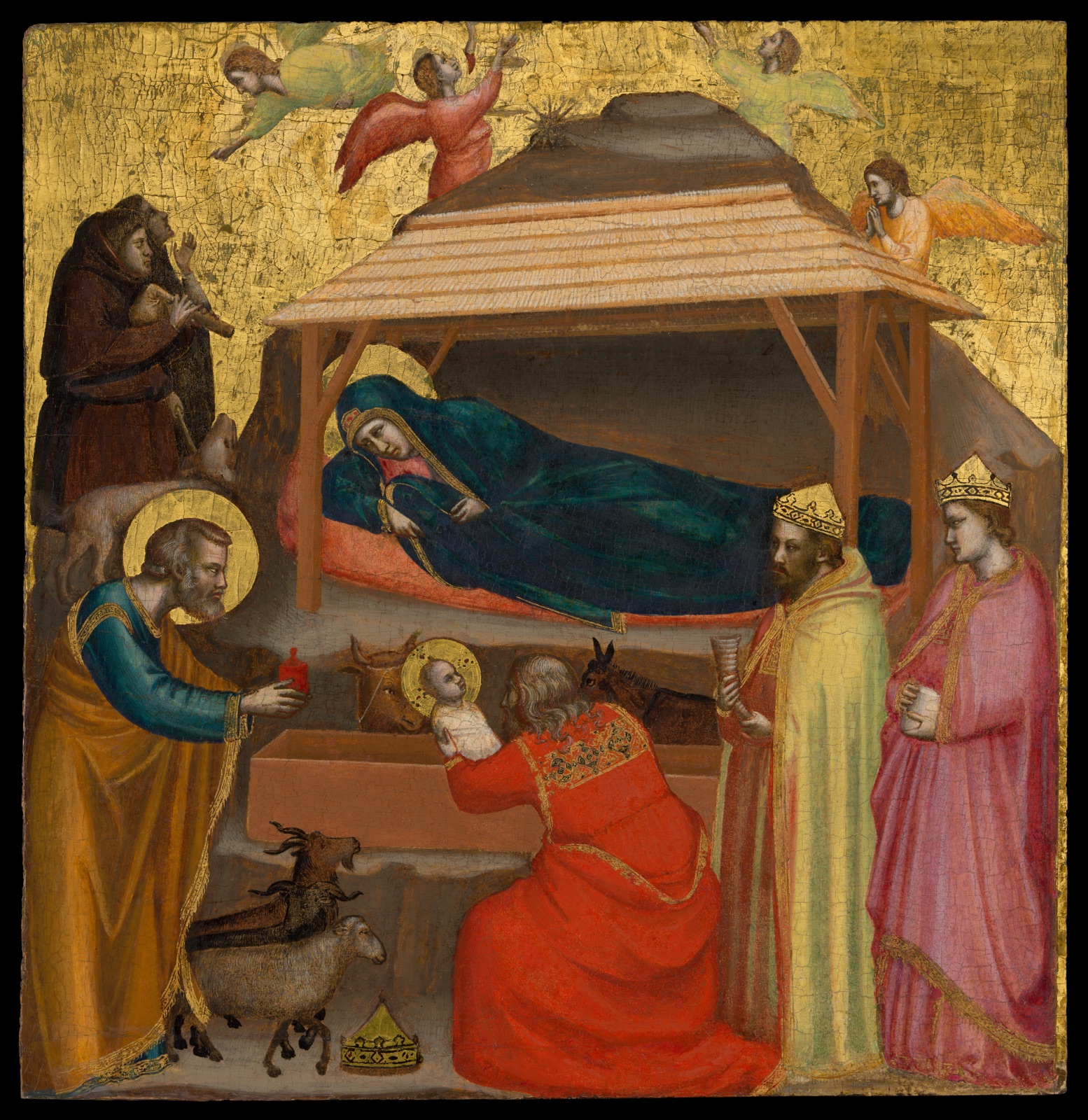

The most common methodologies of art are formalism, iconography, contextualism, biography, feminism, psychoanalysis and semiotics. Each one is a question you ask a painting. What do I see? What do the symbols mean? Who paid for it? Whose life is in it? Ask a few of them and the same painting starts telling you very different things.
What is a methodology of art?
A methodology of art is a method for reading art: a set question you bring to every painting, so your reading goes deeper than a gut reaction. Art historians usually ask several of these questions about one painting, because each one turns up something the others miss.
The list in this post follows the standard textbook on the subject, Laurie Schneider Adams’s The Methodologies of Art: An Introduction, first published in 1996. Its chapters cover the same ground, with Marxism and feminism grouped under contextual readings. Most class lists name them separately, the way this post does. If a class asked you to name the methodologies, these are the names it wants.
What are the 7 most common methodologies of art?
Here they are, each with the question it asks you to put to a painting.
1. Formalism: what do I actually see?
Formalism reads a painting through its visual parts alone. You ignore the story and the artist and look at line, value, color, texture, form, scale and depth. The Swiss art historian Heinrich Wölfflin made this into a method in his 1915 book Principles of Art History, comparing how painters of different periods handled line, space and light.
Painters already know this vocabulary. In the elements of art lesson from our Mastery Program (our online painting program), the elements are taught as the words of a language. Two poets can use the same words and sound nothing alike, because of how they arrange them. The lesson names seven: line, value, color, texture, form, scale and depth. A formal reading asks how a painter arranged those seven. Our guide to the 7 elements of art goes through each one.
2. Iconography: what do the symbols mean?
Iconography reads the objects and figures in a painting as symbols and asks what they stood for at the time. A lily, a skull, a halo or a dog can each carry a meaning the first viewers knew by heart. The German scholar Erwin Panofsky set out the method in Studies in Iconology (1939).
Medieval icons, the painted images of saints and holy figures used in church, show why this matters. Our art history lesson walks through the rules icon painters followed. Holy figures were weightless because they were heavenly. They had large eyes and small mouths, to show they saw and listened more than they spoke. They always wore halos, and each saint carried a set object and wore a set color. If you don’t know the rules, you miss the message. For how artists choose symbols today, see symbolism in art.
3. Contextualism: who paid for it, and why?
Contextualism, also called social history, reads a painting through the world that produced it: money, politics, religion and class. Marxist art history is the best known branch. It asks how wealth and power shaped what got painted and who got to see it.
Our patronage lesson opens with a blunt version of this idea: whoever pays for the art controls the art. A medieval image celebrating Emperor Constantine, who made Christianity legal, worked as political advertising. It told people he was on God’s side. Later, the Medici family paid for paintings and had their own portraits placed inside Bible scenes, standing near the apostles. The painting looks devotional. The context tells you it was also about the family’s standing.
Context also explains what looking alone can’t. Our lesson on decorative art points out that you often can’t tell, at a glance, a painting made to decorate a room from one made as fine art. The difference lies in how it’s sold and what the artist was thinking about. Only a contextual question finds that.
4. Biography: whose life is in it?
Biography reads a painting through the life of the person who made it. It’s the oldest method. Giorgio Vasari’s Lives of the Artists, first published in 1550, explains Italian art as a string of life stories.
Artemisia Gentileschi is the classic case. In our art history lesson she’s the example of a painter who put her own pain and struggles into her paintings. She painted women beheading men again and again, and she was popular and well paid for it. Knowing her life changes how those paintings read.
Biography works on living painters too. In the elements of art lesson, Elli says she painted light for years before she understood why. Only later did she connect it to an experience in her own life. A biographical reading looks for that kind of thread.
5. Feminism and gender: who was allowed to make art?
Feminist art history asks how gender shaped who could train as an artist, what subjects counted as important, and how women are shown in paintings. The essay that started the field is Linda Nochlin’s “Why Have There Been No Great Women Artists?” from 1971. Her answer was that the problem lay in the system, which kept women out of academies and figure drawing classes.
Our patronage lesson uses Mary Cassatt to show this. Cassatt painted mothers caring for their own children, and the lesson describes how the Paris Salon, the official gatekeeper of the day, turned her away. A feminist reading asks why a mother holding her child ranked below a battle or a myth. Our list of historical women artists has more painters this method brought back into view.
6. Psychoanalysis: what did the unconscious put there?
Psychoanalytic art history reads a painting for hidden wishes, fears and memories, using ideas from Sigmund Freud and the writers who came after him. Freud tried it himself in a 1910 essay on Leonardo da Vinci, reading the paintings against a memory from Leonardo’s childhood.
This method fits some art better than others. The surrealists painted dreams on purpose, so a psychoanalytic reading of Salvador Dalí is close to reading the artist’s own instructions. Our guide to surrealism covers how they built those dream images.
7. Semiotics: how does the image work as a set of signs?
Semiotics treats a painting like a language made of signs. A sign is anything that stands for something else, and semiotics asks how those signs produce meaning for a viewer. A red rose means love on a Valentine’s card and something else on a grave. Semiotics asks what makes it mean either one. That’s the difference from iconography, which asks what a symbol meant to its first viewers. Later theories with long names (structuralism, post-structuralism and deconstruction) grew from this method.
Is there a simpler way to sort art history?
Yes. Our art history lesson uses one question that holds almost everything: is this piece building up the elements of art, or tearing them down?
For about five hundred years, from Giotto to the realists, painters were constructing. They worked out perspective, color, composition and the handling of oil paint, and they mastered the elements of art one by one. Then photography arrived and could record reality faster than any painter. In the lesson’s telling, the movements that followed each took one element apart. Impressionism took apart light, Cubism took apart perspective and Fauvism took apart color.
You won’t find this one in the textbook seven. Think of it as formalism stretched across all of history and seen from the easel. It’s useful because it tells you where your own painting sits. If you’re learning to build form, value and depth, you’re working in the construction tradition, whatever your subject.
What do the methodologies look like on one painting?
Here’s Giotto’s The Adoration of the Magi, at the top of this post, read seven ways. It’s a small tempera painting on wood with a gold background, now at the Metropolitan Museum of Art, dated possibly around 1320.
- Formalism. The shed is a box that goes back into space, so the figures stand inside a room in front of the gold. The kneeling king has his back to us, a bold choice that pulls our eye straight to the baby. Red robes repeat across the bottom and hold the group together.
- Iconography. Halos mark Mary, Joseph and the baby. Three crowned kings stand for the Magi of the Gospel story. The kneeling king has set his crown on the ground, a sign that earthly power bows here.
- Contextualism. A painting like this was made for prayer and paid for by the church or a wealthy patron. Our lesson notes that the Medici, about 150 years later, had themselves painted into Bible scenes, one reason subjects like this stayed popular with rich families.
- Biography. Vasari tells the story that the painter Cimabue found the young Giotto, a shepherd boy, drawing sheep on a rock. The story may be legend. It still shapes how people look at the sheep and goat in the corner.
- Feminism. Mary lies resting after the birth, turned toward her child, while the men handle the gifts. A gender reading asks how the painting shows motherhood and who it leaves out of the giving.
- Psychoanalysis. This method has the least to say here. A painting made to church rules gives few clues about one man’s inner life, and an honest reading admits that.
- Semiotics. The gold background is a sign for heaven. The plain wooden shed is a sign for the everyday world. The meaning comes from putting the two side by side.
Our lesson calls Giotto the first painter to break out of the icon rules. You can see it here. The figures have weight, the faces have feeling, and the space is deep enough to walk into.
Which methodology should you use?
For a class assignment, start with formalism and iconography. They’re the two every teacher expects, and they work on almost any painting. After that, use the one that fits your question. If you want to know how a painting works, use formalism. If you want to know what it meant, use iconography and context. If you’re stuck on why an artist painted something strange, try biography or psychoanalysis.
If you paint, start with formalism. It trains you to see a painting the way its maker built it, one element at a time. It’s also how you critique your own paintings: you check each element and find the one that’s off. For why any of this is worth learning, read why study art history.
If you’d like to put the elements of art into practice with a brush in your hand, our 2-week challenge is a good place to start.
Frequently asked questions
What are the most common methodologies of art?
The seven most common are formalism, iconography, contextualism (social history, which includes Marxist readings), biography, feminism and gender, psychoanalysis and semiotics. Laurie Schneider Adams's textbook The Methodologies of Art is the standard introduction, and its chapters cover these same approaches.
What is the difference between formalism and iconography?
Formalism looks at how a painting is made: its line, value, color, texture, form, scale and depth. Iconography looks at what the things in the painting stand for, such as a halo, a crown or a lamb. Formalism can read a painting you know nothing about. Iconography needs you to know the stories and symbols of its time.
Which art methodology is the oldest?
Biography is the oldest. Giorgio Vasari's Lives of the Artists, first published in 1550, explains Italian art through the lives of the people who made it. Formalism and iconography became formal methods in the early 1900s, and feminist and psychoanalytic readings grew mostly in the twentieth century.
Do you have to pick just one methodology?
No. Most good readings use two or three. A formal reading tells you how a painting works, and a contextual or biographical reading tells you why it was made that way. Using several on the same painting is the fastest way to see what each one adds.
Which art methodology is most useful for painters?
Formalism, because its vocabulary is the elements of art you paint with every day. Iconography comes next, because it teaches you how symbols carry meaning, which helps when you choose symbols for your own paintings.