Flow State and Being an Artist: 8 Steps to Get Out of Your Head
Flow is not luck and it is not reserved for a gifted few. It is a state you can set conditions for on purpose. Here are eight steps to get out of your head and into the work.
To get into flow state as an artist, set conditions for it on purpose instead of waiting for it to arrive. Match the challenge in front of you to your current skill, decide your intention before you begin, and clear away distractions. Then let go of perfection, work in a defined block of time, stay physically engaged, paint consistently enough that your brain learns the pattern, and trust your eye rather than overriding it with doubt. Flow is not luck. It is something you can step into.
There is a moment in painting when everything clicks. Time disappears. Your hand moves without hesitation. Decisions feel obvious instead of overwhelming. That is flow state, and for artists it is not just a nice experience. It is where your best work lives. The good news is that flow is not random or reserved for a lucky few. When you understand how it works, you stop chasing it and start stepping into it on purpose. Here is how, in eight steps.
How does flow state actually happen?
Flow happens when your skill meets a challenge that fits it, in the sweet spot between boredom and overwhelm. If something is too easy, your mind wanders. If it is too hard, you freeze. Flow shows up when the challenge stretches you just enough and your skills are engaged but not maxed out.
For your art, that means a few practical choices. Pick references that excite you but do not intimidate you into inaction. Break complex paintings into manageable steps so no single decision feels impossibly large. And keep growing your skills so your edge keeps expanding, which moves the sweet spot along with you. The goal is not to make the work easy. It is to keep the difficulty honestly matched to where you are right now.
Why do you need a clear direction before you begin?
Flow is not chaos, it is focused freedom, and that focus starts with a plan. If you sit down without one, your brain fills with questions. Where do I start? What color should this be? Is this working? That mental noise blocks flow instantly, because you are improvising the plan and making the painting at the same time.
Instead, decide your intention before you begin. Know your reference and your goal, and set a simple plan for the session, even a single sentence. Building strong sources ahead of time is part of this, and our guide to reference photos for painting walks through how to gather them with intention. Clarity removes friction, and flow loves clarity.
How do you eliminate distractions?
Flow requires presence, so protect it ruthlessly. Every notification, every interruption, every small distraction pulls you out, and once you are out it takes real time to get back in. Treating your phone as harmless during a session is one of the quietest ways to keep flow forever out of reach.
Create a flow friendly environment instead. Silence your phone and put it out of sight. Set a timer for uninterrupted work so you are not checking the clock. Prepare all your materials ahead of time so a search for the right brush does not break the spell. Think of it this way: you are not just starting a painting, you are entering a mental state, and that state deserves the same protection you would give to deep focus on anything that matters.
Why does perfectionism kill flow?
Perfectionism is the enemy of flow because the moment you start judging every brushstroke, you shift from creating to criticizing. Flow cannot survive in that environment. The part of your mind that evaluates and the part that makes cannot run at full volume at the same time, and perfectionism turns the evaluator all the way up.
Try this instead. Focus on progress, not perfection. Allow mistakes to be part of the process rather than evidence that you are failing. Keep moving forward, even when it feels messy. Remember that the ugly stage is not a problem, it is a necessary phase, and learning to ride it out is its own skill. Our piece on the ugly stage of painting shows how to push through the point where a piece looks like a disaster. Flow happens when you trust the process enough to keep going.
Can time constraints help you focus?
Yes, because unlimited time often leads to overthinking, while a defined window creates urgency and focus. When the clock is open ended, every decision can be reconsidered forever. A boundary forces you to commit. Working in timed blocks helps you make faster decisions, stay engaged, and avoid getting stuck in details too early.
Try setting clear limits. A 25 minute focused session is a low bar that is easy to start. A one hour painting sprint builds momentum without exhausting you. Clear start and stop points keep the whole thing from sprawling. Flow thrives when there is momentum, and a timer is one of the simplest ways to create it. If structure like this helps you in general, it is worth building it into your routine, which is what our studio practice guide is about.
Why does your body matter for flow?
Flow is not only mental, it is physical, and your body, breath, and posture all affect your ability to stay present. When you slump and lock your gaze on one small corner, your attention narrows and your decisions get tense. When you move, your seeing opens back up.
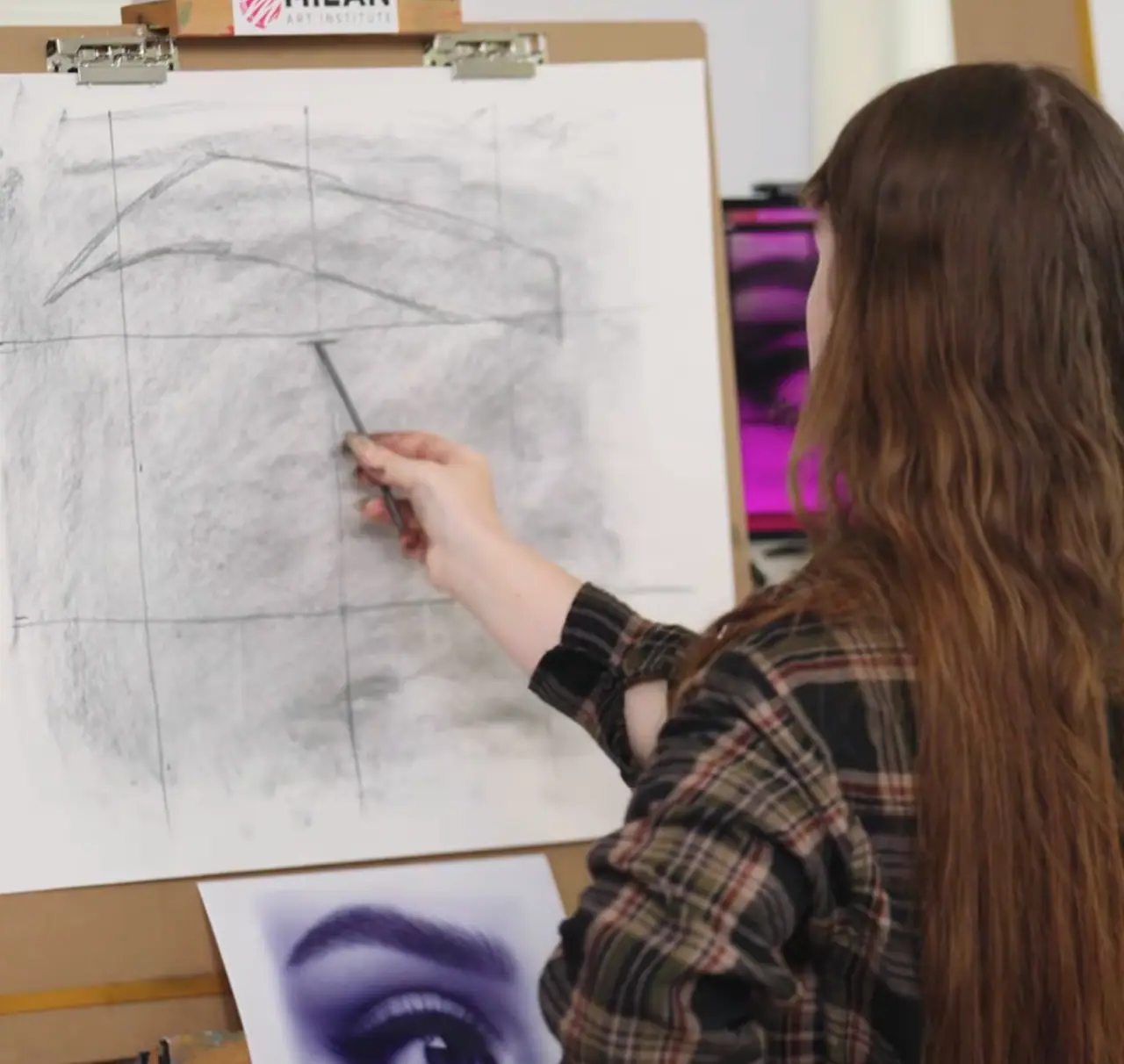
A few simple habits support this. Stand while painting when you can, so you can move freely and shift your distance from the work. Step back often to see the whole piece instead of fixating on one square inch. Keep your movements loose and intentional rather than cramped. When your body is engaged, your mind tends to follow, and the work loosens with it.
How does consistency make flow easier?
Flow becomes easier to access the more often you create, because your brain starts to recognize the pattern. If you only paint occasionally, you spend most of your time just trying to get back into it, climbing the same cold start over and over. When you paint regularly, your resistance decreases and your entry into flow gets faster.
Consistency trains your mind to trust the process. We recommend serious students aim for real, regular studio time rather than rare marathon days, because the rhythm itself is what builds the on ramp. The painter who shows up often is not just logging more hours. They are teaching their mind that this is simply what happens at this time, in this spot, which makes the door to flow open more readily each time. If staying consistent is the part you struggle with, our writing on how to get out of an art block has fast resets for the days you stall.
Why is trust the heart of flow?
At its core, flow is trust: trust in your eye, trust in your instincts, and trust in your ability to figure it out as you go. The more you override that trust with doubt, the harder flow becomes, because every second guess pulls you back into your head and out of the work. Doubt and flow cannot occupy the same moment.
But when you lean into trust, something shifts. You stop forcing and you start responding. The painting begins to guide you, and your job becomes listening rather than controlling. This does not mean abandoning skill or planning. It means letting the skill you have built actually come through instead of strangling it with hesitation. Flow is not something you wait for. It is something you create conditions for, and trust is the condition that ties the other seven together.
The truth about flow
Flow is not something you wait for. It is something you create conditions for, and when you do, your art changes. Not just in quality, but in how it feels to make it. You enjoy the process more, you move faster, and you express more of who you are. The eight steps above are really one idea seen from eight angles: get out of your own way, on purpose, before you begin.
That is also why flow and creative block are two sides of the same coin. Block is what happens when the conditions are wrong and your head is full of noise. Flow is what happens when you clear that noise and let yourself work. If you want the bigger picture on staying unstuck and feeling like an artist in the first place, our guide on how to overcome creative block goes deeper, and the rest of the creative block and identity collection is here when you want to keep going. The fastest way to put all of this into practice is to simply make something this week, and our free Two Week Challenge gives you a guided way to start.
Frequently asked questions
What is flow state in art?
Flow state is the focused, absorbed mode where time seems to disappear, your hand moves without hesitation, and decisions feel obvious instead of overwhelming. For artists it tends to show up when the challenge in front of you is matched well to your current skill, your intention is clear, and nothing is pulling your attention away from the work.
How do you get into flow state when painting?
Set a clear intention before you begin, choose a challenge that stretches you without overwhelming you, and remove distractions like your phone. Then let go of perfection and keep moving. A defined block of time creates focus, consistent practice trains your brain to enter the state faster, and trusting your eye instead of second-guessing every mark keeps you in it.
Why can I not get into flow when I create?
Usually one of three things is blocking it. The task is too easy and your mind wanders, or it is too hard and you freeze. You sat down without a plan, so your brain fills with questions and stalls. Or you are judging every stroke, which turns creating into criticizing. Fixing any one of these often lets flow return.
Does flow state make you a better artist?
Flow does not replace skill, but it lets the skill you have come through cleanly. In flow you stop forcing decisions and start responding to the painting, which usually produces looser, more confident work and a process you actually enjoy. The real gains come from pairing flow with consistent, deliberate practice over time.
How do I stop overthinking my art?
Decide your intention before you start so your brain is not improvising the plan mid-stroke. Work in a timed block to create gentle urgency, focus on progress rather than a flawless result, and let the messy middle stage exist without panicking. Most overthinking comes from chasing perfection, so aim it at finishing instead.
What to practice this week
- Before your next session, write one sentence naming your intention and your reference, so you begin with a plan instead of questions.
- Set a 25 minute timer, silence your phone, and paint without stopping to judge until it goes off.
- Stand while you work and step back from the easel every few minutes to see the whole piece instead of one corner.
Supplies used
About the author
More from ElliKeep learning