Products for Artists: 36 Free and Cheap Tools Every Artist Should Use
Making art does not have to be expensive. Here are 36 genuinely useful products for artists, apps, books, reference photos, and cheap supplies, that cost little or nothing.
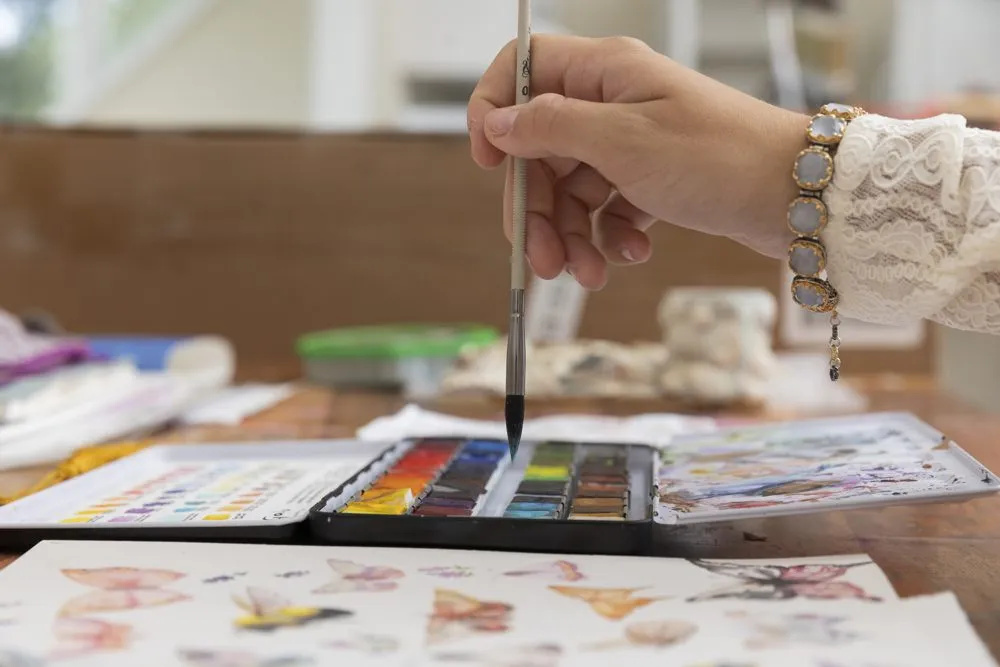
The best products for artists are rarely the most expensive ones. Making art can feel like it demands a studio full of pricey gear, but the truth is simpler: some of the most useful tools in a creative practice are free or close to it. Below are 36 genuinely useful products for artists, sorted into apps, books, business tools, reference sources, and affordable supplies. Whether you are picking up a pencil for the first time or years into your work, start with what is free, add a few cheap favorites, and spend real money only on the tools you reach for every day.
If you want the broader picture of what belongs in a working kit before you shop, our guide to essential art supplies covers the core materials every artist should have. This list goes wider, into the free apps, books, and reference sites that round out a practice without draining your bank account.
What are the best free apps for artists?
The best free apps for artists help you sketch, organize, stay inspired, and share your work, all from a phone or tablet. Your device is one of the most powerful tools you already own, and most of these apps offer a genuinely useful free tier. Here are nine worth installing.
- Procreate Pocket. A portable version of the fan favorite iPad app. Perfect for painting and sketching anywhere you happen to be.
- Adobe Express. Make social graphics, flyers, or quick edits with ease, no design background required.
- Canva. Design content for Instagram, your portfolio, or your website without a design degree.
- Google Keep. Great for saving quick ideas or reference photos the moment inspiration strikes.
- Milanote. A visual planner that helps you organize series ideas, class notes, and project boards in one place.
- Pinterest. A never ending stream of pose references, color schemes, and inspiration boards.
- Pixlr. A free photo editor for cleaning up and enhancing photos of your finished artwork.
- Artfol. A fresh, artist focused platform with no ads and no algorithm fighting for your attention.
- Artwork Archive. Track your pieces, clients, and gallery shows in one system. It starts free and grows with you.
The tenth app on this list is our own. The Milan Art App is the companion to our classes, giving you access to your courses, videos, and training tools on the go, and it is free with any class purchase. If you lean toward digital work, our roundup of digital art tools goes deeper on illustration software and equipment.
What art books should every artist read?
Every artist should read a handful of books on craft, discipline, and creativity, and almost none of them need to be bought new. You can find these used, or borrow them free with the Libby app and a library card. Here are five that come up again and again, plus the app that gets them to you for nothing.
- The War of Art by Steven Pressfield. This one is about ambition and the obstacles that threaten to block you from creating. Pressfield names the looming force as “Resistance” and shows how to fold discipline into the creative process.
- Turning Pro by Steven Pressfield. The follow up to The War of Art, this book draws the line between the amateur and the professional. It covers the sacrifices the shift takes and reminds you that success comes from focus and consistent work.
- Mastery by Robert Greene. As the name suggests, this book covers what goes into achieving greatness. Greene studies the lives of figures like Einstein, Darwin, and Leonardo da Vinci, then analyzes how their paths brought them there.
- Drawing on the Right Side of the Brain by Betty Edwards. A classic since 1979, this best selling drawing book has taught millions to draw and helps dispel the myth that you must be born with talent. It remains one of the most famous books for artists, for good reason.
- Steal Like an Artist by Austin Kleon. A fast, illustrated read covering ten principles for nurturing creativity and living more inventively. It is short, immersive, and full of exercises you can try the same day.
The fifteenth product here is the Libby app itself. Pair it with a library card and you can borrow every book above, and thousands more, completely free. For a longer reading list aimed at the business side of an art career, see our guide to the best art business books.
What tools help artists run the business side?
The tools that help artists run the business side keep you organized, on schedule, and able to share your work with confidence, mostly for free. Making the art is only one part of being an artist. These five platforms handle the rest, and most offer a free plan or a free trial to start.
- Trello. Visual boards for managing commissions, launches, or content ideas at a glance.
- Notion. Track your goals, build an art journal, or organize your supply list in one flexible workspace.
- Google Workspace. Use Docs, Sheets, and Calendar to stay on top of the day to day of your business.
- ChatGPT. Need help drafting an artist statement, brainstorming titles, or writing emails? AI can get you a fast first draft to shape.
- Loom. Record process videos, tutorials, or quick updates for clients and students without editing.
If you want to push these further, our guides to ChatGPT for artists and how to write an artist statement show exactly how to put a couple of these tools to work.
Where can I find free reference photos for artists?
You can find free reference photos for artists on royalty free image sites and dedicated figure drawing tools, with thousands of high quality images at no cost. Good references sharpen everything from anatomy to lighting, and you do not need to pay for them. Here are five sources.
- Unsplash. Stunning, high resolution photos across nearly every category you could want to paint.
- Pexels. A strong source for figure poses and natural lighting references.
- Pixabay. Everything from sweeping landscapes to tight animal close ups.
- Line of Action. Build your drawing skills with timed gesture, anatomy, and portrait practice tools.
- SenshiStock Sketch App. Great for tricky angles, action poses, and expressive movement.
A quick caution worth keeping in mind: free does not always mean usable without thought, so check each site’s license for commercial work. For a fuller method on building your own reference library with intention, read reference photos for painting.
What cheap art supplies do artists actually use?
The cheap art supplies artists actually use are inexpensive, easy to find, and reliable, no high end studio required. You can make beautiful work with modest tools, especially while you are still learning what you reach for most. Here are eleven affordable supplies, including two we designed ourselves.
- Deli Mechanical Pencils. Surprisingly smooth and long lasting for the price.
- Pentel Pocket Brush Pen. Great for bold, dynamic lines and ink drawing.
- Strathmore 400 Sketchbooks. Solid quality for daily sketching and quick studies.
- Sakura Gelly Roll White Gel Pens. Add crisp highlights to mixed media pieces.
- Prismacolor Scholar Colored Pencils. Affordable and blendable, with richer pigment than you would expect at the price.
- Artist Tape or Masking Tape. Clean edges and easy surface prep for almost any medium.
- Milan Art 5-Piece Palette Knife Set. Designed and curated by Elli Milan, these palette knives look great and hold up for years of real use.
- Recycled Cardboard. Turn old boxes into DIY palettes, texture plates, or stencils for free.
- Baby Wipes. Your best friend for cleaning brushes, hands, and the inevitable messes.
- IKEA RASKOG Utility Cart. The go to storage cart for keeping a mobile studio organized.
- Milan Art Proportion Tool. This oak tool scales drawings quickly and accurately, with adjustable ratios from 1:1 to 1:10, so you can enlarge from photo to canvas without a grid. It trains your eye while it saves you time, and it is also included in our Oil and Drawing Essentials Kit.
If your budget is even tighter than this, you do not have to buy at all. Our guide to how to get free art supplies covers where to find materials near you, by mail, and online.
Do you need expensive products to make good art?
No, you do not need expensive products to make good art. Good work comes from trained seeing and steady practice, not from the price of your tools. Beginners improve fastest by making a lot of work with simple supplies, not by assembling a beautiful collection of gear they rarely touch. Start with what you already have, lean on the free apps and reference sites above, and add a few cheap favorites as you go.
Whether you are sketching in a coffee shop, painting commissions from a corner of your home, or dreaming about your first gallery show, there is something on this list for you. The tools matter far less than the habit of returning to use them. If you want a structured, supported way to take the next step with these products in hand, our free Two Week Challenge is built for exactly the beginner you are right now, and the rest of our sell and price your art collection is here when you are ready to turn a practice into a career.
Frequently asked questions
What are the best products for artists on a budget?
The best budget products for artists are the free ones you already have access to: phone apps like Procreate Pocket, Canva, and Milanote for sketching and planning, classic art books borrowed free through the Libby app, and royalty free reference sites like Unsplash and Pexels. From there, a short list of cheap supplies, mechanical pencils, a sketchbook, white gel pens, and baby wipes, covers most of what a beginner reaches for.
Where can I find cheap art supplies?
Cheap art supplies are easier to find than most beginners think. Student grade lines like Prismacolor Scholar pencils and Strathmore 400 sketchbooks cost a fraction of professional grade and still perform. Borrow art books free through your library and the Libby app, pull reference photos free from Unsplash, Pexels, and Pixabay, and repurpose recycled cardboard into palettes and texture plates. Buy professional tools only for what you use every day.
What apps do artists actually use?
Artists use apps to sketch, plan, organize, and share work. Common free or low cost picks include Procreate Pocket for painting on a phone, Canva and Adobe Express for graphics, Milanote and Notion for planning series and goals, Pinterest for references, and Artwork Archive for tracking finished pieces, clients, and shows. Most offer a free tier, so you can build a full toolkit before spending anything.
What art books should every artist read?
A few books come up again and again: The War of Art and Turning Pro by Steven Pressfield on resistance and discipline, Mastery by Robert Greene on the path to greatness, Drawing on the Right Side of the Brain by Betty Edwards on learning to see, and Steal Like an Artist by Austin Kleon on creativity. You can borrow nearly all of them free through the Libby app and a library card.
Do you need expensive supplies to make good art?
No. Good art comes from trained seeing and consistent practice, not from expensive supplies. Beginners improve fastest by working with simple, affordable tools and making a lot of work, not by collecting professional gear they barely use. Start with cheap student grade materials, learn what you actually reach for, and upgrade only the few tools that earn it through daily use.
What to practice this week
- Pick one free planning app, Milanote or Notion, and spend ten minutes building a single board for your next series or set of studies.
- Download three royalty free reference photos from Unsplash or Pexels and do a quick value study from each instead of buying a reference book.
- Borrow one art book free through the Libby app this week, War of Art is a short, fast start, and read the first chapter today.
Supplies used
About the author
More from Elli