How to Write an Artist Statement: A Plain-Language Guide (With a Template)
Write it like you talk, not like a thesis. An artist statement is a short, honest piece about what you make, how you make it, and why. Here is a step-by-step way to get yours onto the page.

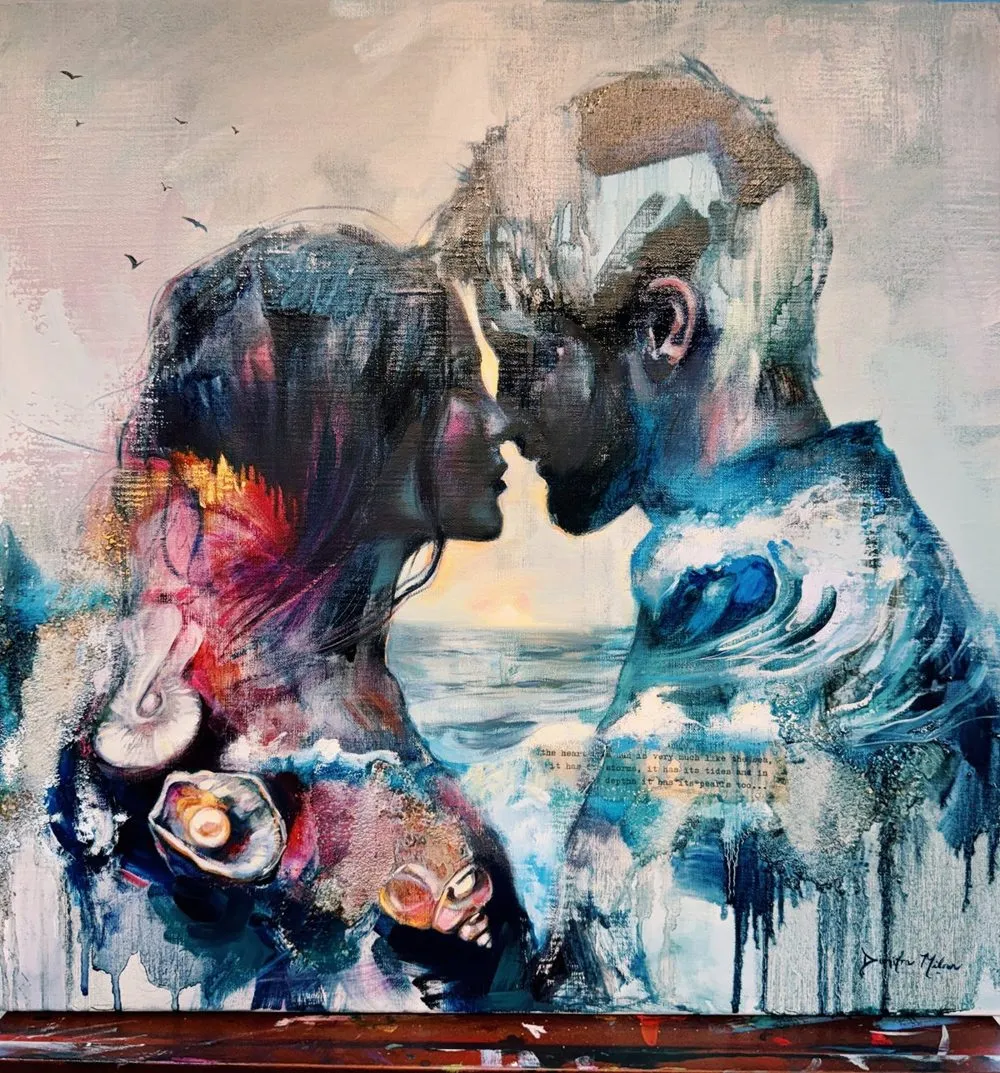
An artist statement is a short, plain-language piece that explains what you make, how you make it, and why it matters to you. That is the whole job. It is not a thesis, not a defense of your work, and not a place to prove you have read enough theory. The single most useful thing you can do is write it the way you talk. If you would never say a sentence out loud to a friend, it does not belong in your statement. Most people reach for grand language when the version that actually connects is the honest one in their own voice.
The reason it feels hard is rarely the writing itself. It is the pressure of explaining your own work, which can make even confident artists freeze. So this guide takes the pressure off. We will cover what a statement is for, what to put in it, how to write one step by step, the mistakes that sink most attempts, and how long it should be. There is a plain template near the end you can fill in.
What is an artist statement, and what is it for?
An artist statement is a short piece of writing, usually one to three paragraphs, that introduces your work in your own words. It answers three simple things: what you make, how you make it, and why. Think of it as the conversation you would have if someone stood in front of your work and asked about it, written down and tightened up.
It earns its keep because you cannot always be in the room. Galleries ask for one when they show your work, and it often becomes the text on the wall or in the show notes. Applications for exhibitions, residencies, and juried shows almost always require one. Grant panels read it to understand what you are doing and why it matters. Your own website uses it on an about or statement page. In every case, the statement stands in for you, giving someone their first real sense of your work.
Here is what it is not. It is not your life story, not a resume of shows and awards (that is your bio), and not a critic’s review of your own art. It speaks in the first person, about the work in front of you. Keep that frame and most of the difficulty falls away.
What should an artist statement include?
Three things, and they map to those plain questions: what, how, and why.
First, what you make. Name your medium and subject in concrete terms. You paint large acrylic abstracts. You make small still life oil paintings of kitchen objects. You draw portraits in charcoal. This is the part people most often skip in favor of something lofty, and it is the part a reader needs first. Tell them plainly what they are looking at.
Second, how you make it. This is your materials and your process, the hands-on part of your practice. Do you build up thin glazes or work fast and thick. Do you start from photographs, from life, or from memory. Do you use palette knives, pour paint, sand things back and start over. A reader does not need a technical manual, but one or two real details about how the work comes to be make it feel specific to you.
Third, why you make it. These are your themes and what draws you to them. What keeps recurring in your work, and why does it matter to you. Maybe you keep painting water because you grew up near it. Maybe you are drawn to decay, or to light, or to the faces of people you love. The why is where your statement becomes yours and no one else’s, so be honest rather than impressive. The rule that holds all three parts together is to stay concrete: every time you drift toward a big abstract claim, pull it back to the actual work on the wall.
How do you actually write one, step by step?
Here is a process that works even if you hate writing. It moves from messy to clear.
-
Brain-dump answers to plain questions. Before you try to write anything that sounds good, just answer questions like you are talking. What do I make. What materials and process do I use. What subjects or ideas keep coming back, and why do those matter to me. Write fast and honestly, and do not edit yet. You are gathering raw material, not drafting.
-
Cut the jargon. Now hunt down the art-speak. Words like explore, interrogate, juxtapose, dialogue, and the human condition feel safe but say almost nothing. Swap every vague or borrowed phrase for something concrete and true. “I explore themes of memory” becomes “I paint the rooms of the house I grew up in.” Specific beats grand every time.
-
Lead with the work, not the theory. Open with what you make, not a sweeping idea about art or life. A reader wants to know what they are looking at before they hear what it means to you. Put the concrete work first, then let the meaning follow. Statements that open with abstract philosophy lose people fast.
-
Get to one tight paragraph, then expand. Pull your strongest, truest lines from the brain-dump and shape them into a single clear paragraph that hits what, how, and why. That paragraph is your short statement. Once it holds together, expand it by adding a little more on your process and your themes. Building short-to-long keeps the writing tight, because you start from the essential and add only what earns its place.
-
Read it aloud. This is the step most people skip and the one that fixes the most. Read your statement out loud, slowly. Anywhere you stumble, or a sentence sounds like a museum placard instead of you, rewrite it the way you would say it. If it sounds like a real person talking about work they care about, you are done.
To see how finished statements handle these moves, read a range of real ones. This collection of artist statement examples shows the same principles at work across different mediums, which makes the advice here much easier to apply to your own.
What are the most common artist statement mistakes?
Most weak statements fail in the same handful of ways. Once you can name them, they are easy to avoid.
The biggest is art-speak jargon. Reaching for inflated academic language to sound serious is the most common mistake, and it backfires, because it puts distance between the reader and your work instead of closing it. Plain words win.
Close behind is vagueness. Abstractions like “I explore the tension between memory and perception” tell a reader nothing they can picture. If a sentence could be glued onto almost any artist’s work, it is too vague. Tie everything to your actual work.
Then there is grandiosity, claiming your work will transform how people see reality or speak to the whole human experience. It reads as overreach and undercuts trust.
Another quiet trap is writing what you think they want to hear. When you guess at the language a gallery or grant panel wants, you write something stiff that sounds like everyone else. Your honest voice is more memorable than any version of impressive.
Last is length. A statement that runs too long loses its reader, buries the good lines, and starts to feel like a defense. Tighter is almost always stronger.
How long should it be, and how do you adapt it?
There is no single correct length, so keep two versions ready. A short statement of roughly 100 words, sometimes just three or four sentences, covers what, how, and why at a glance. A longer one of about 250 to 400 words gives you room to say more about your process and the ideas behind the work. Between those two, you can meet almost any request.
Match the version to where it is going. A wall label, a social profile, or a tight application field wants the short one. A website page, a grant, or a full exhibition submission can take the longer one. For a gallery, lean more on the work itself and what a viewer is seeing. For a grant, say more about the ideas a panel is weighing. You are not writing a new statement each time, just tailoring the same honest core to fit the room.
Here is a generic template you can fill in. It is a made-up illustrative example, not a real artist’s statement, so treat it as scaffolding to adapt rather than text to copy.
I make [type of work, for example large abstract paintings] using [your medium and main materials]. I work by [one or two real details about your process, for example building up thin layers and scraping them back], often starting from [your source, for example memory, photographs, or life]. My work keeps returning to [your recurring subject or theme], because [the honest reason it matters to you]. I am drawn to [a specific quality you chase, for example the way light falls at the end of the day], and I want the work to [what you hope a viewer feels or notices].
Fill each bracket with something true and concrete, read it aloud, and cut anything that sounds borrowed. That is a complete short statement you can expand from there.
A calm path forward
You do not need to get this perfect today. You need a first honest draft that sounds like you, and you now have the steps: answer the plain questions, cut the jargon, lead with the work, shape one tight paragraph, read it aloud. Do that and you are ahead of most artists, who either avoid the task or hide behind language nobody connects with.
Your statement does not stand alone, though. It lives next to your actual work, so the strongest thing you can do alongside writing it is build the body of work it introduces. If you are putting together a portfolio, start with how to build an art portfolio, then use this walk-through on how to create your art portfolio to assemble it piece by piece. As you think about showing or selling, our guidance on how to sell and price your art picks up where your statement leaves off, and the full artist statements collection is here whenever you want more.
If you are still early in the work and want a structured, supported way to grow as an artist, our free Two Week Challenge is built to help you make real progress fast. A clear statement is simply you, learning to put what you make into words. Write it the way you talk.
Frequently asked questions
What is an artist statement?
An artist statement is a short piece of writing, usually one to three paragraphs, that explains what you make, how you make it, and why. It is written in your own plain voice, not in academic art-speak. Galleries, applications, grant panels, and your own website use it to understand the person behind the work before they meet you.
How long should an artist statement be?
Keep a short version of about 100 words and a longer version of 250 to 400 words. The short one fits a wall label, a social profile, or a quick application field. The longer one suits a website, a grant, or a full submission. Most uses are served by one of those two, and you tailor the wording to each.
What should an artist statement include?
Cover three things: what you make (your medium and subject), how you make it (your materials and process), and why you make it (your themes and what pulls you to them). Keep every part concrete and tied to the actual work. You do not need your life story or a list of credentials, just a clear window into the art.
How do you start writing an artist statement?
Start by answering plain questions out loud or on paper: What do I make? What do I use? What keeps recurring in my work, and why does it matter to me? Brain-dump honest answers without editing, then cut the jargon and shape the strongest lines into one tight paragraph. The first draft is just raw material.
What is the difference between an artist statement and an artist bio?
An artist statement is about the work: what it is, how it is made, and why. An artist bio is about you: where you are from, your training, shows, and milestones, usually written in the third person. A statement speaks in your own first-person voice. Many artists keep both because applications often ask for each separately.
What to practice this week
- Set a timer for ten minutes and free-write answers to three questions: what do I make, how do I make it, and why does it matter to me. Do not edit while you write.
- Take your draft and circle every vague or academic word (explore, juxtapose, interrogate, the human condition) and replace each one with something concrete and true.
- Read your statement out loud. Anywhere you stumble or hear a sentence you would never actually say, rewrite it the way you would say it to a friend.
Supplies used
About the author
More from Elli