How to Build an Artist Portfolio: A Step-by-Step Guide with Examples
A working artist's portfolio is a curated argument for your talent, and building one well comes down to a repeatable process you can follow today.

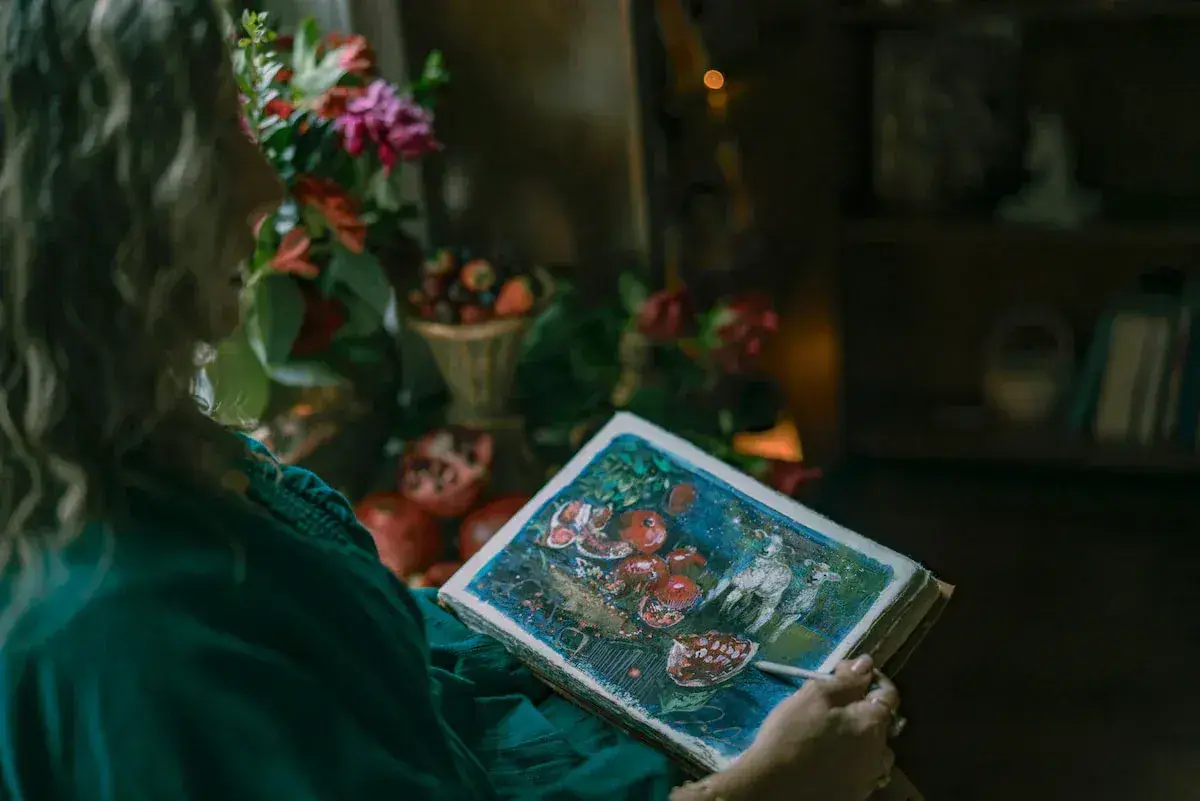
To build an artist portfolio, you select ten to fifteen of your strongest and most cohesive pieces, photograph them in high quality, and present them online and in print alongside a clear artist statement, bio, and CV. The work that gets you into galleries and in front of collectors is not the act of collecting your favorite pieces. It is the act of curating a body of work that represents your vision, your growth, and your unique voice. This guide walks you through the full process step by step, with real examples to follow.
A strong portfolio is the first introduction most people will ever have to your work. Whether you are applying to galleries, seeking commissions, or connecting with collectors, it does the talking when you are not in the room. It is one of the most important tools you can build for an art career, so it is worth building with intention.
What is an artist portfolio?
An artist portfolio is a curated collection of your best work, presented as a visual argument for your talent and your vision. It is not a scrapbook of everything you have ever made. It is a focused selection that demonstrates your evolution, your creative process, and the single artistic voice that runs through your work.
A complete portfolio is more than images. It pairs the work with an artist statement, a bio, and a CV so a curator or collector understands not just what you make but who you are and where you are headed. The strongest portfolios feel cohesive. Someone can flip through them and sense a clear point of view, even across different subjects or mediums.
How do you build an artist portfolio step by step?
You build an artist portfolio by working through six decisions in order: who it is for, what voice it shows, how you balance consistency and variety, how tightly you curate, how you present it, and what written materials you include. Here is the process.
- Know your audience. Decide who will see this portfolio before you choose a single piece. A gallery submission, a commission client, and a private collector each want something different, and tailoring the selection to them is what makes a portfolio land.
- Show your unique voice. Include the pieces that only you could have made. Curators and collectors are not just looking for skill. They are looking for a point of view they can connect with.
- Balance consistency and variety. Show a unified artistic identity while still demonstrating range. The portfolio should flow without feeling repetitive.
- Curate with purpose. Every piece earns its place. Ten to fifteen well-chosen works beat thirty mediocre ones every time.
- Present it professionally. Use high-quality images, a clean layout, and both a digital and a printed version where you can.
- Add your written materials. Finish with an artist statement, a bio, and a CV so the work is framed by your story and your track record.
The rest of this guide takes each of those decisions and shows you exactly how to make it.
How do you build an artist portfolio for galleries?
For a gallery portfolio, lead with a cohesive body of work that shares a clear theme or style, and put your most recent pieces first. Curators are not evaluating one painting at a time. They are imagining how your work would hang together on their walls, so consistency and a clear artistic identity carry more weight than raw variety.
Three moves make a gallery portfolio competitive. First, research the gallery and select pieces that fit its aesthetic and mission, which shows you understand what they are looking for. Second, show a series or body of work with a unified thread, because that proves you can produce a focused collection. If your pieces feel scattered, painting in a deliberate series can pull them together. Third, highlight recent work so it is obvious you are actively producing and evolving.
Collectors and commission clients need something slightly different. Here you are showing versatility and personal connection rather than exhibition-readiness. Tailor the selection to their taste, display a range of subjects, mediums, or scale within your own style, and highlight any limited edition or one-of-a-kind pieces, since exclusivity raises perceived value. If you have completed commissions, include them with testimonials so a new client can trust you to deliver. The collector-facing portfolio overlaps closely with selling your art, so it is worth building both with the buyer in mind.
How do you choose which pieces to include?
Choose pieces that show your unique voice first, then trim until every remaining work earns its place. Your portfolio should be a visual narrative, not a skills demo. The question behind each piece is simple: does this reveal who I am as an artist, or is it just technically fine?
Look for the work that carries your individuality, the recurring colors, materials, themes, or cultural influences that keep surfacing because they matter to you. Those threads are the heart of your artistic identity, and they are what draw people in. A viewer connects with a point of view long before they analyze technique.
Then curate hard. A portfolio with ten to fifteen well-curated pieces beats one stuffed with thirty mediocre works. Think quality over quantity, and do not be afraid to leave strong-but-off-brand pieces out. It also helps to include a few works in progress. Sketches, studies, and early-stage pieces show your creative thinking and technical development, and people are genuinely fascinated by how a finished painting came to be. Letting them behind the curtain can be as compelling as the finished work itself.
How should you present a painting portfolio?
Present your portfolio in both digital and printed form, with high-quality images as the non-negotiable foundation. Poor photography can ruin the impression of even a stunning painting, so this is the place to be uncompromising. If your photographs are letting your work down, start by learning to photograph your art properly before anything else.
For the digital side, a personal website is the strongest option. Platforms like Shopify, Squarespace, Wix, and WordPress offer artist-friendly templates, and a site of your own lets you combine your portfolio with your bio, statement, CV, a shop, and updates about upcoming shows. Organize it by theme, medium, or series, keep the design clean so the artwork is the focal point, and make your contact information easy to find. Choose a professional, memorable domain, ideally your own name or artist brand, so people can find you without effort. If a full website feels like too much right now, portfolio-specific platforms like Behance and Adobe Portfolio give you sleek templates and quick visibility while you grow into a site of your own.

A printed book or catalog is a quietly powerful complement, especially when you approach galleries or buyers in person. A physical catalog lets someone engage with your work away from a screen, on their own time, and it leaves something tangible behind that they can return to. It also signals that you take your career seriously. Do not cut corners on the printing. Use a professional service, keep it cohesive with your personal branding, and bring a few copies to meetings or mail them to galleries you want to work with. Most artists find that pairing the two works best: direct people to your website, then hand them a printed catalog for a deeper look.
What goes in your artist statement, bio, and CV?
Your statement explains the why of your work, your bio explains the who, and your CV documents the what and when. These three written pieces turn a set of images into a professional presentation, and a serious portfolio includes all three.
The artist statement is your chance to explain the themes, messages, and inspirations behind your work. Keep it concise but meaningful. Name the ideas you are exploring and the emotions you hope to evoke, touch briefly on your process and the mediums you favor, and write it so it invites the viewer into your world. Speak from the heart, but stay professional.
The artist bio gives a glimpse of your background and career. Mention where you are from, your education or mentorship, and the experiences that shaped your art. Add a few career highlights such as exhibitions, awards, or significant projects, and a line or two about what drives you, so curators and viewers can connect with the person behind the work.
The CV is your art resume, and it should be organized, easy to read, and regularly updated. List solo and group exhibitions in reverse chronological order with gallery, location, and year. Add awards and recognition, your education and training, any public or private collections that hold your work, professional experience like teaching or curating, and special projects such as self-published books or print-making. Clear headings and a professional format matter as much as the content. If you want help drafting these, our companion guide on how to create your art portfolio goes deeper on the written materials.
What are good artist portfolio examples?
Good artist portfolio examples share three traits: a tight, cohesive selection, professional presentation, and written materials that frame the work. The clearest way to learn the standard is to study artists who hit it.
For a cohesive online series, look at how a single body of work can read as one unified statement rather than a pile of unrelated pieces, which is exactly what galleries respond to. For a printed catalog done well, a professionally produced artist book shows how much more weight a physical portfolio can carry than a screen, with thoughtful sequencing, high-quality reproduction, and branding that matches the work. For the written side, a strong artist statement reads as personal and specific, never generic, and gives you a template for how concise and honest yours can be.
As you study examples, watch for what is missing as much as what is present. The best portfolios are restrained. They leave out the merely competent so the exceptional has room to breathe.
How often should you update your portfolio?
Update your portfolio regularly, treating it as a living document rather than a finished object. As you grow, it should grow with you. Swap in your latest and most relevant work, retire pieces that no longer represent where you are, and keep your CV current as exhibitions and awards accumulate. A portfolio that visibly evolves is itself evidence that you are committed to evolving as an artist.
Before you send it anywhere, ask a trusted mentor or peer for feedback. We are often too close to our own work to see it clearly, and a fresh set of eyes will catch what works and what could be stronger.
Building your portfolio is not a task to check off a list. It is a reflection of your journey, your voice, and your vision, and it will be the gateway to new opportunities and connections. If you want to sharpen the work itself while you build it, keep going with the rest of our artist statements and portfolio collection, and consider learning the fundamentals through a free art workshop when you are ready to take your craft, and your portfolio, further.
Frequently asked questions
How many pieces should be in an artist portfolio?
Aim for ten to fifteen strong, cohesive pieces. A focused selection of your best work makes a stronger impression than thirty pieces of uneven quality. Quality and consistency matter far more than volume, especially for gallery submissions.
What should a painting portfolio include besides the paintings?
A complete portfolio includes high-quality images of your work, an artist statement that explains the why behind your art, a short artist bio that explains the who, and an up-to-date CV listing exhibitions, awards, and education. Together these turn a set of images into a professional presentation.
Do I need a website for my art portfolio?
A website is strongly recommended because it makes your work accessible to a global audience and signals that you take your career seriously. If you are not ready to build a full site, portfolio platforms like Behance or Adobe Portfolio offer clean templates to get started quickly.
How is a gallery portfolio different from a collector portfolio?
A gallery portfolio emphasizes a cohesive body of work with a consistent theme and your most recent pieces. A collector portfolio emphasizes versatility, emotionally resonant pieces, and any exclusive or one-of-a-kind works, since collectors are buying a personal connection rather than evaluating you for an exhibition.
What to practice this week
- Lay out every finished piece you have, then narrow to the twelve that share the strongest thread of style, theme, or palette. Notice what gets cut and why.
- Photograph three of your paintings in even, natural light against a neutral background, then compare them side by side to find your best lighting setup.
- Draft a two-sentence artist statement that names the one idea your work keeps returning to. Read it aloud and cut any word that sounds borrowed.
About the author
More from Jake