Artist Residencies: How to Find and Apply for the Right One
A residency gives you time, space, and community to do your best work. Here is what artist residencies are, how to apply, and how to find the right one for you.
Artist residencies are programs that give you dedicated time, studio space, and a community of other artists so you can focus fully on your work, often with housing and sometimes funding included. To apply, you research programs that fit your medium and goals, prepare a cohesive portfolio and a clear artist statement, keep a current CV, and tailor every application to the residency’s mission. That is the short version, and the rest of this guide walks through each step so you can find the right residency and write an application that gets noticed.
A residency can open doors that change the shape of your career. It offers time, space, and inspiration in ways that ordinary life rarely allows, whether you are just beginning or already building momentum. Below we cover what residencies are, why they matter, how to apply, how to build the CV they ask for, and where to actually find them.
What are artist residencies?
Artist residencies are programs that give artists dedicated time and space to focus on their work, usually in a supportive and inspiring environment. They take place all over the world. Some sit in cities, surrounded by cultural activity. Others are tucked into quiet rural settings where the landscape itself becomes the subject.
Most residencies offer a studio, housing, and the chance to connect with other artists. Some also provide financial support, materials, or mentorship. Their goal is simple: to help you create your best work without distraction.
Why are artist residencies worth pursuing?
A residency is worth pursuing because it does far more than hand you time away. It acts as a catalyst for real creative growth, on several fronts at once.
The first is deep focus and creative freedom. Stepping out of your daily routine lets you rediscover your artistic rhythm, take risks, and push your ideas further than you usually allow yourself to. The second is purpose. Many residencies center on a specific theme or mission, such as environmental conservation, cultural preservation, or social impact, and working inside a cause you care about can fuel your art with renewed meaning.
The third is your professional profile. Taking part in a residency signals to galleries, collectors, and collaborators that you are serious about your craft, and many programs include open studios, exhibitions, or community events that put your work in front of new audiences. The fourth is community. Residencies gather artists from different backgrounds, mediums, and perspectives, and that group can become a lifelong support system you learn from, collaborate with, and lean on for years.
How do you apply for an artist residency?
You apply by matching yourself to the right programs, then presenting your work clearly and specifically. The process feels overwhelming at first, but it gets much simpler once you understand the four steps almost every residency asks for.
- Research residencies that match your goals. Look for programs that align with your medium, interests, and values. Weigh duration, location, cost, financial support, and whether they offer mentorship or exhibitions.
- Prepare a strong portfolio. Curate the pieces that show your best work and your current direction. Most residencies prefer a cohesive artistic voice over a scattered range of unrelated styles, so tighten before you widen. If you are still assembling yours, here is how to build an art portfolio.
- Write a clear and authentic artist statement. Share what drives your creative process, why this residency matters to you, and how it will shape your work. Be honest, concise, and personal. Our guide on how to write an artist statement walks through the structure.
- Customize every application. Each residency has its own focus, so tailor your proposal to show how your work fits their mission and environment. A personalized application stands out immediately.
How do you create and maintain an artist CV?
You create an artist CV by listing your experience and achievements in a clean, scannable format, because a professional CV is essential when applying for residencies. It gives the selection committee a quick snapshot of who you are and what you have done.
Here is what to include:
- Contact information
- Education, workshops, or training
- Exhibitions, shows, or live events
- Awards, publications, or notable achievements
- Residencies or community projects
- Skills relevant to your medium
Then keep it current. Update your CV every time you finish a project, show your work, or complete a course, and set a reminder to revisit it every few months. A current CV signals professionalism and lets you apply quickly the moment an opportunity arises. If you want a companion piece that reads more like a story than a list, our guide to writing an artist bio covers that side.
Where can you find artist residencies to apply to?
You can find residencies through art call sites and residency directories, where programs post open opportunities year round. The most useful starting points are ArtCall.org, CallForEntry.org, PublicArtist.org, and AnyArtist.org. For international opportunities, check Res Artis and ArtRabbit.
Here are some well-respected residencies that artists often pursue:
- Banff Centre for Arts and Creativity, Canada
- Skowhegan School of Painting and Sculpture, USA
- The Watermill Center, USA
- National Parks artist-in-residence programs, USA
- MacDowell, USA
- La Macina di San Cresci, Italy
- Clayarch Gimhae Museum, South Korea
- Red Gate Residency, China
These programs vary widely in style and structure, so explore several before you commit. There are also many smaller or emerging residencies that may be a perfect fit for your particular goals, and they are often easier to get into than the big names.
What are the best tips for getting accepted?
The best tips for getting accepted come down to lowering your competition, applying consistently, and documenting everything you make. Three habits do most of the work.
Start local. Regional residencies usually have less competition and are a great place to begin, helping you build experience and confidence before you apply to larger international programs. Apply often. Treat residency applications as part of your creative practice, because the more you apply, the more you refine your portfolio, your voice, and your odds. Document your work. Keep track of the pieces you create, take good photos, write notes, and capture your process, so you can share your story with collectors, committees, and followers later.
If the long-term goal behind all of this is exhibiting and selling, it is worth understanding how to get your art into a gallery too, since residencies and gallery representation often feed each other.
What does a real residency look like? Marissa’s story
To see what a residency can actually do, it helps to hear from someone who lived one. Marissa Thornberry, a Mastery Program student, spent a year as an artist in residence and shared how it shaped her work and her voice.
She was working in communications for a nonprofit, UrbanPromise Honduras, when her boss saw the work she was making in the Mastery Program and suggested a residency. “Through that one-year residency, I helped craft a model for future artist residencies, which included creating a body of work that told a compelling story, teaching and mentoring local youth interested in art, and coordinating art-based reflections and team-building activities throughout the year,” she said.
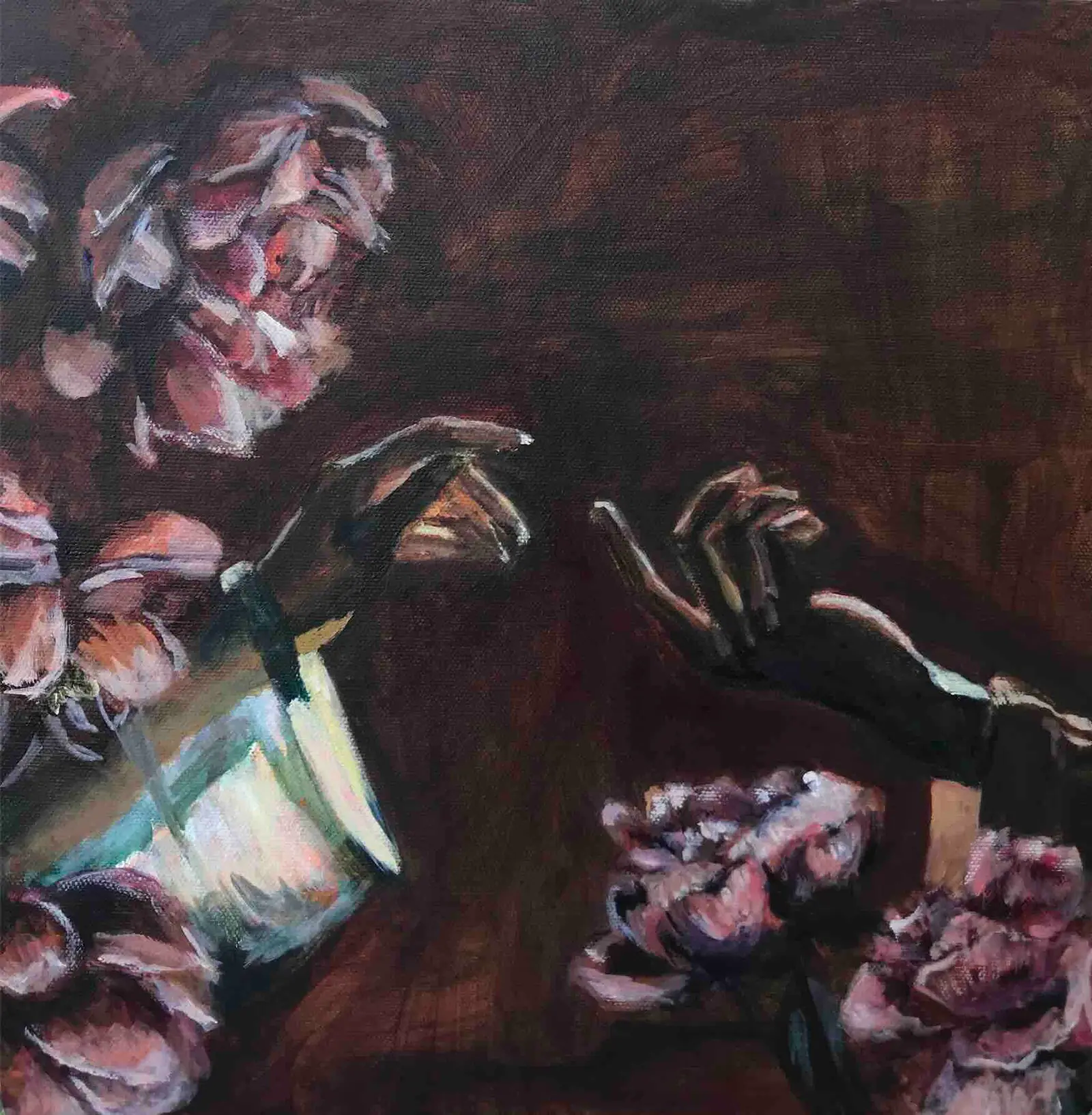
The experience reshaped what her art was about. “That residency experience made clear to me the power of community, which would become one of my primary brand values as an artist. That’s the reason I now love painting hands so much: it’s a way of zooming in on what makes a person unique, of reading and revering the story written into their fingerprints.”
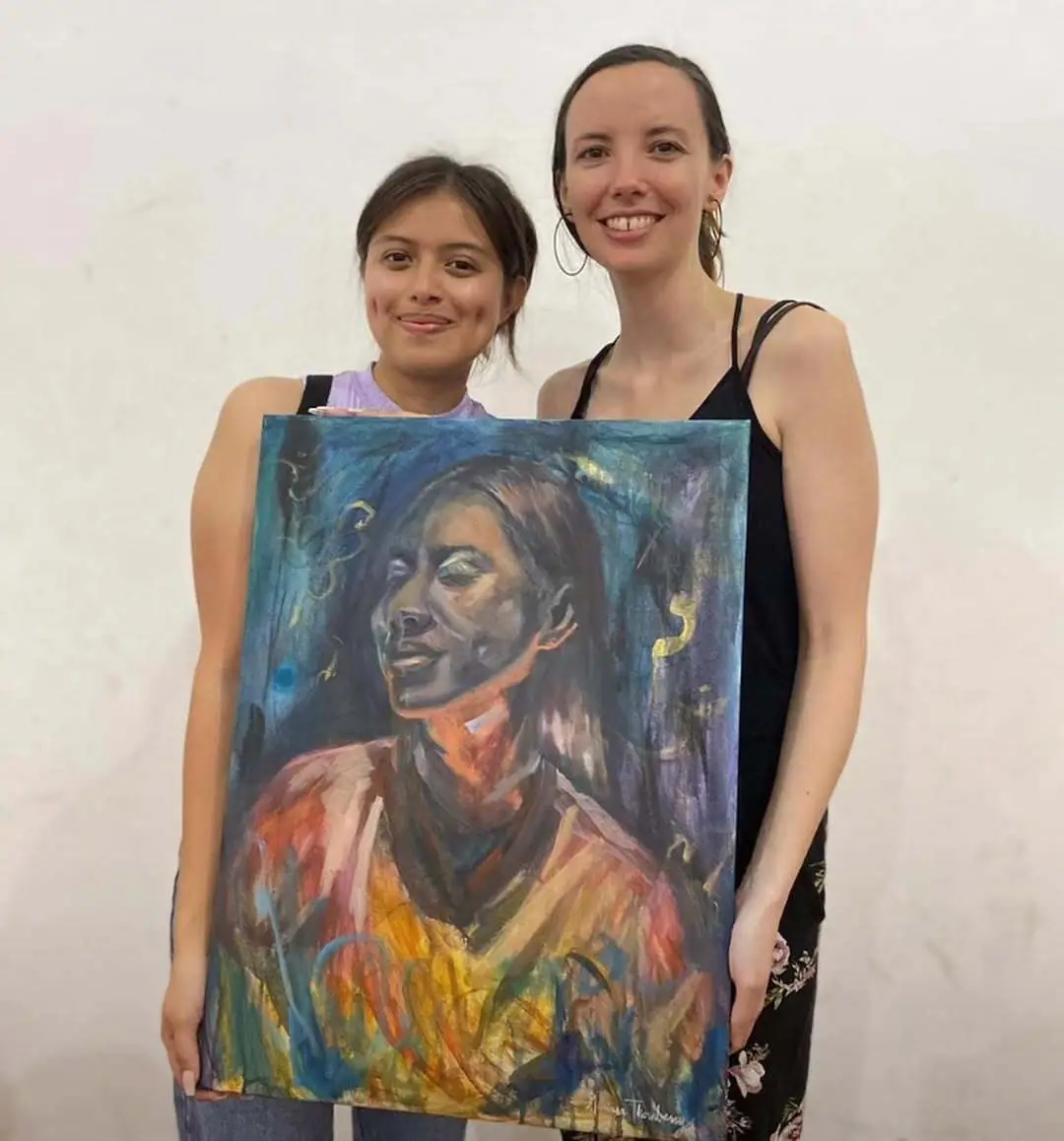
The hardest part was not technique. It was freedom. “The biggest challenge for me was probably time management. It was the first time I was expected to spend the majority of my days creating artwork, and that freedom, if you’re not used to it, can feel intimidating or even paralyzing. You come face-to-face with all your fears of what you make not being good enough. So I had to learn to take that pressure off and simply start painting.”
Her biggest takeaway came at the final exhibit, where staff, teenagers from the program, community members, and donors gathered to see a year of work. Some of her portraits glowed under black light, and when the room went dark and guests lit them with flashlights, the collective gasp stayed with her. “I fell in love with how art allows us to create a shared experience of wonder. Nothing can ever replace that.”
Her advice for anyone considering a residency is to go all in. “A residency is a special container of time and space where you have room to experiment and discover a deeper part of yourself and your voice, so take full advantage of it.” You can see more of her work on Instagram and on her website.
The bottom line on artist residencies
Artist residencies give you time to create, room to grow, and connections that shape your career. They strengthen your voice, raise your professional profile, and let you build work around causes that matter to you. If you are ready to take a bold step, a residency may be one of the most powerful next moves available to you.
The honest part is that competitive applications reward artists who already have a clear voice, a tight portfolio, and the confidence to commit to months of focused work. That is exactly the foundation our free Two Week Challenge is built to start, and the rest of our sell and price your art collection is here when you want to keep building the career a residency can accelerate.
Frequently asked questions
What are artist residencies?
Artist residencies are programs that give artists dedicated time and space to focus on their work, usually away from daily distractions. Most provide a studio and housing, and many add community, mentorship, exhibitions, and sometimes funding or materials. They run in cities, rural retreats, and institutions around the world, and their whole purpose is to help you make your best work.
How do you apply for an artist residency?
Research programs that match your medium, values, and goals, then prepare a cohesive portfolio of your strongest recent work. Write a clear, honest artist statement that explains why this residency matters to you, keep a current artist CV ready, and tailor every application to the specific program's mission and environment. A personalized proposal stands out far more than a generic one.
Do you need an artist CV to apply for a residency?
Yes, most residencies expect a professional CV. It gives the selection committee a fast snapshot of your education, exhibitions, awards, publications, past residencies, and skills. Keep it current by updating it every time you finish a project, show work, or complete a course, so you can apply quickly whenever an opportunity opens.
Are artist residencies free, and do they pay you?
It varies widely. Some residencies are fully funded and even pay a stipend or cover travel, while others charge a fee or ask you to cover your own costs. Many provide a studio, housing, and meals without a cash stipend. Always read each program's terms closely before applying so you know exactly what is and is not covered.
How do you find artist residencies to apply to?
Start with art call sites like ArtCall.org, CallForEntry.org, PublicArtist.org, and AnyArtist.org, and check Res Artis and ArtRabbit for international opportunities. Look at well-known programs and smaller regional ones, since local residencies often have less competition. Apply often and treat each application as part of your practice.
What to practice this week
- Research and shortlist three residencies that genuinely fit your medium, values, and schedule, then note each one's deadline and requirements.
- Build or refresh your artist CV this week so it is ready to send the moment an opportunity opens.
- Draft one tailored artist statement for your top-choice residency that explains, honestly, why that specific program matters to you.
Supplies used
About the author
More from Elli