Artist Personality Traits: Why Some Interactions Drain You and Others Don't
Some artists come home from an opening wiped out. Others come home from a week alone in the studio desperate for a conversation. Both are normal, and both come from the same place: how you process the world.

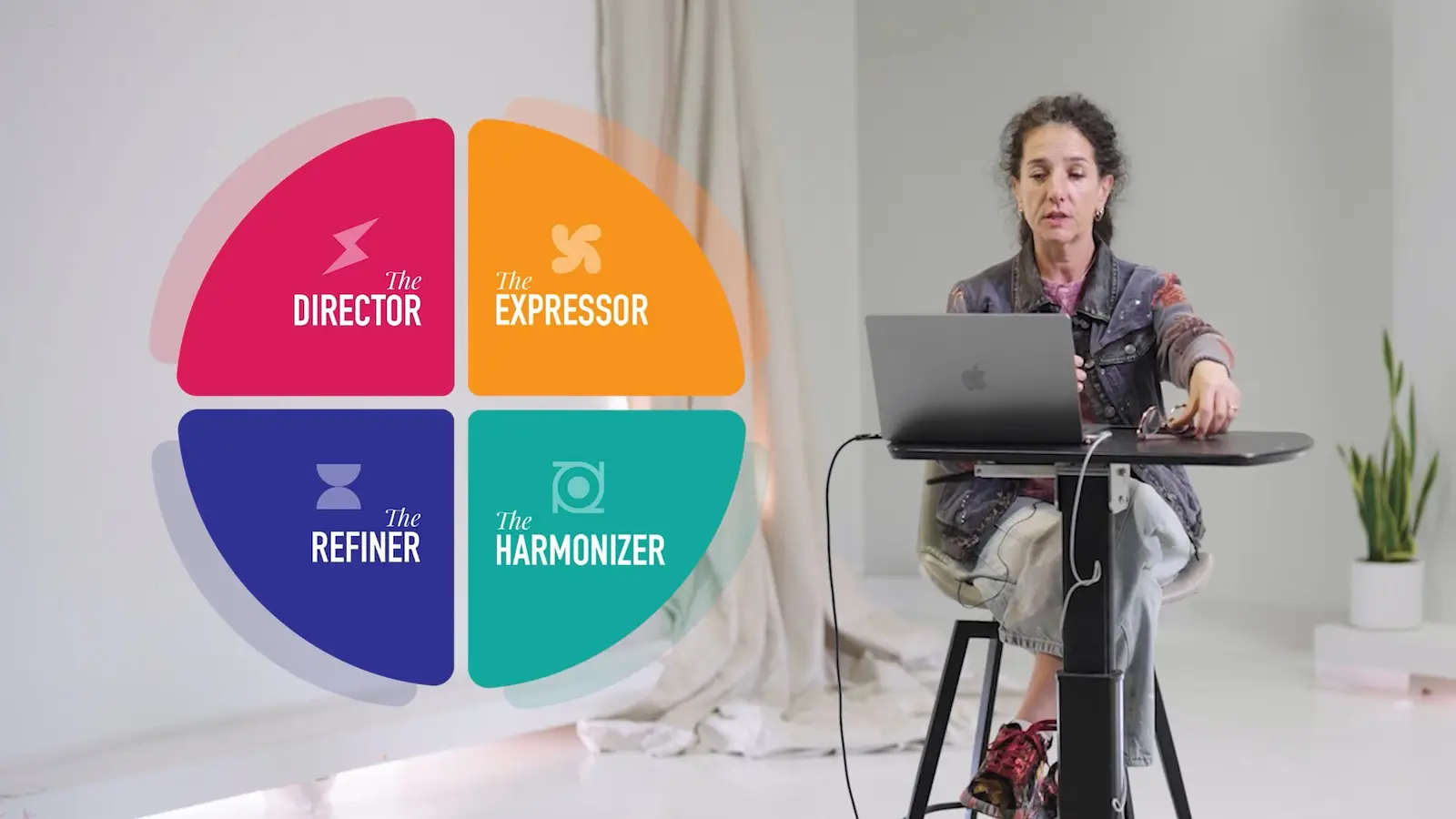
The artist personality traits that make interactions draining are a reflective temperament, which processes thoughts internally, and a strong task focus. Reflective artists need time alone to work out what they think, so a crowd of opinions leaves them confused and tired. The reverse is just as common: active, people-oriented artists are drained by long, lonely hours in the studio. Neither is a flaw. Each is a temperament, and once you know yours you can plan your days around it.
This guide comes from the temperament lessons in our Mastery Program, where we teach artists to build their painting process around how they’re wired, plus our lessons on emotional intelligence for working artists. Here is what drains each kind of artist, why, and what to do about it.
What artist personality traits make interactions draining?
The trait that matters most is where you process your thoughts. In our temperament lessons we split artists into two halves: active and reflective.
- Active artists process externally. To know what they think about something, they talk it through with someone, or they write a pro and con list. Conversation clarifies them.
- Reflective artists process internally. When they listen to a lot of other people, they start losing track of what they actually think. They need to go be alone, turn it over for days, and then they arrive at their answer.
For a reflective artist, a busy opening, a group critique, or a long conversation with a collector is a stack of other people’s thoughts landing on top of their own. That’s tiring in a very specific way. You walk out unsure what you believe about your own painting.
Pace adds to it. Reflective temperaments move, decide and set up their palette slowly. Many were told all their lives to hurry up. Fast talkers who want “the bottom line” right now wear them out, while the slower person drives the fast one crazy in return.
A second trait is task focus. Structure-focused artists get absorbed in what they’re doing and don’t even hear a question asked mid-task. Interruptions cost them more than they cost a people-oriented artist, who happily stops to chat and forgets to finish the text they were writing.
Is it personality or temperament?
It’s temperament, and the difference matters. Your personality can change over time. Your temperament, the way you process the world, stays with you for life. You can mask it and act like a different temperament, but you can’t trade it in.
That’s why plenty of artists look outgoing and still feel drained by people. We see it often: someone is the life of the party, talkative and quick, and then they sit down to paint and want nothing but hours alone with tiny brushes and fine detail. Socially they’ve adapted, maybe for a job that demanded a bold, decisive manner or a family role that needed it. In the studio, the mask comes off.
The rule we teach: how you paint is your true temperament. If your social self and your painting self disagree, trust the painting.
Why does masking your temperament wear you out?
Because you’re running on a borrowed engine. When someone lives for years as a temperament that isn’t theirs, every interaction asks them to perform. Finding out, through their art, that they’ve been living against their nature can feel unsettling at first, and then like relief.
The same thing happens inside the studio. Artists who paint against their temperament feel it as dread about going in, resistance at the easel, and eventually burnout. When they switch to a process that fits how they’re wired, the dread lifts. If you’ve felt that dread, our guide to artist burnout covers the recovery side, and how to design your artistic process from your creative DNA walks through building a process that fits.
Which artists get drained by being alone?
Active, people-oriented artists, the ones we call expressors. For them the solitary studio is the hard part. Hours and hours alone without anyone to talk to empties their tank, the way a crowd empties a reflective artist’s.
These artists tend to paint in shorter stretches: two or three hours, then coffee, then a few more hours, then a conversation with a friend. They join artist groups and paint on FaceTime with other artists. There’s nothing wrong with any of that. If this is you, build community into your week on purpose: paint alongside other artists, meet regularly, and stop treating your need for company as a lack of discipline.
The in-between temperaments are worth knowing too. The harmonizer is slower and reflective but people-oriented. They can spend long hours alone in the studio, often looking more than painting, and they genuinely enjoy visitors and feedback in measured doses. The refiner can disappear into detail for hours and is happiest left alone with a plan and a good source.
Which interactions drain artists the most?
For most artists, the most draining interactions are the ones that touch the painting itself: critique, gallery and licensing meetings, art fairs and comments online. Those are also the ones you can’t avoid if you want a career. Our emotional intelligence lesson treats them as skills you can practice:
- Notice the trigger. If a comment stings, name it to yourself: “I’m feeling overwhelmed,” or “I’m embarrassed.” A sting usually points at an old insecurity, which is useful information.
- Pause before you react. Take a breath. It’s fine to say you’d like to pause the conversation and come back to it.
- Don’t defend the painting during a critique. Listen. Evaluate later. You decide afterward whether to use the feedback.
- Ask a question instead of arguing. Licensing agents and publishers visiting Elli’s studio would sometimes call a palette dated. The move she teaches is to ask what exactly feels dated, because the answer is often small and fixable, like one brick red that should lean pinker. A question turns a verdict into a note you can act on.
- Sleep on hard feedback. There’s no pressure to answer right away, and a night’s sleep changes how it reads.
- Don’t post in the heat of the moment. Online, people say things they’d never say face to face, and replying fast rarely helps you.
For more on giving and taking feedback, see our guide on how to critique art.
Does shyness make artists seem aloof?
Often, yes, and it’s worth knowing. A shy, withdrawn artist at a show can come across as snobby when they’re actually overwhelmed. Elli describes this from her own early career in the lesson: she was so insecure that people took her for a snob, while inside she was only thinking about how out of place she felt.
The way out was small steps, practiced for years: looking people in the eye, smiling, asking about them. Interest in the other person also takes the spotlight off yourself, which is the very thing that makes these moments draining. A specific, generous compliment (“I love that jacket, where did you find it?”) opens a conversation faster than any line about your art.
Is the moody, difficult artist a real personality type?
Mostly no. The tortured, broke, eccentric artist is a story the culture told itself, largely around Vincent van Gogh’s life, and then romanticized through figures like Jackson Pollock. People still meet artists half expecting something to be off about them.
You don’t have to take on that persona to explain needing time alone. Being reflective isn’t the same as being difficult. Today’s artist is a business owner who works with collectors, galleries and students, and the healthiest ones simply manage their energy the way any professional manages a schedule.
How do you protect your energy as an artist?
Protect your energy by matching your days to your temperament instead of fighting it.
- Find your temperament from your painting. Note your pace, whether you like a plan, how long you can paint alone, and whether you want people around while you paint.
- If you’re reflective, process before you decide. Give yourself a day before committing to a gallery, a commission or a critique note. Say so out loud: “Let me think about it and get back to you.”
- If you’re active, schedule people. Put artist meetups, painting calls and studio visits on the calendar so solitude never runs for days.
- Plan recovery after big events. An opening or an art fair weekend needs a buffer afterward: solitary hours for reflective artists, a debrief with a friend for active ones.
- Lean on your opposites. The people we feel safest with tend to be our opposite temperament, the same way the art we love most often isn’t the art we make. A bold, decisive artist often finds a calm, slow friend restoring, and the reverse.
- Keep your identity separate from any one interaction. One awkward conversation or rough critique doesn’t define you as an artist.
When your process, your studio hours and your social life all fit how you’re wired, you’ll have far more energy for both the people and the painting. Knowing your temperament is where that starts.
Frequently asked questions
Why do artists find social interactions draining?
Many artists have a reflective temperament, which means they process their thoughts internally. They need time alone to figure out what they think, so a room full of opinions, questions and small talk confuses them and uses up their energy fast. It isn't a flaw or rudeness. It's simply how a reflective mind recharges, and it usually comes with a gift for deep focus in the studio.
Are all artists introverts?
No. Plenty of artists are active, people-oriented and fast-paced, and for them hours alone in the studio are the draining part. These artists often paint best in a group, on a call with other artists, or in short bursts between conversations. Artists come in every temperament, and the paintings of each one look different.
What is the difference between personality and temperament?
Your personality can change over time with experience and circumstance. Your temperament is how you process the world, and it stays with you for life. You can mask it for years in a job or a family role, but the way you naturally paint tends to reveal your true temperament.
How can a sensitive artist handle criticism without being drained?
Pause before you react, and don't defend the painting while someone is critiquing it. Ask a question instead, such as what exactly feels off to them, so they explain what they mean. Then sleep on it before you decide what to change. Feedback that stings often looks very different the next morning.
Is the moody, difficult artist stereotype true?
It's mostly a myth. The image of the tortured, broke, eccentric artist grew up around a handful of famous lives, Vincent van Gogh's above all, and was romanticized from there. Today's working artists are business owners who deal with collectors, galleries and students every week, and most are thoughtful, steady people who simply need their energy managed well.
What to practice this week
- Look at how you paint, not how you act at work. Write down your pace, whether you like a plan, how long you can paint alone, and whether you want company while you paint. That list tells you your temperament more honestly than any social habit.
- For one week, mark every interaction that left you tired and every one that left you lighter. Look for the pattern: the type of person, the setting, the length.
- Plan one recovery block after your next draining event: an hour alone if you're reflective, a call or coffee with a friend if you're active.
Supplies used

About the author
More from ElliKeep learning