Aesthetic Qualities in Art: What They Are and How to See Them
Every painting you love has something in it that grabbed you before you knew what it was. Those are its aesthetic qualities, and once you can name them, you can paint them on purpose.

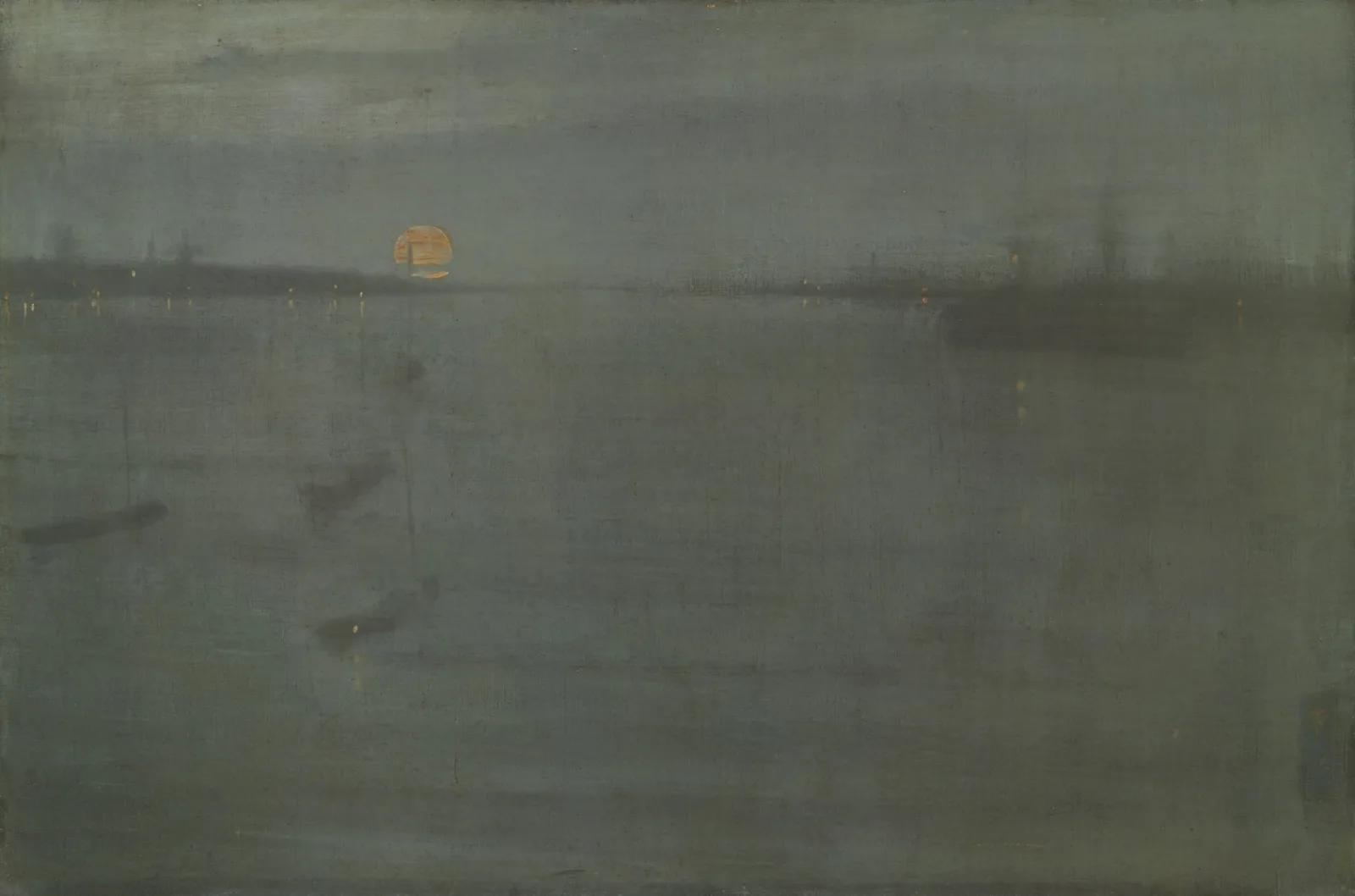

Aesthetic qualities in art are the qualities that make a work beautiful, moving or striking to look at. They’re the color, line, form, texture, light and contrast, rhythm and proportion of a piece, and the mood all of those create together. They’re what grabs you before you’ve even worked out what the painting is of.
Here’s the part most explanations skip. You can learn to see these qualities, name them and then paint them on purpose. That’s the difference between making paintings and making paintings that feel like yours.
What does aesthetic quality mean in art?
An aesthetic quality is any quality you notice with your senses and your taste rather than with a ruler. “Blue” is a fact about a painting. “Moody,” “vivid,” “delicate” and “powerful” are aesthetic qualities, because they describe how the work comes across.
For a long time beauty was the main one people talked about. In 1959 the philosopher Frank Sibley widened the list, arguing that words like graceful, delicate, balanced and garish name real qualities a trained eye can see (Encyclopedia.com has a good overview). That’s why a painting can be eerie, tense or chaotic and still be a great painting.
What are the three types of aesthetic qualities?
Many art classes sort aesthetic qualities into three kinds, and each one matches a different way of judging a work.
- Literal qualities. What the work shows: the subject, how realistic it is, the story it tells. A painting judged this way succeeds when it looks like the real thing.
- Design qualities. How the work is built: the elements of art (line, shape, form, space, value, color, texture) and how they’re arranged (balance, contrast, rhythm, unity, emphasis). A painting judged this way succeeds when the arrangement works, whatever the subject.
- Expressive qualities. What the work makes you feel or think: calm, dread, joy, longing. A painting judged this way succeeds when the feeling lands.
Most paintings you love hit all three. But if you’re trying to understand why one moves you, start with design and expression. That’s where the aesthetic lives.
What are examples of aesthetic qualities in a painting?
Look at the cover of this post, James McNeill Whistler’s Nocturne: Blue and Gold, Southampton Water from 1872. (A nocturne is a night scene.) The literal subject is a harbor at night with a few boats. That’s not why people stop in front of it.
Here’s what’s actually doing the work:
- Color. Nearly the whole canvas is one blue-gray, with one small warm orange moon.
- Contrast. Very low. The lights and darks are close in value (how light or dark a color is), so the eye rests.
- Line. Almost none. Edges dissolve into mist.
- Texture. Thin, washed paint you can see the canvas through.
- Proportion. A tiny moon against a huge empty sky and sea.
- Mood. Still, hushed, a little lonely.
Whistler named many of his paintings like pieces of music (Nocturne, Symphony, Arrangement) to point you at exactly these qualities instead of the subject. You can see this one at the Art Institute of Chicago.
Now flip every one of those qualities: hot color everywhere, hard contrast, thick marks, crowded forms. You’d get a painting with completely different aesthetic qualities about the same harbor.
Which elements create aesthetic qualities?
The elements of art create them. Dimitra Milan, who teaches personal aesthetic in our Mastery Program, puts it simply: aesthetic comes through in form, color, rhythm, line, texture, and light and contrast. “It’s kind of the elements of art, but in images.”
Elli Milan, who teaches alongside Dimitra at Milan Art Institute, adds one more she watches closely: proportion, how big one thing is next to another. A field of tiny yellow flowers has a completely different feel from one giant bloom, even in the same yellow.
If the elements are new to you, the 7 elements of art covers each one, and the principles of art covers how they’re arranged.
How do you see aesthetic qualities instead of the subject?
You look at every image as if it were an abstract painting. Elli teaches this exactly: forget what it is and look at the forms, the composition, the contrast, the color and the light.
That’s harder than it sounds, because your brain wants to name things. Elli’s own example: she loves dogs and doesn’t care for cats as pets. But when she’s looking for beauty, it’s the big cats that stop her. A leopard prowling, a cheetah running across the savanna. She doesn’t want to own one. She’s reacting to power, movement and form.
Two tricks help you get past the subject:
- Pick subjects you have no feelings about. Elli suggests searching for things that are completely unfamiliar to you, and when students are really stuck, she sends them to science photos of cells and extreme close-ups. You can’t like a photo of a cell because of happy memories. All that’s left is rhythm, line and color.
- Notice where you feel it. Elli describes the right reaction as a punch in the gut, a physical “oh, that’s beautiful.” A polite “that’s pretty” doesn’t count.
Why do some paintings energize you and others calm you?
Because aesthetic qualities land differently on different people, and you can learn to tell the two reactions apart. Ask yourself one question as you look: does this make me want to paint, or make me want to rest? Elli and Dimitra call those two reactions energy and the hug.
Energy is the image that makes you want to go paint right now. The hug is the image that makes you feel safe and comforted. Both are real responses to aesthetic qualities, and they’re often opposites.
Elli’s own split is a clear example. What gives her energy is high contrast, a kind of random order in chaos, organic rounded forms, cobalt with gold, and bright red-orange against turquoise. The art she loves to live with is the reverse: soft, minimal, low in color, with one slow poetic line. She loves that art. She just can’t make it, and she doesn’t want to.
Dimitra’s energy runs to pastels inside moody color, iridescent shimmer and double exposure. A still, posed image with little emotion in it feels like a hug to her, even when the subject is one she loves.
This matters for your painting. Elli’s warning is that artists who paint their hug burn out, because it isn’t where their energy lives. Try the Whistler test: does that misty harbor make you want to pick up a brush, or make you want to sit down with a cup of tea? Either answer tells you something.
How do aesthetic qualities come through in your own work?
They come through in two places: what you paint and how you paint it.
Elli makes this point when she teaches themes. For some artists the subject is the voice. For others the subject barely matters, and it’s the way the paint goes down that makes the work unmistakable. And something on your inspiration board isn’t automatically a subject to paint. She once noted that a student might save photos of mountains without wanting to paint a single one, because it was the color, contrast and forms that struck them.
The “how” goes all the way down to a single line. In the first lesson of her drawing course, Elli has students draw with the whole arm, moving from the shoulder, and hold the pencil far back from the tip, lightly. Grip it tight close to the point and you get dark, heavy, stiff lines. Hold it back and loose and you get the light, fluid lines you see in so many fine drawings. Then you practice pressure, pressing down and lifting up so one line runs dark to light to dark.
Delicate, fluid, heavy, broken: those are aesthetic qualities too, and they’re set by how you hold your body before you make a single mark.
How can you find your own aesthetic?
Start collecting images that give you that gut response, then look for the patterns. The colors, contrasts, rhythms and forms that repeat across what you save are your aesthetic. Dimitra says the patterns start to appear somewhere around 50 to 100 images.
We walk through the whole process (and the difference between aesthetic and taste) in painting aesthetic: what it is and how to define yours. If you’re further along and want to turn those patterns into a recognizable body of work, how to find your art style is the next step.
Once you can name the aesthetic qualities in the paintings you love, you stop guessing in front of your own canvas. You know what you’re reaching for.
Frequently asked questions
What are aesthetic qualities in art?
Aesthetic qualities are the qualities that make a work of art beautiful, moving or striking to look at. They include visual qualities like color, line, form, texture, light, contrast, rhythm and proportion, and the moods those create, like calm, power, tension or joy. They're what you respond to before you've worked out what the painting is of.
What are the three aesthetic qualities?
Many art classes sort aesthetic qualities into three kinds. Literal qualities are the realistic subject matter, what the work shows. Design qualities are how the elements of art are arranged: color, line, shape, value, balance and so on. Expressive qualities are the mood, feeling or idea the work gives the viewer. Most strong paintings have all three working together.
What are some examples of aesthetic qualities?
Examples include high contrast or soft, close values; warm or cool color; fluid, delicate lines or heavy, broken ones; smooth or thick, textured paint; symmetry or a random kind of order; organic, rounded forms or geometric ones; and moods like serene, powerful, romantic, playful or melancholy. Words like graceful, vivid, balanced and delicate all name aesthetic qualities.
Is aesthetic quality the same as beauty?
Beauty is one aesthetic quality, but there are many more. A painting can be powerful, eerie, tense, tender or chaotic and still hold your attention. Philosophers use the term for any quality you sense and judge by taste, not one you can measure. So it covers much more than pretty.
Are aesthetic qualities subjective?
Partly. Anyone can point to the high contrast in a painting, but whether that contrast thrills you or wears you out depends on you. That's why two people can stand in front of the same painting and one feels energized while the other wants to walk away. Your own reactions are the map to your personal aesthetic.
What to practice this week
- Pick one painting you love and write one word for each of these: color, line, texture, light and contrast, rhythm, proportion. Then write one word for how it makes you feel.
- Search for photos of a subject you know nothing about, like science photos of cells, and save the ten that grab you hardest. Name what they share.
- Spend ten minutes drawing straight lines, ellipses and circles from your shoulder, holding the pencil far back from the tip, and compare those lines to ones drawn from your wrist.
Supplies used

About the author
More from Elli