Vulnerability in Art: How to Make Vulnerable Art That Actually Connects
The work that moves people is rarely the most polished. It is the most honest. Here is what vulnerability in art really means, why it heals, and how to let it show in your own paintings and drawings.
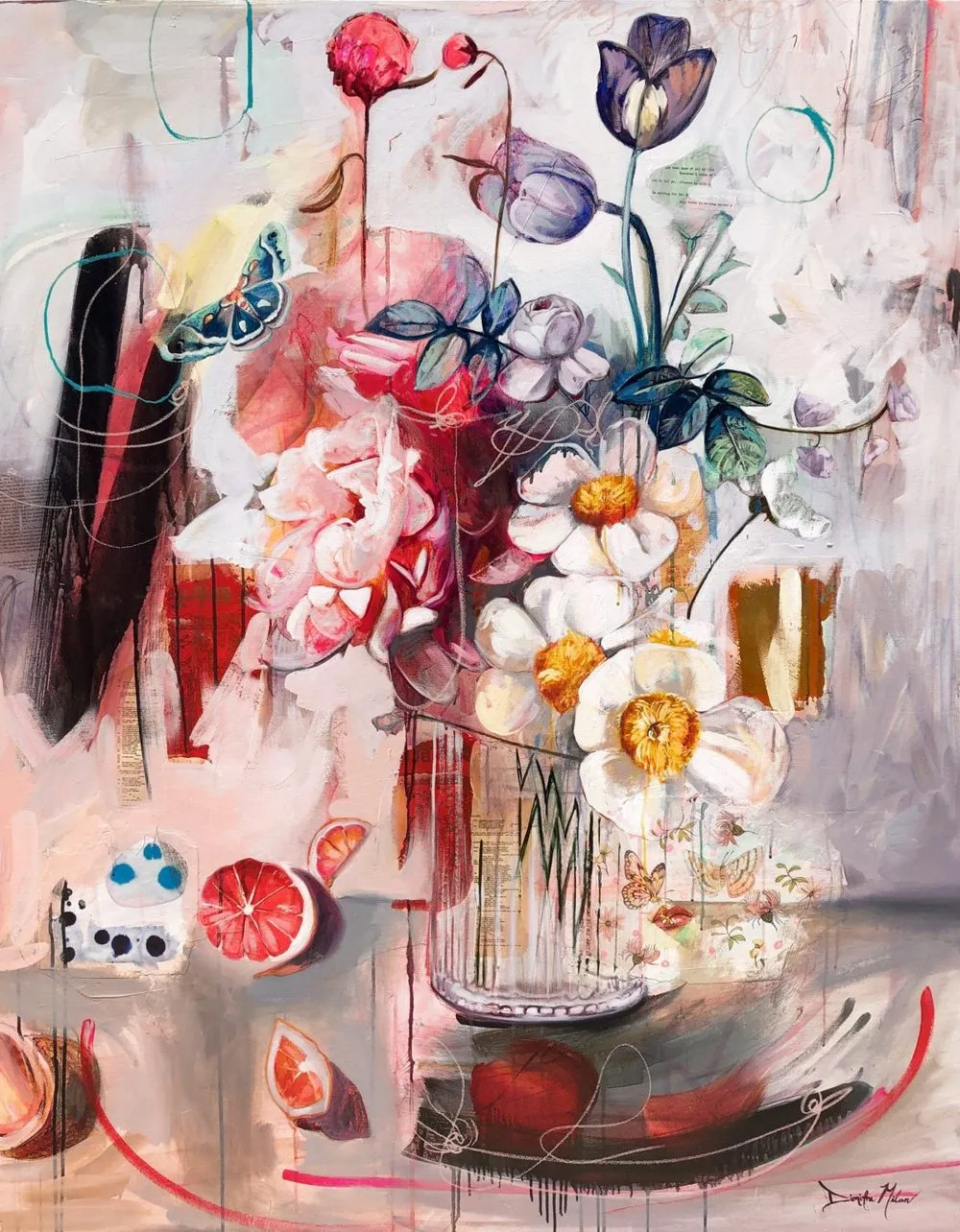
Vulnerability in art means letting your real feelings show in the work instead of hiding them behind clean technique. It is the willingness to put something true on the surface, even when doing so feels exposing. The researcher Brene Brown defines vulnerability as uncertainty, risk, and emotional exposure, and in a painting or a drawing that translates into honest, visible marks rather than a guarded, perfect performance. The strange part is that this is exactly what makes a piece connect. The work that moves people is rarely the most polished. It is the most honest.
That runs against what most people expect when they set out to get better at art. They prepare to spend long hours in front of the easel chasing accuracy and skill. What they do not expect is to be told that the deeper task is learning to be vulnerable. But it is true. You cannot become the kind of artist whose work actually reaches people without taking that step, and when you find the courage to take it, you also tap into something most artists never talk about: the healing power of art, both for you and for the people who see what you made.
What is vulnerability in art?
Vulnerability in art is the practice of letting your genuine, unguarded feeling show in the work rather than smoothing it away. Brene Brown’s definition holds up well here: uncertainty, risk, and emotional exposure. Most people are never taught how to sit with those feelings, so they learn to wall them off, and that same wall goes up in front of the canvas. We make the safe choice, the controlled mark, the version that cannot be criticized. It is comfortable, and it is also the reason so much technically clean work leaves a viewer cold.
Here is the reframe that changes everything. Vulnerability looks like weakness from the inside and like courage from the outside. Brown captured this exactly: it is the first thing we look for in other people and the last thing we are willing to show ourselves. In someone else’s work we read it as daring and honesty. In our own, we fear it reads as not being good enough. But that fear is misreading the room. What resonates with a viewer is the honesty, not the walls. The guarded version is the one that fails to land.
Why is vulnerability important in art?
Vulnerability matters because it is what lets art connect and heal. When you make something open and honest, you create an opening for the person experiencing it to feel that same honesty, and often a kind of recognition. That is the real transformation in art. It does not happen only in the artist. It happens in the viewer too, who sees their own story reflected back and feels less alone for a moment.
There is a reason this works on the body and not just the mind. Art links the mind and body in a way that many other practices do not. Where some forms of processing engage only part of us, making honest work tends to engage all of us at once, which is part of why the act can feel like a release. And just as steady exercise eventually makes you stronger, honest creative work builds a kind of strength too. The most powerful art is usually the most vulnerable art. If you want to go deeper on how a painting carries a story to a viewer, narrative art breaks that down.
Becoming a real artist, then, is not only about making technically perfect paintings. It is about allowing your vulnerability, and the strength of heart it takes to be that open, to show up in every piece you make.
What stops us from being vulnerable in our art?
What stops us is almost always fear of what other people will think. We are afraid of being judged, so we hide our most honest impulses and hand over the polished, defended version instead. The irony is that the defended version is the weaker one. It is in the unguarded marks, the ones you were tempted to fix, that the real artist comes forward and the work gains its influence.
There is a quieter way to hold this. You can decide that you are not going to organize your work around other people’s opinions of you. You can choose to step into your own strength, to allow yourself to heal in the places you have been hurt, and then to share that on the canvas as a kind of victory rather than a confession of weakness. That choice is the whole turning point. If the fear shows up as a nagging sense that you are not a real artist at all, artist imposter syndrome is worth reading, because that voice is far more common than anyone admits, and it lies.
How do you express vulnerability in your painting and drawing?
You express vulnerability by stopping the instinct to hide and using three concrete habits in the work itself. None of them require a dramatic subject or a painful story. They are simply ways of letting honest feeling reach the surface.
- Do not blend all your brushstrokes away. The reflex to smooth every stroke into invisibility also smooths your feeling out of the piece. A brushstroke is evidence. Through it, the viewer can read whether you laid the paint down delicately, or angrily, or calmly. When you blend that away, you erase the record of what you felt while you worked. So let the marks be seen. Leaving visible, expressive marks is also a craft you can practice on purpose, and texture painting techniques is a good place to build that habit.
- Let the work tell a true story. Everyone has a story, and so does the person who will eventually stand in front of your painting. Often the reason a piece resonates is that you and the viewer share something underneath the image. You might think you are only painting a landscape or a vase of flowers, but those flowers carry a story. They are, in a quiet way, you. The feeling lives in the brushstrokes, in the colors you chose, and in the way you laid the paint down.
- Let the art be a bridge between you and the viewer. Treat the work as an honest connection rather than a performance. Pain and difficulty can only stay hidden in the dark, and painting them brings them into the light where both you and the viewer can finally look. Art creates a kind of safe, meditative space for exactly this, which is part of why making honest work is recognized as a genuine form of emotional processing.
Notice that vulnerability here is not the same as choosing sad or shocking subject matter. A quiet still life can be far more vulnerable than a dramatic scene painted with a guarded hand. The honesty is in how you make the marks, not in how heavy the subject is.
How do you start making more vulnerable art today?
You start small, in private, with one honest mark. The fastest way past the fear is to remove the audience entirely. Make a study you never intend to show anyone, and let yourself put down the stroke you would normally smooth away. Then paint one small piece without blending a single brushstroke, so the whole surface stays a visible record of how you felt. After that, choose a subject that carries a real memory for you, even a simple one, and paint it with that feeling in mind rather than just copying how it looks.
These first attempts will feel exposed, and that feeling is not a sign you are doing it wrong. It is the sign you are finally doing it right. If the fear of the blank surface is part of what keeps you from starting at all, how to overcome creative block addresses the deeper version of that struggle, and discovering your own honest art style tends to follow naturally once you let the real feeling through.
Quick recap
Vulnerability in art is the willingness to let your true feeling show instead of hiding it behind polish, and it is the thing that makes work connect and heal. You build it by leaving your brushstrokes visible, letting the piece carry a true story, and treating the work as an honest bridge to the viewer. You do not need a dramatic subject. You need to stop defending and start telling the truth in paint.
If you want a structured, supported way to make your first honest pieces instead of just thinking about them, our free Two Week Challenge is built to get a brush in your hand and the first real marks on the surface. And when you want to keep going on the inner side of this work, the rest of our creative block and identity collection is here. The bravest thing you can do as an artist is let yourself be seen. It is also the thing that makes your work matter.
Frequently asked questions
What is vulnerability in art?
Vulnerability in art is letting your real, unguarded feelings show in the work instead of hiding them behind clean technique. Researcher Brene Brown defines vulnerability as uncertainty, risk, and emotional exposure. In a painting or drawing, that means leaving your honest marks visible and putting something true on the surface, even when it feels exposed, because that honesty is what a viewer actually connects to.
Why is vulnerability important in art?
Vulnerability is what makes art connect and heal. When you are open and honest in the work, it creates an opening for the person viewing it to feel seen too. Polish alone does not move people. Honesty does. The most powerful art is usually the most vulnerable art, because it resonates with a viewer's own story rather than just impressing them with skill.
How do you make vulnerable art?
You make vulnerable art by stopping the instinct to hide. Leave your brushstrokes visible instead of blending every feeling away, let the piece carry a true story that matters to you, and treat the work as an honest bridge to the viewer rather than a performance. You do not need a dramatic subject. You need to put something real into how you make the marks.
Can vulnerability in art be healing?
Yes. Art connects mind and body in a way that few other activities do, and painting something painful can move it out of the dark and onto the canvas where you can finally look at it. The act of making honest work is a recognized form of emotional processing. Both the artist making it and the person viewing it can feel that release.
Does vulnerable art have to be sad or dramatic?
No. Vulnerable art is not about painting trauma or choosing heavy subjects. A vase of flowers or a quiet landscape can be deeply vulnerable if your real feeling lives in the brushstrokes, the colors you chose, and the way you laid down the paint. Vulnerability is about honesty in how you make the work, not about how dramatic the subject is.
What to practice this week
- Paint one small piece and do not blend a single brushstroke. Let every mark stay visible so the viewer can read how you felt when you made it.
- Pick a subject that carries a real memory or feeling for you, even a simple one, and paint it with that feeling in mind rather than just copying its appearance.
- Make one honest study you never plan to show anyone. Removing the audience is often what lets the first truly vulnerable mark come out.
Supplies used
About the author
More from ElliKeep learning