How to Promote Your Designs on Marketplaces So Buyers Actually Find Them
Uploading a design to a marketplace puts it in a pile with millions of others. Here's how artists get theirs seen, and why the marketplace should never be the only place you sell.
A marketplace gives your designs a store with shoppers already inside. It doesn’t give them a spotlight. The artists who sell there treat the listing as the start of the promotion, not the end of it.
Why don’t designs sell on a marketplace by themselves?
Because nobody sees them. Etsy, print-on-demand sites (which print and ship each order for you) and online art galleries hold millions of listings, and their search shows buyers the ones that already get clicks and sales. A brand-new listing can sit at zero views for weeks, at the back of that line.
So the first buyers almost always come from you: your followers, your email list, people who met you at a show. Their clicks and purchases are what tell the marketplace your listing is worth showing to strangers. Promotion on a marketplace is mostly about earning that first push, then making each listing easy to choose once a stranger lands on it.
If you’re still deciding which kind of marketplace fits your work, our guide on how to sell art online compares them, from your own website to curated galleries.
What kinds of marketplaces can you promote designs on?
Three kinds, and each one needs a slightly different push.
- Handmade and design marketplaces like Etsy. You run the shop. You make or order the product, ship it and set the price. Buyers search for gifts and decor, so your listing words do a lot of the work.
- Print-on-demand sites. You upload a design, and the site prints it on paper, metal, clothing or home goods and ships each order. There’s no stock to hold, but you earn less per item and control less of the print quality. Order a sample of your own design before you promote it.
- Curated art marketplaces. They vet artists and reach collectors who pay more for originals. They take a bigger cut and fit best once your pricing is set.
Whichever you pick, read its current fee page before you price anything. Etsy, for example, charges a small fee per listing plus a percentage of each sale, and more when the sale comes through its offsite ads. Those numbers change, so check them yourself.
How do you make your shop recognizable?
Make everything look like one artist made it. We teach this in the Mastery Program, Milan Art Institute’s year-long course for painters, in a lesson on design assets. The point is simple: when your fonts, colors and photos match everywhere, a buyer trusts you sooner and your art looks worth more to them, so your price feels fair.
On a marketplace that means:
- One style across the shop. A shopper should know your designs belong together before they read a word. If you’re painting in three different directions, pick the one that’s most you and start there.
- Your signature as your logo. You don’t need a separate logo. Scan your signature, make it a clean file and put it on your banner and packaging.
- One profile photo everywhere. Use the same photo of your face on the marketplace, Instagram, YouTube and your website, so people recognize you from one platform to the next.
- The same colors and fonts. Keep them in one place so every banner, listing graphic and social post matches. The lesson uses Canva, a free design app, for this: you save your colors, fonts and signature once in its brand kit and reuse them on every graphic.
That first point matters more than it looks. Dimitra Milan, a working painter who co-teaches the Mastery Program, explains in her Creative DNA workshop that every artist has one of four natural temperaments (Power Impact, Raw Earth, Beauty Romance or Whimsical Pop) that shows up in their colors, materials and pace. Artists who fight it end up with a shop that looks like four different people made it. Artists who lean into it get a cohesive body of work, and cohesive is what a shopper can remember. If you’re not sure what yours is, our guide to designing your artistic process from your creative DNA walks through all four.
How do you write listings that buyers find?
Write for the person typing into the search box, not for yourself. Your painting might be called “Morning Hymn,” but nobody searches for that. They search for “watercolor hummingbird print” or “blue abstract wall art for living room.”
- Title with the buyer’s words first. Put the subject, medium and product near the front: what it is, what it shows, where it goes. The poetic title can come after.
- Use every tag the site gives you. Think in phrases a shopper would use: the room, the style, the color, the occasion (“gift for a gardener,” “nursery wall art”).
- Open with the design in use. The first photo decides the click. Show the print on a wall or the design on the product, at a believable size. A painting floating on a white background is hard to picture in a home.
- Show the size. A room mockup where the piece is the right size for the wall answers the question every buyer has: how big is it really?
- Answer the questions in the description. Size, paper or material, how it ships, and whether it’s framed. Every question a buyer has to ask is a chance for them to leave.
How do you send your own traffic to a marketplace listing?
Point your existing audience at it, every week. The marketplace can’t promote a shop it doesn’t know is good yet, so you have to start the line.
- Take photos while you paint. In her lesson on designing your ideal day, Dimitra describes spending the end of each studio day photographing her process, then putting that content together into posts, emails and products once a week. Process shots and finished pieces give you something to post that links back to the listing.
- Use one link hub. Instagram and TikTok let you show one link on your profile. Make it a page that lists your shop, your email signup and your newest release keeps people from getting lost. The design-assets lesson recommends a tool like Linktree for this.
- Pin your designs. Pinterest works like a search engine for home decor and gifts. Save a photo of your design in a room as a pin that links to the listing, and it can keep sending people for months.
- Tell your email list first. These are the people most likely to buy, and their early purchases are what help the listing show up for strangers. No list yet? Start one now with a free signup form on your link page. You can reach everyone on a list, which you can’t say about followers.
- Bring the QR code offline. If you do art fairs, a sign with a QR code to your email signup turns booth visitors into people you can tell about the next release.
For more ways to reach buyers beyond the marketplace, see how to promote your art.
When should you release new designs?
In planned collections, a month or two ahead. Dimitra plans her product and print releases one to two months before the release date: samples first, then a full month of teasing the collection in content and emails before it goes live. A launch with a date gives you a reason to post and email. A design uploaded on a random Tuesday with no plan gives you nothing to say.
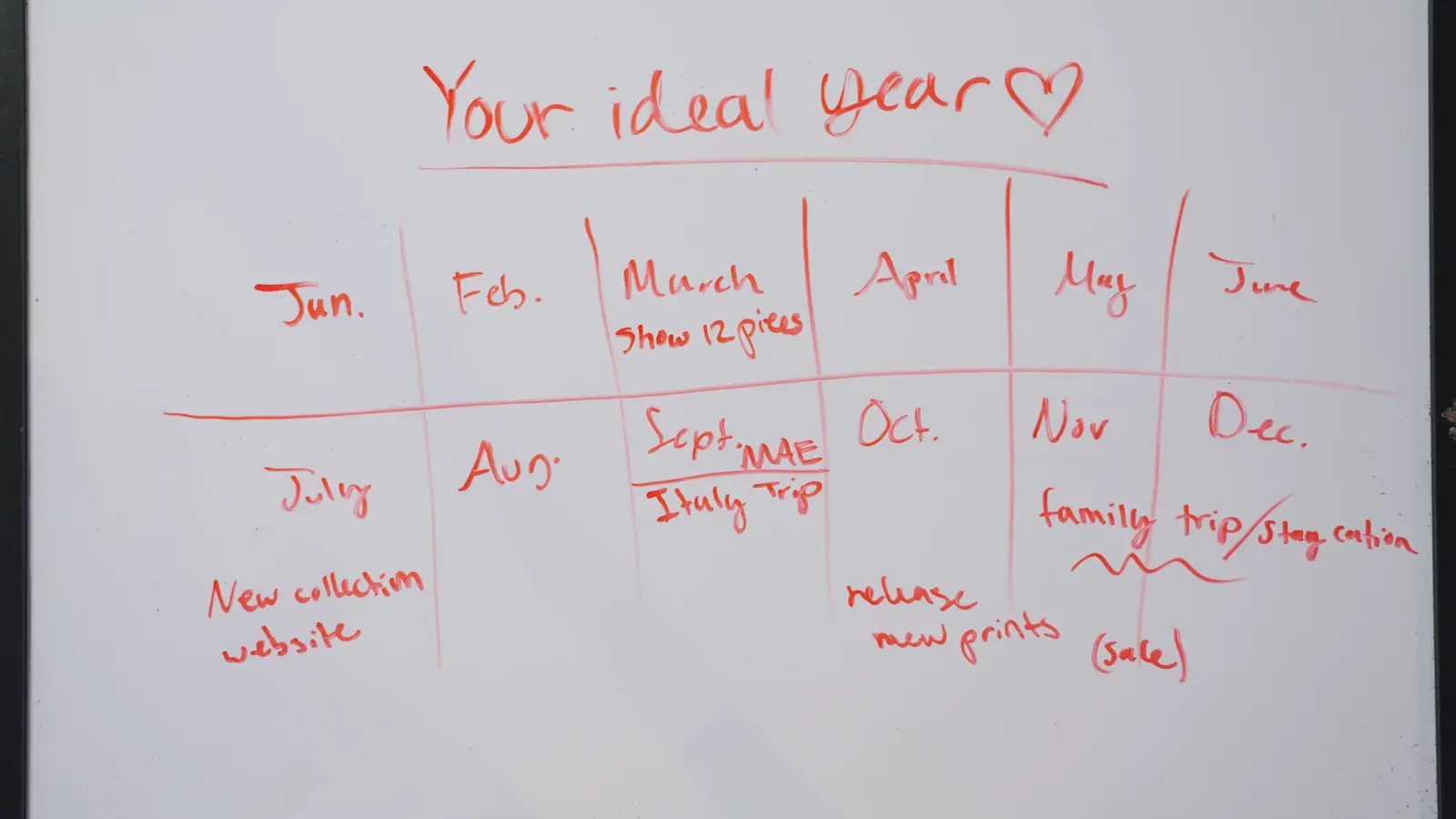
Plan around the gift season too. In the same lesson she points out that from about September through December many people want meaningful gifts, so it’s a strong time to release new prints or products even if you never run a sale. Mark your release months on one page for the year, then count backward to the date you need samples in hand.
How do you promote without losing your painting time?
Put painting first and fit promotion around it. Dimitra’s rule is that when promotion takes over, the art stops, and without new work there’s nothing to promote. She keeps one admin day a week for writing emails and planning posts, and protects other days for painting only.
A simple version for a marketplace shop:
- One admin block a week to list new designs, answer messages and schedule posts.
- Ten minutes a day to capture process photos while you paint.
- Release dates on the calendar, so promotion has a start and an end instead of running in the background all year.
Should a marketplace be your only shop?
No. Use it to be discovered, and build something you own beside it. A marketplace sets the rules, takes a cut and keeps the customer relationship. It can change its fees or its search overnight.
Dimitra’s own path shows the balance. In her Creative DNA workshop she describes starting out with a publishing company that placed her paintings in galleries across the US. After about two years she wanted to make and sell her own prints directly, because her social media was growing and she saw buyers she couldn’t reach through the publisher. She found the answer in doing both, not in leaving one for the other.
The same works on a marketplace. Let it bring strangers to your designs, and give every buyer a reason to join your email list, so the next release goes to people you can reach yourself. Our guide on how to sell art prints covers what to sell once they’re there.
Your next step
Pick your three strongest designs that clearly belong together. Rewrite their titles in a buyer’s words, give each a first photo that shows it in a room at true size, and tell your followers and your list about them this week. Then put your next release date on the calendar.
A marketplace can only sell what you’ve already painted. If you want the paintings behind your designs to be stronger, that’s the part we can help with.
Frequently asked questions
How do I get my designs noticed on a marketplace?
Make the shop look like one artist made it, title and tag every listing in the words buyers search with, open with a photo that shows the design in use at true size, and bring your own audience to it from social media and email. Marketplaces show buyers the listings that already get clicks and sales, so the first visitors usually have to come from you.
Is it better to sell art on Etsy or on a print-on-demand site?
They do different jobs. On Etsy you run the shop: you make or order the product and ship it, and you set your own price. On a print-on-demand site you upload the design and the site prints and ships each order, so there's no stock to hold, but you earn less per item and control less of the quality. Many artists start with print-on-demand to test which designs people want, then sell the winners as prints they control.
How many designs should I upload to start?
Enough to show a clear style, not everything you've ever made. A small, cohesive collection of related designs tells a shopper who you are faster than fifty unrelated ones, and it gives you something to promote as a release. Add new designs in planned batches.
Do I need a logo to sell on a marketplace?
No. Your signature can be your logo. What matters more is that your shop banner, profile photo, colors and fonts match everywhere you show up, so a buyer who saw you on Instagram recognizes you on the marketplace.
What do marketplaces charge artists?
It varies by platform and changes often. Etsy, for example, charges a small fee per listing plus a percentage of each sale, and more when a sale comes through its offsite ads. Print-on-demand sites usually pay you a margin or royalty on each item instead. Read the current fee page before you set your prices.
What to practice this week
- Open your shop and the profile you post from most. Write down every place the colors, fonts, name or photo don't match, and fix one this week.
- Rewrite the title of your best design using the exact words a stranger would type to find it, not the name you gave the painting.
- Take your last year on one sheet of paper and mark two months for new releases. Count back six weeks from each one and write the start date for samples and photos.
Supplies used
About the author
More from ElliKeep learning