Meet Karen Chang: From a Tech Career She Hated to Painting for a Living
Karen Chang spent ten years on the practical path and felt like she was waiting to die. Three years after starting the Mastery Program, she is a full-time professional artist. Here is her story, in her words.
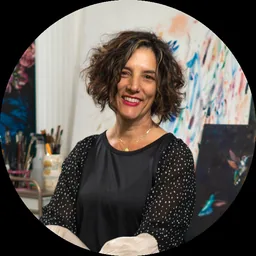
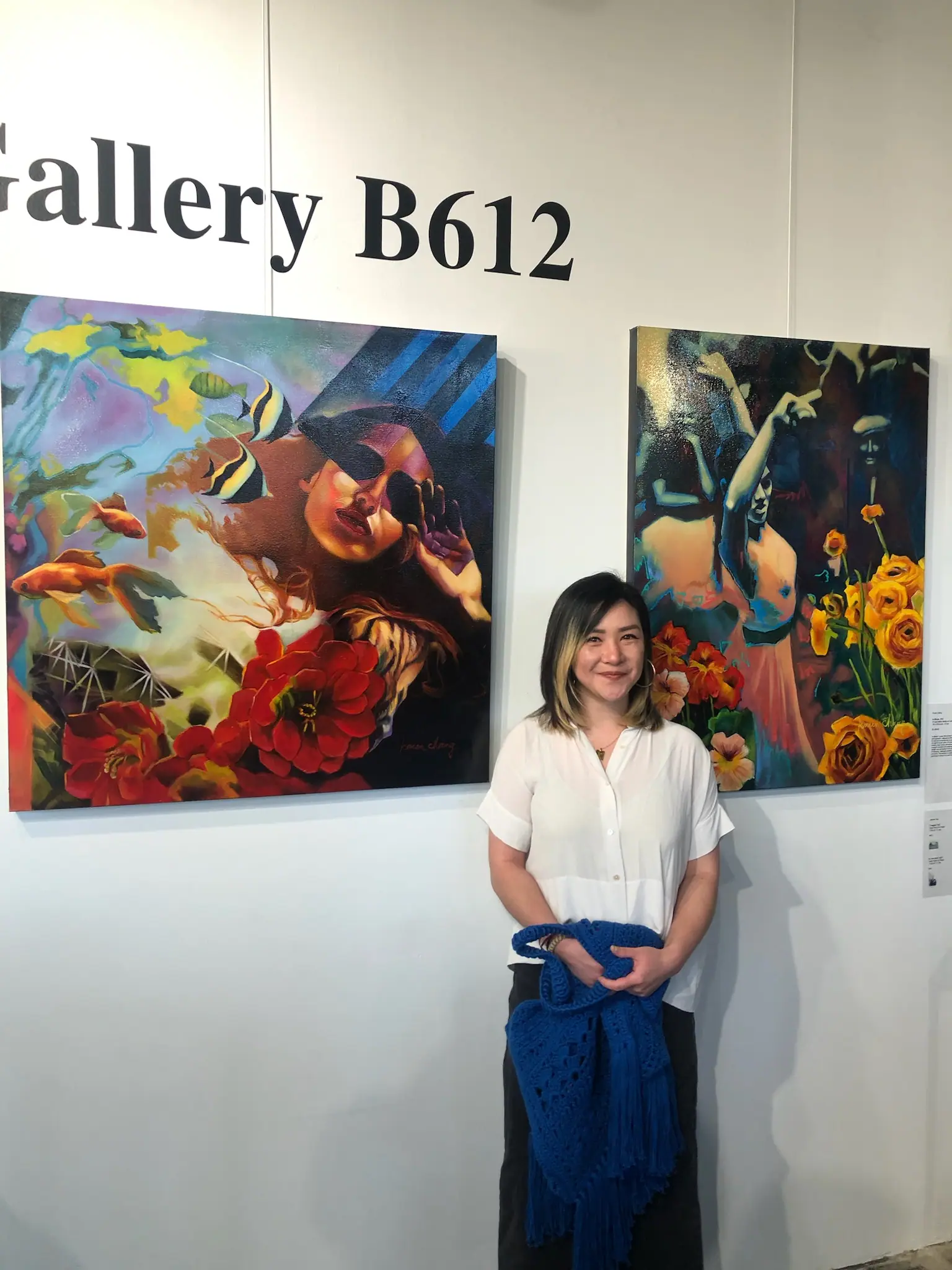
Karen Chang traded a tech career she hated for life as a full-time artist. When she started the Mastery Program in 2023, she was still working a full-time job in tech that paid well but that she hated. Three years later she is a full-time professional artist, and in her first year she earned $55,000 from her work, won multiple awards, held two solo exhibitions, and landed gallery representation in Seattle. This is her story, in her own words.
I had spent the last ten years working toward a PhD, following the practical route, the one I was supposed to like, the one I was supposed to think was successful. I didn’t have any other career paths modeled for me. There was the tough one in academia, or the boring one in the corporate world, and that was it. I had no hope. I felt like I was just waiting to die.
I knew I loved painting, but I had no examples of how to actually make a living from it, and I couldn’t see that it was even possible. I’d resigned myself to the idea that artists don’t make money, or that it was too late for me to go back to a four-year art school, so art could only ever be a side hobby while I made my money some other way. I’d never shown my work, let alone sold it. My skills were mediocre at best.
Fast forward three years. I’ve been a full-time professional artist for a year now. I finished the Mastery Program in September 2025, and I actually started showing and selling my work that April, before I even graduated. In my first year I earned $55,000 from art alone, won multiple awards, held two solo gallery exhibitions, gained gallery representation in Seattle, and found a thriving artist community. I have full confidence and a real, realistic path forward. Now it’s just a matter of hard work and persistence, but I finally know the life I want is possible.
What was your life like before you started?
I was burnt out. I’d been working a job I didn’t love for six years, and honestly, I was burnt out before that too, back in grad school. I just kept going because it was the expected path. It was the prestigious one, the one that made my parents proud. But six years in, I knew my body couldn’t take it much longer. My soul was dying, and I was deep in a depression.
I started painting after work as a way to avoid drinking, because painting was the only thing I knew I really loved doing. Time didn’t exist when I was painting. I’d start at 6 pm, exhausted from a full day of work, and come out of it at 11 pm completely refreshed and re-energized. That’s when I knew: life didn’t have to be such a drag, if only I could paint for a living.
So I started looking. I watched YouTube, I took classes online and through the community college to improve my skills. At that point I was only painting in acrylics or watercolors for fun, photos I’d taken, pictures of my dog, still lifes of flowers I’d bought. The images were fine, but kind of boring. Just representational.
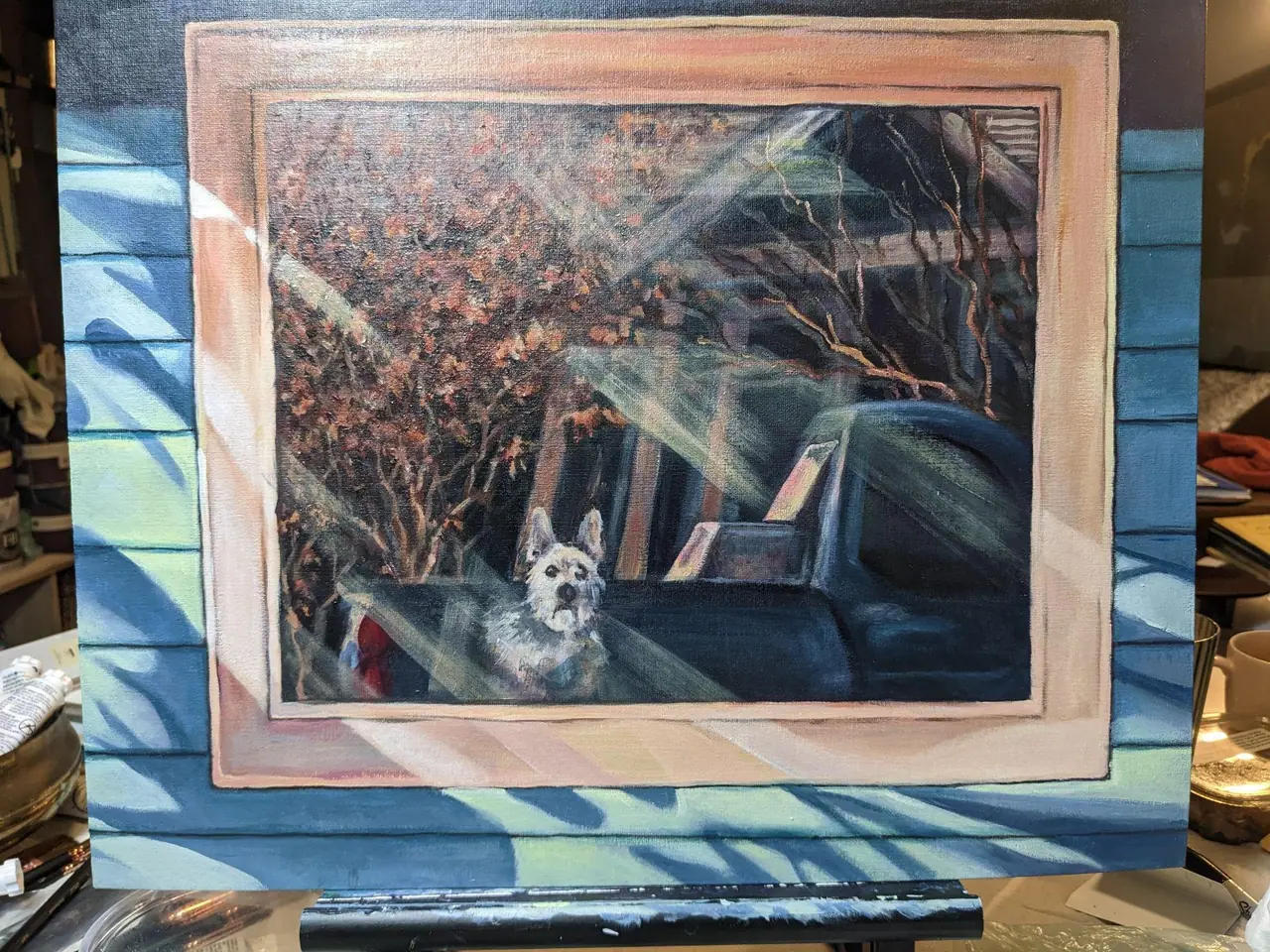
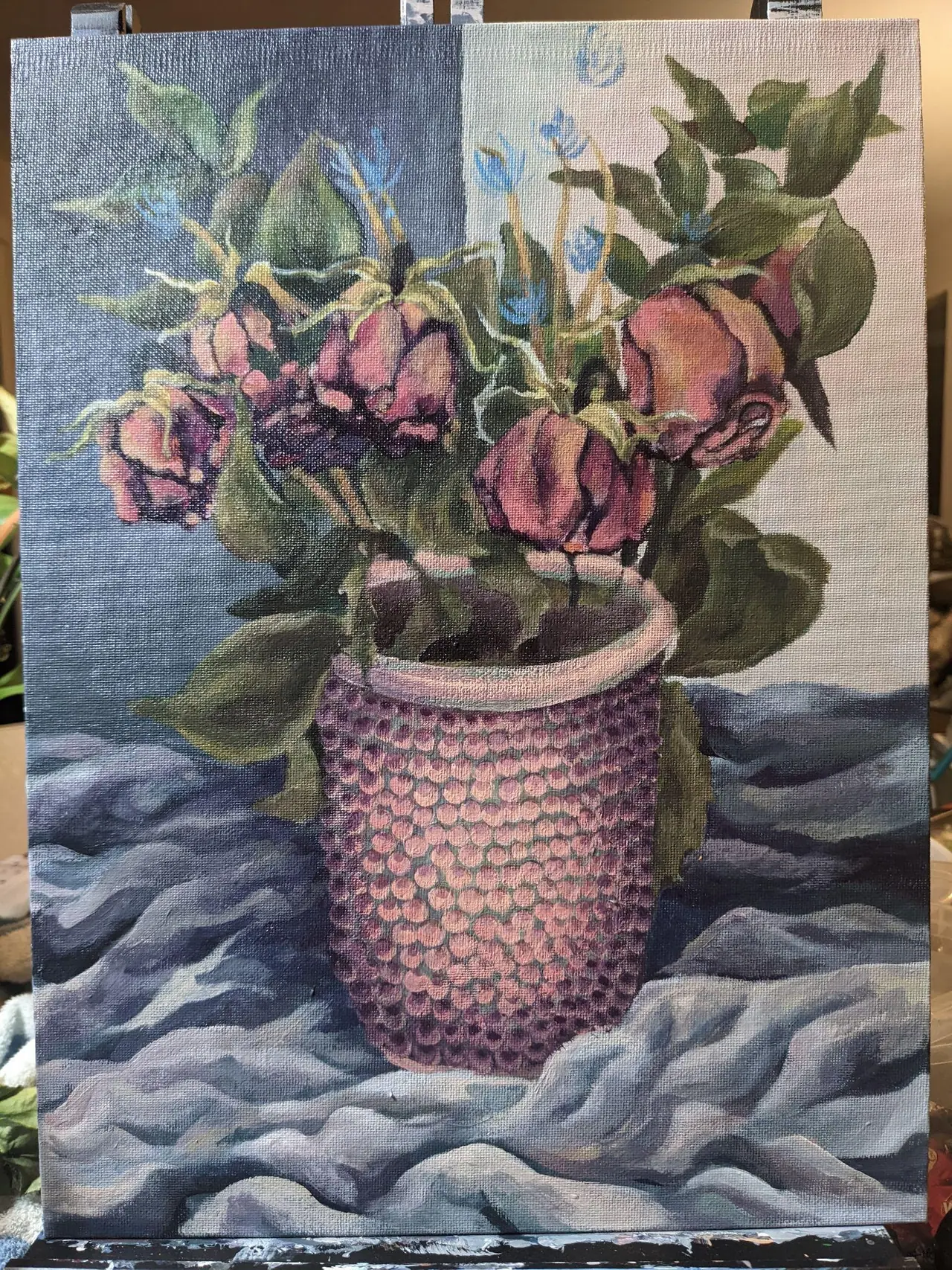
But I am a practical person with a real mortgage to pay. There was almost no information anywhere on actually making a living as an artist. It was a mysterious world, and I had no idea how to get into it. And there was a second gap. Most of the skill-building classes don’t teach you to be creative. They teach you to paint what you see. There was almost nothing on developing your own voice as an artist. Two things felt completely opaque to me: how to make a living as an artist, and how to develop a unique artistic voice. Both were essential. And I could only go so far on my own.
What made you decide to enroll in the Mastery Program?
The curriculum was exactly what I’d been looking for, because it covered both discovering your voice and the business side of being an artist. I kept seeing ads on YouTube for the Milan Mastery Program. Honestly, it sounded too good to be true. I was very skeptical. It seemed really market-y and gimmicky and pushy, and I wasn’t sure if there was real substance behind it or if it was all just a sales tactic.
But no other school I could find covered both of those things, finding your voice and the business of art. So I did the research. I started watching their YouTube videos and was blown away by how much value they gave away for free, and by the fact that they tackled things from a practical viewpoint, not just an artistic one. There was genuinely no alternative to evaluate against for the kind of training I wanted. It was them or nothing.
I had no idea how much I would actually get from this program. It is not just an art school. It teaches mindset, and belief, and the value of doing, and persistence, and working toward a vision. Growth as an artist and growth as a person came hand in hand. I’m finally on a path worth fighting for, and I never would have believed it was possible if it weren’t for this program.
What was the hardest part of the journey?
I struggled, and that was part of the learning. Before, I was doing easy work. Now I had to stretch beyond my comfort zone, learn new materials and methods, let go of perfection, embrace the mess, and produce bad work. It was humbling, and there were many times I wanted to give up. If you have ever felt that pull to quit, our honest look at the fear of failure in art and the ugly stage of painting will sound familiar.
Three things kept me going. The first was the community. Posting my art, as scary as it was, became the first safe place I had to practice being seen. The support, vulnerability, and encouragement from other artists made it possible for me to eventually share my work with the world.
The second was group coaching, which I accessed through the Milan Art App after signing up for the Mastery Program. The coaches helped me zoom out when I couldn’t see clearly. They reassured me that growth takes time and helped me recognize my voice even when I couldn’t.
The third was mentorship, and that was the game changer. I waited too long to get a mentor, and that’s my only regret. My mentor, Elmira Solo, helped me refine my artistic process, align my work with my personality, build a sustainable business model, and improve my paintings at a deeper level. Signing up for a mentor was one of the best decisions I’ve made for my art career. My only regret is that I didn’t do it sooner. One painting she helped me refine went on to win a $4,000 grand prize.
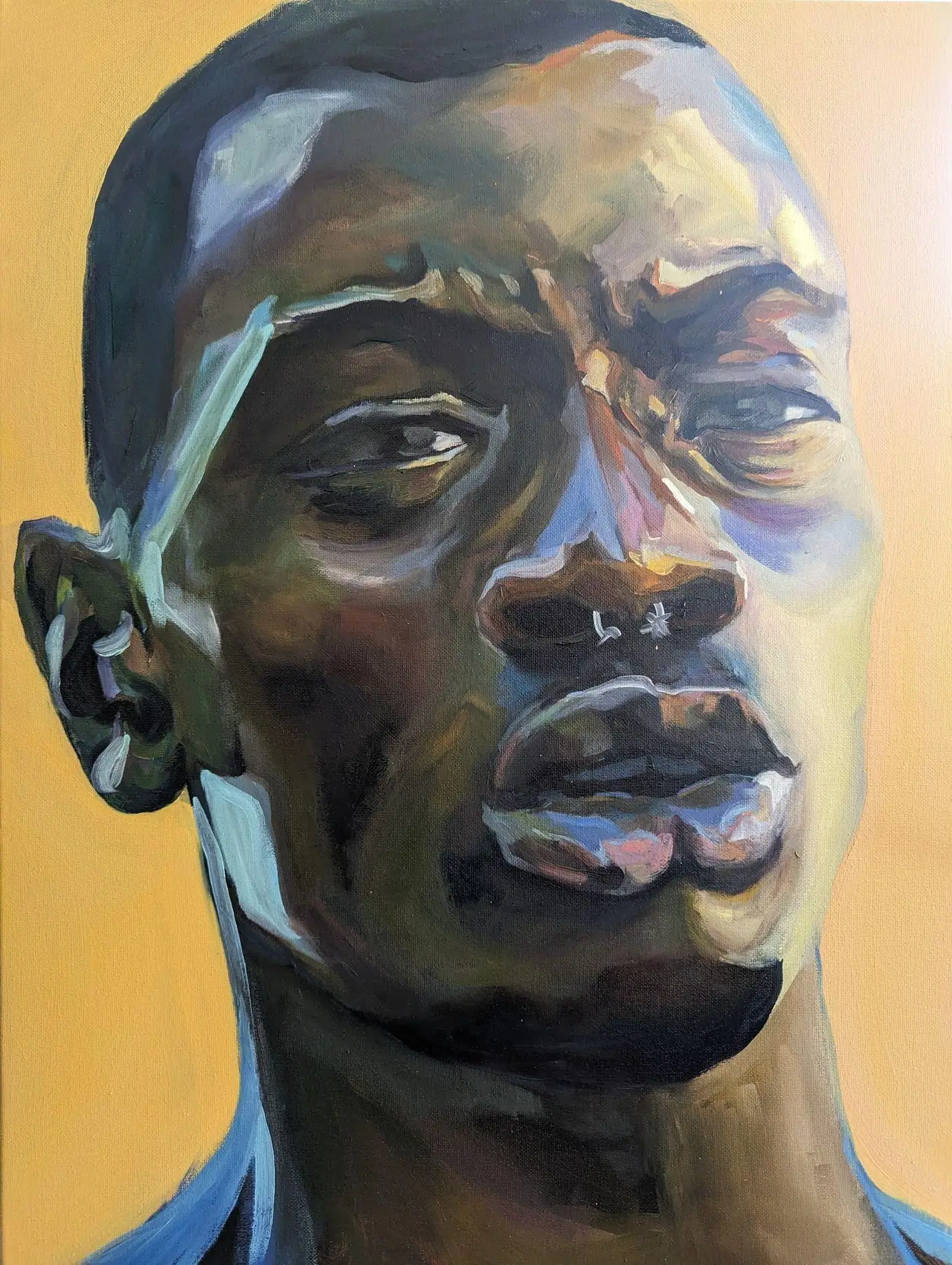
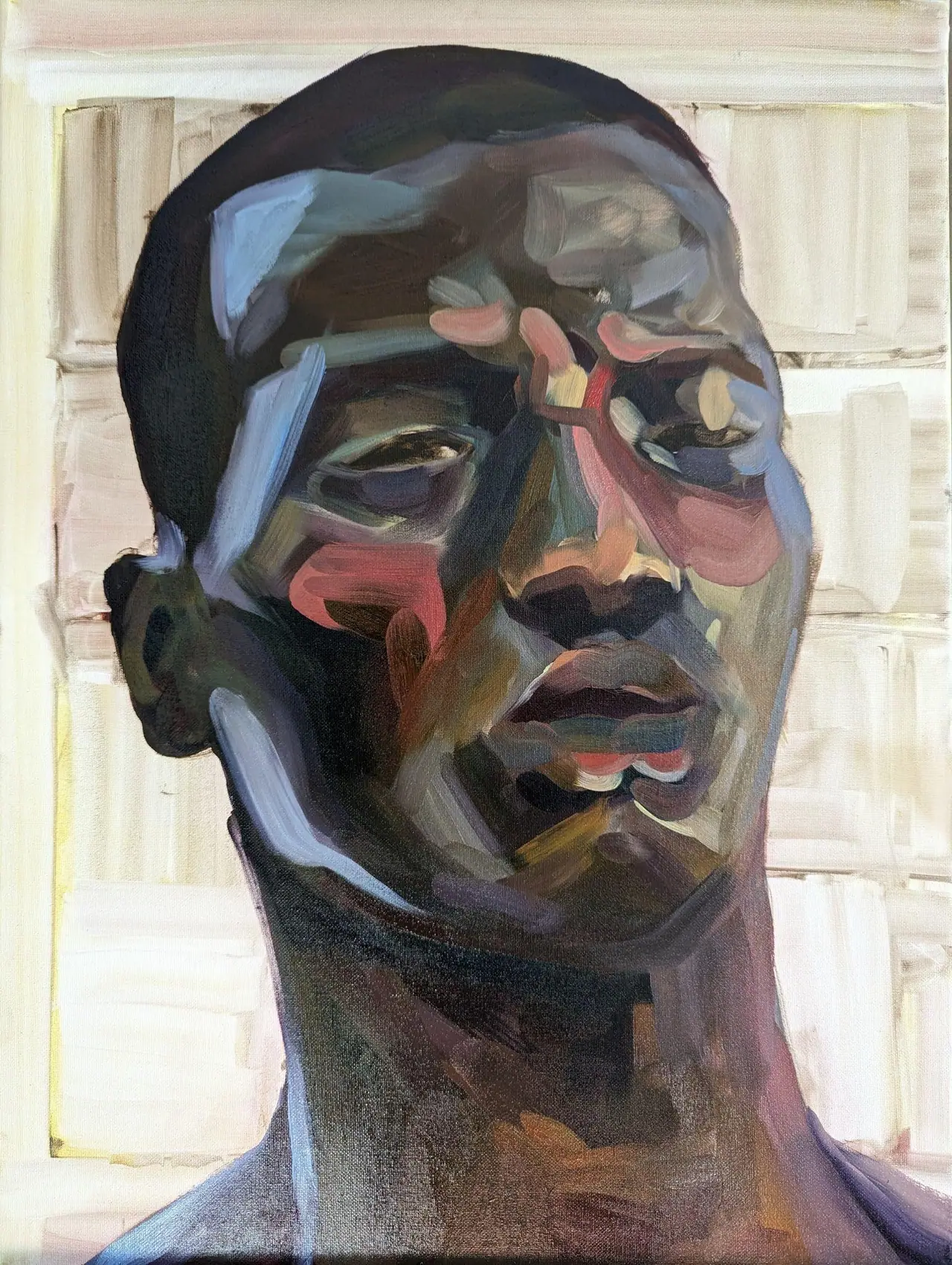
The Monster portrait in Part 1 really challenged my perfectionism and pushed me to embrace the mess. It was my first portrait ever, and it took me three tries and two weeks to finish. But because I didn’t give up, I was a stronger painter on the other side of it, which was evident in the works that followed.
What changed by the end?
My skills, my voice, my confidence, and my whole identity changed. I had never painted a portrait before the program. Now I’m known for painting faces. My work is emotional, colorful, and expressive. I have a recognizable voice and style. And I’m no longer hiding. I’m more open, expressive, and confident, not just in art, but in life. That shift in confidence and identity was as real to me as anything I painted.
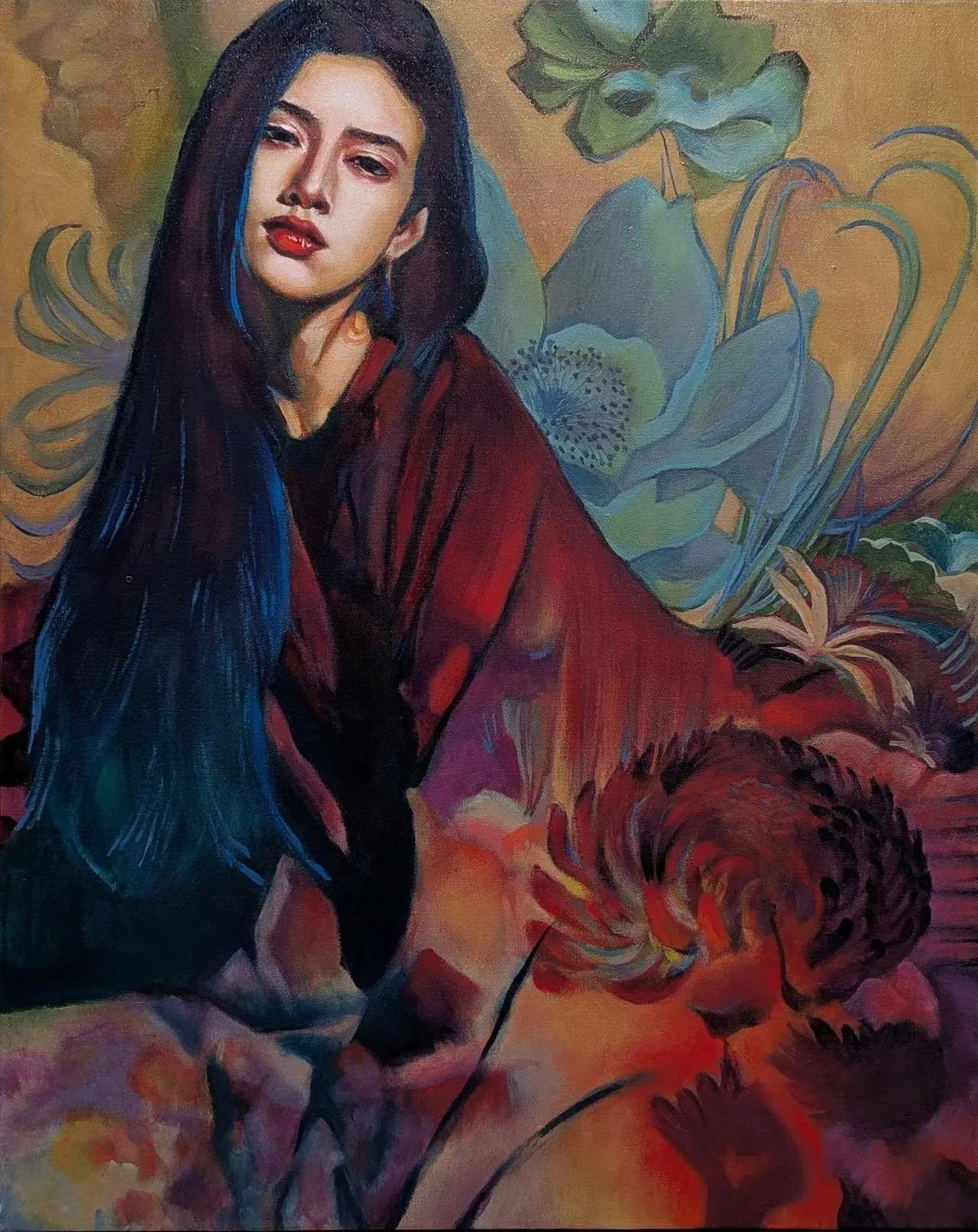
The concrete results stacked up fast. In my first year I earned $55,000, with paintings selling for up to $8,700. I won multiple awards, gained gallery representation in Seattle, held two solo exhibitions, started teaching workshops, ran my own art business, and showed at booths in major art fairs. My painting “Awakening” won the grand prize at the Society of Professional Artists’ Fresh Edge contest. But the biggest win is simpler than any of that: I’m living a life I’m not ashamed of.
What would you tell someone still stuck where you were?
You have to go for it. You have to fight for the life you want. Making a living from art is possible, people are doing it, and now there’s a structured path toward it. If you’re not ready to make the leap yet, take one step every day. Build your skills. Prepare yourself. And one specific piece of advice: get a mentor earlier than I did.
If you want to understand the road Karen walked, our guide on how to make money as an artist maps the real income streams, how to become a professional artist lays out the full path, and if the only thing holding you back is the calendar, read is it too late to become an artist. You can also read another graduate’s path in our Mastery Program student journey.
Take the Mastery Program as a gift to your future self. It will transform you as a person, because art is life, and this program understands that. If Karen’s story sounds like the life you have been quietly wanting, the rest of our creative block and identity collection is here when you want to keep going.
You can find Karen at karenchangart.com and on Instagram at @karenchangart.
Frequently asked questions
Who is Karen Chang?
Karen Chang is a Milan Art Institute Mastery Program graduate who left a full-time tech career to become a full-time professional artist. She is known for emotional, colorful, expressive portraits, has gallery representation in Seattle, and has held two solo exhibitions.
How much did Karen Chang earn in her first year as an artist?
Karen earned $55,000 from art alone in her first year as a full-time professional artist, with individual paintings selling for up to $8,700. She also won multiple awards, secured gallery representation in Seattle, and held two solo exhibitions.
When did Karen Chang start and finish the Mastery Program?
Karen started the Milan Mastery Program in 2023 while still working full time in tech, and finished in September 2025. She began showing and selling her work that April, before she even graduated.
What does Karen Chang say made the biggest difference?
Karen credits three things: the community where she practiced being seen, group coaching that helped her zoom out, and mentorship. She calls mentorship the game changer, and says her only regret is not getting a mentor sooner.
What advice does Karen Chang give to people who want to make a living from art?
Karen says you have to fight for the life you want, because making a living from art is possible and there is now a structured path toward it. If you are not ready to leap, take one step every day to build your skills, and get a mentor earlier than she did.
What to practice this week
- Post one piece of your work somewhere people will see it, the way Karen did, and treat being seen as the first skill to practice.
- Paint one subject you find genuinely hard, the way Karen tackled her first portrait, and finish it even if it takes several tries.
- Write down the two things that feel most opaque about an art career, then go find one credible answer to each this week.
Supplies used

About the author
More from ElliKeep learning