Milan Art Mastery Program: One Student's Journey From Complete Beginner to Selling Artist
Jake Dunn had never picked up a paintbrush when he started. By the end he was selling work. Here is what the Milan Art Mastery Program actually covers, phase by phase.
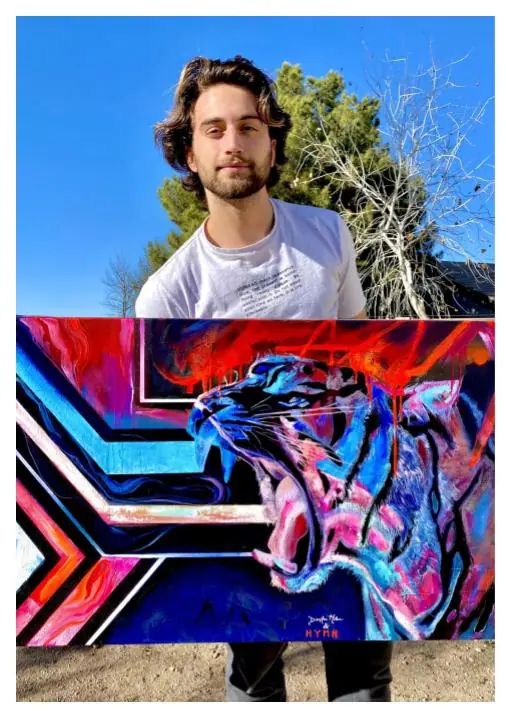
The Milan Art Mastery Program is the Milan Art Institute’s flagship online art education program, and it is built to take a complete beginner all the way to working artist. It does this in four phases: drawing, painting, mixed media and finding your voice, and finally building a portfolio you can market and sell. The clearest way to understand what that path actually feels like is to follow one student who walked it, Jake Dunn, who had never held a paintbrush when he started and was selling his own work before he finished.
That last detail is the whole point. Most people who want to make art quietly assume the door is only open to the naturally gifted. The program is built on the opposite belief: that skill in art is taught, not handed out at birth, and that the proof is in what ordinary beginners can make once they learn in order. Below is what each phase covers, what you produce in it, and what the results looked like for someone starting from nothing. If you want the fuller picture of that student’s story, here is Jake Dunn’s path as an artist.
What is the Milan Art Mastery Program?
The Milan Art Mastery Program is an online art school program designed to turn a beginner into a professional artist through a structured, phase-by-phase curriculum. Three ideas set it apart from a typical art class. First, you do not have to be born with talent; the skills can be taught, and the program teaches them. Second, artists do not have to starve, so the curriculum includes the business of selling work, not just the craft. Third, the case is made with proof rather than promises, which is why a student documented his own beginner-to-selling journey through it.
If the talent question is the thing holding you back, it is worth settling honestly before anything else, and this breakdown of whether art is a skill or a talent lays out the real answer. The program assumes the skill side is the truth and is structured accordingly: it starts you at the fundamentals and builds upward in a deliberate order, so you are never asked to run before you can see.
Do you need talent or experience to start?
No, and the clearest evidence is the student who documented the whole thing. Jake Dunn began with, in his own words, zero experience whatsoever. He had never picked up a paintbrush. What he brought instead was a deep desire to learn to paint and draw, and a real willingness to do the work. That combination, not inborn ability, is what the program is built to reward.
This matters because the fear of being talentless is what stops most people before they make a single mark. The program treats that fear as a misunderstanding of how art works. So-called natural talent turns out to be far less important than consistency once you are inside a structure that teaches the skills in sequence. If you have wondered whether you started too late or never had the gift, the honest answer to whether it is too late to become an artist is more encouraging than you expect, and the same logic runs underneath this entire program.
What does the first phase, drawing, cover?
The program opens with drawing, the foundation everything else is built on. In the early stretch a student is learning to see and to render the fundamentals, and progress shows up faster than most beginners predict. Four weeks in, Jake’s improvement was already visible in side-by-side comparisons of his own work, the kind of jump that makes it obvious how quickly skill compounds when you practice with direction.
Two things stand out about this phase. The first is how directly it disproves the talent myth: a student with no background was producing clearly better work in a month, which says the structure is doing the heavy lifting, not genetics. The second is the emotional reframe that comes with it. One of the founders, Elli Milan, speaks during this stretch about failure as an artist and why you should not let it stop you, because the awkward early work is not a verdict on your ability, it is simply part of learning. That mindset matters as much as the pencil technique.
What happens in the painting and mixed media phase?
After drawing comes painting, and then the program opens up into mixed media and finding your voice, which is where many students feel the work start to become their own. This is the stretch where real challenges show up and get solved. In the acrylics class, for example, a student runs into genuine problems and has to work through them, which is exactly how the craft is learned, not by avoiding difficulty but by moving through it.
The mixed media phase is also where the range of the program becomes clear. Students learn to use ink to make pieces look genuinely interesting, taught in this part by Dimitra Milan, and the work expands into abstracts, spray paint, and more. If you are new to the idea of combining materials, this guide to what mixed media art is and how to use it is a useful companion to what this phase covers. The goal here is not just technical variety. It is finding your voice, the point where your choices start to look like yours rather than like an exercise.
This is also the phase where the business side begins in earnest. Students often start selling their art before the program is even finished, and some use those early sales to cover their tuition. Selling work this early is treated as normal rather than remarkable, because the marketing skill is being taught right alongside the painting.
What is the final portfolio and marketing phase?
The program closes with portfolio week, where the focus shifts from making single pieces to building a coherent body of work you can sell. A key habit taught here is creating art sources before you paint, so you know what you are going to make before you start, rather than improvising every piece from scratch. That single practice does a lot to turn scattered effort into a real portfolio, and you can go deeper on the mechanics in this guide to building an art portfolio.
By this stage the selling has become a through-line rather than an afterthought. A student moving through this phase keeps selling work as a direct test of the principles the program teaches, which is the most honest proof that they work. The point of the final phase is to leave you not just with skills but with a portfolio and the beginnings of an audience, the two things that turn making art into a sustainable practice. If that is the outcome you want, the wider guide on how to become a professional artist covers the path beyond the program too.
What were the results, and who is it for?
The results, in one student’s case, were a complete beginner who could draw and paint, was selling work, and was building a following, all from a starting point of never having held a brush. He kept selling and growing after the formal program ended, and his reflection at the close was less about technique than about building something durable: a real creative practice and the start of a scalable art business. That arc, from zero to selling artist, is the program’s entire argument made concrete.
As for who it is for, the answer is broad. It is built for true beginners and for anyone restarting a creative life, and the founders describe its principles as useful beyond painting, for musicians and writers too, because so much of it is about building a body of work and the habits to sustain it. If you have carried the quiet wish to become an artist and never knew where to begin, this is the kind of structure that question deserves. You can keep exploring that path through our becoming an artist later in life collection, and when you are ready to actually start, the Mastery Program is built to take you from exactly where you are now.
Frequently asked questions
What is the Milan Art Mastery Program?
The Milan Art Mastery Program is the flagship online art education program from the Milan Art Institute, built to take a complete beginner and teach the skills of a professional artist. It is structured in four phases that move from drawing through painting, mixed media and finding your voice, and finally building a portfolio you can sell and market. The core belief behind it is that artistic skill is taught, not something you have to be born with.
Do you need talent or experience to start the Mastery Program?
No. The program is designed for people with no experience, and one of its students, Jake Dunn, had never picked up a paintbrush before he enrolled. What it asks for is desire and consistency rather than so-called natural talent. The whole structure assumes you are learning the fundamentals from the beginning and builds your skill up in order, phase by phase.
What does the Mastery Program teach?
It teaches drawing first, then painting, then mixed media and how to find your own artistic voice, and finally how to build and market a portfolio. Along the way students work in acrylics, ink, abstracts, and spray paint, and they learn to create art sources so they know what they are painting before they begin. The aim is both the craft of making art and the practical skill of selling it.
Can you sell your art during the Mastery Program?
Yes, and many students do. The program teaches marketing and portfolio building alongside technique, and students often begin selling work before they finish, sometimes covering their tuition in the process. Selling early is treated as a normal part of the journey rather than something that only happens years later, because the business skills are taught right alongside the painting skills.
Who is the Mastery Program for?
It is for anyone who wants to learn to make art seriously, from true beginners to people restarting a creative life later on. The founders also describe the principles as useful beyond visual art, for musicians and writers, because much of it is about building a creative practice and a body of work. If you have wanted to become an artist and did not know where to start, it is built for exactly that.
What to practice this week
- Pick one medium and stay with it for your first stretch of work, the way the program moves through drawing before painting rather than scattering your effort.
- Before you paint a piece, make an art source first: gather your reference and decide what you are painting, so you are not improvising the whole thing on the canvas.
- Start sharing and selling small work early instead of waiting until you feel finished, because building the habit of marketing matters as much as the painting.
Supplies used
About the author
More from Elli