How to Sell Abstract Art: Make Abstract Paintings People Actually Want to Buy
A sellable abstract is not random. It has depth, contrast, a focal point, and colors people want to live with. Here is the process we use to build one, step by step.

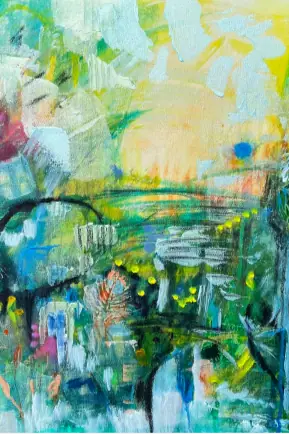

To sell abstract art, you have to make paintings people actually want to live with. That comes down to four things working together: livable color, real depth, clear contrast, and a focal point the eye can land on. A sellable abstract is never random. It only looks loose. Underneath, it is built on purpose, and that intention is exactly what a buyer responds to even when they cannot name it.
We have created and sold thousands of abstract works over the years, both collaboratively and individually, and the process below is the one we keep coming back to. It blends technique with creative freedom so you can go from a blank canvas to a finished, gallery-ready piece that is emotionally powerful and commercially viable at the same time. Grab your paints, clear your workspace, and let us walk through it.
What makes an abstract painting sellable?
Depth and color make an abstract sellable. The pieces that find buyers share a short list of traits: colors people want to live with (usually light and bright), genuine contrast, and one or more clear focal points that give the eye somewhere to rest. Most unsold abstracts fail on exactly these points. They go muddy, they stay flat, or they spread the viewer’s attention everywhere at once so nothing holds. Get color, depth, contrast, and focal point right, and the painting reads as collectible rather than chaotic. If you want to understand demand more broadly first, what kind of art sells best is a useful companion to this guide.
How do you create an abstract painting step by step?
Build it in layers, resolving the image as you go rather than planning every move up front. Here is the distilled process we use and teach to take a blank canvas all the way to a finished piece.
- Start with collage. Use various papers, textured, printed, or even found materials, and apply them with gloss gel. Do not worry about acid-free options, because everything gets encased in acrylic plastic anyway. Use different paper sizes and let some pieces reach the edges of the canvas for more visual interest.
- Kill the white. Apply a transparent wash of acrylic over the entire canvas to unify the composition and eliminate that intimidating white space. A blank white canvas freezes people. A toned one invites the next move.
- Begin the push and pull. Start deciding which areas should move forward (darker, more saturated tones) and which should recede (lighter, softer hues). This is how you build depth, the single element that most separates a flat decoration from a painting collectors want to keep.
- Build layers. Alternate between transparent and opaque layers. Use dry brushes and towels to lift or soften areas. Let the artwork breathe and do not overwork it too early; many good abstracts are ruined by piling on more before the last pass has earned its place.
- Introduce focal points. Once the painting starts to take shape, decide where the focal points should live. Use contrast, color, or unique marks to draw the eye. A buyer’s gaze needs somewhere intentional to land, and this is where you give it that.
- Finish with oils (optional). If you are comfortable with oils, use them to add rich, luminous layers on top. One method that works well: brush a gel medium over the canvas first, which helps the oils glide and dry faster.
If you want a deeper toolkit of mark-making to pull from inside this process, 10 abstract painting techniques walks through specific methods you can try one at a time.
What colors sell best in abstract art?
Light, bright, livable colors sell best, because most buyers are choosing a piece for a wall they will see every day. That does not mean everything has to be pale, but the palette should harmonize instead of clash. A warm field with a few cool accents, or a mostly soft painting with a handful of saturated focal notes, reads as something a person wants in their home. Muddy, dark, or jarring color is the quickest way to lose the sale before anyone even asks about the price.
.jpeg)
What is the mindset behind successful abstracts?
Abstract painting is more than technique, it is a mindset. Be present, intuitive, even childlike, and do not plan too much. Let the art emerge organically and trust the process, especially when it feels uncomfortable or unclear. The painters who sell consistently are not the ones who control every inch; they are the ones who can stay loose enough to follow the painting while staying intentional about depth, color, and focal point.
“All you need to know is your next move. You don’t have to know ten steps ahead.” (Elli Milan)
That is the whole secret to not freezing at the canvas. You do not owe yourself a finished vision before you begin. You owe yourself the next honest move, and then the one after that. If the fear of getting it wrong is what keeps you from finishing pieces at all, why your art isn’t selling and how to make money as an artist get into the business side of staying in the work long enough to sell it.
How do you price and sell the abstract once it is finished?
Once a piece is genuinely finished, the selling is a separate craft from the painting. Price it with a consistent method rather than a gut number, photograph it well, and put it in front of the right buyers. A strong abstract priced randomly or shown in a bad photo will sit unsold next to weaker work that was handled professionally. We cover the money mechanics in how to price paintings, so the painting you just built actually earns what it should.
Final thoughts: keep it playful, keep it you
Creating abstract art is not about getting it “right.” It is about practice, exploring your materials, and staying curious. Let your intuition guide you, and remember it is okay to leave some parts raw or undone. Sometimes the most beautiful moments in a painting come from what you did not plan. The sellable part and the playful part are not enemies: the intention lives in the structure (depth, color, contrast, focal point) while the freedom lives in how you get there.
If you are ready to build a real body of work and a career around it, not just one painting, that is exactly what we teach inside the Mastery Program, where you learn to create art that is both emotionally powerful and commercially viable. And when you want the rest of the business side, the full sell and price your art collection is here to take you further.
Frequently asked questions
What makes an abstract painting sellable?
Depth and color make an abstract sellable. Use colors people want to live with, usually light and bright rather than muddy or dark, and make sure the piece has real contrast and a clear focal point. A sellable abstract reads as intentional: the eye knows where to land, some areas come forward, others recede, and the whole thing feels resolved rather than random.
What colors sell best in abstract art?
Light, bright, livable colors tend to sell best, because most buyers are choosing art for a wall they live with every day. That does not mean every piece must be pastel, but it should harmonize, not clash. A warm palette with a few cool accents, or a soft field with a few saturated focal notes, reads as collectible. Muddy, dark, or chaotic color is the fastest way to lose a buyer.
How do you create depth in an abstract painting?
Create depth through push and pull: decide which areas should move forward and which should recede. Darker, more saturated tones tend to advance, while lighter, softer hues fall back. Alternate transparent and opaque layers so some passages feel deep and others sit on the surface. Depth is what separates a flat decoration from a painting a collector wants to keep looking at.
Can I use spray paint or collage in a sellable abstract?
Yes. Collage and spray paint are both legitimate tools in a finished, sellable abstract. For collage, almost any paper works because it gets encased in acrylic anyway: book pages, menus, gift wrap, and textured stock are all fair game. For spray, choose water-based brands like Liquitex for less toxicity. What matters to a buyer is the finished image, not which tools made it.
What if I overwork an abstract painting?
If you overwork a piece, let it dry completely, then keep building. While it is still water-based you can collage over it, gesso a section, or simply repaint the area, abstracts are forgiving that way. If you have already added oil on top, stick to oil-only fixes from there. The mistake is panicking and overworking further while everything is still wet.
What to practice this week
- Take a finished study and identify its focal point in five seconds. If your eye does not land anywhere, add contrast or a unique mark until it does.
- Do a push-and-pull pass: choose two areas to push forward with darker, saturated tone and two to let recede with lighter, softer hue.
- Repaint one muddy abstract using only light, bright, livable colors and see how much more sellable it reads.
Supplies used

About the author
More from Elli