Getting Back to Creativity When Life Hits You
Every artist hits a season where the studio goes quiet. Coming back is not about forcing inspiration. It is about reconnecting to your values, your goals, and the proof of how far you have already come.
To get back to creativity after a hard season, stop waiting to feel inspired and start drawing on the strength you already have. There are four anchors that pull you home: your values, your goals, the proof of your past resilience, and a small consistent practice. Reconnect to those, in that order, and the work returns. None of it depends on your circumstances feeling perfect first.
There are seasons when creating feels natural and expansive. Ideas flow, energy is high, you feel connected to your purpose. And then life hits you. Unexpected challenges, emotional weight, responsibilities that pull you in every direction. Suddenly the canvas feels heavy and the studio feels quiet, and the creativity that once felt effortless now feels distant. If you have been there, you are not alone. Every artist experiences creative disruption. What matters is not avoiding these seasons, but knowing how to return. If the deeper struggle is feeling like an artist at all right now, how to overcome creative block goes further into that.
Why does creativity disappear when life gets hard?
Creativity goes quiet during hard seasons because your attention and energy get pulled toward survival, leaving little left for open, exploratory work. This is not a flaw in you. It is what happens to everyone when life demands all of you at once.
The mistake is reading the quiet as permanent. When the studio goes silent, it is easy to decide the well has run dry, that whatever you had is gone. It is not gone. It is waiting. Coming back is not about forcing inspiration. It is about reconnecting to the deep well of strength within you, and that well does not empty just because a season got heavy.
How do you get grounded in your values?
You get grounded by remembering why you create, because your values are your stabilizing force when everything else feels chaotic.
Values are not outcomes or achievements. They are the principles that guide how you show up: growth, honesty, beauty, excellence, courage, contribution. When you reconnect with them, you shift from reacting to life to standing firmly inside it. So ask yourself the real questions. Why do you create? What does art mean to you beyond success or recognition? What kind of artist, and what kind of human being, do you want to be? Who are you creating for, and how does it serve them?
When your creativity is rooted in values instead of emotion, it becomes steady. You create not because you feel perfect, but because it aligns with who you are. Even a small act of creation, done in alignment with your values, restores momentum and helps you draw from that deep inner well instead of waiting for outside motivation to arrive.
How do you reignite your goals?
You reignite them by gently bringing your vision back into focus, not with pressure, but with clarity.
Life can blur your vision. When you are in survival mode, long-term dreams feel far away or even unrealistic. This is the moment to revisit them anyway. Goals give direction to your energy. They remind you that your current season is part of a bigger arc, that you are not stuck, you are in process. Ask what you are building as an artist, what skills you are developing, and where you want to be one year from now. When your actions connect to a meaningful goal, even small studio sessions regain power. Thirty minutes of focused work becomes a vote for your future self.
Creativity thrives when it has direction, and direction gives you something solid to stand on when emotions fluctuate. If you want a practical way to turn that vision into steps you can actually take, SMART goals for artists and creatives walks through how to set goals that move your art forward instead of sitting on a list.
How do you remember who you are and where you have been?
You remember by looking at your own history, because your past success leaves evidence you can stand on.
When life hits you, it is easy to forget your resilience. You forget the obstacles you have already overcome, the skills you have built, the paintings you finished when you doubted yourself, the risks you took that paid off. So take time to reflect. What challenges have you already moved through? When have you felt proud of your artistic growth? What breakthroughs have you created through plain discipline? You are not starting from zero. You are standing on years of experience, effort, and earned strength.
When you reflect on your journey, you begin drawing on that deep well of strength within you again. Confidence does not grow from pretending everything is easy. It grows from remembering that you have done hard things before, and you can do them again.
How do you start small and stay consistent?
You start by lowering the pressure and raising the consistency, resisting the urge to make a dramatic comeback.
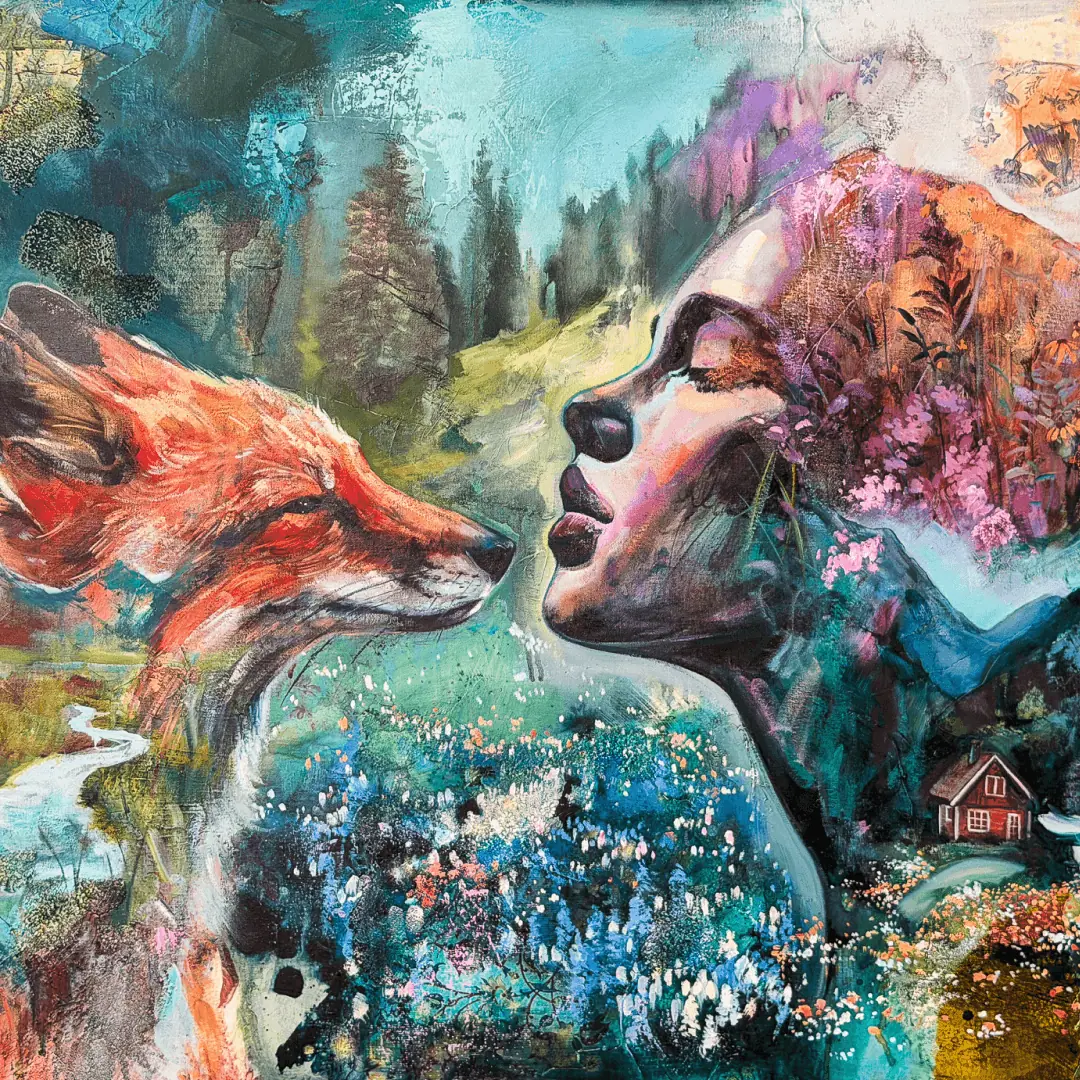
Sketch for fifteen minutes. Mix color studies. Revisit fundamentals. Clean your studio space. Engage with art in a way that feels nourishing instead of overwhelming. Momentum builds quietly, and you do not need to feel inspired to begin. Action creates inspiration far more often than the other way around. The small session you almost talked yourself out of is usually the one that brings the spark back. The habits underneath this matter more than any single burst of motivation, and studio practice covers the routines that keep an artist working through every kind of season.
This is also where the old groove returns. The longer you stay away, the more permanent the distance feels, but a few consistent small sessions dissolve it faster than you expect. If you need help getting that spark back, how to find your art inspiration again has resets that actually work.
Creativity is part of who you are
Life will always have waves. Some seasons expand you, others challenge you. But your creativity is not fragile. It is part of your identity. When you ground yourself in your values, reconnect to your goals, and remember the proof of your past resilience, you create from strength rather than emotion. You draw from the deep well within instead of waiting for circumstances to feel perfect.
You return not as the same artist you were before the disruption, but as a deeper, wiser version of yourself, and that evolution becomes visible in your work. Your creativity is still there. Sometimes it just needs you to come back home to it.
If you want a structured, supported way to put a brush back in your hand, our free Two Week Challenge gives you small guided sessions instead of a blank canvas and a lot of pressure. And when you want to keep going, the rest of the creative block and identity collection is here for the seasons ahead.
Frequently asked questions
How do you get back to creativity after a hard season?
Do not wait for inspiration to return on its own. Reconnect to your values so you create from purpose instead of mood, bring your goals back into focus to give your energy direction, and look at the obstacles you have already overcome for proof of your resilience. Then start small and stay consistent, because momentum builds quietly from action, not from feeling ready.
Why does creativity disappear when life gets hard?
Stress, grief, and overwhelm pull your attention and energy toward survival, which leaves little left for open, exploratory work. This is normal and temporary. Every artist moves through seasons where creating feels distant. The disruption is not a sign that your creativity is gone, only that it needs you to come back to it gently.
How do I create when I do not feel inspired?
Lower the pressure and raise the consistency. Sketch for fifteen minutes, mix color studies, or revisit fundamentals instead of demanding a finished piece. Action creates inspiration far more often than the other way around, so a small act done in alignment with your values restores momentum better than waiting for motivation to arrive first.
What should I do first when returning to art after a break?
Start with something small and nourishing rather than a dramatic comeback. Clean your studio space, do a short sketch, or revisit a fundamental you enjoy. The goal of the first session is not to produce a masterpiece. It is to reopen the door and remind your hands and your eye that this is still part of who you are.
Is it normal to lose motivation to make art during stressful times?
Yes, completely. Losing the pull to create during a difficult stretch is one of the most common experiences artists share, and it says nothing about your talent or your future. Creativity is part of your identity, not a fragile mood. It waits for you, and it returns when you give yourself permission to start small.
What to practice this week
- Write down why you create, beyond success or recognition, and keep it where you can see it before each studio session.
- Choose one goal for the next year and break off the smallest possible next step, then do only that step today.
- List three hard things you have already moved through as an artist, as evidence the next season is survivable too.
Supplies used
About the author
More from ElliKeep learning