Abstract Art Ideas: 12 Simple Starting Points That Get Paint on the Canvas
A blank canvas asks for a decision before it asks for paint. These twelve starting points hand you that first decision, so the painting can take it from there.
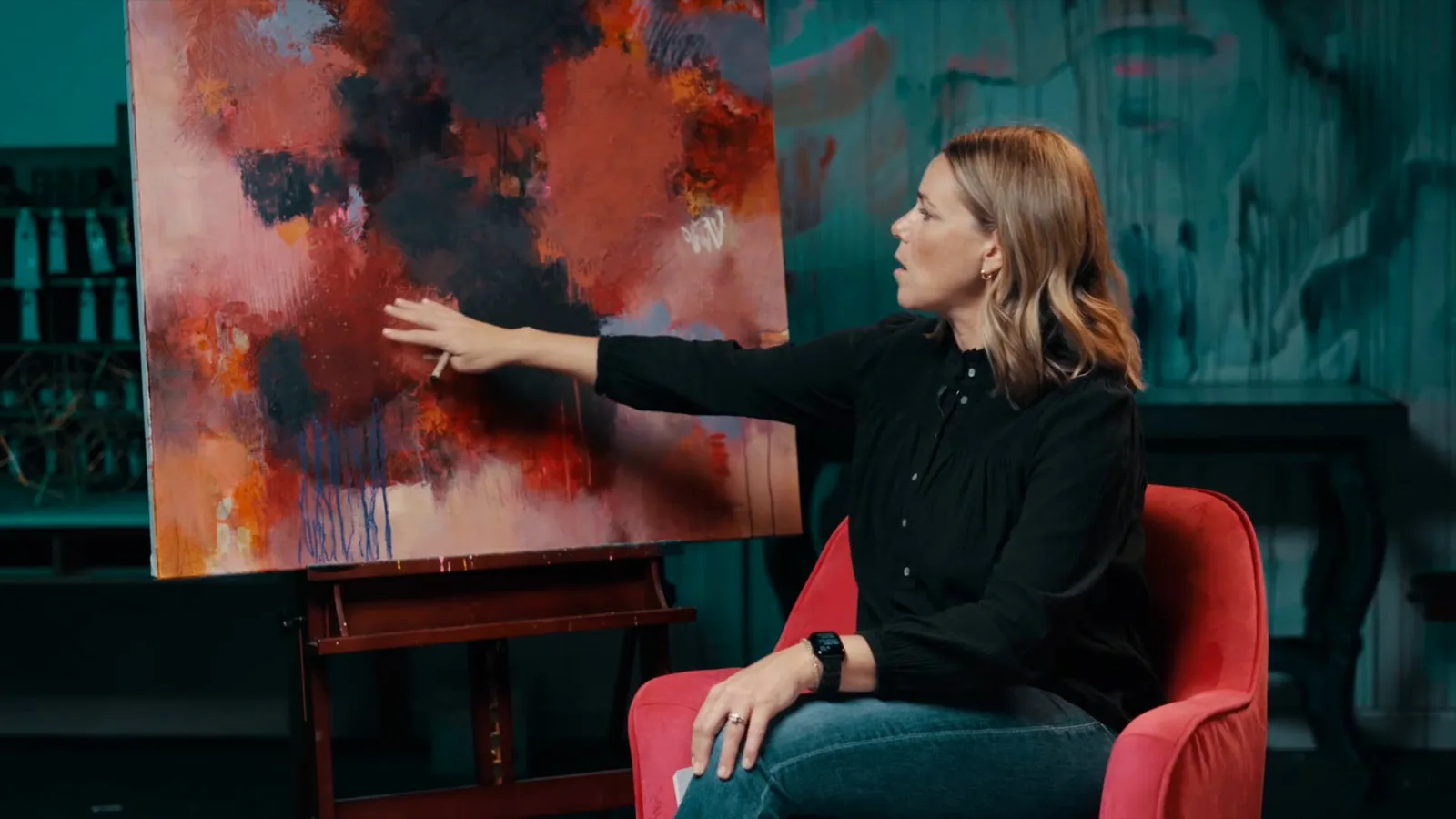
The best abstract art ideas start from one specific thing: a color story you lifted from a photograph, a feeling you want to paint, a song, a handful of materials, or a single detail from a painting you love. Make that first decision, get a layer down, and the painting will hand you the next one.
Every idea below comes from how our instructors actually start their own abstracts. Casey Wakefield, a painter and mentor at Milan Art Institute who has painted abstracts since finishing the Mastery Program, builds idea boards before she touches a canvas. Elli teaches abstract realism, where a recognizable subject dissolves into pure abstraction. Between the two of them, you have more starting points than you’ll paint this year.
Where do good abstract art ideas come from?
Good abstract ideas come from four places: color, emotion, materials, and other artists. Casey looks at all four when she plans a piece. She might borrow a palette from a landscape, choose colors for a mood she wants to paint that day, pick a few materials she’s curious about, or pull one element from an abstract painting she admires.
The fifth source is the painting itself. Casey often starts without knowing what a piece will mean. Thoughts and feelings surface while she’s deep in mark-making, and the meaning arrives over the hours she spends with the canvas. That’s normal, and it’s one of the best parts of abstract painting. Your starting idea only has to be strong enough to get the first layer down.
What are 12 simple abstract art ideas to try?
Here are twelve starting points, from the simplest to the most ambitious. Each one is enough to carry a full canvas.
1. Steal a color story from a photograph
Pick a photo that makes you feel something and paint only with its colors. Casey loves wildflowers, so she pulled a palette straight from a field of them: a range of greens, oranges and violet, with cream as the resting space. That neutral matters. It gives the eye somewhere to land between the busier passages of color.
2. Build an idea board from paintings you love
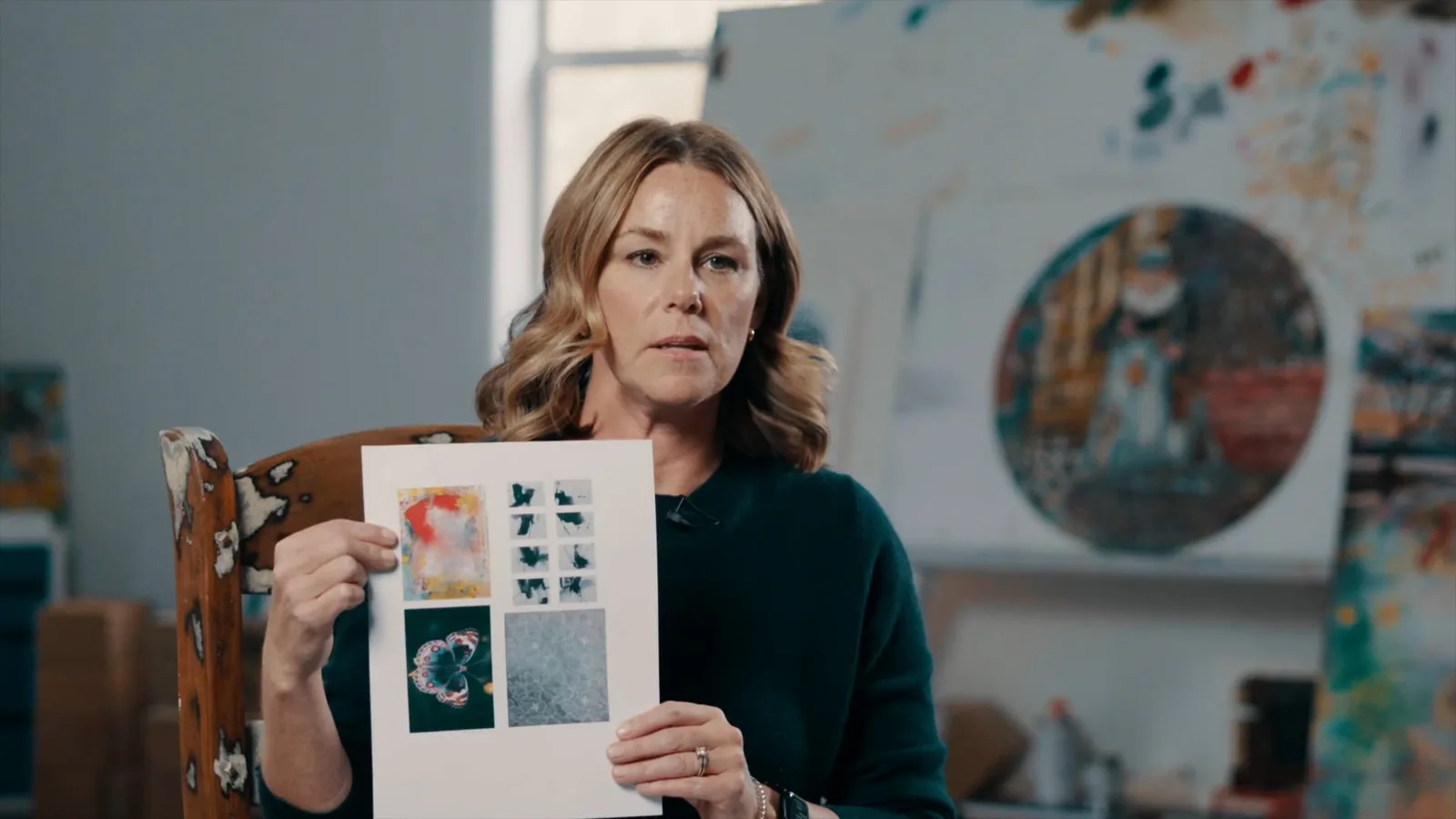
Gather three or four images and name the one thing you want to borrow from each. On one of Casey’s boards, an abstract painting gave her drips, a set of black gestural marks gave her energy, a white lace pattern suggested outlines she could draw with a white china marker, and a butterfly gave her the whole color story. Think of them as ingredients: you take one quality from each and cook something that’s yours.
3. Paint one emotion
Choose a single feeling and let color psychology carry it. Calm might mean soft greens and cream with long, slow marks. Frustration might mean hard reds and black with short, jagged ones. The early abstract painters of the late 1800s and early 1900s were after exactly this: painting inner feelings they couldn’t put into a picture.
4. Paint to a single song
Put one song on repeat and paint what it does to you. Casey describes an abstract painting as an orchestra, or a loud rock song, where every instrument seems to be doing its own thing until they come together into something whole. Let the drums become your marks and the melody become your color.
5. Collage the words that are stuck in your head
Tear up a printed poem, a page of lyrics, a letter or sheet music, and layer the pieces into your background. Casey often puts songs and poems that are resonating with her into her paintings. The words may disappear under later layers, and that’s fine. They’re still in the painting, and so is the reason you chose them.
6. Limit yourself to three materials
Choose three materials you enjoy and use nothing else. Casey’s favorites include charcoal, collage, texture and inks. Constraints make decisions easier, and every material brings its own kind of mark. Start with texture, make marks without thinking too hard, and watch for the movement and composition that appear on their own.
7. Dissolve a flower into abstraction
Paint one flower, such as a peony or a rose, representationally in the center, with color and form true to life. Then let the petals near the edges start to feel like a flower without looking exactly like one, and let the outer areas become pure abstraction. This is abstract realism, and Elli’s rule for it is simple: the realism has to dissipate into the abstract. A realistic subject dropped onto an abstract background is a different thing.
8. Flip abstract realism upside down
Here’s a challenge Elli gives her students: paint a realistic background, maybe a tree or a mountain, and make the subject in the foreground abstract, with the two blending into each other. Elli has said she hasn’t personally seen anyone do this, which makes it a great idea to try. Nobody has worn a path through it yet.
9. Paint a depth study in three layers
Plan a painting in background, midground and foreground. For the background, build lots of layers of marks and colors with several materials. For the midground, lay transparent washes over it in a cool color, such as a cool transparent oil, so the early marks stay visible up close but recede from across the room. For the foreground, stack warm colors over the cool ones and add texture (Casey mixes oil paint with cold wax) to bring those areas forward.
10. Make a mark-making map
Cover one canvas with as many kinds of line as you can: thin graphite lines, marker lines, lines etched into wet paint, drips. Vary the edges too, so some marks blend softly into the background while others sit as solid, definite shapes. Casey names a lack of variety in line and edge as one of the most common mistakes in abstract painting, so this idea builds the skill as it builds the painting.
11. Start loose and pull toward realism
Elli’s method for abstract realism works as an idea on its own. Throw a lot of paint down first, drippy and splattery and expressive. Then decide which area will become realistic and move it there in stages: more definite brushstrokes, then finally the details. Starting loose keeps you from rendering everything with tiny brushes, which is the fastest way to lose the abstract half of the painting.
12. Let the painting name itself
After each session, sit down and write a few lines about what you were thinking about and what you might be working through. Casey does this with every painting. When the piece is done, those notes give her the title, and a description ready for her website or social media. Sometimes the notes turn into the idea for the next painting.
How do you turn an abstract idea into a finished painting?
You turn an idea into a finished painting by building layers and checking them against a short list as you go. Casey runs through a checklist in her head while she paints:
- Does the painting have a cohesive color story?
- Does it feel balanced?
- Is there variety in the marks and lines?
- Is there depth, from background to foreground?
- Is there a focal point that moves the eye around the canvas?
If the answer to one is no, that tells you what the next layer is for. Maybe it needs another layer of paint for depth, or a few marks to guide the eye. The focal point often doesn’t arrive until the very end, so don’t panic if it’s missing halfway through.
Expect the middle to feel uncertain. Casey calls parts of her own abstract process torture: the excitement at the start fades, and you keep working without knowing where the painting is going. Pushing through that stretch is a skill, and every abstract you finish makes it stronger.
What mistakes stop an abstract idea from working?
Three mistakes stop more abstract ideas than anything else:
- No color story. Without a planned palette, colors turn muddy and the painting loses its cohesion. Decide your colors first, including the markers, pencils or pastels that will join the paint.
- Only one value. Sticking to your chosen colors at full strength makes a painting flat. Mix lighter and darker versions, mute some colors down, and keep some pure, so you have a full range of values.
- Uniform marks and edges. When every line is the same size and every edge the same softness, the eye has nothing to explore. Mix thin and thick lines, and blended and hard edges.
For the techniques that solve each of these, from washes and glazing to palette knife and collage, work through our guide to abstract painting techniques.
Why is abstract painting worth trying if you paint realistically?
Abstract painting makes you better at every other kind of painting. Casey found that it sharpens exactly the skills representational painters need: layering, building depth, brushstrokes, and mixing a precise color. It also builds confidence with materials, because an abstract gives you permission to experiment and see what happens.
If you want to see where these ideas can take you, spend some time with famous abstract paintings and notice which ones you keep coming back to. Your own taste is one of the best idea generators you have.
Choose one idea from this list, give it a whole canvas, and see what the painting asks for next. When you’re ready to paint alongside other artists with feedback on what you make, the 2-Week Challenge is a great place to begin.
Frequently asked questions
What is a simple abstract art idea for beginners?
Pull a color story from a photograph you love, such as a field of wildflowers, and paint only with those colors. Use one color as a neutral resting space, build a loose background of marks and texture, then add washes and brighter color on top. A limited palette keeps the painting cohesive while you learn how layers work.
What should I paint for abstract art when I have no ideas?
Start with materials instead of a subject. Choose two or three things you enjoy, such as charcoal, collage paper and ink, and make marks freely for twenty minutes without judging them. Movement and composition often appear out of that loose first layer, and you can build the painting from what you find.
How do you choose colors for an abstract painting?
Decide on a color story before you start. Borrow one from a photograph, a landscape or a painting you admire, or choose colors for the emotion you want the piece to hold. Include light and dark versions of your colors and at least one neutral, because a painting with only one value reads flat.
Can abstract art have a subject?
Yes. Abstract realism keeps part of a subject, such as a flower or a face, painted representationally and lets the rest dissolve into pure abstraction. The in-between areas, where the subject is felt more than seen, are what make the style work.
What to practice this week
- Choose one photograph you love and pull a four-color story from it, including one neutral. Paint a small abstract using only those colors.
- Fill a sheet of paper with marks from three different materials (graphite, a marker, the back of a brush in wet paint), varying thick, thin, solid and broken lines.
- Paint one flower realistically in the center of a small canvas, then let its petals break into loose brushstrokes, drips and dots as they reach the edges.
Supplies used
About the author
More from ElliKeep learning