Social Media for Artists: How to Show Up Without Burning Out
Social media is not a performance. It is a way to share your truth, your process, and your evolution so the right people find your work and stay.
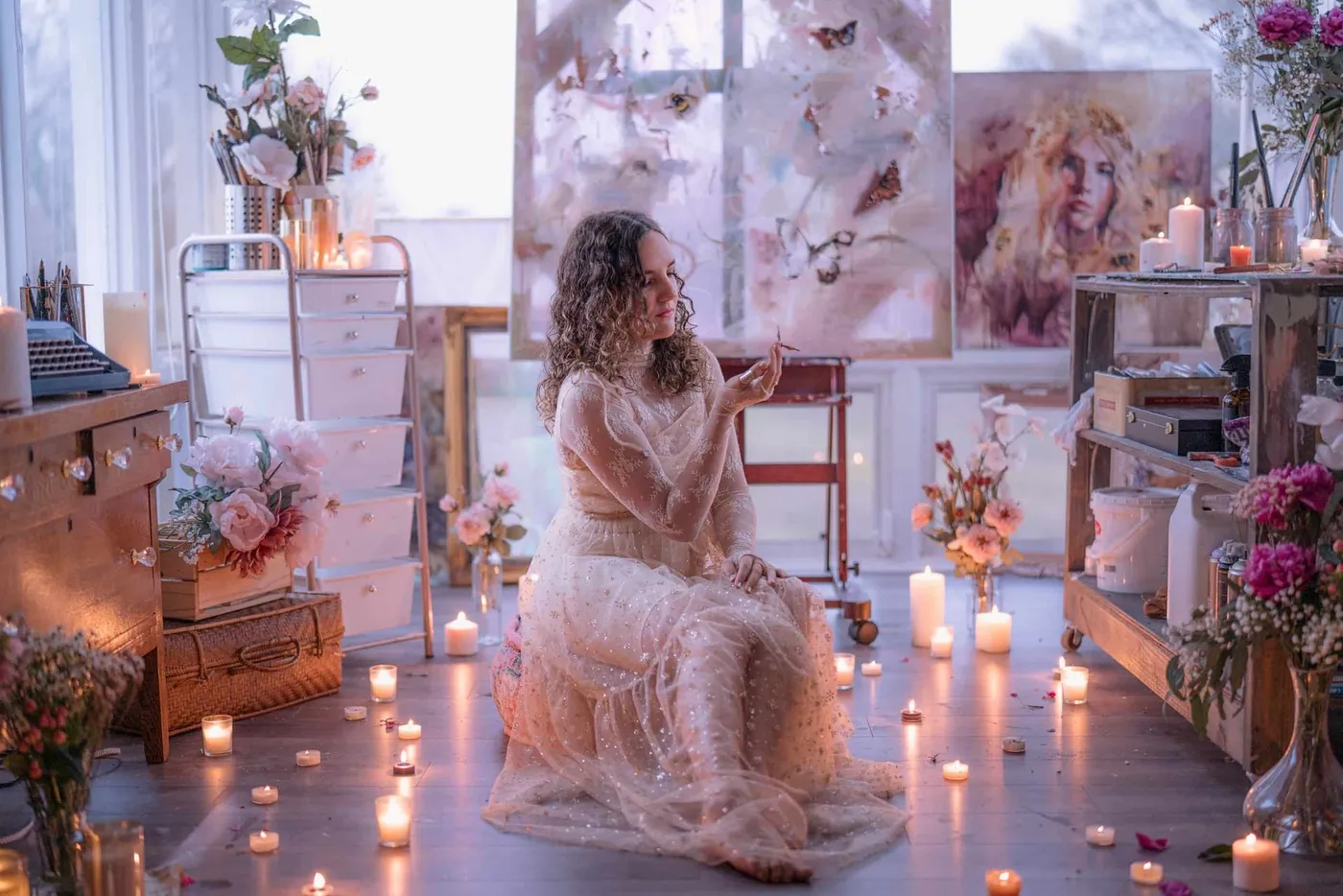
Social media for artists works best when you stop treating it like a separate job and start treating it like an extension of your studio. Share your real paintings, your process, and your story instead of chasing trends or posting constantly. Focus on one or two platforms, show up with honest consistency rather than relentless volume, and let people see the depth behind your work. When they feel that, selling becomes a natural byproduct, not something forced.
Here is the thing most artists get wrong: they approach social media with pressure and confusion, convinced they need to perform, chase every trend, or become someone they are not. That approach does not work long-term, and it leads straight to burnout. At Milan Art Institute we teach a different philosophy. Social media is not about performing. It is about communicating. It is about sharing your truth, your process, and your evolution in a way that naturally attracts the right people to your work.
Is social media really necessary for artists?
Yes, social media is one of the most powerful ways for an artist to build a career on their own terms. It lets you connect directly with collectors, grow a loyal audience, and create consistent income from your art without waiting for a gallery to choose you. The reach is real and it costs you nothing but honesty and time.
That does not mean it has to feel like a grind. The artists who thrive online are not the ones posting the most or gaming the algorithm hardest. They are the ones who treat each post as a way to communicate something true. If you want the bigger picture of getting your work in front of people, how to promote your art covers the wider marketing landscape, and social media is one of its most accessible channels.
Why does social media feel like a separate job, and how do you fix that?
It feels like a separate job because most artists treat it like one, building a content strategy that is disconnected from their actual studio practice. The fix is to stop inventing content and start documenting the life you already live as an artist. Your paintings, your struggles, your breakthroughs, your ideas, your story. That is the content.
Collectors are not just buying a finished piece. They are buying connection, meaning, and energy. Social media lets them see the depth behind your work, the human who made it and why. When they feel that, the relationship forms before any sale does. So instead of asking what you should post, look at what you already did in the studio this week and share that. The work is the strategy.
How often should artists post without burning out?
Show up honestly over time rather than posting every day at a supposedly perfect hour. Consistency matters, but not in the frantic way most people imagine it. It is not about volume or timing. It is about being real and present often enough that your audience trusts you are not going anywhere. When they trust that, they stay. And when they stay, they buy.
Growth also comes from clarity. If you do not know what your art stands for, your audience will not know either. This is why the inner work matters as much as the posting schedule. Your mindset, your confidence, and your willingness to be seen all directly shape your success online. A clear, settled artist posts less and connects more than a scattered one flooding the feed.
How do you stop holding back and start being seen?
Stop trying to be liked by everyone, because the more you aim for universal approval, the less your message lands with anyone. Many artists hold back out of fear of judgment, worrying about what others will think. But the artists who grow are the ones willing to be fully themselves, opinions, edges, and all. Watering yourself down to be safe is the surest way to be forgotten.
That fear of being seen is rarely about photography or captions. It is about identity, the quiet belief that your work is not good enough to defend. If that voice runs loud for you, artist imposter syndrome and vulnerability in art go deeper into where it comes from and how to keep creating anyway. Being visible online is mostly the practice of letting yourself be seen before you feel ready.
Why does storytelling make your art memorable?
Storytelling makes your art memorable because social media rewards meaning, not just images. Your audience wants to understand why you create, what drives you, and what your journey looks like. When you share those layers, your work stops being only visual. It becomes emotional and memorable, the kind of thing people return to and tell others about.
At the same time, keep it simple. You do not need complicated funnels or advanced marketing tactics to start seeing results. What you need is clarity, authenticity, and a willingness to show your process consistently. A short, honest caption about why a painting matters to you will outperform a polished promotional graphic almost every time, because people came to feel something, not to be sold to.
How does visibility turn into a real art career?
Visibility turns into a career because opportunities expand as your audience grows. Commissions, sales, collaborations, and teaching all become possible once people can find you and understand your work. Social media is often the bridge between being unseen and building a sustainable art career, the difference between making work in private and making a living from it.
None of that requires you to become a marketer overnight. It requires you to be findable and to be yourself, repeatedly, until the right people gather. When they do, the income streams that once felt out of reach start to open. If you want to map where that income can actually come from, how to make money as an artist lays out the real paths, and a healthy audience feeds nearly all of them. Even local opportunities grow this way, which is why how to sell your art locally and an online presence work hand in hand.
Quick steps to use social media well as an artist
If you want a simple place to begin, here is the whole approach distilled.
- Pull content from your real life. Document your paintings, process, and story instead of inventing a separate strategy.
- Pick one or two platforms. Focus where you enjoy being. Link Instagram and Facebook through Meta so one post publishes to both.
- Choose a sustainable rhythm. Decide on a posting pace you can keep for months, then show up honestly at that pace.
- Lead with meaning. Share why you create, not just what you made. Storytelling is what people remember.
- Let yourself be seen. Stop holding back to be liked by everyone. The right audience is drawn to the real you.
Social media is not a performance you have to dread. It is a conversation you are already qualified to have, because the only thing it asks for is the truth of your own work and journey. Show up as yourself, consistently and without apology, and the audience that belongs to your art will find it.
If you want a structured way to make the work worth sharing in the first place, our free Two Week Challenge helps you build real paintings and the confidence to post them. And when you are ready to go deeper into the identity work behind being seen, the rest of our creative block and identity collection is here when you want to keep going.
Frequently asked questions
How often should artists post on social media?
There is no perfect number, and chasing one is how artists burn out. What matters is consistency over time, not posting every day at the ideal hour. Choose a rhythm you can actually sustain so you can keep posting honestly. Posting reliably for months beats a frantic week followed by silence.
Do artists need to be on every social media platform?
No. It is far better to focus on one or two platforms where you genuinely enjoy posting and can build real connection. With Meta you can link Instagram and Facebook so one post publishes to both, which doubles your reach without doubling your effort. Spreading yourself across every app usually leads to thin, exhausted posting.
What should artists post on social media?
Post the real content that already exists in your studio: your paintings, your process, your struggles, your breakthroughs, and your story. Content that shows the human behind the work connects far more than polished promotion. People are not just buying a finished piece, they are buying connection and meaning, and your posts are where they feel it.
How do artists grow an audience on social media?
Growth comes from clarity, authenticity, and consistency, not hacks. When you know what your art stands for and show up regularly as yourself, the right audience finds you and stays. Joining common interest groups and linking your accounts helps you reach new potential followers, but the foundation is a clear, honest voice people can trust.
What if I feel uncomfortable being visible online?
That discomfort is completely normal, and it is not a sign you should stay hidden. Visibility is a skill that develops with practice, the same way painting does. The more you show up as yourself instead of a performance, the easier it gets. Most of the fear comes from imagining judgment that rarely arrives the way you expect.
What to practice this week
- Pull your next three posts straight from your real studio life: a painting in progress, a struggle you worked through, and the story behind a finished piece.
- Pick one or two platforms you actually enjoy and link your Instagram and Facebook through Meta so one post publishes to both.
- Choose a posting rhythm you can keep for ninety days without burning out, then show up at that pace honestly instead of chasing the algorithm.
Supplies used
About the author
More from ElliKeep learning